
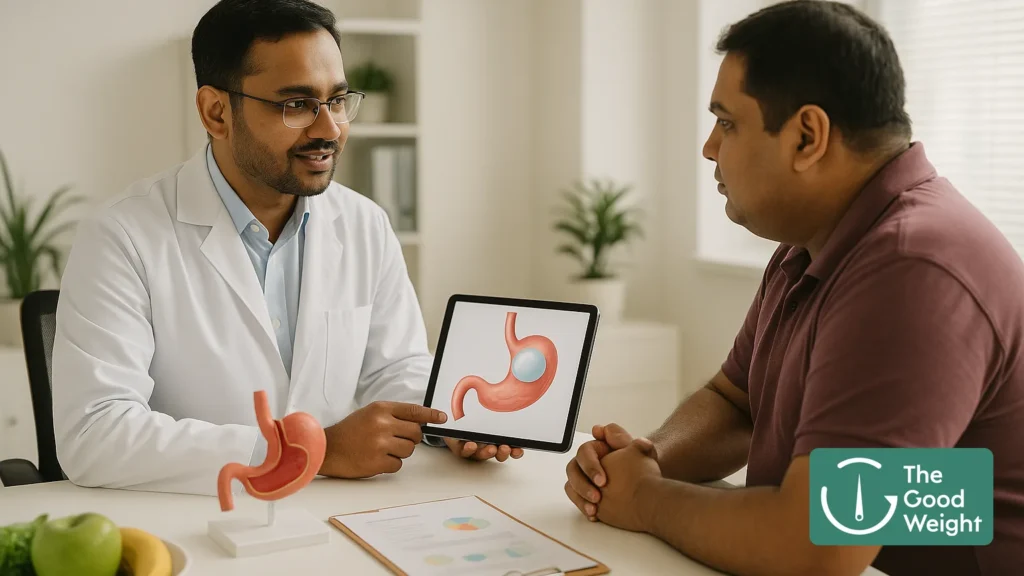
If you have been stuck in the cycle of losing weight, regaining it, and then feeling pushed toward more extreme options, a gastric balloon can sound like a practical middle path. It is often searched by people who are not seeing lasting results from self-directed dieting, but who also feel uncertain about bariatric surgery. That makes sense: many adults want something more structured than willpower alone, yet less invasive than an operation that permanently changes the digestive tract.
A gastric balloon sits in that space. It is a medically supervised, temporary weight-loss procedure designed to help you eat less by taking up room in the stomach and increasing early fullness. But it is not for everyone, and it should not be chosen just because it feels “simpler” than surgery. The real question is whether it matches your health history, your weight-loss pattern, and your ability to follow through with nutrition support and long-term habit change.
This guide explains where a gastric balloon fits, how the procedure works, who may benefit most, what recovery is usually like, what the limitations are, and what to compare before deciding on your next step in India.
Where a gastric balloon fits in the treatment spectrum
Weight-loss treatment is not just a choice between “diet harder” and “have surgery.” In real clinical care, there is a spectrum. On one end, there are lifestyle-only approaches such as calorie tracking, gym plans, online challenges, and generic meal charts. These can help some people, especially early on, but they often fall short when obesity is tied to repeated regain, metabolic risk, emotional eating patterns, or years of unsuccessful attempts.
On the other end, there are bariatric surgeries such as gastric bypass procedures, which are more invasive but can offer greater and more durable weight loss in the right patient. If you are already comparing options, it helps to understand how more definitive operations differ from a temporary device like a balloon. For example, Roux-en-Y gastric bypass and mini gastric bypass change the digestive system itself, while a gastric balloon does not permanently alter anatomy.
That is why a gastric balloon is often considered a middle-ground option. It can make sense for someone who needs more than advice and self-discipline alone, but who is either not medically suited for surgery yet, does not currently want surgery, or wants to try a non-surgical intervention first. In practice, it is best seen as part of a broader evidence-based approach: one tool within comprehensive care, not a stand-alone answer.
What a gastric balloon actually is and how the procedure works
A gastric balloon is a soft balloon placed inside the stomach and then filled so it occupies space. The purpose is straightforward: when the stomach has less room available, you tend to feel full sooner and may find it easier to reduce portion sizes. This mechanical effect can support behavior change, especially when it is paired with structured nutrition coaching and medical supervision.
Placement is usually done through the mouth using an endoscope, so there are no surgical cuts on the abdomen. During the procedure, the doctor guides the deflated balloon into the stomach and then fills it, commonly with saline or gas depending on the device being used. The procedure itself is relatively short, but it still requires screening, preparation, and post-procedure monitoring. A more detailed overview of gastric balloon insertion can help you visualize the process before a consultation.
Most balloons are temporary and stay in place for a defined period, often around six months, though timelines can vary by device and treatment plan. During that time, patients are expected to follow a staged diet progression. The first days are usually liquid-focused, then soft foods are added, and eventually regular foods return in smaller portions. Removal is also a planned medical procedure; the balloon is not meant to stay indefinitely.
What many people notice first is not “weight loss” but fullness. Meals may become smaller because the stomach feels satisfied earlier. However, that effect does not replace decision-making. High-calorie liquids, grazing, and frequent snacking can still limit progress, which is why procedure success depends so heavily on follow-up care.
Who may benefit most from a gastric balloon
The people most likely to benefit from a gastric balloon are usually not those looking for a fast cosmetic fix. They are more often adults with obesity or overweight-related health concerns who have already made repeated serious efforts and still struggle with lasting results. In that context, the balloon can serve as a supervised tool to break a pattern of overeating, regain, or stalled progress.
BMI is part of the eligibility discussion, but it is not the whole discussion. In many settings, gastric balloons are considered for adults with obesity, or for those with excess weight plus related conditions such as prediabetes, type 2 diabetes, fatty liver disease, sleep apnea, or joint strain. The exact cutoffs and suitability depend on the device, the provider, and the person’s wider medical profile. A responsible assessment also looks at prior weight history, medication use, digestive symptoms, and any history of ulcers or major stomach problems.
Repeated failed dieting is another strong clue that a balloon may be worth discussing. If you can lose some weight for a wedding, festival season, or a short challenge but keep regaining it, the issue may not be lack of effort. It may be that you need more structure, more accountability, or a treatment plan that addresses appetite, habits, and health risks together rather than in isolation.
Readiness for follow-up matters just as much as physical eligibility. A gastric balloon is not ideal for someone who wants a one-time procedure and no ongoing coaching. The better candidate is a person willing to attend appointments, adjust eating patterns, manage the early recovery period, and continue behavior work after the balloon is removed. That is often where sustainable results are protected.
What results depend on: the balloon is a tool, not the whole treatment
One of the biggest myths around gastric balloon treatment is that the balloon itself “causes” the full result. In reality, it creates a window of support. Because you feel fuller sooner, you may find it easier to build new routines, reduce meal volume, and interrupt old eating patterns. But the balloon does not choose your meals, plan your protein, manage your emotional triggers, or keep weight off after removal.
This is why outcomes vary so much from person to person. Someone who attends regular follow-ups, works with a nutrition professional, reduces liquid calories, improves meal structure, and becomes more consistent with sleep and movement is likely to do better than someone who relies on the procedure alone. Medical supervision matters because it keeps the treatment anchored in real-life adjustments, not hope alone.
Another myth is that less invasive automatically means easier. A gastric balloon may avoid surgery, but the first several days can still be uncomfortable, and the months that follow require discipline. The balloon gives you an advantage, not immunity from old habits. If a person continues frequent snacking, fast eating, alcohol-heavy weekends, or stress-driven intake, the tool becomes much less effective.
The most realistic way to think about expected weight loss is this: a gastric balloon may help some people create meaningful momentum, but the degree of benefit depends on adherence and fit. It is often useful for those who need help with appetite control and portion reduction, yet it is not the strongest option for every patient. In some cases, medication-led care or surgery may offer better long-term outcomes depending on metabolic risk, weight-loss targets, and comorbidities.
Downsides, side effects, and recovery: what to know before deciding
The most common early issue after a gastric balloon is nausea. Vomiting, stomach cramping, acid reflux, bloating, and general discomfort can also happen during the adjustment period, especially in the first few days. For some people, these symptoms settle with medication and time. For others, the balloon may be difficult to tolerate. That possibility should be discussed before placement, not discovered as a surprise afterward.
Recovery is usually faster than with surgery, but that does not mean it is effortless. You may need a few days off regular activity, and your food intake will be limited at first. Hydration becomes very important, as does following the staged eating plan carefully. Eating too quickly or returning to heavy foods too soon can make the adjustment harder.
Cost is another practical downside. A gastric balloon is not just the procedure fee. A proper program may include screening, anesthesia or sedation, endoscopy-related charges, placement, removal, medications, nutrition visits, and follow-up appointments. When readers ask whether it is “worth it,” the better question is whether the full supervised pathway fits their goals and resources. A cheaper procedure with weak follow-up may offer poorer value than a more complete program with strong clinical support.
There are also reasons someone may need a different option entirely. A balloon may not be suitable if your BMI and health risk suggest you need a more durable intervention, if you have specific gastrointestinal issues, if prior adherence has been very poor, or if your eating pattern is driven mainly by high-calorie liquids and frequent nibbling. In those situations, choosing a balloon because it feels less intimidating can lead to disappointment rather than meaningful progress.
How a gastric balloon compares with other next steps
When a person is deciding what to do after repeated diet failure, the gastric balloon is only one of several reasonable next steps. Comparing it honestly can prevent both fear-based avoidance of treatment and hype-driven choices.
Structured diet programs are the least invasive option and may be enough for someone whose main problem is inconsistency rather than biology, appetite, or longstanding obesity. When these programs are personalized and medically supervised, they can be far more effective than generic meal plans. But if you have already cycled through many versions of the same approach, repeating them without changing the level of support may not solve the deeper problem.
Medication-led care can be another strong middle option. For some patients, doctor-supervised anti-obesity medication can reduce appetite, improve control over portions, and support steady weight loss without an endoscopic procedure. This route may be especially relevant if your pattern suggests that biology and appetite regulation are major barriers. The tradeoff is that medications also require follow-up, monitoring, and long-term planning, and they are not automatically easier or cheaper.
Surgery remains the most intensive option, but for some people it is also the most appropriate one. If you have severe obesity, significant metabolic disease, or need larger and more durable weight loss, a balloon may be too modest. This is where comparing the balloon with procedures such as Roux-en-Y gastric bypass or mini gastric bypass becomes important. The right choice is not the least scary one; it is the one that best matches your medical reality and long-term goals.
In practical terms, a gastric balloon may suit a person who wants a temporary, non-surgical tool and is willing to treat it as part of a supervised program. Medication may suit someone who needs appetite regulation without an endoscopic device. Surgery may suit someone who needs a stronger metabolic and weight-loss intervention. The key is thoughtful matching, not self-diagnosis.
Questions to ask before choosing a provider
Choosing the provider matters almost as much as choosing the procedure. Two clinics may offer a gastric balloon, but the quality of supervision and support around it can be very different. Before you commit, ask specific questions and listen for specific answers.
Who will evaluate whether I am actually a good candidate?
A proper program should include doctor-led screening, not just sales counseling. You want to know whether your BMI, comorbidities, digestive history, medication use, and previous weight-loss attempts will be reviewed carefully. A responsible provider should also be willing to tell you when a balloon is not the best fit.
What nutrition and behavior support comes with the procedure?
The balloon works best when it is part of comprehensive care. Ask whether the program includes personalized nutrition guidance, meal progression support, follow-up sessions, and help with maintaining results after removal. If the answer is vague, the long-term value of the procedure may be weak.
What is the follow-up schedule during the months the balloon is in place?
You should know how often you will be seen, what will be monitored, and how progress will be adjusted if weight loss stalls or side effects continue. Good programs do not disappear after insertion. They stay involved through the full treatment window.
What happens if I have severe nausea, vomiting, or another urgent issue?
Early symptoms are common, so emergency communication should be clear. Ask who to contact after hours, how quickly problems are assessed, and under what circumstances the balloon might need to be removed early. Safety planning is part of good care, not an optional extra.
What exactly is included in the price?
Request a transparent breakdown. The cost should clarify whether screening, the procedure, sedation, medicines, removal, and follow-up visits are included. Financial clarity matters because “procedure-only” pricing can make one option seem simpler than it really is.
A calmer next step than fear or hype
A gastric balloon can be a useful option in India for the right patient: not a miracle, not a shortcut, and not a substitute for long-term behavior change, but a supervised tool that may help bridge the gap between repeated diet failure and more invasive surgery. Its value depends on honest eligibility assessment, tolerance of the adjustment period, strong follow-up, and a plan for what happens after the balloon comes out.
If you are feeling torn between another crash diet and a procedure you may not fully understand, do not force yourself into a decision based on fear, marketing, or frustration. A better next step is to book a supervised evaluation with a team that can compare the balloon with medical weight-loss programs, nutrition-led care, and surgical options based on your actual history. At The Good weight, that kind of evidence-based, medically supervised planning is the goal: choosing the safest and most sustainable path, not the most dramatic one.