
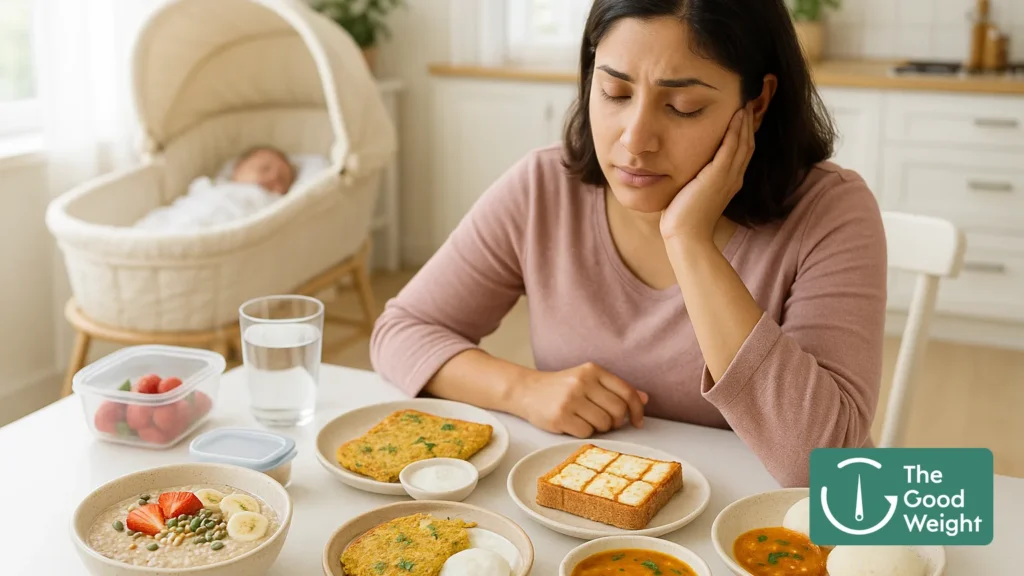
The first few weeks after delivery rarely look like the version of “healthy eating” people imagine. Breakfast gets skipped because the baby is awake, tea and biscuits become a stand-in meal, and appetite can swing from not hungry at all to suddenly starving. On top of that, many new mothers are navigating healing, poor sleep, breastfeeding hunger, and well-meaning family advice that ranges from “eat less to lose the baby weight” to “just eat comfort food for now.”
That is exactly why practical, recovery-friendly nutritious breakfast ideas matter postpartum. The most useful breakfasts are not elaborate, restrictive, or trendy. They are simple meals you can prep ahead, eat with one hand if needed, and rely on for steady energy, protein, fiber, and nourishment while your body recovers. If gradual weight loss is a goal later, this kind of breakfast pattern supports it far better than skipping meals or starting the day underfed.
What makes a postpartum breakfast useful?
A postpartum breakfast does not need to be perfect, but it should do a few jobs well. First, it should include enough protein to support satiety and help reduce the cycle of constant snacking on low-nutrient foods. Second, it should contain fiber from grains, fruit, vegetables, or seeds to support digestion, which can be especially helpful when constipation is an issue after delivery.
It also helps if breakfast includes iron-rich foods or foods that pair well with an iron-supportive diet, especially for women recovering from blood loss during childbirth. Hydration matters too, so meals that naturally go with milk, curd, fruit, or water-rich ingredients are often more useful than dry, ultra-processed options. Finally, the meal must be realistic: quick to assemble, easy to batch prep, and mild enough that a tired mother will actually want to eat it.
9 nutritious breakfast ideas that work in real postpartum mornings
1. Oats with seeds, fruit, and milk
This is one of the easiest postpartum breakfasts because it is soft, quick, and flexible. Rolled oats cooked in milk or water can be topped with chia seeds, flaxseeds, banana, apple, or berries depending on what is available. It offers fiber, slow-digesting carbohydrates, and a simple base for adding more nutrition without much effort.
For postpartum recovery, oats work well because they are easy on the stomach and can help keep energy more even than sugary breakfast foods. Prep a dry mix of oats and seeds in jars for several days at once. In vegetarian homes, add milk, curd, or nut butter for more protein; in non-vegetarian homes, this can stay the same or be paired with a boiled egg on the side if extra protein is needed.
2. Moong chilla with curd
Moong chilla is one of the most practical savory options for women who do not want sweet breakfasts every day. Made from soaked or blended moong dal, it provides plant protein and can be filled with grated vegetables for more fiber and volume. Paired with curd, it becomes a more balanced meal without feeling heavy.
This works postpartum because it is soft, warm, and satisfying while still being simple enough for batch prep. You can soak and blend the batter in advance, refrigerate it for two days, and cook fresh chillas in minutes. In vegetarian households, keep the curd pairing; in non-vegetarian homes, the same base can be served alongside an egg if appetite is higher.
3. Egg bhurji roll
An egg bhurji roll is ideal for one-handed eating, which makes it especially useful during newborn care. Scrambled eggs cooked with onion, tomato, and mild spices can be rolled into a roti for a compact breakfast that travels from plate to sofa without much mess. It brings protein, familiarity, and convenience together.
Postpartum, this kind of meal can help reduce the crash that follows tea-only mornings. Make the bhurji ahead and store it for a day or two, then reheat and roll into fresh rotis. In vegetarian homes, swap the egg filling for paneer bhurji or tofu bhurji; in non-vegetarian homes, the egg version remains one of the most efficient high-protein starts.
4. Daliya bowl with nuts and fruit
Daliya, or broken wheat porridge, is another excellent comfort-style breakfast that can still support recovery and gradual weight management. It can be made sweet with milk, cardamom, nuts, and fruit, or savory with peas and carrots. Either version offers steady carbohydrates and better staying power than refined breakfast snacks.
Its postpartum advantage is that it feels familiar and gentle, which matters when appetite is inconsistent. Cook a larger batch and portion it into containers for the next two mornings. In vegetarian homes, milk and nuts add substance; in non-vegetarian homes, a side of boiled egg can make it more filling for long feeding sessions.
5. Paneer toast
Paneer toast is one of the fastest nutritious breakfast ideas when you need something in under ten minutes. Crumbled paneer mixed with black pepper, chopped vegetables, and a little curd can be spread over whole grain toast or stuffed into a sandwich. It offers a useful combination of protein and convenience.
This works well postpartum because it requires very little cooking skill or attention span. You can prep the paneer mixture the night before and refrigerate it, then toast and assemble in the morning. In vegetarian homes, paneer is the main protein; in non-vegetarian homes, shredded chicken can be used occasionally in the same format if preferred.
6. Overnight oats
Overnight oats are helpful for mothers who know mornings are unpredictable. Oats soaked overnight with milk or curd, plus seeds and fruit, become a ready-to-eat breakfast that needs no morning cooking. It is especially useful on nights when you already know sleep will be broken.
The postpartum benefit is less about novelty and more about removing friction. If breakfast is already waiting in the fridge, you are more likely to eat it before hunger turns into irritability or a random biscuit run. In vegetarian homes, add curd, milk, nuts, or peanut butter; in non-vegetarian homes, pair with an egg if a more filling breakfast is needed.
7. Poha upgraded with peanuts or sprouts
Plain poha can leave you hungry too quickly, but upgraded poha is a very different breakfast. Adding peanuts, roasted chana, sprouts, or peas improves the protein and fiber content while keeping the dish light and quick. Lemon on top can also make the meal feel fresher and more appealing.
This is useful postpartum because it is familiar, affordable, and easy to batch-cook in moderate amounts. You can chop the onions, curry leaves, and vegetables ahead so the morning cooking is faster. In vegetarian homes, peanuts and sprouts do the heavy lifting; in non-vegetarian homes, poha can be paired with a boiled egg if needed.
8. Greek-style curd bowl with fruit and seeds
A curd bowl with fruit, seeds, and a small amount of nuts is one of the simplest no-cook options for mothers who wake up without much appetite. It is cool, easy to digest for many people, and can be assembled in minutes. It also works well as a late breakfast if the first hours of the morning are chaotic.
For postpartum recovery, this can be a useful fallback meal instead of skipping breakfast entirely. Keep washed fruit, roasted seeds, and curd ready in the fridge so the meal takes less than five minutes. In vegetarian homes, this is complete on its own; in non-vegetarian homes, it can still stand alone or be paired with egg toast if hunger is stronger.
9. Idli with sambar and extra protein
Idli is soft, easy to eat, and often tolerated well even on low-appetite mornings. When paired with sambar, it becomes more balanced because the dal and vegetables add protein and fiber that plain idli alone may lack. This makes it a much better choice than eating refined breakfast foods without enough staying power.
Postpartum, idli is especially helpful for women who want something warm but light. Batter can be prepared ahead, and idlis freeze surprisingly well for short-term use. In vegetarian homes, serve with sambar and curd; in non-vegetarian homes, the same meal can be followed with an egg if longer fullness is needed.
A 2-day and 5-day meal-prep system for exhausted mothers
For a 2-day system, keep it extremely small. Prep one cooked breakfast base such as moong chilla batter or poha ingredients, one no-cook option such as overnight oats or curd bowls, and one backup protein such as boiled eggs or paneer mixture. This gives you variety without creating too many containers or decisions.
For a 5-day system, think in components instead of full recipes. Batch-cook oats or daliya, blend chilla batter, boil eggs, crumble paneer, wash fruit, roast seeds, and portion curd. Freeze what holds well, such as idlis or extra rotis, refrigerate what will be eaten first, and keep at least one breakfast that can be assembled in under five minutes. If you are building a more personalized recovery plan, diagnostic tests and products can help guide nutrition decisions when fatigue or appetite issues feel more complicated.
What not to do in the first postpartum weeks
A balanced breakfast is very different from a “diet breakfast.” Juice cleanses, only-coffee mornings, or extremely low-calorie meals may sound like a fast way to lose weight, but they often worsen energy dips, cravings, and inconsistent eating later in the day. For a body that is healing, and possibly breastfeeding, under-fueling in the morning can backfire quickly.
That does not mean breakfast has to be large. It means it should be steady, simple, and nourishing enough to prevent the cycle of skipping meals and then overeating whatever is nearest. If you need support separating evidence-based nutrition from unhelpful noise, even the broader conversations in forums show how common confusion around food advice can be.
FAQ
Does breastfeeding make morning hunger stronger?
It often can. Many women notice increased hunger or thirst while breastfeeding, especially after night feeds. A breakfast with protein, fiber, and fluids usually works better than trying to ignore that hunger.
Is skipping breakfast always a problem?
Not always, but in the early postpartum phase it often leads to low energy, irritability, and random snacking later. If a full meal feels unappealing, even a smaller option like curd with fruit or overnight oats is usually better than nothing.
Should weight loss be the goal in the first month?
For most women, recovery, nourishment, and eating consistently are the better priorities in the first few weeks. Gradual weight loss can follow from a more stable routine, but aggressive restriction is rarely helpful this early.
Save this breakfast list, send it to the person who helps with groceries, and choose just two or three options to repeat this week. Postpartum nutrition works best when it is simple enough to follow in real life. If you want a more personalized, recovery-aware plan, book a review with The Good weight to turn these nutritious breakfast ideas into a sustainable routine.