
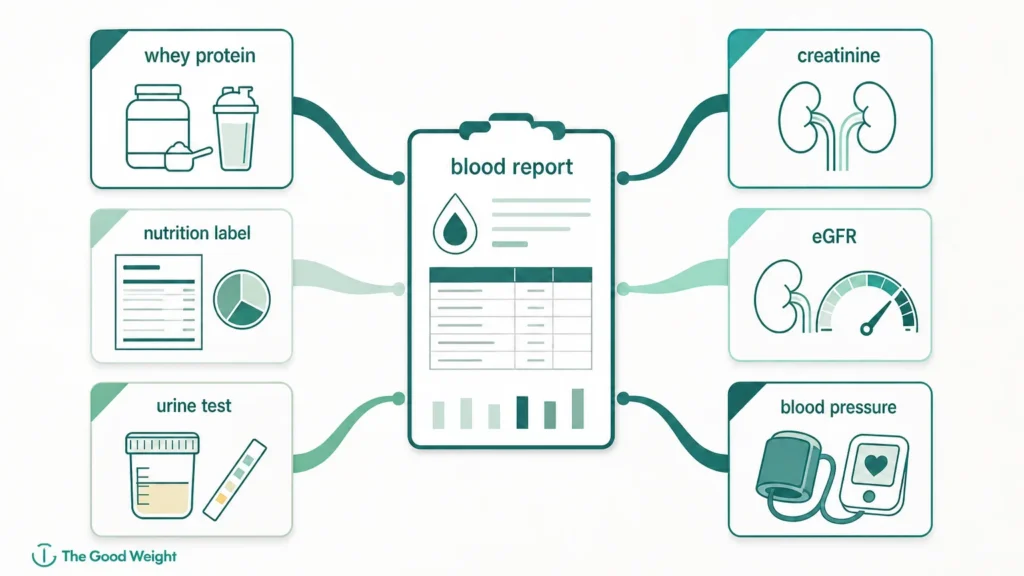
You have started using whey protein, perhaps alongside gym sessions or a weight-management plan, and your blood report now flags creatinine as high. Searching online can leave you caught between two claims: that protein powder damages kidneys, or that an abnormal result is nothing to worry about. Neither conclusion can safely be drawn from the timing alone. The useful next step is to gather the details that help a clinician interpret your result, rather than trying to diagnose the cause yourself.
This checklist is designed to prepare you for that conversation. It explains what to bring, which questions to ask, and what to avoid while awaiting advice. It does not determine whether whey is suitable for you or replace an individual medical assessment. An elevated creatinine result deserves clinical context – not panic, dismissal, or an abrupt nutrition overhaul.
What can and cannot be concluded from one creatinine result?
Creatinine is a waste product associated with normal muscle activity that your kidneys remove from the blood. A blood creatinine measurement helps clinicians assess kidney filtration, but it is not a complete kidney-health assessment by itself. The National Kidney Foundation explains that creatinine levels can also be influenced by muscle mass, exercise, diet, certain medicines and supplements. These factors are reasons to investigate the context, not reasons to assume that an elevated result is harmless.
A result above the laboratory’s reference range does not, on its own, establish the cause or show whether a change is temporary or persistent. Your clinician may consider previous results, symptoms, blood pressure, medical history and other investigations. For example, chronic kidney disease requires qualifying kidney abnormalities to be present for more than three months. That definition does not mean you should wait three months before seeking advice: a new or rapidly changing result may require prompt assessment.
It is also important to distinguish whey protein from creatine. Whey is a protein supplement, while creatine is a different supplement that may appear in a separate product or a blended sports formula. Recording exactly what you take is more useful than writing “gym supplements.” Using whey before a high result does not prove that whey caused it, and online discussions cannot establish whether your kidneys are filtering normally.
What details should I write down before speaking with a clinician?
Bring the complete report rather than a cropped image of the flagged number. The units, laboratory reference range, other results and previous measurements can all help the clinician understand what has changed. Use the printable checklist below to record what actually happened before the test, without trying to make your routine sound healthier or more consistent. This is appointment preparation, not a method for interpreting or changing your results independently.
-
Test details: Record the blood-test date, the creatinine value, its units and the laboratory reference range. Include the estimated glomerular filtration rate, or eGFR, if reported, and note why the test was ordered. -
Recent exercise: Write down your usual training and any unusually strenuous sessions before the blood draw. Mention heavy lifting, endurance events, significant muscle soreness, injury or a recent increase in training. -
Hydration and recent illness: Describe your usual drinking routine and anything unusual around the test, such as heavy sweating, heat exposure, vomiting, diarrhoea or difficulty drinking. Include any prescribed fluid restriction rather than assuming that more water is appropriate. -
Whey and other supplements: Bring photographs of the packaging, ingredient list and nutrition label. Record the serving size, scoops used, frequency, start date and any other powders, creatine products, pre-workouts or herbal preparations. -
Regular foods and drinks: Describe a few representative days of meals, snacks and shakes, including approximate portions. Note recent dietary changes and whether shakes have been added to meals or are replacing them. -
Medicines: List prescription medicines, over-the-counter products and recent changes. Include painkillers, antibiotics, vitamins and traditional remedies, with doses where possible; do not stop prescribed treatment to prepare for the appointment. -
Previous reports and medical history: Gather earlier creatinine, eGFR, urine-test and blood-pressure results if available. Mention diabetes, hypertension, kidney problems, kidney stones, recent hospital treatment and a family history of kidney disease. -
Symptoms and timing: Record changes in urination, swelling, nausea, breathlessness, unusual fatigue or other new symptoms, including when they began. Also note if you feel well, because the absence of symptoms should be part of the history – not a reason to ignore the report.
If you do not know an exact quantity or date, mark it as approximate. A photograph of your supplement container is often more reliable than recalling its name from memory. Similarly, an honest account of an irregular meal pattern is more useful than a newly created “ideal” diet diary. You do not need perfect records before contacting your clinician.
Which questions can I ask about the rest of my kidney-health assessment?
Creatinine is commonly used to calculate eGFR, an estimate of how well the kidneys filter blood. However, creatinine-based eGFR has limitations, including when muscle mass differs substantially from average. Clinicians may also assess urine for albumin, a protein that can help identify kidney damage. The right combination of tests depends on your history and findings, rather than a standard package everyone needs.
Use these questions as an appointment template:
- “How does this result compare with my previous results, and how urgently does it need follow-up?”
- “What factors in my history, medicines, exercise or supplement use are relevant?”
- “What does my eGFR mean alongside the creatinine result?”
- “Would a repeat blood test help, and what preparation instructions should I follow?”
- “Is a urine albumin-to-creatinine ratio or another urine test appropriate?”
- “Would a cystatin C-based assessment add useful information in my situation?”
- “Should a dietitian review my total protein intake from meals and supplements?”
- “Should I change anything now, and which symptoms should prompt urgent help?”
Ask for a clear follow-up plan before the appointment ends. This should cover whether testing is needed, when results will be reviewed and whom to contact if you become unwell. If repeat testing is arranged, follow the clinician’s preparation instructions rather than online strategies intended to lower the number. The aim is an accurate assessment, not a better-looking report.
What should I avoid doing while I wait for professional advice?
Uncertainty can make immediate action feel reassuring, especially when you have worked hard on your fitness or nutrition. However, drastic changes may create new problems without explaining the original result. The safest approach is to contact the clinician who ordered the test and ask whether any interim changes are needed. An appointment checklist should never delay urgent assessment.
Use this safety checklist while arranging advice:
- Avoid panic-driven nutrition changes. Do not suddenly eliminate protein foods, replace meals with restrictive “kidney diets,” or increase supplements to compensate. Ask whether your specific whey product should be paused or adjusted.
- Do not stop prescribed medicines yourself. Report everything you take and request guidance about any medicine or supplement that concerns you.
- Do not force excessive fluids. Drinking large volumes to “flush out” creatinine is not a treatment plan. Follow existing fluid instructions and ask what is appropriate for your circumstances.
- Avoid detox teas, cleanses and unverified kidney remedies. Adding another product makes the clinical picture more complicated and does not establish why creatinine is elevated.
- Do not rely on one social-media post. Someone else’s result, training routine or supplement response cannot determine what your result means.
- Do not try to manipulate a repeat test. Follow the requested preparation rather than deliberately changing food, fluids or exercise to produce a preferred number.
Seek urgent medical assessment if you develop markedly reduced urine output, new or worsening swelling, persistent vomiting or feel significantly unwell. Severe breathlessness, chest pain, confusion, or dark urine with severe muscle pain after strenuous exercise warrant emergency assessment. Follow any urgent instructions already given by your clinician or laboratory, even if you feel well. Kidney problems can sometimes occur without obvious symptoms, so feeling normal does not replace follow-up.
How can a weight-management plan include protein without becoming supplement-led?
A nutrition review should start with your overall health and eating pattern, not with choosing a powder. For someone managing weight, the conversation may include regular meals, appetite, activity, strength goals and whether current intake is practical to sustain. The Good Weight’s discussion of a balanced high-protein eating pattern for weight management offers broader meal-planning context, but an abnormal kidney-related result needs individualized advice. A general nutrition article cannot set your protein target.
| Area to review | Supplement-led approach | Clinician- or dietitian-guided approach |
|---|---|---|
| Regular meals | Adding shakes without reviewing existing intake | Considering meals, snacks, variety and total intake together |
| Activity | Matching scoops to gym sessions automatically | Reviewing training demands, recovery and current health |
| Body-composition goals | Treating more protein as automatically better | Balancing weight goals, strength, adequate nutrition and safety |
| Medical history | Following a generic online protein target | Considering kidney assessment, diabetes, blood pressure and medicines |
| Convenience | Making powder the default meal solution | Deciding whether a supplement fills a genuine practical gap |
| Follow-up | Changing brands after one abnormal result | Reviewing findings and adjusting the plan with professional guidance |
Whey may be a convenient option for some people, but it does not need to be the centre of a nutrition plan. Regular foods can also be discussed, including pulses, dairy, eggs, fish, meat or soy according to preferences and clinical needs. The Good Weight’s ideas for protein-rich vegetarian Indian meals can support that discussion without becoming a prescription. Any decision about protein amount, sources or supplements should reflect your assessment rather than a universal gram target.
Bring the report, not a conclusion
A high creatinine result while using whey protein is a reason for a clinical conversation, not proof of a particular diagnosis or cause. Bring your full laboratory reports, previous results, supplement labels and a realistic account of meals, medicines and exercise. Ask what needs attention now and what follow-up will clarify the picture. Avoid making major nutrition changes without individualized advice.
For support in Chennai, schedule a doctor-led metabolic and nutrition review at The Good Weight. Bring your lab reports and current supplement details so the consultation can consider your weight-management goals alongside your medical history. The aim is a practical, personalized plan – not a supplement-first answer. If urgent assessment has been advised, seek that care rather than waiting for a routine nutrition appointment.