
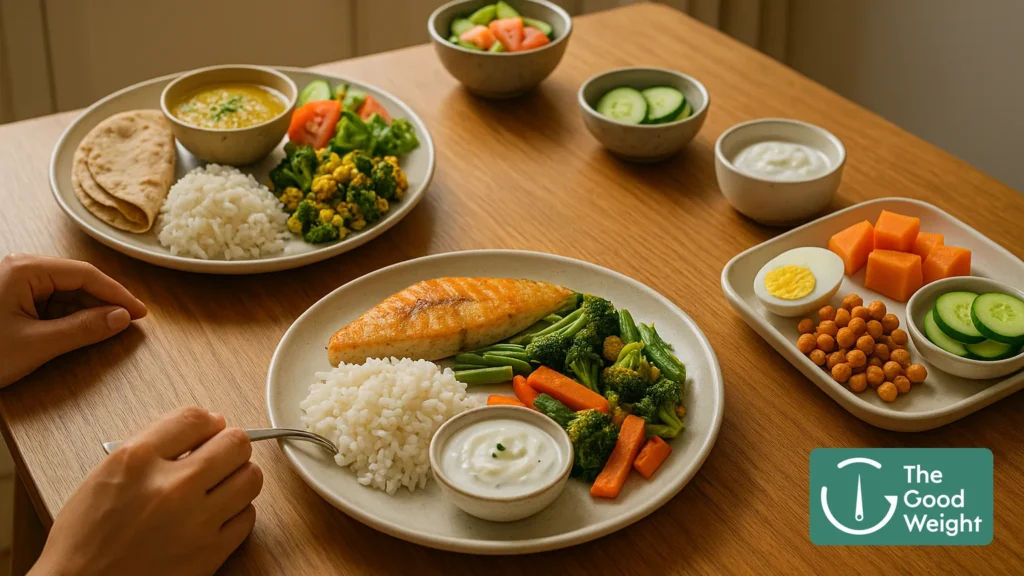
You can eat a lunch that looks “healthy” on paper and still spend the whole afternoon thinking about biscuits.
That’s the part many people don’t say out loud. They cut calories, switch to dry toast, plain salads, fruit bowls, and tiny portions, then act surprised when they’re ravenous by 5 p.m. A few strict weekdays later, the weekend turns into a rebound. One dinner out becomes an entire “I’ll restart Monday” cycle. Not because they lack discipline. Because the food plan was flimsy from the start.
When people search for low calorie diet foods, they’re often not asking for the lowest number on a label. They’re asking a better question: what can I eat that actually helps with weight loss without making me hungry, bored, or obsessed with my next meal? I’ve found that this is where many diets quietly fail. The calories may drop, but fullness drops faster.
The way I see it, the fix isn’t starvation dressed up as wellness. It’s meal structure. Meals that use protein, fiber, water-rich foods, and enough texture to feel like real food. Research on lower calorie density eating patterns and portion-friendly approaches to weight loss points in the same direction: people tend to do better when meals have volume and satisfaction, not just fewer calories.
So if you’re tired of bland weight-loss meals, good. That frustration is useful. It usually means you’re ready to stop eating “less” and start eating smarter.
Why low-calorie diets fail even when people follow them
A lot of weight-loss plans break down in a very predictable way. Breakfast is tiny. Lunch is respectable but joyless. The afternoon gets foggy. Then dinner becomes huge, snacks appear from nowhere, and the day’s calorie target falls apart in two hours. I’m not 100% sure people fail diets. Often, diets fail people.
Hunger is not a small problem
Hunger changes behavior fast. A bowl of cucumber and lettuce may be low in calories, but if it has barely any protein, little fiber variety, and no staying power, it won’t hold you for long. That matters because satiety is one of the biggest drivers of consistency. A classic review on satiety found that foods differ sharply in how filling they are calorie for calorie, with potatoes, oats, fruit, and protein-rich foods tending to outperform airy snack foods and sweets on fullness scores in research on the satiety index of common foods.
And yes, that gap shows up in real life. A 150-calorie snack that disappears in six bites can leave you hunting for more. A 250-calorie mini-meal with curd, fruit, and chia seeds may keep you steady for hours. Big difference.
Bland food wears people down
Then comes the boredom problem. Repetitive “diet food” strips away crunch, warmth, spice, creaminess, and comfort. People can tolerate that for three days, maybe ten. After that, the plan starts feeling like punishment. Food doesn’t need to be hyper-palatable to be enjoyable, but it does need contrast. Soft plus crunchy. Cool plus warm. Fresh plus savory.
Indian meals actually make this easier when they’re built well. A bowl with dal, sautéed vegetables, curd, and salad has more texture and interest than another limp salad with bottled dressing. So the issue isn’t that lower-calorie eating is doomed. It’s that many people choose foods that don’t feel worth repeating.
The weekend rebound is often a design flaw
The more I looked at this pattern, the more I realized weekday under-eating is often the setup for weekend overeating. Tiny breakfast, skimpy lunch, “saving calories,” skipping carbs, and pretending coffee kills hunger – that script nearly always backfires. Not because weekends are magical. Because the body and brain push back after days of under-fueling.
That’s why steady meals matter more than performative restraint. At The Good weight, that’s also why a sustainable diet and weight loss approach has to feel livable on a Wednesday afternoon, not just ideal in a spreadsheet.
The satiety formula behind better low calorie diet foods
Here’s a clean definition worth keeping:
Satiety means how full and satisfied a food keeps you after eating it, not just how low its calories are.
People often count calories as if all calories behave the same in the body. They don’t. Meal composition changes fullness, cravings, and how easy it feels to stop eating when you’ve had enough. Research on high-protein diets and satiety during weight loss and work on water-rich, low-energy foods both point toward the same idea: fullness rises when meals combine protein with fiber and volume.
Four parts matter most
1. Protein
Eggs, Greek yogurt, curd, paneer, tofu, chicken, fish, dal, and beans help slow the “I’m hungry again already” effect. Protein tends to be more filling than refined starch or sugary snacks, and it also helps protect lean mass during weight loss.
2. Fiber
Vegetables, fruit, oats, legumes, seeds, and whole grains add bulk and slow digestion. Fiber also stretches the meal out in the stomach, which helps many people feel physically satisfied.
3. Food volume
Water-rich foods matter more than people think. Soups, vegetables, fruit, yogurt bowls, and cooked dals can take up real space on the plate without packing huge calories. That’s one reason low-calorie foods with high water and fiber content tend to feel more generous than processed snack foods with the same calories.
4. Meal composition
A meal works better when those parts show up together. Oats alone may not hold you. Oats with yogurt and fruit might. Rice alone may leave you searching for more. Rice plus dal, vegetables, and a protein side feels very different an hour later.
Anyway, point being: low calorie does not need to mean tiny. It should mean strategic.
Smart swaps by meal that feel realistic, not miserable
You don’t need a whole new food identity. You need a few smart exchanges that change satiety without making daily life weird.
Breakfast swaps
If breakfast is tea and two biscuits, you’re starting the day in a hole. Swap that for plain Greek yogurt or thick curd with fruit and seeds, or two eggs with sautéed vegetables and one slice of toast. If you like Indian breakfast, try a vegetable besan chilla with curd instead of a large serving of fried snacks. Upma can work too, but I’d pair a smaller portion with extra vegetables and a side of curd.
Another good move: replace sugary cereal with oats cooked in milk or a high-protein curd bowl. Oats rank well for fullness, and pairing them with protein keeps breakfast from vanishing too quickly. You’re still eating carbs. Just not naked carbs.
Lunch swaps
A sad salad often fails because it’s all raw volume and no anchor. Swap a plain salad for a grain-and-protein bowl: mixed vegetables, chickpeas or grilled chicken, curd-based dressing, and a small portion of rice or roti. If you eat Indian lunches, try one or two rotis with dal, sabzi, and salad instead of four rotis with little protein.
Rice doesn’t need to disappear either. A measured serving of rice with rajma, chana, sambar, or grilled fish often works better than trying to white-knuckle your way through soup alone. According to Mayo Clinic guidance on weight-loss eating patterns, meals built around vegetables, fruit, and sensible portions tend to be easier to sustain than restrictive plans built on avoidance.
Snack swaps
This is where many “healthy” diets quietly unravel. Granola bars, fruit juice, and handfuls that turn into half a packet are common traps. Better snack swaps include roasted chana, apple with peanut butter, curd with cucumber, boiled eggs, or a small paneer bowl with spices.
If you crave crunch, air-popped popcorn beats fried namkeen most days because volume changes the experience. You get more bites. More chewing. More time for your brain to catch up. Honestly, that matters.
Dinner swaps
At dinner, people often swing between two extremes: very heavy takeout or a comically light soup. Both can backfire. A better plate looks like this: grilled fish or tofu, a big serving of cooked vegetables, dal or curd, and a moderate serving of rice or roti. If you want comfort food, make it structured comfort food.
For Indian dinners, think tandoori chicken with kachumber and dal, paneer bhurji with sautéed vegetables and one phulka, or khichdi with extra vegetables plus curd. The goal isn’t to make dinner tiny. It’s to make it filling without making it calorie-dense.
Three sample plates that work in real life
Sometimes theory is the problem. People don’t need more nutrition vocabulary. They need to see the plate.
1. Vegetarian plate
Start with one cup of dal or chana masala. Add one phulka or a modest serving of rice. Fill the rest of the plate with a cooked vegetable like beans, cauliflower, or lauki, plus cucumber-onion salad and a bowl of curd. You get protein, fiber, water-rich volume, and enough carbs to keep the meal from feeling stingy.
I personally prefer cooked vegetables over giant raw salads at least once a day because they’re easier for many people to eat in larger amounts. And they feel more like dinner. That counts for something.
2. Mixed-diet plate
Use grilled chicken, fish, or egg bhurji as the protein base. Add one serving of rice or two small rotis, a cup of sabzi, and curd or raita. If you want more volume, start with a broth-based soup or add a side salad with lemon and salt.
The result is a plate that feels normal. Not “diet” food. Just a smarter version of everyday food. Research on energy density and food intake patterns supports the common-sense idea that people often eat a fairly steady weight of food, so lowering calorie density can help reduce energy intake without shrinking the plate too much.
3. Ultra-busy-day plate
Okay, not exactly a plate. More like an emergency assembly kit. Keep one high-protein yogurt or curd, one fruit, one boiled egg or roasted chana pack, and one easy vegetable option such as baby carrots, cucumber, or a quick soup. If dinner is chaotic, build around rotisserie chicken, ready dal, frozen vegetables, or paneer with spices.
Busy days are where plans crack. So build for friction, not perfection. At The Good weight’s diet-based weight loss page, the idea is similar: make the better choice easier to repeat.
What makes low-calorie eating miserable
A lot of misery comes from four mistakes that sound disciplined but act like sabotage.
1. Drinking too many calories
Juices, fancy coffees, sweetened smoothies, and “healthy” shakes can slide into the day without creating much fullness. Whole fruit usually beats juice because chewing and fiber change satiety. USDA data also shows many households consume calories from beverages and convenience foods in ways that add up fast in national food spending patterns and diet quality trends.
2. Cutting carbs so hard that cravings explode
People love to blame carbs for everything. But removing them entirely often makes meals harder to stick with, especially if protein is low and portions are tiny. A small serving of rice, oats, fruit, or roti can make a meal feel complete. The thing is, “complete” meals are easier to repeat.
3. Under-eating protein
This one shows up constantly. Toast for breakfast, salad for lunch, soup for dinner. Then late-night cravings hit and people think their willpower vanished. More often, the day was just protein-poor.
4. Eating portions that are too small to be believable
If your lunch looks like a side dish, your body notices. Then evening hunger arrives like a bill collector. Not ideal. A better move is to make meals larger in volume with vegetables, soups, salads, dals, and lean proteins while keeping calorie-dense extras in check. Even common-sense calorie density approaches keep coming back to the same point: eat more foods that fill the plate without overloading calories.
A simple process for rebuilding one meal
If your current plan feels awful, don’t redo everything tonight. Start with one meal and run it through this filter:
- Pick a protein anchor – eggs, curd, Greek yogurt, dal, beans, tofu, paneer, chicken, or fish.
- Add one fiber-rich side – fruit, sabzi, salad, oats, or legumes.
- Add volume – soup, cucumber, tomatoes, leafy vegetables, or cooked veg.
- Keep one sensible carb – roti, rice, toast, oats, or fruit.
- Cut one stealth calorie source – sugary drinks, creamy dressing, large fried side, or random munching.
- Ask the blunt question – would this meal keep me full for 3 to 4 hours?
That last question matters more than people expect. If the answer is no, the calories may be low but the plan is weak.
For people who want more structure, a doctor-led food plan or even a ready diet kit can remove some of the guesswork. Still, the plate logic stays the same.
Frequently asked questions
Is fruit too sugary for weight loss?
No. For most people, whole fruit is one of the better low-calorie food choices because it brings fiber, water, and chewing. Mangoes and bananas still fit. Portion size matters, but banning fruit usually creates more fear than progress.
Are salads enough for a meal?
Sometimes, but not the kind most people mean. A meal salad needs a real protein source, enough volume, and some texture. Lettuce with a few cucumber slices won’t do much. Add beans, chicken, paneer, tofu, eggs, or thick curd, and it becomes a different meal.
Do soups help with fullness?
Often, yes – especially broth-based or vegetable-heavy soups. Water-rich first courses may help reduce total calorie intake, and that pattern has shown up in research on low-energy-dense foods and satiety. Cream-heavy soups are another story, so ingredient choices still matter.
How do I handle cravings without undoing the day?
First, check whether you’re under-eating at meals. A lot of cravings are delayed hunger wearing a different outfit. If the craving is real and specific, have a planned portion and pair it with protein when possible. Chocolate after dinner? Fine. Eat two squares with Greek yogurt or after a full meal, not on an empty stomach at 4 p.m.
Are nutrient-dense foods always low in calories?
No. Nuts, seeds, and avocado are nutritious, but they’re more calorie-dense. Foods like leafy greens, berries, mushrooms, broth-based soups, and many vegetables give you more volume per calorie, while nutrient-dense food lists remind us that healthfulness and low calorie are not always the same thing.
Strict weekday eating followed by weekend overeating doesn’t mean you’re broken. It usually means your meals aren’t doing enough work. Start with one upgrade: add protein to breakfast, make lunch larger in volume, or stop trying to survive on tiny dinners. Then watch what happens to your hunger.
And if you keep getting stuck in the same loop, get help building a plan that fits your routine, medical needs, and food preferences. Learn more at thegoodweight.com.