
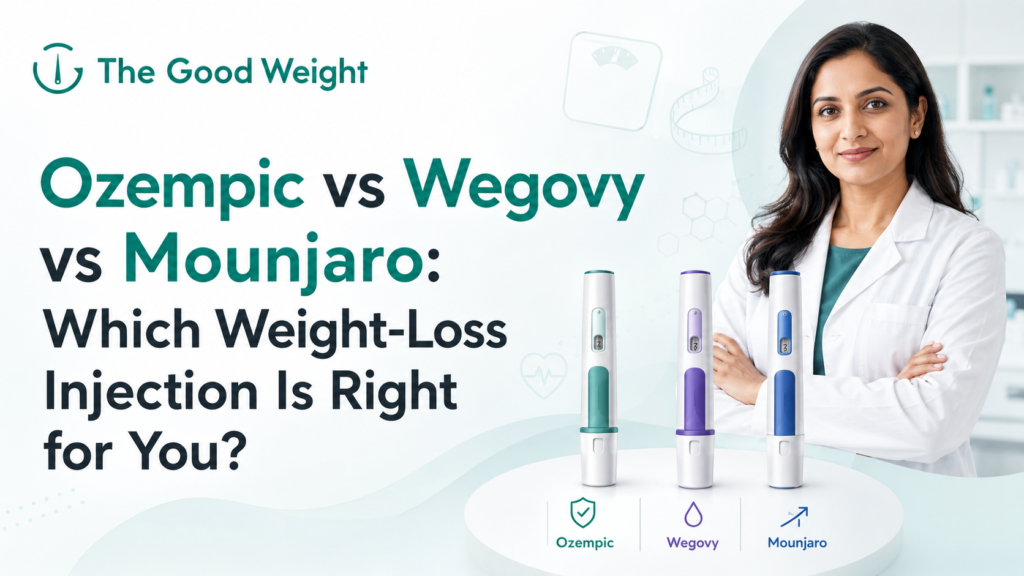
Weight-loss injections have revolutionized the way obesity and Type 2 diabetes are managed, with some of the most popular drugs today being discussed for their ability to promote weight loss.
Weight-loss injections have changed the landscape of obesity and Type 2 diabetes treatments, with certain drugs like Ozempic, Wegovy, and Mounjaro being among the most talked about medications today. These prescription drugs are used to manage chronic metabolic disorders, and they are not appropriate for all people, although they may be linked to weight loss.
When considering the options of Ozempic vs Wegovy vs Mounjaro, it is crucial to grasp the differences between them. While all three can help manage appetite and promote metabolic health, they differ in their active ingredients, approved uses, efficacy, side effects and target audience.
This guide will outline the important distinctions between these drugs, how they work, side effects, cost, and the importance of choosing the correct drug based on your metabolic health, not a one-size-fits-all treatment.
Understanding GLP-1 Medications
It’s important to understand how they control hunger and blood sugar to understand the differences between Ozempic, Wegovy, and Mounjaro.It is helpful to understand how they work to regulate hunger and blood sugar to understand the differences between Ozempic, Wegovy, and Mounjaro.
Incretin hormones are released after eating and communicate with the brain and pancreas to manage appetite, insulin production and digestion. One of these hormones, called GLP-1 (glucagon-like peptide-1), can help reduce blood sugar, slow the emptying of the stomach and make people feel full. Ozempic and Wegovy are drugs that mimic this hormone, which can help lower appetite and food cravings.
These medications are meant to complement and not replace good lifestyle habits. They work best when used in conjunction with balanced nutrition, regular exercise and continuous medical oversight.
What Is Ozempic?
Semaglutide is the active ingredient in Ozempic of the medication used for weight loss called Ozempic. A GLP-1 receptor agonist that is typically used in adults with type 2 diabetes to help control blood sugar. It is administered by injection once a week.
Ozempic is known for weight loss, but it’s primarily used for diabetes treatment. As an extra benefit, semaglutide can help people lose weight by making them feel full with less food, and by slowing the emptying of their stomachs.
A healthcare professional may consider the use of Ozempic for adults with type 2 diabetes, particularly when they are also at risk for overweight, insulin resistance or cardiovascular conditions.
But it should not be used on a whim or just because it’s popular on the net. It is a prescription drug and should be used under doctor’s supervision.
What Is Wegovy?
The active ingredient of Wegovy is the same as that of Ozempic. The difference is that Wegovy is a weight management drug specifically formulated and dosed for people with chronic weight management who qualify for the treatment.
Wegovy may also cause more weight loss than Ozempic, and cause more appetite suppression because it is prescribed at a higher maintenance dose. It does this by suppressing appetite, boosting satiety after eating and decreasing stomach emptying, all without using willpower alone.
Wegovy may be used in adults with obesity or adults who are overweight and have a weight-related health condition like type 2 diabetes, high blood pressure, sleep apnoea or abnormal cholesterol level. Weight should never be the only criterion used to assess suitability.
What Is Mounjaro?
Mounjaro contains tirzepatide. Mounjaro is different from Ozempic and Wegovy, which target primarily GLP-1 receptors, because it targets both GLP-1 and GIP receptors. This dual-incretin action can help to control blood sugar, curb appetite and help many qualified patients lose significant amounts of weight.
The drug Mounjaro has been marketed as a diabetes medication, but it has recently garnered significant attention for its potential in weight loss. Tirzepatide works on two hormone pathways that control appetite and glucose levels, which could make it more effective than GLP-1 alone for some people.
This is not to imply that Mounjaro is the best choice for all individuals. The choice of treatment will depend on the level of diabetes, severity of obesity, medical history, tolerance of side effects, availability, cost and long term goals.
Ozempic vs Wegovy vs Mounjaro: Key Differences
| Feature | Ozempic | Wegovy | Mounjaro |
| Active ingredient | Semaglutide | Semaglutide | Tirzepatide |
| Hormone pathway | GLP-1 | GLP-1 | GLP-1 + GIP |
| Main treatment focus | Type 2 diabetes | Chronic weight management | Type 2 diabetes and metabolic weight support where clinically appropriate |
| Dosing style | Once-weekly injection | Once-weekly injection | Once-weekly injection |
| Weight-loss potential | Moderate to significant | High | Often higher in clinical studies |
| Best suited for | Diabetes-focused care | Weight-management care | Diabetes/metabolic care with significant weight concern |
| Approximate four-week medicine cost in India | ₹5,660–₹9,100 | ₹5,660–₹16,400 | ₹13,125–₹25,781 |
The right medication is not simply the one with the highest average weight loss in studies. It is the one that matches your medical needs, health risks, treatment tolerance and long-term plan.
How Effective Are Ozempic, Wegovy and Mounjaro for Weight Loss?
A common question is, “Which medication helps you lose the most weight?” While clinical trials provide useful guidance, individual results vary based on factors such as metabolic health, insulin resistance, lifestyle, medication adherence, and underlying medical conditions.
Ozempic can support meaningful weight loss, particularly in people with Type 2 diabetes. However, because it is primarily approved for diabetes management, it should not be directly compared with medications specifically studied for obesity treatment.
Wegovy has demonstrated significant weight-loss benefits. In the STEP 1 trial, participants receiving semaglutide 2.4 mg alongside lifestyle changes lost an average of 14.9% of their body weight over 68 weeks. (Src: New England journey of medicine)
Mounjaro has shown even greater results. In the SURMOUNT-1 trial, participants receiving tirzepatide achieved average weight reductions of up to 20.9% over 72 weeks. (Src: New England journey of medicine)
Benefits Beyond Weight Loss
These medications are extensively talked about for weight loss, but they can have benefits that go beyond the weighing scale.
GLP-1 and dual-incretin therapies can help control blood sugar levels, decrease appetite, reduce cravings and may help regulate metabolism for eligible people. Weight loss can also help alleviate mobility issues, sleep disturbances, energy fatigue and joint pain for those who have obesity-related conditions.
But, the success of treatment should not be based solely on the scales. A healthy medical weight loss program also evaluates waist circumference, body composition, blood sugar, blood pressure, cholesterol, liver function, sleep, energy levels, hunger and overall quality of life.
What Are the Common Side Effects?
As with any prescription drug, Ozempic, Wegovy and Mounjaro may have side effects.
Side effects include:
- Nausea
- Vomiting
- Diarrhoea
- Constipation
- Bloating
- Indigestion
- Reduced appetite
- Abdominal discomfort
These symptoms may be caused by medications that slow stomach emptying and interfere with hormones that regulate appetite. Side effects diminish as the body adapts to the treatment.
Typically, doctors start with a low dose and then boost it over time. This is called dose titration and helps to make it more tolerable. Smaller meals, avoiding excessive fats, chewing slowly and drinking plenty of water can also help to ease digestion.
If symptoms are severe, persistent or unusual, medical advice should be taken immediately.
Can Ozempic, Wegovy or Mounjaro Cause Hair Loss?
Hair loss is another concern that has gained attention with the increasing use of GLP-1 medications. However, current evidence suggests that hair loss is not a direct side effect of Ozempic, Wegovy, or Mounjaro. Instead, it is more commonly associated with rapid weight loss, reduced calorie intake, nutritional deficiencies, or the physical stress that the body experiences during significant weight reduction.
According to Dr. Neha Shah, Founder and Bariatric Surgeon at The Good Weight, most cases of hair shedding seen during weight-loss treatment are temporary and improve once nutritional intake is optimized and weight loss stabilizes. A balanced, protein-rich diet and appropriate medical follow-up can help minimize this risk.
Read more @ can-using-ozempic-cause-your-hair-to-fall-out-experts-explain (NDTV)
Are There Any Serious Risks?
Although serious complications are uncommon, they can happen. These medicines may not be suitable for people with certain medical histories.
Possible serious risks include pancreatitis, gallbladder problems, dehydration from prolonged vomiting, kidney stress, severe gastrointestinal symptoms and allergic reactions. People with a personal or family history of medullary thyroid carcinoma or Multiple Endocrine Neoplasia syndrome type 2 are generally advised to avoid these medications.
These medicines should also be carefully reviewed in people who are pregnant, planning pregnancy, breastfeeding, have recurrent pancreatitis, severe gastrointestinal disease or complex medication needs.
This is why medical supervision is essential. A proper assessment helps determine whether the benefits outweigh the risks for individual.
Who May Benefit from These Medications?
Ozempic, Wegovy or Mounjaro may be considered for adults who have obesity, overweight with weight-related health problems, type 2 diabetes, insulin resistance or metabolic health concerns. However, eligibility is not based only on weight.
A clinician may assess:
- BMI and waist circumference
- Blood sugar and HbA1c
- Insulin resistance
- Blood pressure
- Cholesterol levels
- Liver health
- PCOS or hormonal concerns
- Sleep quality
- Eating patterns
- Existing medications
- Previous weight-loss attempts
- Risk of side effects
Some people may benefit from medication. Others may need nutrition therapy, behaviour support, sleep correction, hormonal treatment or a different medical approach before medication is considered.
Who Should Avoid These Medications?
These medications may not be suitable for everyone. They are generally avoided or used with caution in people who:
- Are pregnant or planning pregnancy
- Are breastfeeding
- Have a personal or family history of medullary thyroid carcinoma
- Have Multiple Endocrine Neoplasia syndrome type 2
- Have recurrent pancreatitis
- Have severe gastrointestinal disorders
- Have had a serious allergic reaction to similar medications
- Cannot attend regular medical follow-up
Your healthcare provider should also review your current medicines to reduce the risk of interactions or complications.
Why Personalized Metabolic Care Matters
While medications such as Ozempic, Wegovy, and Mounjaro have transformed obesity treatment, they are only one part of a successful weight-management plan. Sustainable results depend on understanding the underlying factors contributing to weight gain, whether they involve insulin resistance, hormonal imbalances, PCOS, sleep disorders, stress, or other metabolic conditions.
As Dr. Neha Shah, Founder and Bariatric Surgeon at The Good Weight, explains in her News18 feature, the future of obesity care is moving beyond simply prescribing weight-loss medications. It is increasingly focused on lifestyle science, metabolic health, and personalized medical treatment, where every patient’s plan is tailored to their unique health profile rather than following a one-size-fits-all approach.
Read more @ From Ozempic to Lifestyle Science: The Changing Face of Weight Management (News18)
Common Myths About Ozempic, Wegovy and Mounjaro
As these medications have become more popular, several myths have also spread.
One common myth is that these injections work without lifestyle changes. In reality, they work best when combined with nutrition, movement, sleep improvement and behavioural support.
Another myth is that everyone loses the same amount of weight. Clinical trials show average results, but individual outcomes vary widely. Genetics, insulin resistance, stress, hormones and consistency all influence results.
Some people also believe that higher doses always mean faster results. This is not true. Doses are increased gradually to reduce side effects. Increasing too quickly can worsen nausea, vomiting and discomfort without improving long-term outcomes.
Another major misconception is that these medicines permanently cure obesity. Obesity is a chronic metabolic condition for many people. Medication may help control appetite and support weight loss, but long-term success requires a maintenance strategy.
When Should You See a Doctor?
You should consider consulting a healthcare professional if you:
- Have obesity or overweight with health concerns
- Have type 2 diabetes and struggle with weight
- Suspect insulin resistance
- Have PCOS and persistent weight gain
- Have fatty liver disease
- Have tried several diets but regained weight
- Are considering Ozempic, Wegovy or Mounjaro
- Are already taking one of these medicines and experiencing side effects?
A medical evaluation can help you understand whether medication is suitable, which option may be safer and what else needs to be addressed for sustainable results.
Finding the Right Path for You
While popular treatments like Ozempic, Wegovy, and Mounjaro have transformed obesity and type 2 diabetes care, sustainable weight management isn’t about choosing the trendiest option.
Real, lasting success requires looking beyond clinical trial percentages to understand your unique metabolic health, medical history, and long-term goals. Instead of just asking how to lose weight, true progress starts by uncovering why your body is holding onto it.
At The Good Weight, we pair doctor-led care with comprehensive metabolic assessments to design personalized treatment plans that address the causes of weight gain. If you are ready for a clinician-led, science-backed approach to your health, book a consultation today at our Chennai (OMR) or Bengaluru (HSR) locations.
Frequently Asked Questions
Which is better for weight loss: Ozempic, Wegovy or Mounjaro?
Clinical studies suggest that tirzepatide, the active ingredient in Mounjaro, has shown the highest average weight loss, followed by semaglutide at weight-management doses. However, the best choice depends on your medical history and metabolic health conditions.
Is Wegovy the same as Ozempic?
Both contain semaglutide, but they are not the same product. Ozempic is mainly used for type 2 diabetes, while Wegovy is designed for chronic weight management at a different dose pathway.
Can someone without diabetes take these medications?
Some people without diabetes may be eligible for weight-management medication if they meet medical criteria. This should always be decided by a qualified healthcare professional.
Will I regain weight after stopping?
Weight regain can happen if treatment is stopped without a maintenance plan. Long-term weight management requires ongoing attention to nutrition, activity, sleep, behaviour and underlying metabolic issues.
Can these injections replace diet and exercise?
No. They support weight management but do not replace healthy eating, physical activity, sleep and behavioural care.
How much do Ozempic, Wegovy and Mounjaro cost per month in India?
As of July 2026, the approximate four-week medicine cost ranges from ₹5,660 to ₹9,100 for Ozempic, ₹5,660 to ₹16,400 for Wegovy and ₹13,125 to ₹25,781 for Mounjaro KwikPen, depending on the prescribed dose.
Medically Reviewed: Dr Neha Shah, Chief Obesity Specialist and Co-Founder, The Good Weight