
If you have PCOS and low energy, generic advice to “work out harder” can feel disconnected from real life. Fatigue, disrupted sleep, stress, irregular meals, pain, medicines, and metabolic concerns such as insulin resistance can all affect how exercise feels and how well you recover. PCOS is a complex hormonal and metabolic condition; it is not caused by a lack of effort, and exercise does not cure it.
A practical approach to PCOS exercise for weight loss starts with the activity you can tolerate now, not the routine you think you should be able to do. Regular movement can support cardiovascular health, insulin sensitivity, mood, strength, and weight management, but the most useful plan is one you can repeat without worsening your symptoms. Your baseline, recovery, schedule, food intake, and medical needs generally matter more than intensity alone.
Why can exercise feel unusually difficult when you have PCOS and low energy?
PCOS can involve irregular menstrual cycles, excess androgen hormones, difficulty with ovulation, and metabolic changes. Insulin resistance is common in PCOS, meaning the body may not respond as effectively to insulin, the hormone that helps move glucose from the bloodstream into cells for energy. This does not mean every person with PCOS will experience fatigue, but it can be one factor affecting energy, appetite, and recovery.
Low energy may also have causes that need attention beyond PCOS. Inadequate or poor-quality sleep, high stress, iron deficiency, thyroid concerns, depression or anxiety, restrictive eating, dehydration, and some medications can all make movement feel harder. If you are starting exercise after a long gap, ordinary deconditioning – loss of fitness from reduced activity – may also make even short walks feel demanding at first.
The goal is not to prove that you can tolerate the toughest workout. It is to build a pattern of movement that supports your health without making the next day unmanageable. International PCOS guidance recommends lifestyle support for everyone with PCOS, while emphasising that care should be individualised and free from weight stigma. Healthy lifestyle behaviours have benefits even when weight does not change.
What should you consider before starting a new exercise plan?
Before changing your routine, take a short, honest look at what may be affecting your capacity. This is not about finding reasons not to exercise. It helps you choose a safe starting point and identify when a clinician’s input could make the plan more effective.
Consider the following areas:
-
Your current symptoms and energy pattern. Notice whether fatigue is steady, linked to poor sleep, worse around certain points in your cycle, or sharply worse after activity. Keep an eye on headaches, breathlessness, joint pain, pelvic pain, or prolonged muscle soreness that does not settle with rest.
-
Sleep, meals, and hydration. Exercise may feel disproportionately difficult if you are sleeping poorly, skipping meals, or trying to train while under-fuelled. Regular eating is not a “PCOS diet cure,” but adequate energy and fluids can make a routine more sustainable.
-
Menstrual patterns and metabolic health. Record very irregular periods, long gaps between periods, unusually heavy bleeding, or changes in acne or hair growth. PCOS is associated with a higher risk of glucose intolerance and type 2 diabetes, so your clinician may recommend blood pressure, glucose, or lipid testing based on your health history. PCOS assessment can include screening for diabetes and cardiovascular risk factors.
-
Medicines and other health conditions. Review any medicines with your doctor, including medicines for blood sugar, blood pressure, mood, thyroid conditions, or PCOS symptoms. Let them know about injuries, arthritis, asthma, heart conditions, pregnancy, or recent surgery, as these may change the type or pace of activity that is appropriate.
Arrange a medical review before starting a demanding programme if you have new or unexplained fatigue, dizziness, fainting, chest discomfort, persistent shortness of breath, severe pain, or a known health condition that has not been recently assessed. A review can also be useful when fatigue has become a barrier to daily life, rather than simply an occasional difficult day.
How can you start moving without making fatigue worse?
The best PCOS exercise for weight loss plan is usually a progression, not a dramatic reset. Start with a level that feels possible on an average day, then give your body time to show you how it responds. Exercise research in PCOS supports a range of aerobic and resistance activities; no single format has been shown to be universally superior for every person. Exercise can improve important cardiometabolic outcomes in women with PCOS, but consistency and individual fit are central.
Use a gradual movement ladder
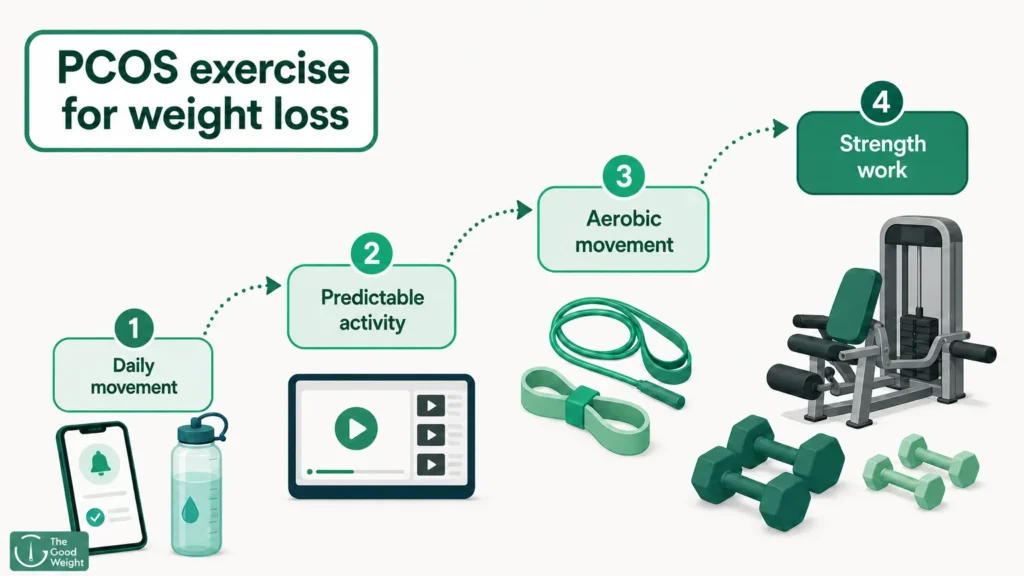
Step 1: Begin with tolerable daily movement. For some people, this might mean five minutes of gentle walking after one meal, a few mobility movements between work tasks, or standing and moving during a phone call. If a walk is not comfortable, seated mobility work, water-based activity, or gentle cycling may be better options. The starting point should leave you feeling similar – or only mildly tired – later that day.
Step 2: Make the activity predictable. Once the first step feels manageable for one to two weeks, repeat it on more days rather than immediately making it longer. For example, a five-minute walk three days a week can become five to ten minutes on four days. This builds the habit and lets you assess recovery without changing too many variables at once.
Step 3: Add purposeful aerobic movement. Walking, cycling, swimming, dancing, or low-impact exercise videos can all count. Aim for a pace at which you can speak in short sentences but would not want to sing comfortably – a simple way to recognise moderate effort. There is no need to begin with running, long gym sessions, or high-intensity intervals.
Step 4: Introduce strength work when ready. Two brief sessions each week may be enough to start. You could use bodyweight movements, resistance bands, machines, or light weights, selecting movements that feel stable and comfortable: sit-to-stands, wall push-ups, supported rows, step-ups, or a seated press. Strength training can help maintain or build muscle and improve function, but it should not leave you unable to manage normal activities for days afterward.
Increase only one element at a time: duration, frequency, resistance, speed, or complexity. If you add five minutes to your walk, keep the pace the same. If you add resistance training, avoid also adding extra cardio that week. Your recovery – not someone else’s workout plan – is the most useful guide.
Adapt the plan to your actual week
A busy schedule does not make short activity “less valid.” Two 10-minute walks can be easier to fit in than one 20-minute session and can still contribute to your overall movement. On lower-energy days, reduce the duration, choose a gentler version, or focus on routine daily movement rather than cancelling the habit entirely.
Low-impact options can be especially helpful if you have joint discomfort, pelvic pain, or concerns about high-impact exercise. A physiotherapist or qualified exercise professional can help adapt movements if pain, injury, mobility limitations, or fear of falling are part of the picture.
How can you plan exercise, food, and rest so the routine lasts?
A repeatable routine has enough structure to guide you and enough flexibility to accommodate real life. It helps to plan movement alongside meals, hydration, rest, and sleep rather than treating exercise as a separate test of willpower. Nutrition, activity, medical treatment, and emotional wellbeing can all be part of personalised PCOS care.
Here is an example of a gentle week:
| Day | Movement | Recovery support |
|---|---|---|
| Monday | 15-minute comfortable walk | Regular meals and a consistent bedtime |
| Tuesday | 15-20 minutes of simple strength exercises | Protein- and fibre-containing meals; hydration |
| Wednesday | Rest or light stretching | Check energy and muscle soreness |
| Thursday | 15-minute walk or low-impact cycling | Avoid skipping meals before activity |
| Friday | Repeat the short strength session | Wind down before sleep |
| Saturday | A preferred activity, such as a longer walk or swimming | Flexible meal planning and fluids |
| Sunday | Rest or easy mobility | Prepare for the week and review recovery |
Balanced meals can support steadier energy, especially when they include a source of protein, fibre-rich carbohydrates, vegetables or fruit, and fats in portions that suit your needs. This is not about banning foods or following an extreme plan. Lifestyle management for PCOS should be tailored to individual preferences, goals, and circumstances.
Try to protect recovery as deliberately as you protect exercise time. A regular sleep routine, adequate fluids, and planned rest days can make it easier to continue. If weight management is one of your goals, nutrition support for sustainable weight loss can help you build meals around your medical needs, culture, schedule, and appetite rather than relying on rigid rules.
How do you know whether your plan is challenging you appropriately?
Some effort is expected when you begin or progress. You may breathe faster during a brisk walk, feel your muscles working during strength exercises, or notice mild soreness for a day or two after a new activity. Over time, the same routine may feel easier, your confidence may improve, or you may be able to add a little more activity without needing excessive recovery.
A plan may be too demanding if fatigue keeps increasing week after week, sleep worsens, soreness is severe or prolonged, or you need several days to recover after every session. Reduce the duration, intensity, or frequency and return to the last level that felt sustainable. Progress is not lost because you take a step back; it is often how you protect long-term consistency.
Stop exercising and seek urgent medical care for chest pain or pressure, fainting, severe shortness of breath, or symptoms that feel sudden or alarming. Seek non-urgent professional advice for persistent dizziness, new palpitations, worsening pelvic or joint pain, unexplained exhaustion, or changes in menstrual patterns that concern you. PCOS symptoms and related health risks deserve ongoing clinical attention, not just self-management through exercise.
FAQ: building a sustainable PCOS exercise routine
Is high-intensity exercise necessary for PCOS weight loss?
No. High-intensity interval training can suit some people, but it is not required for health or weight management. Moderate activity, strength training, and regular daily movement can all be valuable. If intervals leave you depleted, disrupt sleep, or make it difficult to exercise again for several days, they may not be the right starting point.
Does walking count as exercise?
Yes. Walking is accessible, adjustable, and can be broken into shorter sessions. A walk that fits your energy, safety needs, and schedule is far more useful than an ambitious plan that repeatedly ends after one week.
Where does strength training fit in?
Strength training may support physical function and muscle mass, and it can be adapted for beginners and low-impact needs. Start with a small number of comfortable movements and allow recovery between sessions. Technique, appropriate resistance, and pain-free range of motion matter more than lifting heavily.
When is personalised support more useful than online advice?
Individualised support is particularly useful if fatigue, insulin resistance, irregular periods, medications, pain, diabetes risk, or repeated stop-start routines make generic advice difficult to apply. For people in Chennai, The Good Weight’s doctor-led team can help connect activity planning with metabolic assessment, nutrition support, and a weight-loss doctor consultation. The next step is not necessarily doing more exercise – it is choosing a baseline you can recover from and building forward from there.