
Seeking support for PCOS weight loss can feel complicated when the advice you receive is limited to “eat less and move more.” Polycystic ovary syndrome (PCOS) is a common hormonal condition that can affect menstrual cycles, androgen levels, fertility, skin and hair changes, and metabolic health. The World Health Organization notes that PCOS care may involve lifestyle support, medicines and treatment for individual symptoms and health concerns.
Weight-related goals can be part of PCOS care, but they should not become the only measure of health or a judgement of effort. Respectful support starts with listening to your symptoms, your routines and the practical realities of your life. It also means building a plan that can be reviewed and adjusted over time – not handing you a standard diet sheet and expecting it to work for everyone.
Why can PCOS weight conversations feel discouraging?
Many people seek PCOS weight support after trying approaches that felt restrictive, exhausting or impossible to maintain. You may have been told to remove broad food groups, exercise intensely, try a supplement or rely on a “detox” drink, without anyone asking about your symptoms, work schedule, sleep, medications or access to food. When advice is generic, it can leave people feeling blamed when the plan does not fit their life.
That experience can make future appointments feel difficult. A person may delay asking questions about irregular periods, fatigue, acne, mood, fertility concerns or changes in weight because they expect the conversation to focus only on the number on the scale. Partners and family members can help by recognising that PCOS is a health condition, not a personal failing, and that unsolicited diet advice is rarely helpful.
PCOS can be associated with metabolic concerns for some people, including insulin resistance, which means the body does not respond to insulin as effectively as it should. However, symptoms and health risks vary. The international evidence-based guideline for PCOS emphasises individualised assessment and shared decision-making, rather than assuming that one experience or treatment applies to every person.
A helpful consultation should make room for your priorities. For one person, that may be improving energy and meal regularity; for another, it may be managing metabolic-health risk, preparing for pregnancy or finding movement that feels manageable. Weight change may be a goal, but it should be discussed in clinical context and without shame.
What should a respectful first consultation cover?
A first appointment should be a conversation, not a test of whether you have followed a particular diet or exercise routine perfectly. Before making recommendations, a clinician should understand what you want support with and what has made previous efforts difficult. This creates a safer foundation for a realistic PCOS weight loss plan.
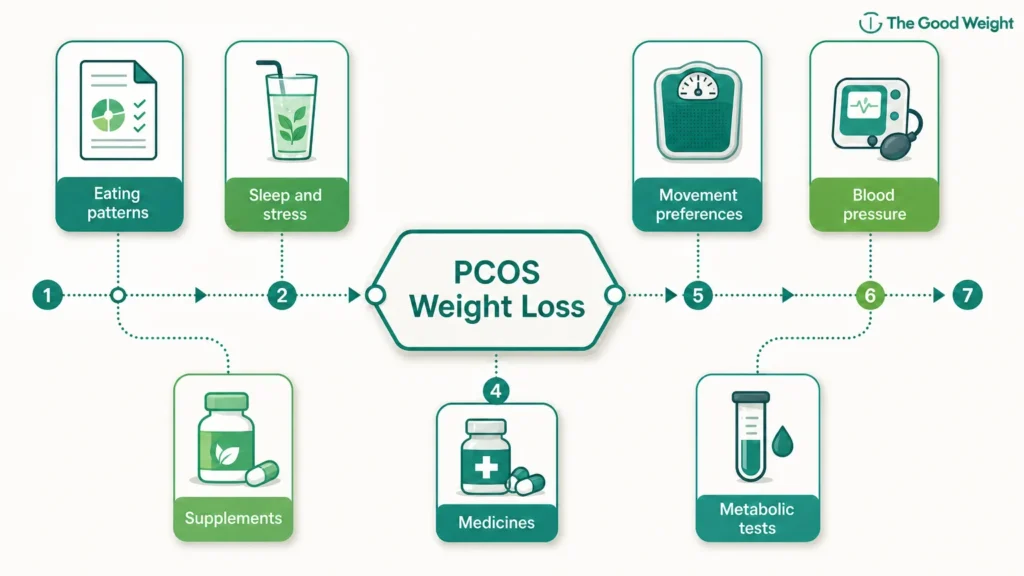
A thoughtful assessment may cover:
- Your goals and priorities: You might want support with weight, energy, menstrual symptoms, confidence in food choices, fertility planning or metabolic health. Clarifying the goal helps ensure the plan is relevant to you.
- PCOS symptoms and medical history: Discuss cycle patterns, acne, excess facial or body hair, hair thinning, fertility concerns, previous test results and any conditions such as diabetes, high blood pressure, thyroid disease or sleep apnoea.
- Current medicines and supplements: Some medicines can influence appetite, blood sugar, sleep or weight. Your clinician needs a complete picture before suggesting changes, supplements or weight-management medication.
- Previous approaches: Share what you have tried, what felt useful and what felt unsustainable. This is important information, not evidence that you have “failed.”
- Eating patterns and food access: A plan should consider your usual meals, cooking facilities, work hours, cultural foods, budget, travel and who else you eat with. Nutrition support has to work in ordinary life.
- Sleep, stress and emotional wellbeing: Poor sleep, chronic stress, low mood, anxiety and disordered eating patterns can all affect what support is appropriate. These topics deserve care, not assumptions.
- Movement preferences and physical comfort: A clinician should ask what types of activity you enjoy or can access, as well as pain, injury, fatigue, time constraints and fitness experience.
These questions matter because weight-related care is not simply about choosing a calorie target. For example, a person working shifts may need a different meal structure from someone with regular daytime hours. Someone experiencing binge eating, severe fatigue or distress around food may benefit from additional mental-health or specialist support before pursuing a highly structured eating plan.
Relevant clinical evaluation may also include blood pressure and clinician-selected tests related to glucose, cholesterol and other metabolic factors. The PCOS guideline recommends assessing cardiometabolic risk factors and considering a person’s broader health context. Your clinician can explain which tests are relevant for you and how often they should be reviewed.
At The Good Weight, a doctor-led weight-loss consultation can help connect your weight goals with symptoms, medical history and metabolic-health needs. It should complement – not replace – care from your gynaecologist, endocrinologist or primary doctor when those services are involved.
Why is one PCOS weight loss diet not enough?
Search results often promise one “best” PCOS weight loss diet. In reality, a rigid plan may work well for one person and be impractical, culturally unfamiliar or overly restrictive for another. A nutrition plan is only useful when it supports adequate nourishment and can be repeated through busy workdays, family meals, celebrations and periods of stress.
Individualised nutrition support looks beyond food rules. It may involve creating more regular meals, including satisfying sources of protein and fibre, planning practical snacks, learning how to build balanced plates from familiar foods or finding options that fit a limited budget. For some people, meal planning reduces decision fatigue; for others, flexibility is more important. The appropriate approach depends on health needs, preferences and your relationship with food.
There is also no evidence-based reason to treat a PCOS weight loss drink as a solution in itself. A drink may be convenient as part of a meal or snack pattern, but it cannot replace a full assessment or address every factor affecting health. Be cautious of products that claim to “balance hormones,” “flush toxins” or guarantee rapid results without explaining the evidence, ingredients, costs or risks.
The same applies to PCOS weight loss exercise advice. Movement can support cardiovascular fitness, strength, mood, sleep and overall wellbeing, but it should not be prescribed as punishment for eating or as a requirement to earn food. A sustainable plan might include walking, strength training, yoga, swimming, cycling, home workouts or simply more activity built into daily routines. The best starting point is usually one that respects your current capacity and can be adjusted safely.
For practical dietary support, a personalised diet and weight-loss approach may be more useful than a template that ignores your culture, schedule or medical needs. If medication or a procedure is being considered, nutrition guidance should still remain part of a comprehensive, medically supervised plan.
What can progress look like beyond the scale?
When weight changes slowly – or does not change in a straight line – it can be helpful to review progress using more than one measure. The scale can provide one piece of information, but day-to-day changes in hydration, digestion, menstrual cycles and routine can affect it. Treating it as the only sign of success can obscure changes that matter to your health and quality of life.
With your clinician, you might agree to review areas such as:
- greater consistency with meals or snacks;
- improved energy for work, caregiving or daily tasks;
- increased strength, stamina or confidence with movement;
- better sleep routines;
- more confidence planning meals and navigating social occasions;
- changes in symptoms you and your clinician have agreed to monitor; and
- clinician-selected measures such as blood pressure, blood glucose or cholesterol where appropriate.
These markers should never be used to pressure you into a particular outcome. Instead, they can help show whether the plan is practical and whether it is supporting the goals that brought you to care. If your energy is worse, food thoughts are becoming more distressing or the plan is too difficult to maintain, that is valuable feedback – not a reason to push harder.
Medical monitoring remains important. PCOS can involve health concerns that require clinical follow-up even when you feel well, and health markers should be interpreted by an appropriate professional rather than through online calculators or social-media advice. The WHO describes PCOS as a condition that can affect health across the life course, which is one reason ongoing, individualised care matters.
What should you ask before choosing PCOS weight support?
Before committing to a programme, ask how the service will understand your situation and what happens if the first plan does not fit. Transparent answers can help you distinguish comprehensive care from services built around a fixed package, a single product or a dramatic promise.
Consider asking these questions:
- Who will assess and guide my care? Ask whether a doctor, dietitian, nutrition professional, psychologist or other qualified clinician is involved, and what each person’s role will be.
- What does the initial assessment include? A good answer should include your symptoms, medical history, medications, goals and relevant tests – not only your starting weight.
- How often will follow-up happen? Sustainable care usually needs planned review, especially if symptoms, medications or routines change.
- How will you adapt the plan? Ask what happens if you struggle with hunger, side effects, cost, sleep, emotional wellbeing or adherence to the original plan.
- What results are realistic? Be wary of providers who promise a specific amount of weight loss, a deadline or a universal result. Responsible care should explain uncertainty and individual variation.
- What will it cost? Request clear information about consultation fees, diet plans, tests, medicines, meal products, procedures and any minimum commitments before you enrol.
- When would you refer me elsewhere? PCOS care may require coordination with a gynaecologist, endocrinologist, mental-health professional, fertility specialist or primary-care doctor.
If weight-management medication is discussed, ask why it may or may not be appropriate, what monitoring is needed and how nutrition and lifestyle support will continue alongside it. You can read more about medical weight-loss care as one part of a broader doctor-led approach, but any treatment decision should follow an individual consultation.
How can you assess reviews and personal experiences responsibly?
Reviews can offer useful insight into practical aspects of care: whether people felt heard, whether appointments were organised, whether clinicians explained options clearly and whether follow-up felt accessible. The most helpful feedback is specific and balanced. It describes an experience without claiming that the same outcome is guaranteed for everyone else.
Be cautious with testimonials focused only on dramatic before-and-after images, very rapid results or promises that a single programme “works for PCOS.” Personal stories may leave out important details, including other care received, changes in medication, life circumstances and the time involved. They also cannot tell you whether a plan is medically suitable for your symptoms or history.
Look for signs that feedback has been shared with consent and that the provider does not pressure people to publish private health information. Reviews should support your research, not replace a conversation with a qualified professional. A consultation gives you the opportunity to ask about qualifications, safety, costs, follow-up and whether the proposed plan fits your goals.
Finding care that starts with listening
Respectful PCOS weight loss support is not a standardised diet, a punishing exercise schedule or a promise attached to a product. It begins with your history, symptoms, preferences, resources and health priorities. It makes room for realistic goals, regular review and course correction when life changes.
If you are looking for support in Chennai, contact The Good Weight to discuss PCOS, weight-related goals and metabolic-health concerns with a doctor-led team. The aim is not to prescribe a one-size-fits-all result, but to help you explore evidence-based care that fits your health and your life.