
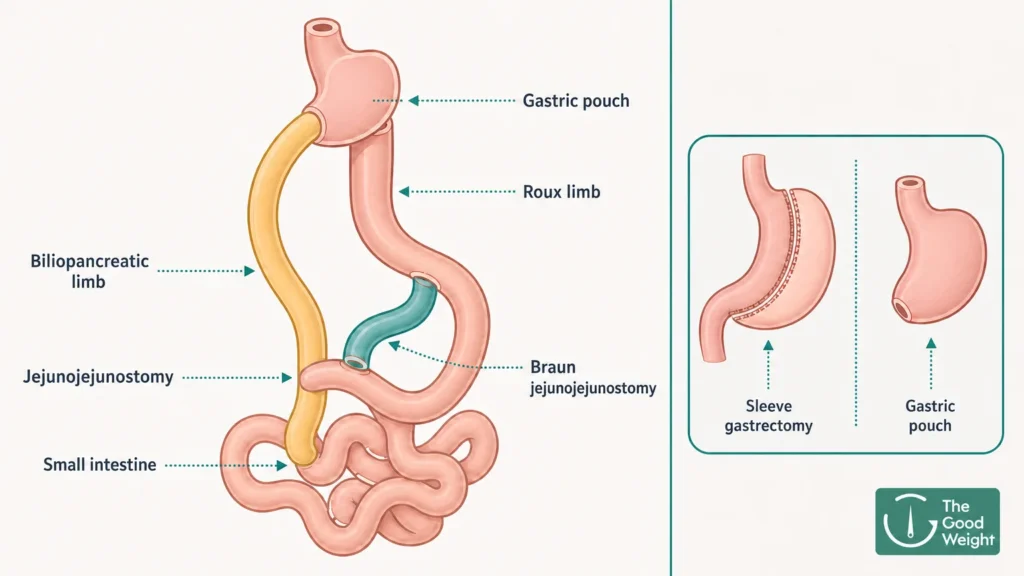
A person considering bariatric surgery often begins with one practical question: “Which procedure will help me lose weight?” Then the medical terms arrive. Roux limb. Anastomosis. Gastric pouch. Braun jejunojejunostomy. It can feel as though a decision about your health has suddenly turned into an anatomy exam.
The wording matters because different intestinal connections have different jobs. In standard Roux-en-Y gastric bypass, the surgeon creates a connection between two portions of small bowel called a jejunojejunostomy. A Braun jejunojejunostomy is a related but distinct surgical connection more often discussed after other upper gastrointestinal operations. The terms can overlap in conversation, which is why patients deserve a plain-English explanation before signing a consent form.
Weight-loss surgery can improve metabolic health, reduce obesity-related illness, and change the day-to-day burden of eating. It also asks for long-term nutrition work, clinic visits, blood tests, and honest attention to habits that surgery cannot erase. The goal is not to choose the “strongest” operation. It’s to choose the treatment path that fits your health history and the life you can realistically maintain.
What Braun jejunojejunostomy means in the context of gastric bypass
Definition: A jejunojejunostomy joins one section of the jejunum, the middle part of the small intestine, to another. In Roux-en-Y gastric bypass, that join reconnects food flow with digestive juices farther down the bowel.
A Braun jejunojejunostomy also joins two segments of jejunum, but surgeons more often use the term after a gastrojejunostomy in operations involving the stomach, pancreas, or bile ducts. The added connection can direct bile away from the stomach and improve drainage through the reconstructed bowel. Studies of Braun-type reconstruction discuss its role in reducing bile reflux and delayed gastric emptying after selected gastrointestinal procedures, not as a routine label for modern bariatric bypass anatomy (reviewed surgical evidence describes its use in upper gastrointestinal reconstruction).
During a standard Roux-en-Y gastric bypass, the surgeon makes a small stomach pouch near the top of the stomach. Food enters that pouch and then travels into a section of small intestine called the Roux limb. Digestive juices from the bypassed stomach, pancreas, and liver travel through a separate biliopancreatic limb before meeting food at the jejunojejunostomy.
That rerouting changes more than meal size. The smaller pouch limits how much food feels comfortable at one time, while the intestinal rerouting changes gut hormone signaling and nutrient exposure. Those changes can improve blood glucose control early, sometimes before a person has lost much weight. It’s a body-wide metabolic procedure, not a smaller-stomach trick.
The thing is, every clinic should be able to draw your planned anatomy and explain it without hiding behind jargon. Ask whether your surgeon means the standard Roux-en-Y jejunojejunostomy or a Braun-type connection added for a specific reason. A vague answer deserves a follow-up question.
Who may be considered for Roux-en-Y gastric bypass?
Body mass index, or BMI, remains part of the conversation, but it should never become the whole conversation. A doctor looks at weight, medical conditions, previous treatments, medicines, eating patterns, and surgical history. In South Asian populations, metabolic illness can occur at lower BMI levels, so clinicians in Chennai may discuss intervention earlier than a person expects.
Many people referred for gastric bypass have one or more obesity-related concerns, such as type 2 diabetes, obstructive sleep apnea, high blood pressure, fatty liver disease, painful weight-bearing joints, or reduced mobility. Severe reflux deserves special attention. Sleeve surgery can worsen reflux in some people, while gastric bypass often becomes the preferred surgical discussion when reflux has become a serious, persistent problem.
A candidacy conversation often includes:
-
BMI and health burden: Higher BMI with obesity-related disease may strengthen the case for surgery, but numbers alone do not decide it. A clinician should ask how weight affects breathing, blood sugar, sleep, work, pain, and daily function.
-
Previous treatment attempts: Repeated dieting without durable results is not a moral failure. Obesity behaves like a chronic medical condition, and non-surgical options such as nutrition care, medications, and supervised programmes still belong in the decision.
-
Medical and surgical history: Prior abdominal surgery, ulcers, inflammatory bowel disease, smoking, alcohol use, medications, and pregnancy plans can change the choice of procedure or the timing.
-
Readiness for follow-up: Gastric bypass requires permanent supplements and periodic laboratory checks. Someone who cannot commit to those steps may need a different approach first.
Professional guidelines have widened access to metabolic surgery beyond the older “BMI 40 only” rule, with surgery recommended for many adults with BMI of 35 or above and considered at lower BMI levels when metabolic disease persists. Still, guidelines start a conversation. They don’t replace a surgeon’s assessment.
Gastric bypass or sleeve surgery: the comparison that matters
People often frame this as a battle between two procedures. It isn’t. Gastric sleeve surgery removes a large curved portion of the stomach, leaving a narrow tube-shaped stomach. Gastric bypass creates a small pouch and reroutes the intestine, making it more complex and usually more demanding nutritionally.
| Question | Roux-en-Y gastric bypass | Sleeve gastrectomy |
|---|---|---|
| How it works | Small pouch plus intestinal rerouting | Smaller, tube-shaped stomach |
| Expected weight loss | Often greater average loss, though individual results vary | Strong results for many people, with less intestinal rerouting |
| Reflux | Often chosen when serious reflux is present | May trigger or worsen reflux in some people |
| Nutrient absorption | Higher risk of iron, B12, calcium, and vitamin deficiencies | Deficiencies still occur, but intestinal malabsorption is less pronounced |
| Reversal and revision | Technically complex to reverse or revise | The removed stomach cannot be restored |
| Eating pattern | Small meals, slow eating, care with sugar to avoid dumping | Small meals, slow eating, careful portion control |
Longer-term comparative research has found both operations produce meaningful weight loss and improvements in health, while gastric bypass may carry more nutritional and gastrointestinal trade-offs (five-year randomized trial data compare the two procedures directly). Numbers from studies help, but they cannot tell you how well a procedure suits your reflux symptoms, food tolerance, medication needs, or ability to keep follow-up appointments.
Here’s a real-world version of that choice. A person with poorly controlled diabetes, frequent nighttime reflux, and a history of large portions may find bypass worth discussing seriously. Someone without reflux who wants a less complex operation and understands the permanence of stomach removal may lean toward sleeve surgery. Neither choice is “easy.” Both require practice after the operation, especially during the first strange months when a few extra bites can feel miserable.
Readers comparing procedures can also review gastric sleeve surgery at The Good Weight before their consultation. Bring your questions, not a predetermined answer.
The workup before surgery should feel thorough, not rushed
A good bariatric assessment is partly medical detective work. Someone may arrive focused on weight and discover untreated anemia, high blood sugar, fatty liver disease, sleep apnea, or a medication that affects appetite. Finding those issues before surgery gives the care team time to treat them and plan safely.
Blood tests often check glucose control, liver and kidney function, thyroid markers when indicated, blood count, iron stores, vitamin B12, vitamin D, and other nutrients. Depending on symptoms, the team may request a sleep study, ECG, endoscopy, ultrasound, or specialist review. Patients with reflux or ulcer symptoms may need endoscopy before deciding between a sleeve and bypass.
Nutrition counselling should begin before the operation, not after discharge. You’ll practise slow eating, identify protein sources you can tolerate, learn fluid timing, and discuss vitamin routines. Many patients are surprised by how practical these conversations become: Can you manage curd, eggs, dals, fish, or protein supplements? What happens when you travel? Who shops and cooks at home?
Psychological assessment isn’t a test you pass by saying the “right” things. It explores emotional eating, depression, binge eating, substance use, expectations, family support, and past experiences with weight stigma. Surgery can change your relationship with food quickly. It does not erase grief, stress, loneliness, or a chaotic schedule.
At The Good Weight’s diagnostic testing service, doctor-led assessment can help turn scattered symptoms into a clearer metabolic-health plan. Sometimes surgery is the right next step. Sometimes medical weight loss, nutrition support, or another procedure makes more sense. Rushing because someone wants a date on the calendar is a bad reason to operate.
Recovery after gastric bypass: what changes first
Most people stay in hospital for one to three days after laparoscopic gastric bypass, though the exact stay depends on pain control, hydration, walking, medical history, and the surgeon’s protocol. Nurses encourage short walks early because movement helps circulation and reduces the stiffness that can make the first day feel long. Sipping fluids starts carefully, often before hunger returns.
Days 1 to 14: fluids, tiny volumes, and patience
Clear liquids progress to fuller fluids according to your surgical team’s instructions. Small sips matter more than drinking a glass quickly, because the new pouch has little room and dehydration can sneak up fast. Some people feel tired, gassy, emotional, or oddly uninterested in food. Not glamorous. Still normal for many.
Weeks 3 to 6: soft textures and protein practice
Pureed or soft foods enter gradually. The usual priority is protein first, then fluids, followed by small amounts of other foods as tolerated. Your dietitian may set a protein target based on body size and medical needs; many plans fall around 60 to 80 grams a day, but personal targets vary.
Vomiting, repeated pain after eating, fever, fast heartbeat, shortness of breath, black stools, or an inability to keep fluids down need prompt medical advice. Don’t try to “wait it out” because you worry about bothering the surgeon. Post-operative problems are easier to manage when the team hears about them early.
Weeks 6 to 12: building a routine
Walking grows into planned activity, then resistance training when your surgeon clears it. Muscle loss can occur with rapid weight loss, and strength work helps protect function. The scale may move quickly, stall, then move again. Bodies are annoyingly non-linear.
Recovery also changes social routines. Restaurant portions become absurdly large. Family members may push food with good intentions. A patient who once skipped breakfast and ate heavily at night may need alarms for fluids and planned mini-meals. The surgery changes anatomy; repetition changes the day.
Long-term care is part of the operation
Gastric bypass patients need lifelong vitamin and mineral supplementation because food intake drops and part of the intestine no longer contacts food in the same way. Common plans include a bariatric multivitamin, calcium with vitamin D, iron when indicated, and vitamin B12. Your team should tailor the exact formulation and dose to blood tests, sex, age, menstruation status, pregnancy plans, and prior deficiencies.
Regular tests look for anemia and nutrient shortages before they cause obvious symptoms. Iron deficiency may show up as fatigue, hair shedding, or breathlessness. B12 deficiency can affect nerves and blood cells. Calcium and vitamin D problems can quietly affect bone health over time, which is why long-term nutritional monitoring after Roux-en-Y bypass has a clear clinical rationale.
Dumping syndrome is another practical issue. Sugary foods or large meals may move rapidly into the intestine and trigger sweating, cramps, nausea, diarrhoea, dizziness, or a racing heart. The experience can be unpleasant enough that people start avoiding certain foods quickly. That reaction is not a substitute for learning balanced eating, though. Highly processed foods can return in small, frequent amounts if old patterns creep back.
Follow-up also protects weight-loss results. A clinic should check eating tolerance, mood, medications, physical activity, reflux, alcohol use, sleep, and lab results, not just the number on the scale. For ongoing nutrition planning after any procedure, post-procedure weight support can keep the focus on health habits that hold up after the rapid-loss phase ends.
Three myths that cause real trouble
“Surgery is the easy way out”
No. Surgery is a medical treatment for a chronic condition that can resist willpower-only approaches. It involves anaesthesia, recovery, altered eating, permanent supplements, and a new set of decisions every day. People who call it easy have usually never had to plan water intake around a tiny gastric pouch or explain to relatives why “just one more spoonful” is not harmless.
“The weight can never come back”
Weight regain can happen. The body adapts, appetite can return, grazing can increase, activity may fall, and life can throw in grief, work stress, injuries, pregnancy, or medication changes. A regain is not proof of personal failure, but it does call for early review with the bariatric team.
“The procedure fixes every food struggle”
Surgery changes hunger, capacity, and digestion. It cannot settle an argument, repair a difficult relationship, or make sleep deprivation disappear. If food has become your quickest comfort after a hard day, counselling and structured support remain part of treatment. Honestly, that work may be the hardest part.
Questions to ask before you book
Before choosing a clinic, ask questions that make the team explain how it handles ordinary care and the messy bits. You are not being difficult. You are doing the job of an informed patient.
-
How many gastric bypass procedures does the surgeon perform, and what are their complication and reoperation rates? Ask for a plain-language explanation of what they measure and over what time period.
-
Who will support me after surgery? A surgeon matters, but so do a dietitian, physician, psychologist or counsellor, nursing team, and a clear route for urgent concerns.
-
What happens if I develop vomiting, dehydration, reflux, dumping symptoms, or suspected deficiency? You want a named contact process, not a vague promise to “call the clinic.”
-
What is included in the quoted cost? Clarify surgeon fees, hospital charges, investigations, medicines, dietitian visits, supplements, follow-up, and treatment for complications.
-
How will you decide between bypass, sleeve, and non-surgical treatment for me? A clinic that discusses alternatives is more trustworthy than one that pushes the same procedure for everyone.
The best decision may be gastric bypass. It may be sleeve surgery, medication-supported weight care, or a period of treatment before surgery. Ask for a recommendation tied to your medical record and your daily reality, then give yourself room to think.
If you’re ready for that conversation, schedule a bariatric eligibility consultation with a doctor-led team at The Good Weight.