
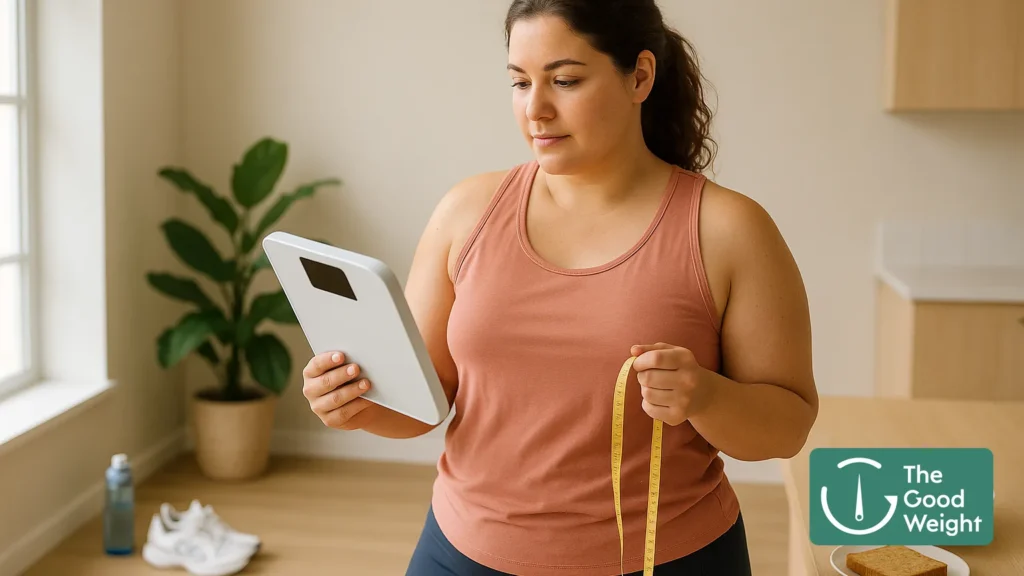
If you started eating better, walking more, or getting back into the gym a few weeks ago, it is completely understandable to feel discouraged when the scale barely moves. This is one of the most common reasons people give up on otherwise solid plans. They expect visible proof quickly, and when that proof does not show up on schedule, they assume the plan is broken or that they are somehow failing.
In reality, slow progress is often normal. The question of how to lose weight is usually framed as if the answer is simply “eat less and move more,” but real-life fat loss is messier than that. Body weight can rise and fall from water retention, digestion, hormones, sodium intake, sleep quality, and inflammation from exercise. That means a person can be doing many of the right things and still feel stuck after 2 to 6 weeks.
That emotional gap matters. Online discussions about “slow weight loss” and “why am I not losing weight” have become common because many people are experiencing the same pattern: effort first, doubt second, panic third. What often follows is a crash diet, overexercise, or a complete loss of motivation. A better approach is to understand what normal progress actually looks like and how to judge whether your plan is working before you abandon it.
This guide offers a doctor-led, realistic framework for how to lose weight sustainably. The goal is not to push you into a more extreme plan. It is to help you tell the difference between normal fluctuations, a fixable routine issue, and a genuine medical reason to get more support.
What “normal” weight loss really looks like
One reason people feel misled is that body weight is not the same thing as body fat. You can lose fat and still weigh the same for a period of time, or even weigh slightly more, depending on what else is happening in your body. That is why healthy progress is better judged over several weeks, not several days.
For many adults, a realistic rate of fat loss is gradual. The body is not a machine that sheds exactly the same amount every week. Some weeks produce a clear drop on the scale, while others appear flat despite similar effort. That does not automatically mean your diet is not working. It often means short-term body-weight noise is masking a longer-term trend.
Water shifts can hide fat loss
Water weight is one of the biggest reasons progress looks slow. If you eat a saltier meal, increase carbohydrates, sleep poorly, or start exercising harder, your body can temporarily hold onto more fluid. This can cover up real fat loss for days at a time. Then, suddenly, the scale drops and it seems as if everything happened at once, when in fact the change had been building in the background.
This is especially common when people begin a walking routine or resistance training. Muscles under new stress hold more water during recovery. That is not a sign of damage or failure. It is often part of normal adaptation.
Digestive changes affect the scale too
The scale also reflects what is physically inside your digestive system. A higher-fiber diet, constipation, irregular meal timing, travel, dehydration, or changes in routine can all shift your weight independent of body fat. Someone who weighs on Monday after a heavy weekend meal pattern may get a very different number from the same person on Thursday after several days of regular eating.
That is why isolated weigh-ins create so much confusion. If you want a more truthful picture of how to lose weight effectively, look at averages and trends instead of individual numbers.
Menstrual cycle changes can make progress look uneven
For women, the menstrual cycle can strongly affect weight, appetite, bloating, and waist measurements. It is not unusual to retain more water in the days leading up to a period, or even during ovulation, and then see the number fall later. If you compare week 2 of one month to premenstrual week of the next, it may look like nothing is happening even when progress is occurring.
This is one reason women often benefit from comparing the same cycle phase month to month instead of reacting to random weekly changes. On a site focused on women’s health, this is especially important to normalize. The body is not being difficult; it is responding to physiology.
Strength training can improve body composition before scale loss shows
If you have added strength training, your body may start changing shape before body weight changes much. Clothing can fit differently, measurements can improve, and you may notice more muscle tone even when the scale seems underwhelming. That is because body composition is changing in ways the scale cannot fully capture.
For anyone asking how to lose weight without crash dieting, this matters. Sustainable progress often looks like improved habits, better energy, more strength, and a slow downward trend in weight rather than dramatic weekly losses.
Why progress often looks slower than it is
When weight loss feels stalled, there are several hidden reasons that may be contributing. Some are behavioral and easy to tighten up. Others point to a need for more personalized or medically supervised care.
Checklist: common reasons the scale is not telling the full story
Portion creep. Even healthy meals can become less effective for fat loss when portions slowly expand. Extra spoonfuls of rice, larger pours of oil, frequent handfuls of nuts, or “healthy” snacks eaten mindlessly can shrink the calorie deficit more than people realize. This is not about blame. It is about recognizing that effort and intake do not always match perfectly over time.
Weekend calorie rebound. Many people maintain structure from Monday to Friday and then unknowingly erase the deficit on weekends. Restaurant meals, desserts, alcohol, and looser routines can make average intake much higher than expected. Someone may feel they are “good all week” and still not see progress because the weekly picture, not the weekday picture, drives results.
Sleep debt. Poor sleep does not just affect energy. It can increase hunger, reduce activity, worsen cravings, and affect water retention. A person trying to figure out how to lose weight may focus only on food and workouts while ignoring the role of recovery. Consistently short sleep can make adherence harder and progress appear slower.
Low protein intake. Protein helps with fullness, muscle retention, and body composition during weight loss. When meals are too low in protein, people often feel hungrier, snack more, and lose lean tissue more easily. A plan can look disciplined on paper but still be less effective if protein is not anchored well.
Low movement outside workouts. One intense workout does not automatically create a high-activity lifestyle. Some people exercise for 45 minutes but spend the rest of the day sitting more because they feel they have “done enough.” This drop in everyday movement can offset part of the benefit of structured exercise. Step count consistency often matters more than people think.
Medication or hormone factors. Certain antidepressants, antipsychotics, steroids, diabetes medications, and hormonal conditions can affect weight, appetite, fluid retention, or insulin response. In women, PCOS may increase the difficulty of losing weight with standard advice alone. If your efforts are consistent and results remain unusually slow, it may be time to consider doctor-supervised medical weight loss rather than simply pushing harder on your own.
Two people can do the same work and look very different on paper
One of the most important ideas in sustainable weight management is that equal effort does not always produce equal-looking scale results in the short term. That does not mean one person is doing it right and the other is doing it wrong. It means bodies respond differently based on baseline size, hormones, sleep, training history, menstrual cycle timing, medications, stress, and fluid balance.
Patient example 1: scale progress is obvious
Imagine Patient A starts walking 8,000 steps a day, eats more regularly, reduces takeout, and increases protein at breakfast and lunch. Over six weeks, the scale drops 3.5 kg. Her waist measurement is down 4 cm, and she feels encouraged because the evidence is visible from every angle. For her, the feedback loop is straightforward: effort goes in, numbers go down, motivation improves.
In this situation, she may assume her friend should see the same thing if she follows a similar routine. But that is not always how it works.
Patient example 2: body changes arrive before scale changes
Patient B makes almost the same weekly effort. She also walks consistently, improves meal structure, and adds two strength sessions per week. After six weeks, the scale is down only 1 kg. On paper, she feels as if she is behind. But her waist is down 5 cm, her jeans fit better, her face looks leaner, and she has better stamina during workouts.
What happened? Most likely, several things happened at once: she reduced body fat, gained or preserved lean tissue, retained more water from training, and had normal cycle-related fluctuations during weigh-in weeks. If she judged her success by scale alone, she might wrongly conclude that the plan failed. In reality, her body composition may have improved more than Patient A’s.
This is why people who want to know how to lose weight sustainably should track more than one metric. Weekly average weight, waist circumference, progress photos, clothing fit, hunger control, step count, and gym performance together tell a much more honest story than a single number.
What to change first if your weight loss feels stalled
When progress feels too slow, the best next move is usually not a harsher plan. It is a more precise one. Tightening a few high-impact habits often works better than cutting calories aggressively or doubling your exercise.
1. Tighten one meal pattern before changing everything
Start by examining one meal that happens most days. For many people, that is breakfast, lunch, or the late-evening eating window. If that one pattern is inconsistent, calorie-dense, or low in protein, improving it can create a meaningful difference without making the whole plan feel restrictive.
For example, a breakfast of coffee and biscuits may leave you hungry and overeating later. Replacing it with a more balanced meal can improve appetite control across the day. If you need structured support, personalized diet and weight loss guidance can help translate general advice into an actual routine you can follow.
2. Increase protein in a practical, repeatable way
Do not think of protein as a bodybuilding concept. Think of it as a stability tool. Protein at meals can help reduce grazing, improve fullness, and support better body composition during fat loss. The goal is not perfection. It is consistency.
A simple way to start is to make sure at least two meals per day include a clear protein source such as eggs, paneer, Greek yogurt, fish, chicken, tofu, lentils, or a medically recommended supplement if needed. For many women, this single change improves adherence more than chasing complicated diet rules.
3. Make your step count more consistent across the week
If you are already exercising, look beyond formal workouts. Ask whether your Monday-through-Friday routine falls apart on weekends or whether you are very active on some days and almost sedentary on others. A consistent step range is often more useful than occasional bursts of effort.
This matters because sustainable fat loss comes from total weekly behavior, not a few heroic sessions. If your average movement is low outside exercise, the answer may not be “work out harder.” It may be “move more reliably.”
4. Review whether you need supervision, not punishment
If you have been genuinely consistent for several weeks and results still feel unusually slow, especially with symptoms such as irregular periods, marked cravings, fatigue, hair changes, or central weight gain, it may be time to stop guessing. Some people benefit from a more structured pathway that includes body-composition tracking, metabolic review, and women’s health context.
That is where a weight loss doctor consultation can be useful. The goal is not to jump straight to medication or procedures. It is to assess whether your current plan fits your biology, your history, and your health needs.
How to judge progress better than the scale alone
The scale still has value, but it should be used correctly. Daily weight can be averaged across the week, taken under similar conditions, and compared over a month rather than reacted to day by day. This reduces the emotional impact of normal fluctuations.
Waist circumference is one of the most useful companion tools because it often reflects fat loss even when water retention is masking scale changes. Clothing fit adds another layer of feedback, especially around the waist, hips, and thighs. Progress photos taken every two to four weeks can also reveal changes that are easy to miss in the mirror.
Behavior metrics matter too. Are you eating more regularly? Hitting your protein target more often? Walking consistently? Sleeping better? Feeling less out of control around food? If those markers are improving, your plan may be working even before dramatic scale changes show up. For women in particular, a more tailored approach such as female weight loss diet support can help align tracking with real physiological patterns instead of unrealistic expectations.
Doctor-reviewed FAQ: when is slow progress normal, and when should you get help?
Is it normal to lose weight very slowly in the first month?
Yes, sometimes. If you are making realistic changes rather than crash dieting, early progress may be uneven. Some people lose quickly at first because of water changes, while others see very little on the scale before a later drop. What matters more is whether your average trend over several weeks is moving in the right direction and whether your habits are becoming more consistent.
How long should I wait before deciding my plan is not working?
In most cases, give a well-followed plan at least 4 to 6 weeks before making major conclusions. That does not mean doing nothing during that time. It means collecting better data: average weight, waist measurement, step count, meal consistency, and sleep pattern. If there is no meaningful change in trends, it is reasonable to review calories, protein, movement, and medical factors.
Can I be losing fat even if the scale stays the same?
Absolutely. This is common when someone starts strength training, retains water around the menstrual cycle, or improves body composition while preserving muscle. If your waist is smaller, clothes fit better, and photos show change, the scale may simply be lagging behind the reality.
When should I worry about PCOS, insulin resistance, or thyroid issues?
Consider medical review if weight loss is unusually difficult despite consistent effort, especially if you also have irregular periods, excess facial hair, acne, fertility concerns, strong sugar cravings, unusual fatigue, cold intolerance, constipation, or rapid unexplained changes in weight. These do not automatically mean you have PCOS, insulin resistance, or thyroid disease, but they are valid reasons to seek assessment instead of relying on generic advice.
Does slow progress mean I need a more extreme diet?
Usually not. More extreme plans often create short-term losses that are hard to maintain and may increase the risk of rebound weight gain. In many cases, the better solution is tighter structure, better protein intake, more consistent movement, and medical oversight when needed. Sustainable results usually come from a plan you can repeat, not one you can barely survive.
A better next step than panic
If your weight loss feels slow, that does not automatically mean your effort is wasted. Very often, it means you are measuring a complex biological process with a tool that only shows part of the picture. Real progress can be slow, uneven, and still completely valid.
If you are tired of second-guessing every weigh-in, the next step is not to become more extreme. It is to become more informed. Book a medically supervised assessment with The Good Weight to review your food pattern, activity level, body-composition trend, and whether you need a more structured plan rather than a harsher one. That kind of evidence-based support can make the question of how to lose weight feel less confusing and far more sustainable.