
Why This Matters Now
As Indians adapt to modern food environments, high refined-carbohydrate diets and metabolic risks are on the rise. Nationwide data show adults still derive over 60% of energy from carbohydrates, often from refined sources, while protective nutrients like protein and fiber remain insufficient (Nationwide data on carbohydrate intake). Seniors, in particular, need thoughtful dietary approaches that promote weight loss without compromising muscle mass, hydration, or nutrient status (senior nutrition recommendations). Good Weight’s practical, culturally resonant guide can help bridge that gap.
—
Understanding Senior Nutrition with Diabetes
Energy Needs: Tailor with Care
Older adults require about 30 kcal per kg body weight per day, adjusted for physical activity and health status (nutrition energy requirement guidelines). Excessive calorie restriction risks frailty, while moderate deficits (~500-750 kcal/day) paired with adequate protein help preserve functionality (energy balance reference).
Protein: Preserve Muscle, Support Well-being
Standard adult RDA is 0.8 g/kg/day (50 g for average women, 56 g for average men), but for older adults, especially those with illness or sarcopenia, the recommendation rises to 1.0-1.5 g/kg/day (protein requirement study). A protein-rich, modest calorie deficit diet helps seniors retain muscle while supporting weight loss and metabolic balance.
Carbs & Fiber: Choose Wisely
Indian diets often include 60-64% of calories from carbohydrates – above the moderate range of 50-55% (macronutrient distribution data). Seniors benefit from shifting toward complex carbohydrates and foods high in fiber, aiming for 25-35 g/day to stabilize blood sugar (fiber intake and blood sugar management research).
Hydration & Micronutrients Matter
Older adults may experience diminished thirst and impaired absorption of nutrients like vitamin B12 and vitamin D. Guidelines recommend minimum fluid intake of ~30 mL/kg (~1.5 L/day), along with attention to micronutrient-rich foods or supplements (hydration and micronutrient guideline).
—
Structuring a Diabetes-Friendly Indian Meal Plan for Seniors
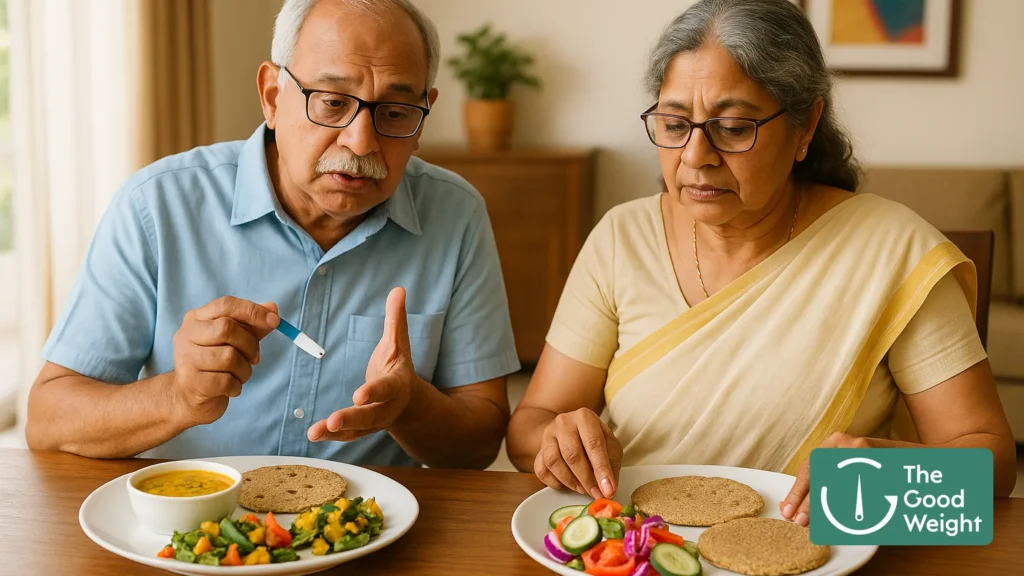
Portion-Friendly Plate Strategy
Use a simple visual guide to assemble balanced meals:
- ½ plate: non-starchy vegetables (e.g., sautéed greens, salad)
- ¼ plate: lean protein (dal, paneer, legumes, eggs, fish)
- ¼ plate: whole-grain or millets-based roti, brown rice, or millet porridge (Indian diabetes plate method guide)
This plate method honors traditional tastes while promoting portion control and glycemic stability.
Sample Meal Combinations
| Meal | Example Indian Dish & Benefits |
|————|——————————-|
| Breakfast | Moong dal chilla (savory lentil pancake) + curd or vegetable omelette – rich in protein, moderate carbs |
| Mid-morning Snack | Fruit (apple/pear) with handful of nuts |
| Lunch | 1-2 millet chapatis + vegetable sabzi + dal + salad – balanced macros, fiber, micronutrients |
| Evening Snack | Sprouted moong or boiled chana seasoned lightly |
| Dinner | Brown rice or millet khichdi with mixed vegetables + paneer or eggs |
| Bedtime | Warm low-fat milk or buttermilk – supports hydration and satiety |
These meals maintain cultural familiarity and promote blood sugar stability while providing adequate protein and fiber.
—
How to Reduce Empty Carbs without Sacrificing Flavor
- Replace white rice with millets (barnyard, ragi, foxtail) or brown rice gradually.
- Use whole wheat, oats, or multi-grain instead of refined flour.
- Incorporate vegetable-bound snacks (e.g., carrot-sabzi-stuffed paratha) to boost fiber.
—
Benefits You’ll Feel and See
- Improved glucose control due to lower glycemic responses from balanced meals (glucose control improvements reference)
- Sustainable weight loss, preserving lean mass thanks to adequate protein and moderate calorie deficit (protein and weight balance study)
- Better hydration and nutrition, reducing risk of constipation, frailty, and micronutrient deficiencies (hydration and nutrition data)
—
Common Mistakes to Avoid
- Skipping breakfast, leading to overeating later and instability in blood sugar (diabetes meal timing guidance)
- Relying on liquid calories like sweet tea, juices, or sugary beverages
- Late heavy dinners and prolonged gaps between meals
- Choosing “sugar-free” packaged snacks without checking portion size or nutritional value (checking packaged snack nutrition advice)
—
FAQs
Q: How low should calories go?
Aim for a modest deficit of 500-750 kcal/day, but ensure intake stays above ~30 kcal/kg/day to prevent malnutrition and frailty (safe calorie intake data).
Q: How much protein is enough?
Target 1.0-1.5 g/kg/day, depending on health and activity levels. For example, a 60-kg senior might need 60-90 g daily. Use dal, paneer, eggs, legumes, or fish.
Q: What if digestion is slow?
Increase fiber gradually along with hydration. If symptoms of gastroparesis (delayed digestion) persist, consult a healthcare provider before high-fiber ramps.
Q: When should I involve medical professionals?
Always consult if you notice unintended weight loss, frailty symptoms, or poor glucose trends. A registered dietitian or doctor can personalize your plan using tools like the Mini Nutritional Assessment (Mini Nutritional Assessment guidance).
—
Conclusion
This guide frames a diabetic weight loss strategy rooted in senior-specific needs and Indian dietary customs. Balance energy, prioritize protein and fiber, hydrate well, and keep meals culturally comforting. For personalized support, explore Good Weight’s diet and weight loss resources or consult a weight-loss doctor through our weight loss doctor consultation service.
Healthy eating doesn’t mean giving up flavor or tradition – it means eating smart, sustainably, and with your long-term well-being in mind.