
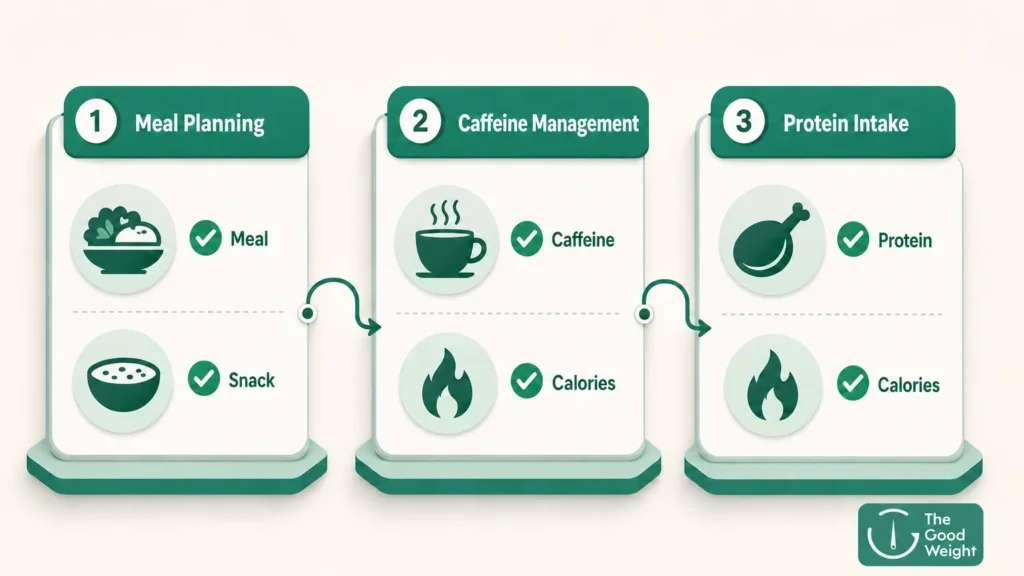
You may be planning meals, trying to exercise, and saying no to foods you used to eat without thinking – yet the scale has barely moved. Meanwhile, you wake up tired, feel hungry earlier than expected, and find that late-afternoon or evening cravings undo the structure you worked hard to create. For women balancing demanding jobs, caregiving, changing schedules, or hormonal shifts, this pattern can feel like a personal failure.
It is not. One of the most overlooked losing weight tips is to look at sleep before adding more restriction. Poor sleep does not erase the importance of food choices, movement, or an appropriate calorie deficit. But it can make each of those habits substantially harder to follow by increasing appetite, reducing energy, and leaving you with fewer mental resources for decisions.
The answer is not necessarily a stricter diet. Before extending a fasting window, cutting out another food group, or forcing punishing workouts, address the sleep-cravings-routine loop that may be keeping progress stuck.
Can Lack of Sleep Cause Weight Gain or Stall Weight Loss?
Short sleep can affect weight management in several overlapping ways. When sleep is consistently limited or disrupted, appetite cues, food preferences, stress responses, and day-to-day habits can shift in a direction that makes maintaining a calorie deficit more difficult. Research has linked short sleep with greater energy intake and a higher risk of weight gain, while controlled studies suggest that sleep restriction can increase the pull toward calorie-dense foods.
Sleep is not the only reason weight changes, and it should not be treated as a simple explanation for every plateau. Medical conditions, medications, menopause transitions, activity changes, and an eating plan that is not sustainable can also matter. Still, evidence indicates that short sleep can undermine weight-loss efforts during calorie restriction, making sleep a practical part of a comprehensive approach rather than an optional wellness extra.
Why cravings tend to get louder after a bad night
After fragmented or insufficient sleep, the brain often seeks fast energy and easy comfort. That may look like a strong desire for sweet coffee drinks, bakery items, chips, takeout, or large portions in the evening. This is not simply a matter of “weak willpower.” Sleep loss may influence appetite-related hormones and reward pathways, and experimental research has found sleep restriction is associated with increased hunger and changes in appetite regulation.
Decision fatigue adds another layer. If you have spent the day troubleshooting work issues, caring for children or parents, commuting, and functioning on too little rest, preparing a balanced dinner can feel far harder than ordering something convenient. The issue is often not a lack of knowledge. It is that your routines demand more energy than you have available.
A day-in-the-life example
Imagine a woman who sleeps from midnight until 5:30 a.m., with two wake-ups during the night. She skips breakfast because she is rushing and relies on two large coffees to get through the morning. By 3 p.m., she is hungry, irritable, and looking for quick energy, so she eats biscuits or packaged snacks at her desk.
She planned to walk after work, but low energy and a long to-do list make the sofa more appealing. Later, she has a light dinner because she feels guilty about the snack, then finds herself grazing in the kitchen at 10 p.m. The next morning begins with exhaustion again. None of these choices make her irresponsible; they show how a sleep-deprived routine can steadily work against her intentions.
The Sleep-Deprived Weight-Loss Mistakes to Stop Making
When progress slows, it is understandable to want a more intensive plan. However, several common strategies can worsen hunger, energy instability, and nighttime eating when you are already sleep-deprived. Use this checklist as a chance to identify the pattern – not as another set of rules to follow perfectly.
□ Skipping breakfast to “save” calories
Skipping breakfast works for some people, but it is not automatically helpful when it leaves you ravenous later. If a missed morning meal leads to a vending-machine snack, oversized lunch, or evening overeating, the strategy is not serving you. A protein-rich first meal can create more structure and may make it easier to build balanced choices through the rest of the day.
□ Using caffeine to compensate for sleep
Caffeine can temporarily improve alertness, but relying on it late in the day may prolong the underlying problem. An afternoon coffee may seem necessary after a poor night, yet it can make it harder to wind down later, especially for people who are sensitive to caffeine. The goal is not necessarily to give up coffee; it is to set a personal cutoff early enough to protect the night ahead.
□ Starting aggressive intermittent fasting
Intermittent fasting is a meal-timing approach, not a requirement for weight loss. A shorter eating window may be workable for some women, but an aggressive fasting schedule can backfire if it increases fatigue, triggers binges, disrupts social eating, or makes protein and fiber intake harder to achieve. If you are waking tired and battling late-night cravings, steadier meal timing is often a more useful first experiment than pushing your first meal later.
□ Under-eating protein and relying on “healthy” snacks
A diet can include nutritious foods and still be too light on satisfying meals. Fruit, crackers, granola, or a small salad may be convenient, but they may not carry you through a demanding day on their own. Include a clear protein source – such as eggs, Greek yogurt, dals and beans, fish, chicken, tofu, paneer, or lean meat – alongside fiber-rich carbohydrates and produce.
□ Expecting nighttime willpower to solve an all-day problem
Evening eating is often treated as a discipline issue. More often, it is feedback: perhaps you did not eat enough earlier, your sleep debt is high, dinner was not satisfying, or your evening routine has no buffer between stress and food. Rather than making nighttime rules stricter, design the day so that you arrive at night less depleted.
A Practical 7-Day Reset for Sleep, Cravings, and Consistency
This one-week reset is not intended to produce dramatic scale changes. Its purpose is to make hunger, energy, and routines more predictable so that sustainable weight-loss habits feel possible again. Focus on consistency over perfection, especially if your work or caregiving responsibilities make sleep timing unpredictable.
Days 1 and 2: Set a realistic wake-up anchor
Choose a wake-up time you can follow most days, including weekends within roughly an hour where possible. A consistent wake time can help strengthen your body’s sleep-wake rhythm, even when bedtime cannot be identical every night. Do not try to “fix” sleep by spending excessive time in bed; instead, start creating a repeatable morning and evening pattern.
Also note your baseline for seven days: bedtime, wake time, night wake-ups, caffeine timing, meals, and the time cravings feel strongest. This is information, not a food diary designed to judge you. Patterns become easier to change when you can see whether cravings follow skipped meals, late caffeine, poor sleep, or stressful days.
Days 3 and 4: Build a higher-protein first meal
Within a few hours of waking, aim for a meal that combines protein and fiber. Examples include vegetable omelette with fruit, Greek yogurt with nuts and berries, besan chilla with curd, or tofu and vegetables with whole-grain toast. The right portion depends on your health needs, appetite, and weight-management plan, but the aim is to avoid starting the day under-fuelled.
This approach does not require eating a large breakfast if you are not hungry early. A smaller, balanced first meal is enough to test whether steady nourishment reduces the late-day urgency to snack. For more individualized meal structure, a women-focused weight-loss diet plan can help account for preferences, health conditions, and practical schedules.
Day 5: Move your caffeine cutoff earlier
Keep your preferred morning coffee or tea if it works for you, but set an earlier caffeine cutoff – often early afternoon is a reasonable starting point. Substitute water, decaffeinated drinks, or herbal tea later in the day. You may feel more tired initially if you have been using caffeine to cover up chronic sleep loss, which is a sign to prioritize recovery rather than simply adding another cup.
Day 6: Choose the walk you can actually repeat
Movement supports health and weight management, but an exhausting workout plan is rarely the best answer for someone running on too little sleep. Begin with a realistic walk: 10 minutes after lunch, 15 minutes after dinner, or three short walks spread across the day. The recommended baseline of 150 minutes of moderate activity weekly, plus muscle-strengthening activity on two days is a useful long-term target, but modest activity is still meaningful when you are rebuilding consistency.
Walking after meals can also create a transition out of work mode and reduce the urge to immediately graze at home. Keep the standard low enough that you can meet it on an ordinary Tuesday, not only on a highly motivated weekend.
Day 7: Protect the hour before bed
Create an evening routine that reduces friction. Prepare tomorrow’s breakfast components, dim bright lights, put your phone on charge outside the bedroom if practical, and choose a calming activity such as reading, gentle stretching, or a shower. If stress keeps your mind active, write down tomorrow’s tasks rather than rehearsing them in bed.
You do not need a perfect “sleep hygiene” routine to benefit. The objective is to make the better choice easier when you are tired: fewer decisions, fewer triggers, and a predictable cue that the day is ending.
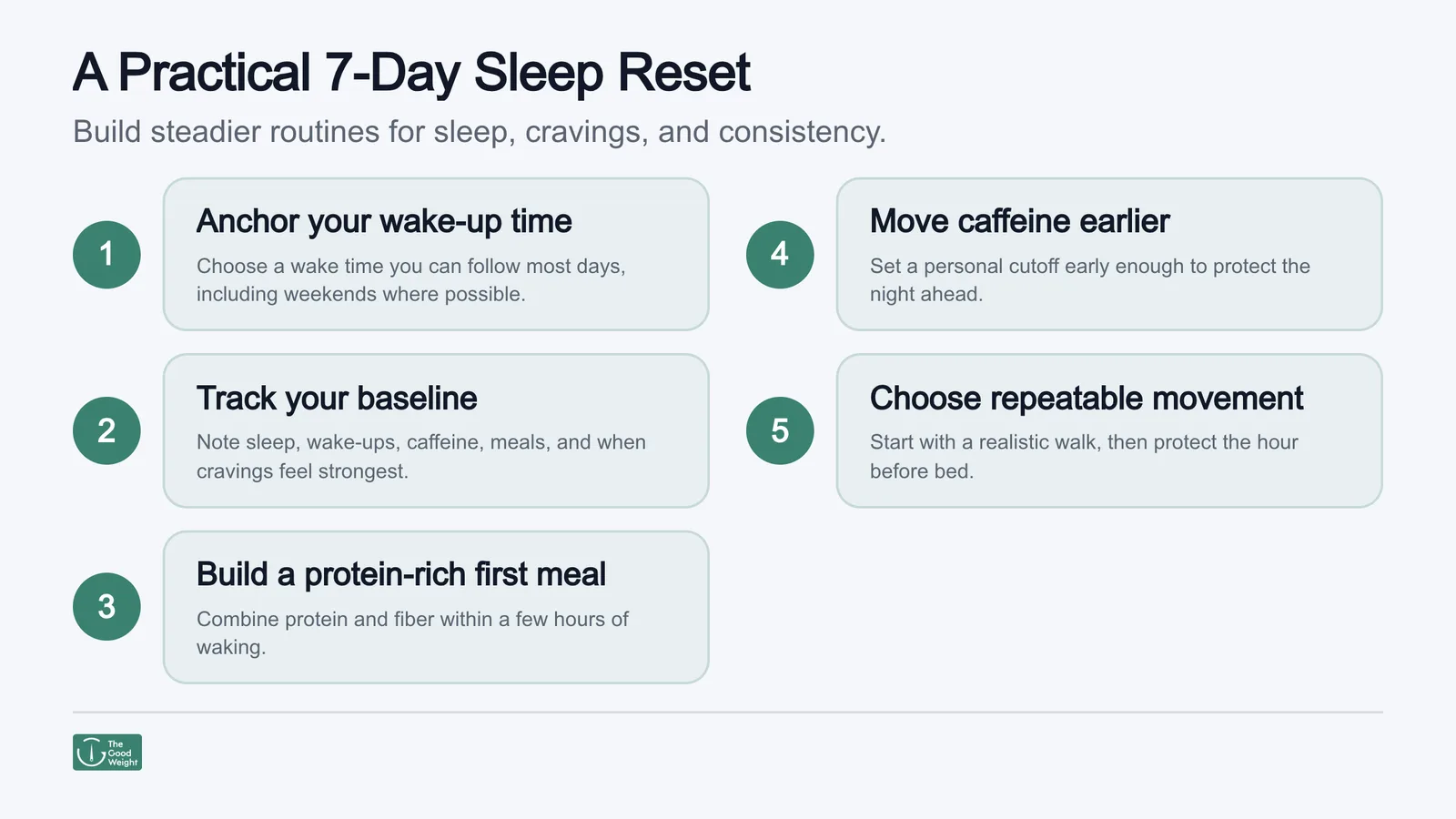
Small routine changes can make sustainable weight-loss habits feel more manageable.
When Poor Sleep and Weight Gain Need Medical Review: FAQ
When should snoring be evaluated?
Speak with a clinician if you snore loudly, wake up gasping or choking, have witnessed pauses in breathing, experience morning headaches, or remain very sleepy despite spending enough time in bed. Sleep apnea can interfere with restorative sleep and deserves proper assessment rather than self-treatment. Weight management may be part of care, but sleep symptoms should not be dismissed as something you simply need to tolerate.
Could perimenopause be affecting sleep and appetite?
Yes. Hormone-related changes during perimenopause can bring night sweats, sleep disruption, mood changes, and shifts in body composition or appetite. These changes do not make healthy progress impossible, but they often require a more personalized plan than generic diet advice. Discuss persistent symptoms with a qualified healthcare professional, particularly if they are affecting daily functioning.
What if I am tired all the time and the scale will not move?
Persistent fatigue warrants medical review, especially if it is new, severe, or accompanied by menstrual changes, low mood, hair loss, palpitations, or other symptoms. A clinician can assess potential contributors such as sleep disorders, medication effects, thyroid concerns, iron deficiency, diabetes risk, or depression. Evidence-based obesity care can include behavioral support, nutrition changes, medications, or procedures when appropriate; comprehensive treatment options should be matched to an individual’s health needs.
Start With the Loop, Not More Restriction
If you feel stuck, the most useful losing weight tip may be to stop assuming you need to eat less and try harder. Start by making sleep, meal timing, protein, caffeine, and realistic movement work together. A more rested body is not guaranteed to make weight loss effortless, but it can make the choices that support sustainable results far more manageable.
If poor sleep, strong cravings, or an unexplained plateau continues to derail your progress, The Good weight can help you explore a medically supervised, personalized plan. Comprehensive care looks beyond a number on the scale to consider nutrition, sleep, women’s health, medical factors, and the support needed for lasting well-being.