
Starting a PCOS diet plan can feel unnecessarily intimidating. Social-media posts may tell you to eliminate rice, avoid fruit, drink detox teas, exercise intensely every day, or buy expensive “hormone-balancing” foods. For someone newly diagnosed with polycystic ovary syndrome (PCOS), that amount of advice can make everyday eating feel like a test they are destined to fail.
A more helpful starting point is simpler: PCOS weight loss does not require perfect meals, imported supplements, or a restrictive food chart. It requires a realistic routine that supports fullness, steady energy, metabolic health, and consistency. This matters because PCOS is associated with a higher likelihood of insulin resistance and type 2 diabetes risk, so nutrition and lifestyle support should focus on health markers as well as body weight and symptoms. PCOS can increase the risk of type 2 diabetes, which is one reason sustainable habits are more valuable than short-term restriction.
For beginners in India, an affordable PCOS weight-loss program should work with familiar foods: dal, curd, eggs, vegetables, rice, roti, millets, fish, chicken, and legumes. The goal is not to make every meal “perfect.” It is to build a pattern you can repeat through busy workdays, family meals, travel, periods of low energy, and the occasional celebration.
What an affordable PCOS program should include
A credible PCOS diet plan is more than a printable meal chart with rigid meal times. The 2023 international guideline for PCOS emphasizes lifestyle management for all women with PCOS and notes that there is no single dietary composition proven to be superior for everyone. Healthy lifestyle approaches are central to PCOS care, which means a program should be adaptable rather than overly prescriptive.
Nutrition guidance that fits your usual meals
A beginner-friendly plan should teach you how to compose meals, not just tell you what to eat on Monday morning. In practice, that means understanding how to include protein, fibre-rich carbohydrates, vegetables, and fats in proportions that suit your hunger, activity level, medical history, and weight goals. It should also allow for vegetarian, non-vegetarian, Tamil, North Indian, office-canteen, and home-cooked eating patterns.
For many people, improving meal balance is more achievable than banning staple foods. A rice-based lunch, for example, can include a portion of rice along with sambar or dal, a vegetable poriyal, curd, and an egg, fish, paneer, or chicken serving. The structure matters more than trying to make rice, roti, or any single food the enemy.
Hunger management rather than willpower tests
PCOS nutrition support should address hunger honestly. Skipping meals, eating very little during the day, and then overeating in the evening is often a sign that the plan is too restrictive or poorly timed – not a lack of discipline. Adequate protein, vegetables, legumes, regular meals, sleep, and planned snacks can make it easier to manage appetite.
A useful program helps you identify patterns: Are you hungriest at 5 pm? Do you crave sweets after a low-protein breakfast? Are long work meetings making you miss lunch? Instead of prescribing shame or stricter rules, it should help you build practical responses, such as carrying roasted chana, fruit with curd, or boiled eggs for high-risk times of day.
Symptom and progress tracking
Weight is only one measure of progress with PCOS. A structured program should also track menstrual regularity, acne or hair changes, energy, sleep, cravings, digestion, stress, waist measurements where appropriate, and consistency with habits. This is important because PCOS can affect periods, ovulation, skin, hair growth, and metabolic health in different ways for different people. PCOS symptoms and health effects vary widely, so a plan should not assume that every person needs the same strategy.
Tracking should be simple enough to maintain. A weekly check-in with a few questions is often more useful than recording every calorie or weighing yourself daily. The purpose is to spot what helps you feel and function better, then adjust the routine gradually.
Exercise basics that are sustainable
Movement supports cardiovascular fitness, insulin sensitivity, strength, mood, and long-term weight management, but beginners do not need punishing workouts. A good program starts from your current capacity and may include walking, cycling, swimming, yoga, resistance exercises, or structured gym sessions. Strength training can be especially useful because it builds muscle and functional capacity, but it should be progressed gradually.
The right exercise plan is one you can repeat without injury or burnout. For someone who has been inactive, a 15- to 20-minute walk after meals a few times weekly may be a better first step than attempting daily high-intensity workouts. Lifestyle recommendations for PCOS should be tailored, with attention to preferences, goals, and barriers rather than relying on a one-size-fits-all exercise target. Individualised lifestyle support is recommended in PCOS care.
Follow-up and medical oversight
Affordable should not mean unsupported. At minimum, a program should include periodic review, opportunities to ask questions, and adjustments when a plan is not working. It should also clearly explain when diet support alone is not enough and when you may need medical evaluation for irregular periods, fertility concerns, diabetes risk, high blood pressure, sleep problems, depression, or medication discussions.
PCOS management may involve nutrition, movement, sleep, mental-health support, and medical treatment depending on the individual. If you are taking medicines, have diabetes or prediabetes, are pregnant, are trying to conceive, or have a history of disordered eating, do not begin a restrictive diet without guidance from a qualified clinician. A safe program works alongside doctor-led treatment rather than replacing it.
A sample Indian day of eating for PCOS weight loss
This example is not a prescription or a fixed calorie plan. Portion needs differ based on body size, hunger, medications, activity, health conditions, and weight history. Instead, use it to see how an Indian PCOS diet plan can provide protein and fibre without relying on expensive specialty products.
Breakfast: start with protein and staying power
Try two vegetable omelettes or besan chilla with curd, alongside one small fruit such as guava, orange, apple, or papaya. A vegetarian alternative could be vegetable upma with a generous side of curd or sprouts, rather than upma alone. Protein from eggs, curd, besan, or sprouts can help make breakfast more satisfying, while fruit contributes fibre and micronutrients.
If you prefer idli or dosa, you do not have to stop eating them. Pair them with sambar, add a bowl of curd where suitable, and avoid treating a light breakfast as a reason to go hungry until late afternoon. The goal is not to remove familiar foods but to make the meal more balanced.
Lunch: build a balanced plate, not a “diet” plate
A practical lunch could include one or two rotis or a moderate serving of rice, one bowl of dal, rajma, chana, fish curry, chicken curry, paneer, or egg curry, plus two portions of vegetables and salad or curd. The plate-style approach to eating includes vegetables, protein foods, and quality carbohydrate sources, which can be adapted easily to Indian meals without measuring every ingredient.
Rice is not automatically incompatible with PCOS weight loss. What often matters is the total meal: a large bowl of rice with little protein and no vegetables may leave you hungry sooner than a moderate rice portion served with dal, vegetables, curd, and a protein source. Slow down enough to notice fullness before taking a second helping.
Snack: plan for the time hunger usually appears
A snack can prevent the “all-or-nothing” pattern of being extremely hungry by dinner. Choose one accessible option such as roasted chana, a boiled egg, unsweetened curd with fruit, buttermilk with peanuts, sprouts chaat, or a small handful of nuts with fruit. These are not magic foods; they are practical bridges between meals.
Try not to judge snacks as “good” or “bad.” If biscuits and tea are your usual evening routine, start by adding protein or fibre – such as roasted chana, peanuts, or curd – rather than demanding an immediate total change. Sustainable PCOS fat loss is usually built through upgrades that fit real life.
Dinner: keep it satisfying, not excessively light
Dinner might be vegetable dal khichdi with curd and salad, two rotis with mixed vegetables and paneer or egg bhurji, or grilled fish or chicken with vegetables and a modest rice or roti portion. If you are genuinely hungry after dinner, review whether you ate enough at breakfast and lunch before deciding you need a more restrictive evening meal.
A lighter dinner may suit some people, but “light” should still mean nutritionally adequate. Regularly replacing dinner with only soup, fruit, or tea can increase later hunger and make the routine difficult to maintain. Consistency matters more than following the smallest possible meal.
What beginners should stop doing
Myth: skipping meals speeds up fat loss
Reality: Skipping meals may reduce food intake for a few hours, but it can also lead to intense hunger, low energy, overeating later, and an inconsistent routine. Some people prefer a shorter eating window, but it is not required for PCOS weight loss and should not leave you under-fuelled. A regular meal pattern that controls hunger is usually a more practical foundation for beginners.
Myth: all carbohydrates must be removed
Reality: Carbohydrates include dal, fruit, milk, rice, roti, oats, millets, beans, and vegetables – foods with very different nutritional roles. The evidence does not support one universally best PCOS diet, including a single low-carbohydrate approach, for every person. No specific diet composition has shown consistent superiority in PCOS, so focus on carbohydrate quality, portions, protein pairing, and your overall pattern.
Myth: influencer detoxes fix hormones
Reality: Detox drinks, juice cleanses, and “hormone reset” packages often remove meals rather than solving the reasons eating feels difficult. They may be costly, low in protein, and hard to sustain once normal life resumes. Your liver and kidneys already handle detoxification; what your body needs is adequate nutrition, sleep, hydration, and appropriate medical care.
Myth: more exercise is always better
Reality: Overtraining can worsen fatigue, increase injury risk, and make movement feel like punishment. A well-designed routine includes rest, gradual progression, and exercises you can continue over months. The best starting plan may be modest, especially if you are managing low fitness, joint pain, poor sleep, or a demanding schedule.
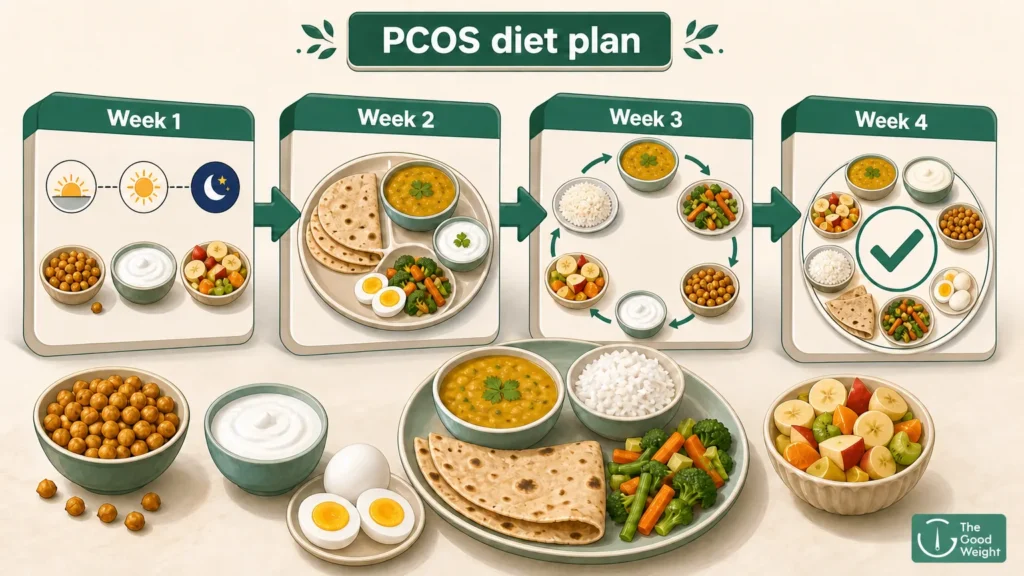
A simple four-week PCOS daily diet plan roadmap
Week 1: create meal timing and improve breakfast
Choose a realistic rhythm for three meals, with one snack if needed. You do not need to eat at identical times every day, but try to avoid repeatedly going many waking hours without food. Add a meaningful protein source at breakfast at least five days this week, such as eggs, curd, paneer, besan, milk, or sprouts.
Notice your hunger and energy, especially in the late afternoon. Do not attempt to change every part of your diet at once. The goal is simply to make the first meal of the day more filling and your eating pattern more predictable.
Week 2: practise the balanced-plate method
At lunch and dinner, include a protein source, vegetables, and a portion of carbohydrate rather than eating carbohydrate alone. Start with the meals you prepare most often, such as rice and sambar, roti sabzi, or khichdi. Add vegetables and protein before trying to reduce portions of staples dramatically.
Keep one affordable backup food at home or work for busy days. Roasted chana, eggs, curd, dal, peanuts, and frozen or seasonal vegetables can prevent a missed meal from becoming a takeaway-only evening. This planning is a form of support, not a sign that you lack self-control.
Week 3: add movement you can repeat
Choose one movement habit that feels achievable: a 20-minute walk after dinner, two beginner strength sessions, or a weekend cycle ride. Start small enough that you can still do it during a stressful week. Record how your body feels afterward rather than judging success only by calories burned.
If you have pain, dizziness, severe fatigue, or other concerning symptoms, pause and seek clinical advice. Movement should build confidence and capacity over time, not make you feel depleted.
Week 4: review consistency and symptoms
Look back at the previous three weeks. Which breakfasts kept you full? Which meals were easiest to make? When did cravings, tiredness, or skipped meals happen most often? Use this information to adjust one or two habits for the next month.
Judge results over weeks and months, not a few days. PCOS symptoms, menstrual cycles, weight, and metabolic markers can change at different rates, and progress may not be linear. A recent review of PCOS care reinforces the value of lifestyle treatment while recognising that support often needs to be personalised and combined with medical management when appropriate. PCOS treatment should account for individual symptoms and health goals.
Affordable Indian food swaps that still support your goals
Expensive powders, imported seeds, and packaged “PCOS foods” are not necessary for a balanced diet. Buy familiar foods consistently and use substitutions based on availability, taste, and budget.
-
For protein: Use dal, chana, rajma, lobia, soy chunks, eggs, curd, milk, paneer, chicken, fish, and roasted chana. If paneer is expensive, use more dal, eggs, curd, or soy chunks rather than feeling that the plan has failed.
-
For fibre: Choose seasonal vegetables, leafy greens, beans, fruit, oats, whole wheat atta, millets when affordable, and legumes. Seasonal produce is often less expensive and easier to use regularly than specialty “superfoods.”
-
For snacks: Replace costly protein bars with roasted chana, boiled eggs, curd, fruit, peanuts, makhana, or sprouts. Pairing a carbohydrate-rich snack with protein or fat can make it more satisfying.
-
For rice and roti: Keep them portion-aware instead of forbidden. Add dal, vegetables, curd, and a protein source to make the meal more balanced; this is usually more sustainable than repeatedly trying to avoid staple foods altogether.
Frequently asked questions
Does PCOS mean I need to go gluten-free?
No. Gluten-free eating is necessary for people with coeliac disease and may be appropriate for specific medical reasons, but PCOS alone does not automatically require it. Removing wheat without a clear reason can make Indian eating more expensive and restrictive. A personalised plan should focus first on meal quality, protein, fibre, hunger patterns, and overall consistency.
Is fruit allowed in a PCOS diet plan?
Yes. Fruit provides fibre, vitamins, minerals, and variety, and it does not need to be eliminated because it contains natural sugar. Whole fruit is generally more filling than juice, and pairing fruit with curd, nuts, or another protein source may help some people stay satisfied longer. The larger pattern of eating matters far more than fearing a guava, apple, orange, or banana.
Does everyone with PCOS need the same diet?
No. People with PCOS differ in symptoms, body weight, insulin resistance, activity levels, cultural eating patterns, fertility goals, medications, and medical conditions. PCOS care should use shared decision-making and personalised goals. A helpful plan respects these differences rather than forcing every person into the same menu.
How quickly should I judge results?
Give foundational habits at least several weeks before deciding they are not working, unless you are experiencing adverse symptoms or have been advised otherwise by your clinician. Look beyond the scale at meal consistency, hunger, energy, sleep, waist changes, lab results when relevant, and menstrual symptoms. Sustainable weight loss is rarely a straight line, and a plan that you can maintain is more valuable than a dramatic but short-lived result.
A strong, affordable PCOS diet program in India should make eating feel more manageable – not more frightening. Build meals around protein, fibre, familiar staples, and routines that fit your actual life, then seek help when symptoms or medical risks need closer attention. To turn this beginner framework into a plan based on your symptoms, schedule, and weight-loss history, consider booking a PCOS-focused assessment with The Good Weight.