
A face can look different from one month to the next. Sleep, stress, salt intake, allergies, medications, hormonal shifts, and body-weight changes may all affect how full the cheeks appear in the mirror. That can make a permanent operation feel tempting when the real issue may be temporary, treatable, or unrelated to cheek anatomy.
Buccal fat pad removal is often discussed as a route to sharper cheek hollows and a slimmer lower face. But the procedure removes tissue. It does not treat metabolic health, change bone structure, or promise that someone will resemble a filtered image. Once cheek fat has been removed, putting it back is far more difficult than taking it out.
I think that permanence should slow the conversation down. A good decision starts with a clear answer to a deceptively simple question: What, exactly, is making my face look fuller? The answer may point toward surgery. It may point elsewhere. Either outcome is useful.
Plain-language definition: Buccal fat pads are naturally occurring pockets of fat deep in the cheeks, between facial muscles. Buccal fat removal removes part of that tissue through incisions inside the mouth to reduce fullness in the lower cheek area.
What buccal fat pad removal actually changes
The buccal fat pad sits beneath the cheekbone area and above the jawline, deeper than the soft tissue that changes after a salty dinner or a poor night’s sleep. During surgery, a qualified plastic surgeon makes small incisions inside the mouth, identifies the fat pad, and removes a planned amount before closing the incision. Cleveland Clinic’s procedure overview describes it as an outpatient facial-contouring procedure.
What it changes is specific: lower-cheek volume. It may create more shadow below the cheekbone or make a naturally round face appear less full. It does not reshape the jaw, tighten loose skin, remove fat from every part of the face, or change the width of the cheekbones. Those distinctions matter because social-media before-and-after images often blur them.
Bone structure does a lot of visual work here. A person with prominent cheekbones and stable lower-cheek fullness may see a different effect from someone whose face appears round due to a smaller chin, loose skin, weight fluctuation, or swelling. Same operation. Different face. Different long-term trade-off.
Age also matters. Facial fat naturally shifts and diminishes over time. A hollowed or tired appearance that feels fashionable at 28 may not feel welcome at 48. Johns Hopkins notes that candidates need to consider facial aging and the possibility of a gaunter appearance later in life. That isn’t an argument against surgery. It is an argument for looking past next month’s photographs.
Is facial fullness an anatomical concern or something else?
A useful first step is to observe patterns instead of judging one selfie. Does fullness stay consistent across several months at a stable weight? Is it equal on both sides? Did it appear suddenly? Those details can separate a structural concern from a health or lifestyle concern that needs a different response.
| Pattern you notice | What may be going on | Better next step |
|---|---|---|
| Full lower cheeks that have looked similar since adulthood | Natural facial anatomy or inherited fat distribution | Discuss anatomy and long-term goals with a qualified surgeon |
| Face looks puffier after restaurant meals, alcohol, poor sleep, or allergy flares | Fluid retention or inflammation | Track patterns, address triggers, and seek medical advice if it persists |
| Fullness changes alongside body-weight gain or loss | Overall body-fat distribution | Focus on stable, sustainable weight management before judging facial contour |
| New, one-sided, painful, or rapidly worsening swelling | Dental, salivary-gland, sinus, or other medical issue | Seek timely clinical assessment rather than cosmetic treatment |
The thing is, buccal fat pads do not explain every “round face” concern. Steroid medicines, dental infections, salivary-gland conditions, and swelling can alter the face in ways a cosmetic operation should never try to solve. Sudden asymmetry, pain, fever, a lump, or trouble opening the mouth deserves medical care first. Not a cosmetic consult.
Body weight can matter too, though it does not let anyone predict a facial result with neat precision. Some people lose weight and see a marked reduction in facial fullness. Others don’t. Genetics, facial structure, and where the body stores fat make the mirror a finicky measuring tool.
For people already pursuing health-led change, a doctor can look at the broader picture through medical weight-loss care. Sustainable weight loss may change facial fullness, but it should never be pursued solely to chase a narrower face. Metabolic health, energy, mobility, and a stable routine are better reasons.
What a responsible consultation should examine before surgery
A consultation should feel more like an assessment than a sales pitch. The surgeon needs to see your face at rest and in motion, assess symmetry, and discuss what you want to change in ordinary language. “I want to look less puffy” means something different from “I want a permanent hollow beneath my cheekbone.”
Here is a practical consultation checklist:
-
Facial anatomy and skin quality. The surgeon should assess cheekbone projection, chin and jaw proportions, the amount of lower-cheek volume, and skin laxity. Removing fat from an already lean or narrow face can produce a result that feels too sharp, especially as years pass.
-
Age and likely facial aging. No clinician can forecast every change in a face. Still, they should discuss the direction of change: volume loss, looser skin, and a less padded midface often become more visible with time.
-
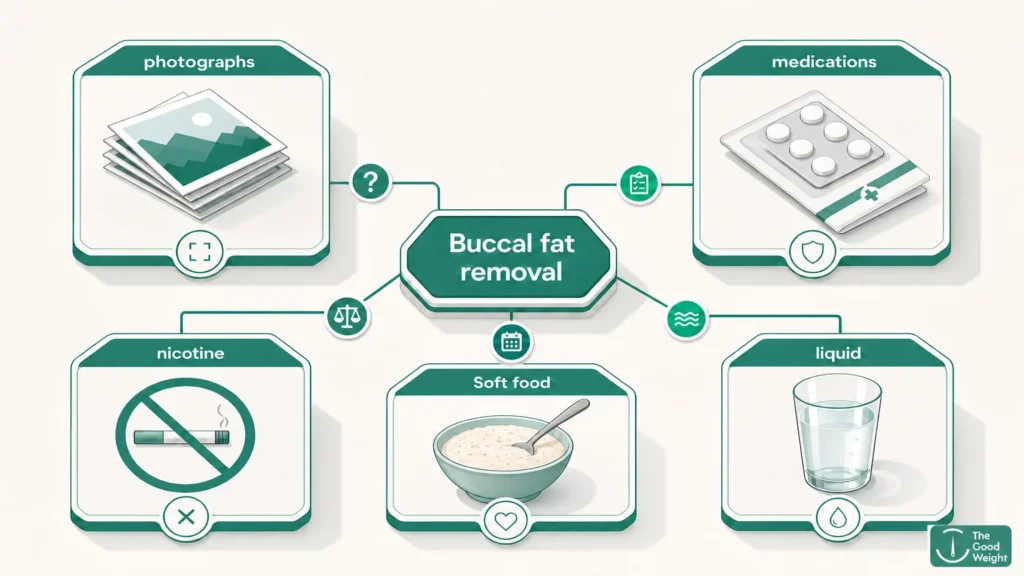
Health history and healing factors. Share medications, smoking or nicotine use, prior facial surgery, dental problems, bleeding history, and conditions that affect healing. A surgeon may advise against surgery if risks outweigh the likely aesthetic benefit.
-
Goals, photographs, and expectations. Bring inspiration images if helpful, but use them as conversation starters, not blueprints. Camera lenses, lighting, makeup, body position, and digital editing can create cheek contours that surgery cannot safely reproduce.
-
Alternatives and the option to wait. A careful clinician should be comfortable telling you that no procedure is the better choice right now. That answer can be disappointing. It can also save you from making a decision based on a temporary feeling.
Look for a surgeon with relevant qualifications, experience in facial surgery, and a clear explanation of their complication and revision approach. Ask who performs the operation, where it happens, and who you contact outside clinic hours if you have a concern. Vague answers are a reason to pause.
Recovery, uncertainty, and the trade-offs people forget
The first days after buccal fat removal often involve cheek swelling, soreness, and a modified diet while the inside of the mouth heals. Swelling can hide the early contour, so judging the result in the first week is a recipe for anxiety. Patients often need to wait weeks to see changes settle, with the final appearance taking longer as tissues recover.
Recovery instructions vary with the surgeon and the person. You may need a liquid or soft-food plan at first, careful oral hygiene, prescribed mouth rinses, and limits on strenuous activity. Follow the individual instructions you receive, even if a friend had a breezy recovery. Mouth wounds are not the place for improvisation.
Risks deserve plain speech. They can include bleeding, infection, poor healing, injury to nearby structures, asymmetry, numbness, and an outcome that looks more hollow than intended. A peer-reviewed review of the anatomy and surgical approach discusses the proximity of facial nerve branches and the parotid duct, which is why surgeon experience and precise technique matter.
The emotional part is easy to underestimate. Swelling can make people regret a choice before healing has had time to progress. Then, months later, the concern may reverse: a person might feel the cheeks became too hollow. Revision or restoration is not simple. Fat grafting and fillers may be discussed in some cases, but neither recreates the original tissue arrangement exactly. Permanent is permanent enough to deserve patience.
Buccal fat pad removal cost and comparing your options
The buccal fat pad removal cost should never be reduced to a single number from an ad. Fees may include the surgeon, anesthesia, operating facility, medical tests, medicines, follow-up appointments, and any care needed if recovery does not go to plan. The American Society of Plastic Surgeons advises that cost estimates vary by surgeon, location, and the components of care.
Ask for an itemized written quote. A lower initial figure may exclude anesthesia or facility charges, while a higher one may reflect a more involved setting and follow-up schedule. Cosmetic surgery is usually not covered by health insurance, so financing deserves careful thought too. Don’t borrow against your future comfort for a procedure you still feel uncertain about.
Different goals call for different tools:
-
Sustainable weight management suits people whose facial fullness changes with overall weight or who want better metabolic health. It is slower than a procedure, yes, but it addresses health rather than removing a local fat pad.
-
Non-surgical appearance choices may suit someone testing a look or addressing another concern, such as skin texture, facial balance, or temporary puffiness. Makeup, hairstyle changes, and clinician-guided treatments are not interchangeable with surgery, yet they may help clarify what someone actually wants. The Good Weight also discusses non-surgical fat reduction, though body-contouring treatments should not be confused with facial surgery.
-
Surgery suits a narrower situation: stable, anatomy-related lower-cheek fullness in someone who accepts the risks and the permanence. It is not a substitute for weight management, and it cannot promise a celebrity’s face.
Honestly, I prefer a decision that survives six months of reflection over one made after an hour of scrolling.
Questions to bring to your appointment
Am I a suitable candidate for buccal fat removal?
Ask the surgeon to explain your anatomy in relation to your goal, including why they would recommend surgery or advise against it. A good answer should mention future facial aging, not only the likely early result.
What are your credentials and experience with this procedure?
Ask about specialist training, how often they perform the operation, where surgery takes place, and who manages complications. You are looking for clarity, not a rehearsed sales answer.
What will aftercare look like?
Ask about food restrictions, mouth care, pain management, work and exercise restrictions, follow-up timing, and an after-hours contact plan. Write the instructions down. Recovery is easier when no one is trying to remember details while swollen and tired.
What does the quoted price include?
Request an itemized estimate that states professional fees, anesthesia, facility charges, medicines, tests, and follow-up visits. Ask what happens financially if you need more appointments or treatment for a complication.
What is your revision policy?
Ask how the practice handles asymmetry, dissatisfaction, or a result that appears too hollow after healing. No clinician should promise a perfect outcome, but they should explain how they assess concerns and what options might exist.
A permanent facial change should stand up to informed questions, a stable sense of self, and a conversation that is not rushed. If you’re considering surgery in Chennai, schedule a qualified consultation through The Good Weight for an anatomy-led discussion of suitability, risks, aftercare, and alternatives. Learn more at The Good Weight.