
Choosing a GLP-1 weight-loss provider can feel difficult when online advertisements focus on dramatic before-and-after images, low monthly prices, or promises of effortless results. These medicines may be helpful for some people living with obesity or metabolic health concerns, but they are prescription treatments – not a one-size-fits-all solution. Safe, sustainable care depends on the quality of the medical assessment, follow-up, nutrition support, and long-term plan around the medication.
This guide can help you compare options for doctor-supervised GLP-1 weight loss in India without relying on promotional claims alone. Treatment suitability, the choice of medication, dose changes, and outcomes vary from one patient to another. An appropriate medical consultation should determine whether medication is suitable and how it may fit into a broader plan for sustainable weight loss and metabolic health.
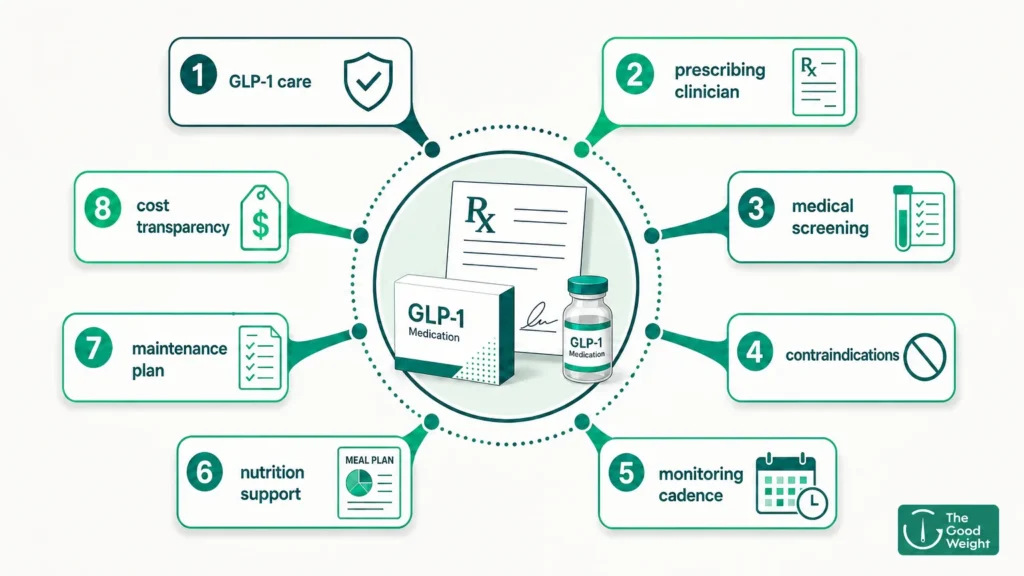
Use this checklist to assess a GLP-1 weight-loss provider
A credible provider should be comfortable explaining how their care model works before asking you to begin treatment. The goal is not simply to receive a prescription; it is to understand whether the provider can support safe decision-making from the first consultation through maintenance. Use the following points to compare clinics and programmes.
Confirm who is prescribing and supervising your care
Ask which doctor will assess you, prescribe medication if appropriate, and remain responsible for clinical decisions during treatment. A physician should be able to explain their relevant qualifications, experience in obesity or metabolic care, and how they coordinate with dietitians, diabetes specialists, or other clinicians when needed. Be cautious if a service makes it difficult to identify the prescribing clinician or presents medication as a standard package for everyone.
Obesity management often involves more than body weight alone. Blood sugar, blood pressure, sleep, liver health, joint symptoms, menstrual or reproductive considerations, and mental wellbeing can all affect the care plan. Professional guidance on obesity pharmacotherapy emphasises that medications should complement lifestyle interventions rather than replace individualized nutrition, activity, and behavioural support.
Expect a meaningful medical screening process
A responsible first consultation should cover your weight history, previous attempts at weight management, eating patterns, sleep, stress, current activity, and personal goals. It should also include a review of diagnosed conditions, prior procedures, allergies, pregnancy plans where relevant, and all current medicines and supplements. Depending on your history, the clinician may recommend physical examination, blood pressure assessment, or diagnostic testing before deciding on a plan.
This screening matters because GLP-1-based medicines can affect appetite, digestion, blood glucose management, and the way some medicines are tolerated. People using diabetes medicines, for example, may require a more careful review of their regimen to reduce avoidable risks. A provider that offers a quick prescription without asking about your health history may not be gathering enough information to make an individualized recommendation.
Ask directly about contraindications and precautions
Your clinician should discuss reasons a particular medicine may not be appropriate, as well as situations that need added caution or specialist input. For semaglutide used for chronic weight management, the prescribing information includes important contraindications and warnings, including a personal or family history of medullary thyroid carcinoma or multiple endocrine neoplasia syndrome type 2, as well as warnings related to pancreatitis, gallbladder disease, kidney injury from dehydration, and severe gastrointestinal effects.
A good consultation also makes space for practical questions. What should you do if persistent vomiting prevents you from drinking fluids? What symptoms require a same-day call? How should treatment be handled before a procedure or during a major illness? You do not need to memorize every possible side effect, but you should leave knowing how and when to seek help.
Understand the monitoring cadence before you start
GLP-1 care should not end with a prescription and a payment receipt. Ask how frequently follow-ups occur during dose escalation, who checks in between appointments, and whether you have a clear route to report troubling symptoms. Early follow-up is especially important because gastrointestinal side effects such as nausea, constipation, diarrhoea, vomiting, and abdominal discomfort may affect adherence, hydration, and nutrition.
The provider should explain that dose progression is individualized rather than rushed to meet a promotional timeline. If side effects occur, the right response may involve dietary adjustments, a slower escalation schedule, medication review, or a clinical reassessment. The approved prescribing information for semaglutide outlines why monitoring and patient counselling are integral to safe use.
Look for nutrition support that protects health, not just weight loss
Reduced appetite can make it easier to eat less, but it can also make it harder to meet protein, fibre, fluid, and micronutrient needs. Ask whether the programme includes practical nutrition support tailored to your culture, schedule, food preferences, diabetes risk, or medical conditions. Generic calorie targets and restrictive meal plans are not the same as comprehensive wellness support.
Nutrition guidance should help you create meals that are realistic to continue as medication doses change or after medication is stopped. It should also address constipation prevention, hydration, protein intake, and strategies for social occasions or travel. Exploring a provider’s approach to diet and weight loss can help you determine whether nutrition is treated as a meaningful part of care rather than an afterthought.
Clarify the follow-up and maintenance plan
Weight management is usually a long-term clinical process. Ask what happens after initial weight loss, when your dose is stable, if progress slows, or if you decide to stop medication. In a semaglutide withdrawal study, participants who stopped treatment regained a substantial proportion of lost weight over the following year, illustrating why maintenance planning deserves attention from the beginning.
A provider should discuss how they measure progress beyond kilograms lost. Depending on your situation, meaningful measures may include waist circumference, blood pressure, glycaemic markers, mobility, sleep, energy, medication requirements, and eating behaviours. The plan should also recognize that progress is rarely perfectly linear and that a plateau is not automatically a treatment failure.
Request complete cost transparency
Ask for the total expected cost of the first three to six months, not just an advertised starting price. This should include consultation fees, follow-up visits, medication, blood tests, nutrition appointments, delivery fees if relevant, and the cost of any treatment for side effects. You should also understand what happens financially if the clinician decides the medicine is unsuitable or if a dose needs to change.
Be particularly careful with unclear claims about compounded, imported, or “customized” products. Regulators have warned of dosing errors with compounded semaglutide products, including cases requiring medical attention. Ask exactly what product is being prescribed, how it is supplied, how the dose is measured, and whom to contact if you have concerns.
Check the escalation pathway for side effects or changing needs
Every programme should have a clear escalation pathway. Find out whether you can speak with the prescribing team promptly, whether urgent concerns are triaged by a clinician, and when the clinic would refer you to another specialist or emergency care. A vague assurance that someone will “get back to you” is not the same as a defined safety process.
This matters if symptoms are severe, persistent, or different from what you were told to expect. It also matters when your health status changes – for example, if you become pregnant, begin a new medication, prepare for surgery, or develop symptoms requiring evaluation. Doctor-led treatment should adapt to the patient, not expect the patient to adapt to a fixed package.
Documentation and questions to request when comparing providers
Before enrolling, ask for written information rather than relying only on a sales call or social-media message. This gives you time to review the plan, compare clinics fairly, and discuss questions with your regular doctor if needed. A transparent provider should not object to reasonable questions about safety, pricing, or clinical oversight.
Request a written outline of the assessment process, the proposed follow-up schedule, medication and dose-escalation approach, expected programme costs, cancellation or refund policies, and contact details for clinical support. If laboratory tests are recommended, ask what each test is intended to assess and whether it is necessary for your individual history. You may also wish to ask how records are maintained and how your care is coordinated if you see other doctors.
Useful questions include:
- Who makes prescribing and dose-adjustment decisions, and how can I contact that clinician?
- Which conditions, medicines, or symptoms could make this treatment unsuitable for me?
- What will you measure besides body weight, and how often will we review those measures?
- What side effects should prompt a call, an urgent visit, or emergency care?
- What nutrition support is included, and who provides it?
- What is the maintenance plan if I reach my initial goal, plateau, or stop medication?
- What are the full medication, consultation, testing, and follow-up costs?
Evidence can help set realistic expectations, but it cannot predict an individual result. In a major trial, adults receiving semaglutide alongside lifestyle intervention had a mean weight reduction of 14.9% at 68 weeks, while individual outcomes varied substantially. Another trial found that tirzepatide produced mean reductions of up to 20.9% at 72 weeks in studied participants, but trial eligibility, support, and follow-up conditions may differ from routine clinical care.
How to interpret patient reviews responsibly
Reviews can reveal useful details about communication, appointment availability, billing clarity, medication delivery, and the day-to-day experience of a programme. Look for detailed accounts that appear independently published and describe both strengths and limitations. A review that explains how a clinic managed a side effect or handled a change in plan may be more informative than a short statement promising exceptional results.
At the same time, testimonials are personal accounts, not clinical proof that a treatment is safe, appropriate, or likely to work for you. People may have different diagnoses, starting weights, medicines, financial circumstances, nutrition support, and follow-up periods. A small number of highly positive stories cannot guarantee that you will have the same response.
Be cautious about reviews that make absolute promises, describe unusually rapid results without clinical context, or do not identify who provided medical supervision. It is reasonable to ask a provider how they define outcomes and whether they report results across all patients rather than selected success stories. The best decision combines patient experience, transparent clinical information, and an individualized medical assessment.
A safer standard for doctor-supervised GLP-1 weight loss
The right provider will not present GLP-1 medication as a shortcut or guarantee. Instead, they will assess your health carefully, explain benefits and limitations honestly, provide nutrition and follow-up support, and help you plan for maintenance. That is the difference between simply obtaining medication and receiving personalized weight care designed around your long-term metabolic health.
If you are in Chennai and want an individualized eligibility discussion, consider booking a weight-loss doctor consultation with The Good Weight. Bring your health history, current medicines and supplements, and questions about safety, monitoring, pricing, and long-term maintenance. A thoughtful consultation can help you decide whether GLP-1 treatment – or another evidence-based approach – is appropriate for your needs.