
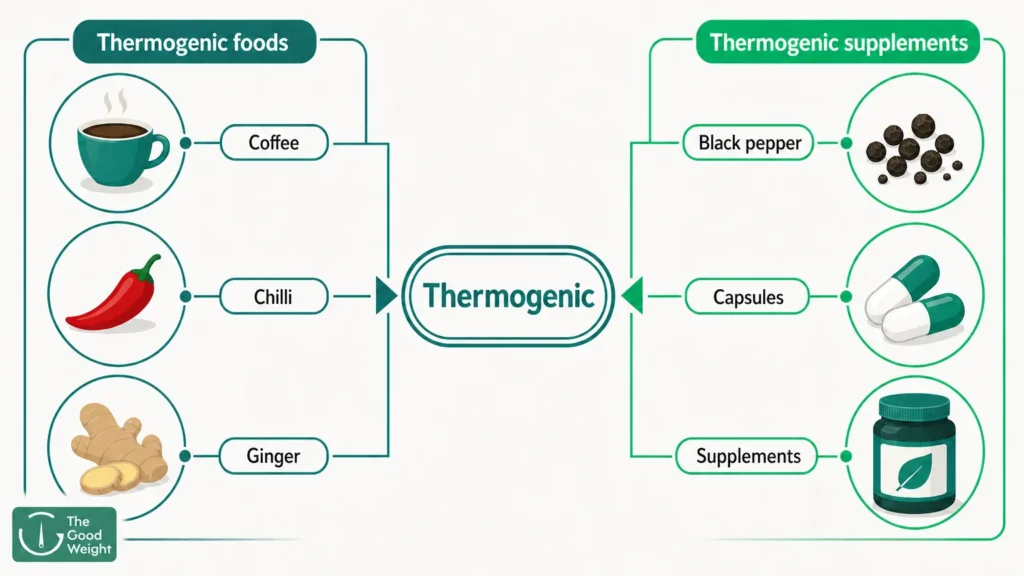
A cup of strong coffee before a walk. Extra chilli sprinkled over lunch. A social-media ad for capsules that promise to “turn your body into a fat-burning machine.” The pitch is familiar because it speaks to a very human wish: that one small change could make weight loss finally feel easier.
The term thermogenic sounds scientific, and there is real biology behind it. Your body uses energy to digest food, absorb nutrients, move, stay warm, and keep organs working. But that kernel of truth often gets stretched into a claim that a spice, tea, drink, or capsule can melt body fat on its own.
It can’t.
A food or drink may be enjoyable, fit your routine, or help you build a more filling meal. Some ingredients can cause short-lived changes in energy expenditure or appetite. Yet lasting fat loss does not come from targeting one body area, “heating up” metabolism, or finding the right powder. It comes from a pattern of eating, movement, sleep, medical care when needed, and a plan that you can live with for months rather than days.
Plain-language definition: Thermogenesis is the energy your body uses to produce heat. In nutrition marketing, “thermogenic” often describes foods or products claimed to increase calorie burning. The marketing claim is far larger than the effect most people can expect.
Can one food independently melt fat?
Myth: A thermogenic food causes meaningful fat loss by itself.
Reality: No single food independently creates targeted or lasting fat loss. Body fat changes over time in response to total energy intake, activity, sleep, health conditions, medicines, stress, and other personal factors. A spicy meal cannot direct your body to burn abdominal fat. Green tea cannot cancel out a week of irregular eating. Lemon water is still water with lemon in it.
That doesn’t make these foods “bad” or useless. Coffee may be part of a morning ritual you enjoy. Ginger, black pepper, mustard seeds, and chilli can make home-cooked food taste less flat, which may make an eating pattern easier to keep. Protein-rich foods may help you stay satisfied between meals. The useful question isn’t, “Which ingredient burns fat?” It’s, “What makes my usual meals more satisfying and manageable?”
I’ve found that the loudest claims often leave out the dull but meaningful part: repetition. Eating a filling breakfast five days a week may have more effect on your routine than buying an expensive tub of powder that makes you jittery by day three. Not glamorous. Still true.
What thermogenic means in the body
Your body burns energy all day, even while resting. Part of that energy use comes from processing a meal, called the thermic effect of food. Protein tends to require more energy to digest than carbohydrate or fat, though that fact does not turn protein into a fat-loss shortcut. A review of the research on dietary protein describes its effects on energy expenditure and fullness, while also making clear that the wider eating pattern matters for weight outcomes in this review of protein, appetite, and energy expenditure.
Ordinary thermogenesis versus a sales claim
Food-related heat production is normal physiology. So is feeling warmer after a hot drink or a spicy curry. Marketing often takes that ordinary response and implies a much bigger result: a “boosted metabolism” that keeps burning fat around the clock. That leap is where the trouble starts.
Caffeine and capsaicin, the compound that gives chilli its heat, have been studied for effects on energy expenditure and appetite. Research on capsaicinoids has reported small changes in these measures under study conditions, but small physiological changes do not equal meaningful long-term fat loss in everyday life as this systematic review of capsaicinoids and weight management found. Dose, tolerance, meal pattern, sleep, and a person’s starting health all muddy the picture.
And there’s a practical issue. Your body adapts. Someone who drinks several cups of coffee every day may feel less of caffeine’s stimulant effect than someone who rarely has it. Chasing a stronger effect can lead to more caffeine, poorer sleep, palpitations, reflux, or anxiety. That is a steep price for a modest and unreliable payoff.
Thermogenic foods: sensible habits versus red flags
The table below separates eating habits that can fit sustainable weight loss from claims that deserve caution. No ingredient needs to become the star of every meal.
| A steadier habit | Why it may help | A claim to question |
|---|---|---|
| Include a protein source such as dal, curd, eggs, fish, chicken, tofu, or paneer | Protein can make meals more filling and has a higher thermic effect than other macronutrients. | “Eat protein alone to force fat loss.” |
| Build fibre from vegetables, fruit, pulses, and whole grains | Fibre-rich foods can add volume and slow the rush back to hunger for many people. | “Detox tea flushes stored fat.” |
| Drink water regularly, especially if you confuse thirst with hunger | Hydration supports normal daily function and can replace sugary drinks. | “Ice water burns enough calories to change your weight.” |
| Use spices for flavour | Chilli, ginger, cumin, and pepper can make simple meals satisfying. | “Spices melt belly fat while you sleep.” |
| Keep meals regular enough to avoid arriving ravenous at night | A predictable rhythm can make food choices feel less frantic. | “Skip meals, then use stimulants to suppress hunger.” |
Look at the pattern. The useful side is ordinary food, eaten consistently. The red-flag side tries to sell urgency, punishment, or a dramatic bodily reaction as proof that something works. Sweating more is not proof of fat loss. Neither is a rumbling stomach.
The NIH consumer guidance on weight-loss supplements warns that many products have limited evidence, may interact with medicines, and can contain ingredients that are not safe for everyone. “Natural” on the label tells you very little about dose, purity, or risk. Honestly, a product that claims to work without changes to food, activity, or health care should make you pause.
Thermogenic pills and supplements need a medical-review check
Thermogenic pills and thermogenic supplements often combine caffeine with plant extracts, stimulants, or multiple ingredients. Labels can look tidy. The body’s response may not be. A capsule that raises heart rate, disrupts sleep, or causes diarrhoea can make a weight plan harder to sustain, not easier.
Before trying one, work through this checklist with a doctor, pharmacist, or qualified dietitian:
-
Check your health history. High blood pressure, heart rhythm symptoms, panic attacks, reflux, migraines, thyroid conditions, and diabetes all change the risk discussion. A product that feels harmless to a friend may be a poor fit for you.
-
List every medicine and supplement. Diabetes medicines, blood-pressure treatment, antidepressants, stimulant medicines, and blood thinners deserve particular care. Ingredient blends can complicate blood glucose, blood pressure, sleep, or medicine absorption.
-
Notice digestive and sleep symptoms. Frequent acidity, loose stools, constipation, poor sleep, or late-night hunger are not minor details. More caffeine or an aggressively restrictive eating rule can worsen the exact issue you are trying to solve.
-
Do not self-prescribe during pregnancy or breastfeeding. Weight-loss products and restrictive food rules need individual clinical advice during these periods. The same caution applies if you are trying to conceive.
The NIH health-professional fact sheet on weight-loss dietary supplements also notes that supplement ingredients can have adverse effects and drug interactions. Point being: “sold without a prescription” does not mean “right for my health context.”
People with a family history of diabetes, unexplained weight change, persistent fatigue, or fluctuating appetite may also benefit from medical assessment before tightening food rules. Relevant blood tests can sometimes clarify the picture. The Good Weight’s diagnostic testing options can form part of a doctor-led discussion about metabolic health, rather than guessing from symptoms alone.
A familiar Indian plate beats a miracle ingredient
Take an ordinary weekday lunch: one or two phulkas, a bowl of rajma or sambar, a generous serving of mixed vegetables, cucumber-onion salad, and plain curd. If you prefer rice, use a portion that suits your hunger and medical needs, then keep the dal, vegetables, and protein on the plate. Add a squeeze of lime, chilli, coriander, or pickle for flavour, not as a fat-burning ritual.
Why might that meal hold you better than tea and biscuits followed by a giant evening snack? It contains protein from pulses and curd, fibre from vegetables and legumes, and enough volume to feel like a meal. The flavours matter too. Food that tastes satisfying is easier to repeat than a joyless “diet” plate.
Here’s another option for breakfast: vegetable oats or vegetable upma paired with curd, sprouts, eggs, or tofu. Someone with diabetes, kidney disease, irritable bowel symptoms, or a history of bariatric treatment may need a different balance and portion size. Food plans should bend around real life, not force real life around a spreadsheet.
For practical ideas that account for routines and preferences, explore The Good Weight’s approach to diet and weight loss. A meal need not be perfect. It needs to work often enough.
Frequently asked questions about thermogenic products
Does coffee burn fat?
Coffee contains caffeine, which can temporarily increase alertness and may slightly affect energy expenditure. It does not selectively burn body fat. Keep an eye on total caffeine, added sugar, sleep, anxiety, reflux, and blood pressure. A morning filter coffee can fit well for some people; a late-evening energy drink is a different story.
Do chilli, ginger, and black pepper speed up metabolism?
They may create a warming sensation and make meals more enjoyable. Chilli compounds have shown small effects in research settings, but spices have not shown that they independently create lasting fat loss. Use them because you like the food they make, not because they promise a metabolic rescue.
Are thermogenic supplements safe?
Some are not suitable for people with medical conditions or medicines, and product labels may combine several stimulants. Stop and seek medical advice if you develop chest discomfort, a racing heartbeat, dizziness, severe anxiety, insomnia, or ongoing digestive symptoms. Don’t treat unpleasant side effects as proof that a pill is “working.”
Why am I hungrier after starting a fat-burning product?
Stimulants can disrupt sleep, and poor sleep can make appetite feel more intense the next day. Extreme restriction can also leave you physically hungry and mentally preoccupied with food. Rather than doubling the dose, review your meals, sleep, and product ingredients with a clinician.
What if my progress has stalled?
A stall is not a personal failure, and it is rarely solved by adding another supplement. Review your usual portions, weekend eating, activity, sleep, medicines, stress, and health markers. If weight or metabolic concerns persist, doctor-led medical weight-loss care can help identify the next sensible step.
A thermogenic claim may be persuasive because it turns a complicated process into a tidy promise. Your body is not tidy in that way. It responds better to patient adjustments, nourishing meals, and care that takes your medical history seriously.
If you are considering supplements, managing diabetes risk, or need an eating plan that works around your routine and health conditions, seek a doctor-led nutrition assessment. Learn more through The Good Weight.