
Many people begin a body weight loss plan by focusing only on walking, cutting calories, or trying to “boost” metabolism. These steps can be useful, but resistance training deserves a place in the conversation too – especially if you want to feel stronger, protect everyday mobility, and build habits you can maintain.
Strength training is not a shortcut that suddenly transforms metabolism or guarantees rapid fat loss. Its value is more practical: it can help preserve lean tissue while you lose weight, improve the strength needed for daily tasks, and make physical activity feel more manageable over time. For adults in Chennai who are restarting exercise, managing joint discomfort, or following a medically supervised nutrition plan, a gradual and personalised approach is usually safer than an intense workout challenge.
What resistance training can realistically contribute to weight loss
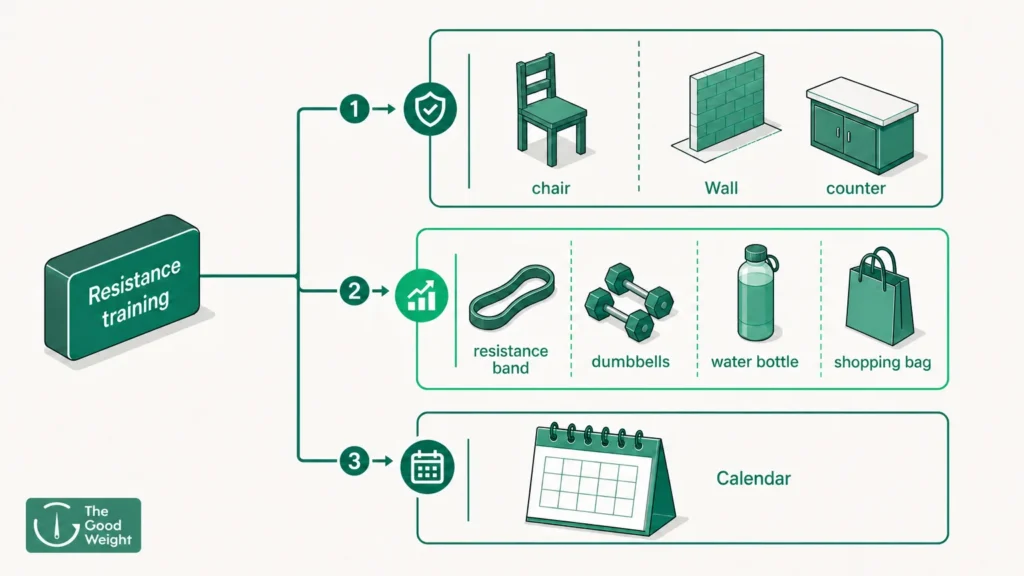
Resistance training includes exercises that ask muscles to work against an external load. That load may come from your body weight, a resistance band, dumbbells, a water bottle, a gym machine, or even a shopping bag carried with good posture. The aim is not necessarily to lift heavy weights; it is to apply a manageable challenge and gradually build strength.
Myth: strength training dramatically speeds up metabolism
Strength training uses energy during the workout, and muscle tissue is metabolically active. However, it is misleading to suggest that gaining a small amount of muscle will create a dramatic, automatic increase in calorie burn. Sustainable body weight loss still usually depends on a pattern of eating, movement, sleep, recovery, and, for some people, medical treatment that supports an appropriate energy deficit.
The more useful point is that regular physical activity and dietary changes work together. The National Institute of Diabetes and Digestive and Kidney Diseases notes that physical activity can help people manage weight and maintain weight loss, while eating patterns remain central to creating the energy balance needed for change. A combination of healthy eating and physical activity supports weight management, rather than one exercise method doing all the work.
Fact: it can help protect strength and lean mass during weight loss
When body weight decreases, the scale does not distinguish between fat, water, and lean tissue. A well-designed plan should therefore care about more than kilograms lost. Resistance exercise provides a signal to the body to keep using its muscles, which can be valuable when food intake is reduced. Research reviews have found that resistance training can improve body composition and muscular strength, though results vary based on the programme, starting health, nutrition, and consistency.
Maintaining or improving strength has immediate benefits beyond body composition. Sitting down and standing up from a chair, climbing stairs, lifting a child, carrying groceries, and walking longer distances all rely on muscular capacity. If a person becomes more capable in these tasks, they may find it easier to stay active throughout the day – an important but often overlooked part of sustainable weight care.
Fact: the scale may move slowly even when progress is real
It is normal for body weight to fluctuate because of hydration, salt intake, digestion, menstrual cycles, and changes in exercise. Early strength training can also cause temporary soreness and fluid shifts. This does not mean the plan has failed or that you should respond by skipping meals or adding punishing workouts.
A realistic body weight loss plan measures health progress over weeks and months, not only from one weigh-in to the next. The CDC advises that gradual, steady weight loss is more likely to be maintained. Strength, waist measurements, energy, and adherence often provide a fuller picture than the scale alone.
How to start with a safe two-to-three-day routine
For most beginners, two non-consecutive full-body sessions per week are enough to start. A third session can be added once the first two feel manageable and recovery is good. This approach allows you to practise key movements without leaving you excessively sore or exhausted.
Aim for a level of effort where the final few repetitions feel challenging but your technique remains controlled. You should be able to breathe steadily and stop before your form breaks down. If you are new to exercise, begin with one set of each movement and build toward two sets over several weeks.
A simple first-week full-body structure
Start each session with five to 10 minutes of gentle movement, such as easy walking, marching in place, or slow cycling. This is an opportunity to notice how your body feels that day rather than a test of fitness. Then choose one option from each movement pattern below.
| Movement pattern | Beginner option | Band or gym alternative | Suggested starting dose |
|---|---|---|---|
| Sit-to-stand or squat | Stand from a sturdy chair | Leg press machine or supported squat | 6-10 repetitions |
| Push | Wall push-up or hands-on-counter push-up | Chest press machine or band chest press | 6-10 repetitions |
| Pull | Supported band row | Seated cable or machine row | 8-12 repetitions |
| Hip hinge | Hip hinge to a wall behind you | Light dumbbell deadlift or cable pull-through | 6-10 repetitions |
| Carry | Carry two light bags while standing tall | Dumbbell farmer carry | 20-30 seconds |
| Core stability | Seated abdominal brace or wall plank | Pallof press with a band | 10-20 seconds |
Rest for about one to two minutes between sets, or longer if you need it to regain comfortable breathing. A beginner session does not need to last an hour. Twenty to 35 minutes of focused movement is enough when you are learning exercises and creating a repeatable routine.
Example of a practical week
On Monday, complete one set of chair sit-to-stands, wall push-ups, band rows, hip hinges, carries, and a wall plank. On Tuesday, take an easy walk or do a gentle mobility routine. Wednesday can be a rest day, followed by the same strength session on Thursday or Friday.
Weekend movement might include a relaxed walk at the beach, time in the park, household activity, cycling, or another activity you enjoy. Adults are encouraged to build toward at least 150 minutes of moderate-intensity aerobic activity weekly, alongside muscle-strengthening activity on two or more days. You do not need to reach that total immediately; short bouts of activity still count toward a more active routine.
How to choose exercises when mobility or confidence is limited
Exercise should be adapted to the person, not the other way around. If you have a larger body, joint discomfort, low confidence, or a long break from movement, a stable and supported option is often the best starting point. Needing a chair, wall, machine, or smaller range of motion is not a failure; it is sensible exercise selection.
Lower-impact substitutions and modifications
| If this feels difficult | Try this instead | Helpful adjustment |
|---|---|---|
| Knee discomfort during a squat | Sit-to-stand from a higher chair or partial squat holding a counter | Use a pain-free range and sit back slowly |
| Floor push-ups feel inaccessible | Wall push-ups or incline push-ups on a counter | Begin more upright and lower the incline gradually |
| Standing rows feel unstable | Seated band row or supported machine row | Keep both feet firmly on the floor |
| Bending toward the floor is uncomfortable | Hip hinge with hands on thighs or a wall target behind you | Keep the load light and spine neutral |
| Carrying weights bothers hands or balance | Seated machine work or shorter supported carries | Use lighter loads and a clear walking path |
| Getting on the floor is difficult | Wall plank, seated brace, or standing band press | Avoid floor transitions until they feel safe |
A useful rule is to distinguish muscular effort from joint pain. Working muscles may feel tired, warm, or mildly sore a day after training. Sharp, catching, spreading, or worsening pain is different. Stop the exercise if pain is significant, changes your walking or movement pattern, or continues after the session.
A modification checklist before every session
First, ask whether you slept poorly, are unusually fatigued, have new swelling, or feel unwell. If so, choose a gentler session, take a walk, or rest. Second, use supports without hesitation: a chair, wall, rail, resistance band anchored safely, or gym machine can make movement feel more secure.
Finally, make the range of motion fit your body today. A partial chair squat performed with control is more useful than a deep squat completed with pain or fear. Over time, your range, confidence, and strength may improve naturally. Progress is more sustainable when you earn it gradually rather than force it through discomfort.
How to make workouts support fat loss over time
The best progression plan is usually the least dramatic one you can repeat. Do not add weight, repetitions, and extra training days all at once. Choose one small change after the current routine feels comfortable for at least one or two weeks.
Use a gradual progression framework
Begin with one set of six to 10 controlled repetitions for each exercise. When you can complete the top end of your chosen repetition range with stable technique and without a substantial increase in joint symptoms, add two repetitions, a small amount of resistance, or a second set. If you use gym machines, even a small increase in the selected weight can be enough.
After several weeks of two weekly sessions, consider a third non-consecutive session only if recovery remains good. You should not feel that exercise leaves you unable to work, care for family, sleep, or walk comfortably. Taking rest days is part of training because muscles and connective tissues need time to recover from a new stimulus.
Walking and other aerobic movement complement resistance work rather than compete with it. If formal exercise feels difficult, begin by adding short walks after meals, choosing stairs when comfortable, or taking regular movement breaks from desk work. These body weight loss tips may appear simple, but daily movement is often more sustainable than occasional exhausting workouts.
How food, hydration and recovery fit around training
Exercise is easier to maintain when your body is adequately fuelled. Extreme restriction can leave you dizzy, fatigued, excessively hungry, or unable to recover well from training. A body weight loss diet should support health, energy, and metabolic needs – not make daily life feel unmanageable.
Build regular meals around familiar foods
You do not need special supplements or “fat-burning” foods to begin strength training. Aim for regular meals that include a source of protein, high-fibre carbohydrate foods, vegetables or fruit, and fats in portions aligned with your nutrition plan. Familiar body weight loss food choices may include dal, chana, rajma, curd, milk, paneer, tofu, eggs, fish, chicken, sprouts, and soy products.
For example, a light pre-workout option might be fruit with curd, a small idli-and-sambar meal, or a banana with milk if it suits your plan. After training, a normal meal containing protein and carbohydrates can support recovery: rice with sambar and vegetables plus curd, chapati with dal and paneer, or millet with fish and vegetables are practical examples. Individual needs can differ substantially for people with diabetes, kidney disease, digestive conditions, or medication-related appetite changes.
The broader goal is an eating pattern you can sustain. The NIDDK’s guidance on healthy eating and physical activity for life emphasises choosing eating and activity habits that fit long-term health, rather than relying on restrictive short-term plans. For personalised nutrition support, explore The Good Weight’s approach to diet and weight loss planning.
Hydration and sleep are training tools
Drink water regularly across the day, with extra attention in Chennai’s heat and humidity. Carrying a bottle, drinking with meals, and taking fluids before and after exercise are practical habits. Your individual fluid requirements may be different if you have heart, kidney, or other conditions that require fluid guidance from a clinician.
Sleep matters too. Poor sleep can make appetite regulation, recovery, energy, and motivation more difficult. Rather than treating sleep as optional, protect a consistent bedtime routine where possible. A lighter session performed after a difficult night is often wiser than abandoning your plan or attempting an intense workout to “make up” for it.
What progress to track beyond body weight
A scale can be one monitoring tool, but it is not a complete report card. Weighing under similar conditions, such as once weekly at the same time of day, can be more informative than reacting to daily fluctuations. If weighing feels emotionally distressing, discuss alternatives with your healthcare team.
Use a simple weekly checklist to notice meaningful change:
- Strength and function: Can you rise from the chair more easily, carry groceries with greater confidence, or complete more controlled repetitions?
- Waist measurement: Measure at the same point and under similar conditions no more often than every few weeks.
- Daily movement: Note walks, step counts if you use them, or the number of days you took active breaks.
- Energy and sleep: Record whether you feel less tired during daily tasks and whether sleep quality is improving.
- Confidence and consistency: Track the sessions you completed, not the sessions you think you “should” have done.
- Health measures: If relevant, monitor blood glucose, blood pressure, medication changes, or laboratory results with your clinician.
This wider view keeps the focus on health and capability. It also helps your care team identify why progress may have slowed – whether the issue is recovery, nutrition, medication, pain, or an unrealistic routine – not simply assume you need to work harder.
When professional review is important
A professional review can make exercise safer and more effective when health conditions, symptoms, or medicines affect your plan. It is especially valuable when body weight loss is part of treatment for metabolic health concerns, rather than an isolated fitness goal.
Should I speak with a doctor before starting?
Speak with a doctor before beginning or progressing a programme if you use insulin or medicines that can lower blood glucose, have uncontrolled high blood pressure, known heart disease, severe breathlessness, or a recent hospital admission. Medication, meal timing, and exercise may need to be coordinated to lower the risk of low blood glucose, dizziness, or other complications.
A review is also important following recent surgery, bariatric or endoscopic procedures, pregnancy-related complications, or major changes in health. The right activity plan may be very different during recovery. The Good Weight can help patients explore doctor-led medical weight loss care that integrates movement, nutrition support, health monitoring, and appropriate treatment options.
When is a physiotherapist the better first step?
Consider a physiotherapist if you have severe or persistent joint pain, repeated falls, numbness or weakness, swelling, pain after a recent injury, or difficulty performing basic movements such as standing from a chair. A physiotherapist can assess movement patterns and provide modifications that build confidence without asking you to push through symptoms.
Stop exercising and seek prompt medical advice for chest pain, fainting, severe dizziness, unusual shortness of breath, or sudden neurological symptoms. Exercise should challenge you appropriately, but it should never require you to ignore warning signs.
Build strength for the long term
Resistance training can be a valuable part of body weight loss, but it works best as one part of a comprehensive plan. Start with manageable full-body movements two or three times a week, use modifications that respect your joints and confidence, and progress only when your current routine feels stable. Pair training with nourishing meals, hydration, sleep, regular movement, and medical guidance when needed.
If you are in Chennai and want a plan matched to your health history, medications, mobility, and goals, book a doctor-led weight-management assessment with The Good Weight. Personalised weight care can help you build a realistic movement, nutrition, and monitoring plan designed for sustainable health – not a short-lived metabolic shortcut.