
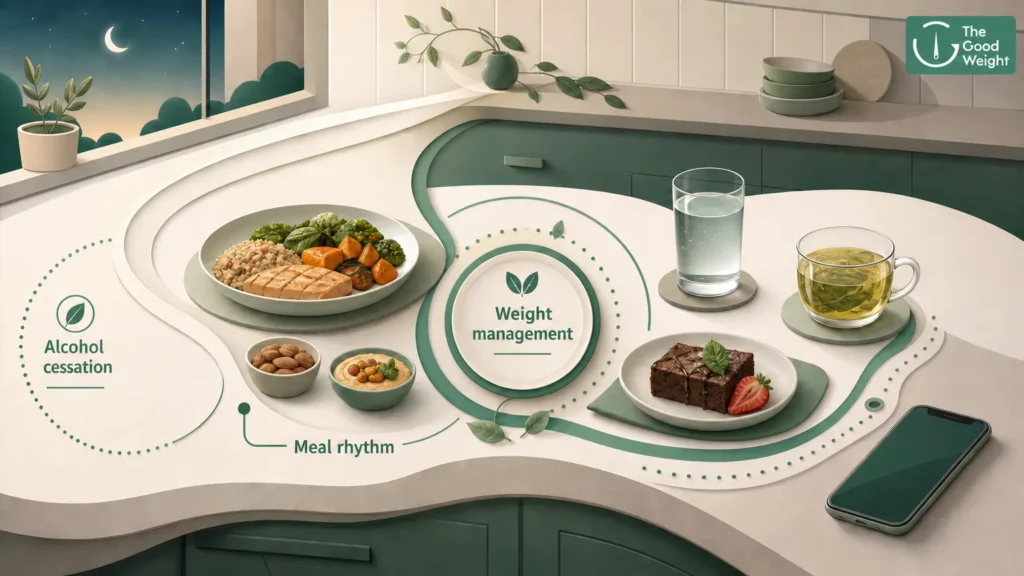
After you stop drinking, it is common to notice that your appetite, energy, sleep or food preferences feel different. Some people feel hungrier, some reach for sweet foods more often, and some see their weight change in either direction. Others notice no meaningful change at all.
This can make the idea of a weight loss diet after quitting alcohol feel urgent. However, alcohol cessation is a significant health transition, not a deadline to transform your body. The most helpful priority is usually to rebuild steady meals, sleep and coping routines while getting the right clinical or recovery support. Weight management, if it is a concern, can then be approached gradually and without shame.
Why appetite and weight can change after alcohol cessation
Alcohol can become linked to a person’s daily rhythm: when they eat, when they unwind, how they socialise and when they go to bed. Removing it may change these routines quickly. An evening that once involved drinks and little food might now include dinner, snacks or dessert; alternatively, someone may find that they have little appetite while adjusting to a new routine.
Energy intake can change as well, but there is no universal outcome. Alcoholic drinks can contribute substantial energy, while food chosen alongside drinking can add more. At the same time, replacing alcohol with frequent high-sugar drinks, takeaway food or grazing can offset that change. Research on alcohol and body weight suggests that the relationship varies with drinking pattern, overall diet, activity and individual metabolic factors rather than following a single predictable path.
Sleep is another important piece. Alcohol may make some people feel sleepy initially, but it can disrupt the quality and timing of sleep. In the early period after quitting, sleep can still be unsettled, and tiredness may make convenient, sweeter foods seem more appealing. Short or disrupted sleep is associated with changes in appetite regulation and higher obesity risk, although it is only one of many influences on weight.
There may also be an element of substitution. Alcohol and sweet foods can both provide a fast sense of comfort, reward or relief after a difficult day. This is not a personal failure and does not mean that you have “traded one problem for another.” It is useful information: your body and mind may be asking for regular nourishment, rest, connection or support.
Start with regular, nourishing meals
A sustainable weight loss diet plan after quitting alcohol should not begin with skipping meals or cutting out entire food groups. Restriction can intensify hunger, make cravings harder to manage and add unnecessary pressure during a period of adjustment. Instead, aim for a predictable pattern that gives your body enough fuel through the day.
Build a simple meal rhythm
For many people, three meals plus one planned snack is a practical starting point. The exact timing matters less than avoiding long stretches of under-eating followed by intense evening hunger. If mornings are difficult, start small: curd with fruit and nuts, eggs with toast, or a bowl of oats can be more manageable than forcing a large breakfast.
At lunch and dinner, use a flexible plate structure. Include a protein source such as dal, beans, eggs, fish, chicken, paneer, tofu or curd; add vegetables or salad where practical; and include a satisfying carbohydrate such as rice, roti, millet, potatoes or whole-grain bread. Carbohydrates are not a mistake – they can support energy and fullness when paired with protein and fibre.
Make preparation easier, not perfect
When routines are changing, the best meals are often the ones you can make consistently. Keep a few low-effort options available: cooked dal, boiled eggs, chopped vegetables, frozen vegetables, fruit, roasted chana, plain curd, nuts and leftovers that can become the next day’s lunch. If cooking every day is unrealistic, decide in advance which meals will be homemade, ordered or assembled from convenience foods.
Hydration deserves attention too. Keep water nearby, particularly at times you would previously have had a drink. Sparkling water, unsweetened lime water, buttermilk or herbal tea can offer a comforting ritual without requiring an all-or-nothing approach to beverages. A clinician or dietitian can help adapt this framework for diabetes, digestive symptoms, kidney disease, medication use or other health needs.
For people looking for more tailored structure, The Good Weight’s approach to nutrition support for diet and weight loss focuses on realistic meal patterns rather than generic restriction. The goal is to create routines that still work on busy workdays, family occasions and low-energy evenings.
Handling sugar cravings without all-or-nothing rules
Sugar cravings after quitting alcohol are common enough to deserve a calm plan rather than guilt. A craving may be stronger when you are hungry, tired, lonely, stressed or in a place strongly associated with drinking. Sweet food may also be serving as a quick reward during a time when familiar coping rituals have changed.
Trying to ban every sweet food can make the pattern more emotionally charged. A more workable strategy is to make sure the craving does not arrive when you are already depleted, then choose deliberately rather than reactively.
A worked example for an evening craving
Imagine you regularly want biscuits, ice cream or mithai at 9 pm. First, look back at the day: did lunch happen late, was dinner too small, or did you miss an afternoon snack? If so, plan a more filling snack at 4-6 pm, such as fruit with curd, a handful of nuts with fruit, roasted chana, or a sandwich with paneer or egg.
Then decide what you would genuinely enjoy after dinner. It may be a portion of dessert, fruit with curd, dark chocolate, or a warm drink and a snack. Eating it seated, without hiding it or scrolling through your phone, can make it feel more satisfying than repeatedly picking at food in the kitchen.
A craving check-in
When a craving appears, pause long enough to ask three questions:
- When did I last eat a balanced meal? Hunger often masquerades as a specific sugar craving, especially after an irregular day.
- What is happening around me? Note the time, place, people and emotions involved. Patterns may emerge around commuting, loneliness, work stress or television.
- What would help for the next 20 minutes? This might be a planned snack, a shower, music, calling someone, a short walk, or simply resting.
This is not meant to turn eating into a constant self-monitoring exercise. It is a way to replace automatic reactions with a little more choice. If a sweet food helps you stay away from alcohol in the short term, it may be an understandable part of your adjustment. You can work on broader nutrition habits gradually, once recovery routines feel more secure.
Sleep, stress and social situations
New routines are most vulnerable on nights of poor sleep, after stressful days and during social events. Rather than expecting yourself to make ideal decisions every time, it helps to plan for the situations that tend to unsettle you. Sustainable change is built through recovery after difficult moments, not through perfect adherence.
When sleep is poor
The day after a restless night is not the time to compensate by fasting, over-exercising or starting a strict diet. Eat regular meals, get daylight exposure if possible, and keep caffeine earlier in the day if it affects sleep. A short walk, a regular bedtime cue and a simple evening routine can be more useful than trying to force sleep.
If poor sleep continues for weeks, or comes with severe anxiety, low mood, snoring, breathing pauses or daytime exhaustion, speak with a clinician. Sleep concerns can affect metabolic health and deserve care in their own right.
When stress peaks
Create a short list of non-food and non-alcohol coping tools before you need them. A five-minute breathing exercise, a shower, a brief walk, journalling, prayer, music, a recovery meeting or a call to a trusted person can give the urge time to pass. The right tool is the one you are willing and able to use in the moment – not the most elaborate one.
It can also help to lower the bar for meals on difficult days. A filling sandwich, curd rice with vegetables and dal, or a ready-made soup with eggs or paneer is still a meal. Consistency is more protective than trying to cook an ideal menu when your capacity is low.
When social events feel difficult
Before an event, decide on a non-alcoholic drink, eat a meal or snack beforehand, and arrange your own transport if leaving early would feel safer. Tell one trusted person what you need, if that feels comfortable. You do not owe anyone a detailed explanation for not drinking.
Social adjustment can take time. If events repeatedly trigger intense cravings or distress, avoiding them temporarily may be a sensible form of self-care, not a lack of willpower. Specialist alcohol-dependence support is the appropriate source of help when alcohol urges, relapse risk or withdrawal concerns are the main issue.
When weight concerns need medical or mental-health support
It is reasonable to ask for help before you feel overwhelmed. A doctor-led assessment can look beyond the number on the scale and consider sleep, medications, medical history, eating patterns and metabolic risk. The NHLBI’s guidance on obesity treatment also emphasises that effective care can combine nutrition, physical activity, behavioural support and medical treatment when appropriate.
Consider speaking with a clinician if you notice any of the following:
- Persistent fatigue, dizziness, weakness, vomiting or an appetite change that does not settle.
- Rapid or unexplained weight change, especially if it is distressing or affecting daily life.
- A history of diabetes, prediabetes, high blood pressure, fatty liver disease, sleep apnoea or a strong family history of metabolic disease.
- Questions about whether a current medicine affects appetite, blood sugar, weight or alcohol recovery.
- Feeling preoccupied with food, weight or body image; binge eating; purging; or feeling unable to eat regularly because of fear or guilt.
- Difficulty stopping alcohol, concern about withdrawal, relapse risk, severe anxiety, depression or thoughts of self-harm.
Weight-management support is not a substitute for addiction treatment, mental-health care or emergency services. If alcohol dependence or withdrawal is a concern, seek specialist substance-use support and urgent medical care when needed. A coordinated plan can address recovery and metabolic health without forcing you to choose one over the other.
At The Good Weight, a medical weight-loss consultation can include an individual review of metabolic risks, nutrition needs and appropriate evidence-based options. Medication or procedural care should only be considered after a doctor assesses whether it fits your overall health plan and recovery priorities.
Frequently asked questions
Will I automatically lose weight after quitting alcohol?
No. Some people lose weight, some gain weight and others remain stable. Changes depend on prior drinking patterns, food intake, sleep, activity, medicines, stress and underlying health conditions. The more useful measure of progress is whether you are establishing routines that support your recovery and health over time.
Should I start a strict diet right away?
Usually, a strict diet is not the best first step. Public-health guidance supports gradual, sustainable weight loss rather than rapid approaches, and this is especially relevant when you are adjusting to life without alcohol. Begin with regular meals, protein, fibre, hydration and sleep support; seek individual advice if weight or metabolic risk needs more focused treatment.
Can medical weight-management support be part of a wider health plan?
Yes. Medical support can be useful when it is personalised and coordinated with your other care. This may include screening for diabetes risk, reviewing medications, working with a dietitian and discussing treatment options when clinically appropriate. It should complement – not replace – specialist alcohol-dependence or mental-health support.
A steadier routine is the real foundation
After quitting alcohol, the scale does not need to be your main measure of success. Regular meals, more predictable sleep, compassionate responses to cravings and the right professional support can strengthen both metabolic health and day-to-day wellbeing. If weight changes are worrying you, there is no need to manage them alone.
People in Chennai can arrange a confidential metabolic-health consultation with The Good Weight for personalised nutrition and weight-management support. If alcohol dependence, withdrawal or relapse concerns are present, please seek specialist substance-use care alongside any weight-focused support.