
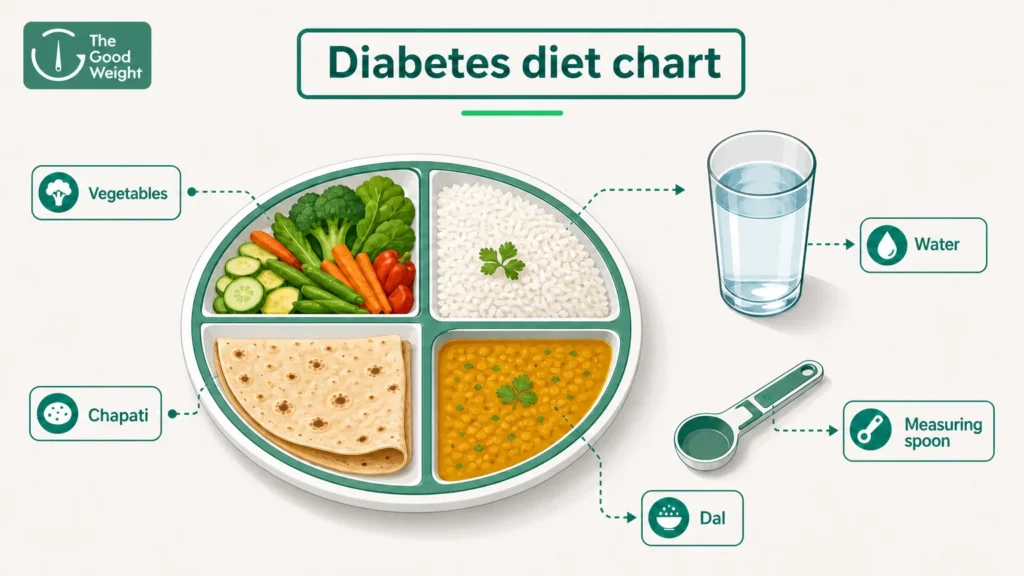
Trying to lose weight while managing diabetes can feel like receiving two competing sets of instructions: eat less, but do not skip meals; reduce carbohydrates, but do not eliminate foods that help you feel satisfied; exercise more, but avoid low blood sugar. A useful diabetes diet chart resolves these tensions by considering your glucose pattern, medicines, routine, food preferences, and portions together.
For many adults, gradual weight loss can improve insulin sensitivity and support blood-glucose management. But there is no single “best” diabetic weight-loss diet plan for everyone in India. Nutrition therapy works best when it is individualized, culturally familiar, and realistic enough to follow over time, rather than built around blanket restrictions or imported meal rules. Diabetes nutrition plans should be individualized to a person’s health needs, preferences, and treatment goals.
This guide offers an educational framework and an Indian one-day meal-chart example. It is not a prescription or a replacement for care from your doctor or registered dietitian – especially if you use glucose-lowering medicines.
Why diabetes and weight goals need to be planned together
A standard weight-loss diet may focus only on reducing calories. With diabetes, that approach can be incomplete or unsafe. The amount, type, and timing of carbohydrate affect blood glucose, while medications such as insulin and sulfonylureas can increase the risk of hypoglycaemia when meals are delayed, skipped, or made substantially smaller without medical advice.
Weight change can be valuable for metabolic health, but the right pace and plan vary. For someone with type 2 diabetes, a modest, sustainable calorie reduction combined with nutritious food, activity, sleep, and follow-up can be more useful than a severe short-term diet. Evidence from the Diabetes Prevention Program showed that an intensive lifestyle intervention reduced progression to type 2 diabetes in high-risk adults, reinforcing the value of sustained food and activity changes rather than temporary dieting alone. Lifestyle intervention reduced the incidence of type 2 diabetes by 58% in the Diabetes Prevention Program.
The goal is not to label rice, fruit, or chapati as “bad.” It is to build meals that produce a steadier glucose response, provide enough protein and fibre for fullness, and suit your health needs. A person who eats two large rice-heavy meals daily will need a different strategy from someone who works night shifts, takes insulin, is underweight, or has kidney disease.
A safety note before changing your diet
Do not start a very-low-calorie diet, prolonged fasting routine, or strict carbohydrate restriction on your own if you take insulin or medicines that can cause low blood sugar. Your clinician may need to adjust medication doses as food intake, activity, and body weight change. Diabetes self-management includes learning how food, movement, medicines, and glucose monitoring work together. A diabetes care plan should include regular monitoring and treatment adjustments with a health care team.
If you have symptoms such as shakiness, sweating, confusion, palpitations, or sudden weakness, check your glucose if you can and follow the low-glucose treatment plan provided by your clinician. Do not attempt to “push through” symptoms in the interest of weight loss.
Build a balanced plate, not a list of forbidden foods
A practical plate framework makes a diabetes diet chart easier to use at home, in an office canteen, or at a family meal. Instead of counting every calorie immediately, begin by balancing the food on your plate and keeping carbohydrate servings reasonably consistent. The CDC’s diabetes plate method uses non-starchy vegetables for half the plate, lean protein for one quarter, and carbohydrate foods for the remaining quarter. The diabetes plate method provides a simple way to balance vegetables, protein, and carbohydrates.
Fill half the plate with vegetables and fibre-rich foods
Aim for a generous serving of non-starchy vegetables at lunch and dinner: beans, gourds, brinjal, okra, cabbage, cauliflower, spinach, cucumber, tomatoes, carrot, radish, mushrooms, and mixed vegetable poriyal. These foods add volume, texture, micronutrients, and fibre without contributing as much carbohydrate as rice, chapati, or potato.
Fibre can slow digestion and support fullness, which may make it easier to maintain an energy deficit without constant hunger. Include pulses, vegetables, whole grains, nuts, seeds, and whole fruit across the day where appropriate. Increase fibre gradually and drink enough water, particularly if your current intake is low, to reduce bloating or constipation.
Include protein at every main meal
Protein helps meals feel more satisfying and can reduce the tendency to compensate later with large portions of refined carbohydrates or snack foods. Vegetarian choices include dal, chana, rajma, lobia, sprouts, tofu, soy chunks, paneer, curd, and unsweetened Greek yoghurt. Non-vegetarian choices include eggs, fish, chicken, and lean meat portions.
Protein requirements are individual. For example, a person with chronic kidney disease may need a different protein target from someone without kidney concerns. Rather than automatically adding protein powders or large amounts of paneer, discuss suitable choices and portions with a dietitian if you have kidney disease or other medical conditions.
Keep carbohydrate portions visible and consistent
Carbohydrates are not prohibited in diabetes. They are a primary source of energy, but their portions matter because they raise blood glucose more directly than protein or fat. A typical meal may include one measured carbohydrate choice: a small serving of cooked rice, two small phulkas, millet roti, oats, idli, dosa, or a portion of legumes. The ideal amount depends on your glucose readings, activity, medicine schedule, and total meal composition.
Choose minimally processed, high-fibre carbohydrate foods more often where they suit you. Brown rice, red rice, hand-pounded rice, millets, whole wheat, oats, barley, and pulses can be useful options, but “healthy” grains can still raise glucose when the serving is large. Portion awareness is more reliable than assuming any grain is automatically blood-sugar neutral.
Use fats thoughtfully and drink regularly
Healthy fats make meals enjoyable and help absorb fat-soluble vitamins, but they are energy dense. Use measured amounts of groundnut, mustard, sesame, or other cooking oils; include nuts and seeds in modest portions; and limit frequent deep-fried snacks, bakery foods, and foods high in saturated fat. A teaspoon of oil in cooking and a small handful of nuts are very different from free-pouring oil or grazing on mixtures through the day.
Water should be the default drink. Unsweetened tea, coffee, buttermilk without added sugar, and plain soda water can also fit. Sugary drinks, fruit juices, sweet lassi, sweetened coffee, and regular soft drinks can raise glucose quickly without providing much fullness. Reducing sugary beverages is part of healthy eating guidance for people living with diabetes.
Create a meal rhythm that fits your treatment
Regular meal timing is helpful for many people, especially those taking medicines linked to food. That does not mean every person must eat six meals or follow a rigid clock. It means avoiding a pattern of long fasting followed by very large meals, unless fasting has been planned safely with your care team.
A simple starting point is three balanced meals, with a planned snack only when needed for hunger, activity, work timing, or medication. Review glucose readings around meals with your clinician before making major changes to meal frequency or fasting windows.
An illustrative Indian diabetes diet chart for one day
The example below shows how familiar foods can fit into a blood-sugar-conscious day. Portions are intentionally described as starting points rather than medical targets. A smaller person, a physically active person, someone using insulin, and someone trying to lose weight may all need different quantities.
| Time of day | Illustrative meal | Adaptable vegetarian or non-vegetarian option |
|---|---|---|
| On waking | Water; tea or coffee without sugar if desired | Avoid replacing breakfast with only tea and biscuits |
| Breakfast | Two vegetable idlis with sambar and a bowl of unsweetened curd | Vegetable oats upma with tofu; or two-egg vegetable omelette with one small phulka |
| Mid-morning, if hungry | One whole fruit with a few nuts | Guava, apple, orange, pear, or a small bowl of papaya; choose whole fruit rather than juice |
| Lunch | Half plate vegetables, one quarter protein, one quarter carbohydrate | Vegetable sambar or dal, salad/poriyal, and a measured rice serving; or two small phulkas with chana and vegetables. Add fish or chicken if preferred. |
| Evening snack | Protein- and fibre-forward snack with an unsweetened drink | Roasted chana, sprouts chaat, boiled egg, or buttermilk with a small handful of nuts |
| Dinner | Similar balance to lunch, adjusted for hunger and timing | Mixed-vegetable curry with tofu/paneer or grilled fish/chicken, plus one or two small phulkas or a modest millet serving |
| If needed before bed | Only if advised for medication or recurring low glucose | Follow the specific snack plan from your diabetes clinician |
This chart is not an instruction to eat identical foods every day. For example, breakfast could rotate among vegetable dosa with sambar, besan chilla with curd, ragi dosa with egg bhurji, or poha made with plenty of vegetables and paired with sprouts or curd. Variety supports nutrition and makes a plan less monotonous.
Pay attention to preparation as well as ingredients. A vegetable dish cooked with excess oil, a large bowl of “healthy” millet pongal, or a fruit smoothie with honey can still work against a weight or glucose goal. Conversely, a modest serving of home-cooked rice paired with vegetables, dal, curd, and protein may be more balanced than a restaurant “diet” meal.
For support beyond a generic chart, explore The Good Weight’s approach to nutrition support for diet and weight loss, where food planning can be considered alongside broader metabolic-health goals.
Everyday food swaps that keep meals steadier
Small substitutions can make familiar eating patterns more manageable without demanding that you abandon cultural foods or family meals. The best swap is one you can repeat consistently and enjoy.
| Common concern | A practical adjustment | Why it can help |
|---|---|---|
| Large rice portions | Serve a measured portion of rice, then add dal, vegetables, curd, fish, egg, or chicken | Pairing carbohydrate with fibre and protein can improve fullness and reduce the urge for seconds |
| Refined-grain breakfast | Try vegetable oats, dosa with sambar, besan chilla, or idli with protein-rich sides | Adds fibre, protein, and vegetables instead of relying on biscuits, white bread, or sweet cereals |
| Only potato or rice with curry | Make half the plate non-starchy vegetables and include dal, tofu, eggs, fish, or chicken | Creates a more balanced plate and moderates the carbohydrate load |
| Fruit avoidance | Choose one portion of whole fruit, preferably alongside or after a meal if that suits your readings | Whole fruit provides fibre; juice is easier to overconsume and lacks much of the fibre |
| Tea-time fried snacks | Choose roasted chana, peanuts in a measured portion, sprouts, egg, or unsweetened curd | These choices are generally more filling than chips, bakery snacks, or namkeen |
| Sweetened drinks | Choose water, unsweetened buttermilk, plain tea/coffee, or soda water with lime | Reduces rapidly absorbed added sugars |
| Restaurant meals | Order a vegetable and protein-based dish first; share rice, naan, dessert, or fried starters | Helps manage portions without making eating out socially restrictive |
Rice deserves special mention because it is central to many Indian meals. You do not necessarily need to stop eating it. Start by measuring the cooked serving, reducing the amount gradually if it is very large, and avoiding a plate that is mostly rice. Some people find that cooling and reheating rice, choosing less polished varieties, or combining rice with legumes and vegetables helps them manage portions – but your own glucose readings are the most relevant feedback.
Food labels can also be useful. Check serving sizes, total carbohydrates, added sugars, and saturated fat in packaged foods marketed as “diabetic-friendly.” A product without added sugar may still contain refined starches or be calorie dense. “Diabetic” on a label is not a guarantee that a food suits your individual plan.
When a generic meal chart is not enough
Online templates can be a helpful starting point, but certain situations need personalised clinical review. Diabetes treatment is not static: medication doses, appetite, glucose readings, kidney function, pregnancy needs, and activity levels can all change what is appropriate.
Speak with your doctor or dietitian before relying on a generic plan if any of the following apply:
- You use insulin, sulfonylureas, or other medicines that may cause low blood glucose, particularly if you are reducing portions, increasing exercise, or fasting.
- You have frequent readings below your target range, repeated symptoms of hypoglycaemia, unexplained high readings, or major day-to-day glucose swings.
- You have chronic kidney disease, liver disease, heart failure, gout, digestive disorders, or a history of an eating disorder.
- You are pregnant, planning pregnancy, breastfeeding, or have gestational diabetes. Pregnancy nutrition and glucose targets need specific medical supervision.
- You are unintentionally losing weight, have poor appetite, are older and frail, or have recently been discharged from hospital.
- You are considering a very-low-calorie diet, meal replacements, intermittent fasting, or significant carbohydrate restriction.
Regular follow-up matters because lifestyle plans should be adjusted according to results, not judged as a success or failure after a few days. Diabetes care recommendations emphasise collaborative, person-centred support and ongoing assessment. If diabetes medicines are part of your care, diet changes should be coordinated rather than made in isolation.
Frequently asked questions about a diabetes diet chart
Should I eat at exactly the same time every day?
Consistency can help, particularly if your medication schedule and glucose pattern are sensitive to delayed meals. However, the goal is a dependable rhythm rather than perfection. Plan meals around your work, commute, exercise, and family routine, and discuss any fasting practice with your clinician if you take glucose-lowering medicines.
Can I eat out if I am trying to lose weight with diabetes?
Yes. Choose meals with vegetables and a protein source, request less oil or sugar where possible, and be mindful of portions of rice, breads, fried starters, and desserts. You do not need to “compensate” by skipping the next meal; return to your usual balanced routine. Frequent restaurant eating may simply require more planning and attention to portions.
Do I need to avoid all sugar forever?
No single food determines diabetes control. Added sugar is best limited because it can add calories and raise glucose quickly, especially in drinks and desserts, but an occasional planned sweet may fit for some people. The portion, frequency, meal context, medication, and your own readings matter more than an all-or-nothing rule. Ask your dietitian how to include special foods safely and realistically.
How should I track progress beyond the weighing scale?
Weight is one useful measure, but it is not the only one. Track fasting or post-meal glucose as advised, HbA1c at intervals recommended by your clinician, waist circumference, energy levels, sleep, hunger, activity, and how consistently you can follow your routine. Your doctor may also monitor blood pressure, lipids, kidney markers, and medication needs. A1C and other diabetes checks help show whether a care plan is meeting its goals.
A sustainable plan starts with personal clinical context
The most effective diabetes diet chart is not the strictest one. It is a plan that accounts for your diagnosis, glucose pattern, medicines, portions, meal timing, culture, and preferences – and that you can continue while protecting your health. Familiar Indian foods can absolutely be part of steady weight management when meals are balanced and reviewed thoughtfully.
If you are in Chennai, book a doctor-led metabolic-health and nutrition assessment with The Good Weight to create an individualised plan around your medical history, diabetes treatment, food preferences, and realistic follow-up.