
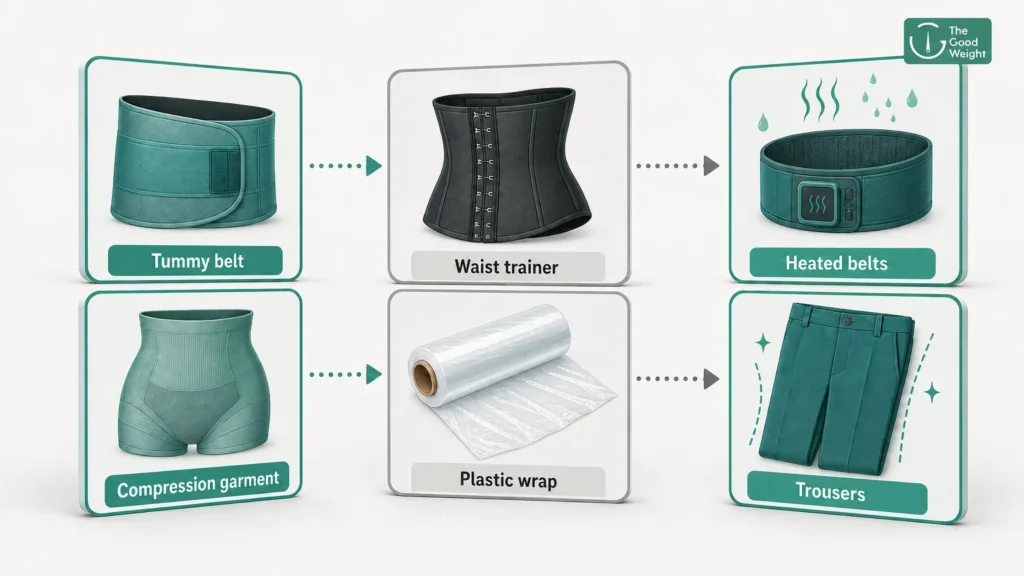
When you feel uncomfortable with your abdominal shape, a tummy belt can seem like a practical answer. It is easy to buy, promises visible “slimming,” and may make the waist look flatter under clothing within minutes. For someone searching for a stomach belt to lose weight, that immediate change can feel like proof that fat loss has started.
However, a tummy belt, waist trainer, or compression garment does not burn or remove belly fat. It can temporarily compress soft tissue, alter how clothing fits, and in some cases provide support during recovery from a medical procedure. Those effects are different from sustained weight loss, which requires changes in the body’s stored energy over time.
Understanding that distinction can help you choose tools that support your comfort and confidence without relying on products that cannot deliver the results they imply.
Why tummy belts seem like they should reduce belly fat
The appeal of a tummy belt is understandable. Abdominal fat can be particularly frustrating because it may affect how trousers, sarees, dresses, or workwear fit, and changes in this area can feel slower than changes elsewhere. Marketing that shows a smaller waist immediately after wearing a belt can make it seem as though compression is the same as fat reduction.
There is also a common assumption that tightening or heating an area will force the body to use fat from that spot. In reality, fat cells do not disappear because they are squeezed. A belt applies external pressure to the abdomen, but it does not create the physiological conditions needed for the body to use stored fat as energy.
Some products add claims about sweating, vibration, electrical stimulation, or “detoxing.” Sweating may cause a temporary drop on the scale because of fluid loss, but drinking fluids restores that weight. The FDA cautions that medical devices marketed for weight loss or body shaping have limits and should not be viewed as substitutes for healthy weight-management care.
What a tummy belt can realistically change while you are wearing it
A well-fitted compression garment can change appearance temporarily. It may smooth the outline of the abdomen, reduce movement of soft tissue, make garments sit differently, and give some people a feeling of postural awareness. These are valid comfort or styling benefits if the garment is comfortable and used appropriately.
Myth: Compression means fat is being broken down
Fact: Compression changes the shape of soft tissue under the garment; it does not destroy fat cells or meaningfully increase fat metabolism. Once the belt comes off, the compressed area returns to its usual shape. The visible change is therefore temporary and should not be confused with a reduction in waist circumference from fat loss.
Waist trainers can also make a person feel fuller sooner simply because there is less room to expand comfortably after a meal. That effect is not a reliable nutrition strategy, and overly tight garments may contribute to discomfort. Clinical guidance on waist trainers notes concerns such as restricted breathing, skin irritation, reflux, and pain when the garment is too tight or worn too long.
Myth: More sweat means more belly fat is lost
Fact: Sweat is primarily the body’s cooling response. A belt that makes you sweat around the abdomen may leave your skin and clothing damp, but it does not selectively melt fat from that location. Any short-term weight change after heavy sweating is usually fluid loss, not a lasting change in body fat.
For the same reason, wrapping the stomach in plastic, using heated belts, or exercising in excessive layers can increase the risk of dehydration and overheating. A sustainable plan focuses on habits and treatment options that improve health over weeks and months, rather than chasing a rapid change that disappears after rehydration.
What actually influences belly fat over time
Belly fat changes when the body’s energy balance changes consistently over time, but that is only part of the picture. Food quality and portion patterns, daily movement, strength training, sleep, stress, medications, hormonal changes, age, genetics, and medical conditions can all affect body weight and where fat is stored. This is why two people following the same online plan may have very different results.
A calorie deficit is often needed for fat loss, yet an overly restrictive diet is difficult to sustain and may not be suitable for everyone. The CDC notes that gradual, steady weight loss is more likely to be maintained than rapid loss. For many people, the most effective approach combines realistic nutrition changes with regular activity, adequate sleep, and follow-up that helps them adapt the plan when progress slows.
Abdominal fat also has a health dimension beyond appearance. Excess fat around the abdomen can be associated with cardiometabolic risk, particularly when it occurs alongside high blood pressure, elevated blood sugar, fatty liver disease, sleep apnoea, or abnormal cholesterol levels. A clinician can consider waist measurements, weight history, symptoms, medications, and laboratory findings rather than judging health from appearance alone.
For people with obesity or weight-related health conditions, lifestyle support may be combined with medical treatment. The NHLBI describes weight-management care as a combination of nutrition, physical activity, behavioural strategies, medicines when appropriate, and weight-loss procedures for selected patients. That is a very different model from expecting one garment to create targeted abdominal fat loss.
When compression garments may be medically recommended
Compression garments do have legitimate medical and post-procedure uses. A surgeon may recommend one after certain abdominal, liposuction, body-contouring, or other procedures to support healing tissues, manage swelling, protect an incision, or improve comfort during recovery. The garment is part of aftercare – not the treatment responsible for removing fat or causing weight loss.
The appropriate garment, pressure level, fit, and duration depend on the procedure and the individual’s healing. Evidence reviews of postoperative compression show that benefits and recommendations can vary by procedure and the quality of available evidence. For that reason, it is important not to copy another person’s recovery routine or buy a generic “post-surgery” belt without advice from the treating team.
If you have recently had a procedure, follow the clinician’s instructions exactly. Contact the team promptly if the garment causes worsening pain, numbness, swelling beyond the garment, skin breakdown, shortness of breath, fever, or concerns about the incision. A tighter fit is not automatically a better fit, and discomfort should not be dismissed as a necessary part of recovery.
A practical next-step checklist for stubborn abdominal fat
If your concern is persistent belly fat, the most helpful next step depends on your goals, health history, and whether the issue is overall weight, skin laxity, or a localised contour concern.
-
Start with a realistic nutrition review. If meals feel difficult to plan, hunger is intense, or repeated diets have not lasted, a structured plan with nutrition support may be more useful than another restrictive programme. The Good Weight’s diet and weight-loss support can help turn broad advice into meal patterns that fit your routine, preferences, and health needs.
-
Consider a medical evaluation when weight changes are unexplained or difficult to manage. Discuss concerns such as irregular periods, fatigue, snoring, blood-sugar changes, medication-related weight gain, or a family history of diabetes with a qualified clinician. A doctor-led medical weight-loss plan can assess metabolic health and discuss evidence-based options rather than assuming lack of willpower is the problem.
-
Separate fat loss from body contouring goals. Weight-management treatment can reduce overall body fat, but it cannot guarantee where the body will lose fat first. If weight is stable and the main concern is a localised area, loose skin, or post-pregnancy body changes, a consultation can clarify whether body contouring is appropriate and what result is realistic.
-
Discuss procedures only after a personalised assessment. Endoscopic or surgical weight-loss procedures may be options for selected people based on BMI, medical conditions, prior treatment, and individual risk. Learning about endoscopic weight-loss procedures is useful, but a procedure should always be considered within a long-term plan for nutrition, follow-up, and metabolic health.
Frequently asked questions about tummy belts
Can sweating in a tummy belt reduce belly fat?
No. Sweat loss is water loss, and it does not indicate that abdominal fat is being burned. Replacing fluids will usually restore the short-term weight change. If sweating is excessive or you feel dizzy, weak, nauseated, or overheated, remove the belt, cool down, hydrate, and seek medical advice if symptoms are severe or persist.
Should I wear a tummy belt while exercising?
A comfortable, non-restrictive support garment may be acceptable for some activities, but it should not interfere with normal breathing, movement, or hydration. Do not use a tight belt to try to sweat more during exercise, especially in hot or humid conditions. Stop using it if it causes pain, light-headedness, tingling, shortness of breath, or skin chafing.
Is it safe to sleep in a tummy belt?
Unless a surgeon or treating clinician has specifically instructed you to wear a postoperative garment overnight, routine overnight use is generally unnecessary. Tight compression may disrupt comfortable breathing, sleep, digestion, or circulation, particularly if the belt rolls, digs into the skin, or feels tighter when lying down. A garment should never cause pain, numbness, or a sense that you cannot take a full breath.
Can I lose fat from only my stomach?
No method can reliably force the body to lose fat from one chosen area alone. Core exercises strengthen abdominal muscles and improve function, but research has found that abdominal exercise alone did not reduce abdominal fat. Overall fat loss may reduce abdominal fat over time, but the pace and pattern are influenced by genetics, hormones, age, and total body-fat change.
When should I stop using a belt and seek advice?
Stop using the belt if you develop pain, numbness, tingling, a rash, skin sores, worsening reflux, breathing difficulty, or unusual swelling. Seek urgent care for chest pain, severe shortness of breath, fainting, or signs of a serious allergic reaction. After surgery, contact your treating clinician for any new or worsening symptom rather than trying to adjust the garment yourself.
The bottom line
A tummy belt may temporarily smooth the abdomen, support posture awareness, or have a clinician-directed role after a procedure. It does not remove belly fat, create targeted weight loss, or replace evidence-based care for obesity and metabolic health.
If you are tired of short-term fixes, book a consultation with The Good Weight for a personalised review of your health history, weight-management goals, nutrition needs, and appropriate medical or body-contouring options. Sustainable weight loss is not about tightening your body into a shape – it is about receiving the right support to improve health and maintain progress.