
Healthy diets do not need perfect timing, flawless meal prep, or a fresh start every Monday. During a demanding season, a small amount of structure can be enough.
A late meeting runs into dinner. A parent needs help. Your fridge is bare, your sleep has been patchy, and the meal you planned for yourself is suddenly a packet of biscuits eaten standing at the kitchen counter. Then comes the familiar thought: I’ve ruined the week.
You haven’t. Stress changes the conditions around eating. It can disturb sleep, narrow attention, reduce the mental space available for grocery shopping and cooking, and alter appetite in either direction. Some people feel hungrier and seek quick comfort foods; others lose their appetite or forget meals altogether. Research on stress and eating finds that these responses vary widely between people and situations, rather than following one neat pattern for everyone stress can shift eating behaviour in different directions.
That matters because healthy diets are often presented as a test of discipline. Real life is messier. Illness, grief, caregiving, demanding work, financial strain, and poor sleep can all make a carefully planned routine feel oddly out of reach. The useful question is not, “Why can’t I stick to my diet?” It is, “What is the smallest routine that will take care of me this week?”
A few flexible meal anchors can steady the day without turning food into another project to manage.
Meal anchors: repeatable eating opportunities built around foods you can access and tolerate, rather than rigid rules or calorie targets. Their job is to reduce decision fatigue when life feels unpredictable.
Why healthy diets can feel harder under stress
Stress does not create a character flaw. It changes your bandwidth. When the brain is busy scanning for the next problem, tasks such as planning meals, comparing groceries, chopping vegetables, or remembering to defrost dinner can feel disproportionately difficult.
Sleep can add another layer. Experimental research has linked short sleep with changes in appetite regulation and higher energy intake, which may help explain why a tired evening can make snack foods feel unusually persuasive sleep restriction can affect appetite and food intake. Nobody needs a study to recognise the feeling, though. After a bad night, cooking dal and vegetables may sound less appealing than ordering something fast.
Food may also become one of the few predictable comforts in a difficult day. There is nothing childish or weak about that. Eating can be social, soothing, convenient, familiar, or all four at once. The problem starts when a moment of comfort gets followed by punishment: skipped meals, exhausting exercise, or a promise to “be good” tomorrow.
The way I see it, pressure shrinks choices. A supportive eating plan should widen them again.
A small framework for eating when routines wobble
Forget building the ideal week. Start by setting up two or three regular eating opportunities that fit your actual day: perhaps breakfast before a commute, something around 1 pm, and dinner or an evening snack. The exact clock time matters less than avoiding the long, accidental gaps that leave you ravenous later.
Try this four-part process for each eating opportunity:
-
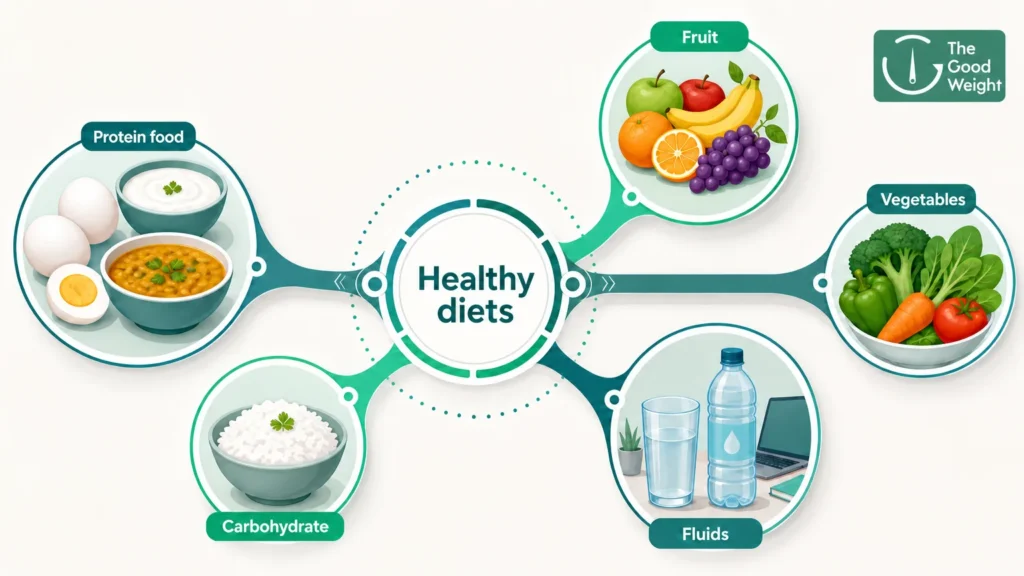
Choose an accessible protein food. Eggs, curd, milk, paneer, dal, chana, fish, chicken, tofu, soy chunks, or leftovers all count. Protein-containing foods can make a meal feel more sustaining, but the best choice is the one you can buy, prepare, and eat that day.
-
Add fruit or vegetables when they are available. A banana in a work bag, sliced cucumber beside takeaway, frozen vegetables in upma, or tomato and onion with a dosa still count. The World Health Organization’s healthy diet guidance centres dietary patterns around varied foods, including fruit and vegetables, while recognising that local food habits matter.
-
Include a familiar carbohydrate if you want one. Rice, idli, chapati, oats, bread, poha, or millet dishes can make a meal satisfying and practical. Stress is not the time to declare entire food groups forbidden.
-
Keep fluids visible. Water, buttermilk, milk, unsweetened tea, or other suitable drinks can sit near your workspace. Dehydration and hunger can feel similar for some people, especially during a long day indoors.
The point is repeatability. Keep a few “boring but reliable” foods at home or at work. A shelf-stable back-up could include roasted chana, unsalted nuts, oats, dal, and UHT milk. Your back-up does not need to be Instagram-worthy. It needs to be there.
Three ordinary days, with meals that still count
The long office day
For someone leaving home early and reaching back late, a practical day might begin with idli and sambar, eggs on toast, or curd with fruit and oats. Lunch might be a canteen meal of rice or chapati with dal, a vegetable dish, and curd. If meetings run over, keeping fruit, roasted chana, or a small packet of nuts in a drawer can stop the 6 pm crash from turning into a frantic order.
Dinner need not “make up” for the day. A simple bowl of curd rice with vegetables, a leftover roti with dal, or a ready-made soup paired with toast and paneer can be enough. Long office days are tiring. Making dinner deliberately plain may be the smartest move you make.
The caregiving day
Caregiving can dismantle predictable meal times because another person’s needs keep arriving. Put food where you will see it: bananas on the counter, curd in the front of the fridge, cooked chana in small containers, or a flask of buttermilk nearby. Eating while the person you care for eats may work better than waiting for a quiet break that never appears.
Family food can stay family food. Add an egg, dal, curd, or paneer to what is already being cooked, and place a vegetable or fruit beside it where possible. You do not need a separate “diet meal” to care for your metabolic health.
The low-energy evening
Some evenings, cooking is simply not happening. Fine. Keep a short list of low-effort combinations: vegetable khichdi with curd, dosa with sambar, bread with omelette and fruit, or store-bought rotis with dal. Even a sandwich with paneer or egg, plus a piece of fruit, is a meal.
Honestly, this part can feel annoying. We are taught that a “good” dinner has to look cooked from scratch. Yet a meal assembled in seven minutes may be far more supportive than delaying food until hunger turns sharp and choices get finicky.
After an unplanned meal, choose flexibility over punishment
You ate more than intended at a party. Or work ran late and dinner became biryani, sweets, and a fizzy drink. One meal does not erase your goals, change your worth, or require repayment.
All-or-nothing restriction tends to keep the cycle alive. “I’ve failed, so I’ll skip breakfast tomorrow” often creates intense hunger by afternoon. The same goes for punishing exercise. Movement can help mood and health, but it should not function as a fine for eating.
Try a calmer reset:
- Name what happened without drama. “I was very hungry after skipping lunch,” or “I wanted to join the celebration.” A useful observation beats a moral verdict.
- Eat your next planned meal or snack. Return to the next anchor, even if it is small. Regular eating helps more than a day spent trying to undo the previous evening.
- Check the practical gap. Were you underfed, overtired, unprepared, or emotionally overwhelmed? One answer can shape tomorrow’s back-up plan.
- Move only if it feels good. A walk after dinner can settle the mind. It does not need to burn off anything.
The more I look at this pattern, the clearer it becomes: perfection creates brittle routines. Flexibility leaves room for being human.
When stress needs medical or mental-health support
Food routines can bend during a difficult month. But some changes deserve more attention than a revised shopping list. Please speak with a doctor, dietitian, or mental-health professional if any of the following are happening:
- Your appetite has changed for weeks, and you are eating far less or far more than feels usual for you.
- Sleep disruption is frequent, especially if exhaustion is affecting work, driving, relationships, or daily safety.
- You have had rapid or unintentional weight change, ongoing nausea, bowel changes, or persistent fatigue.
- Thoughts about food, body size, exercise, or “making up” for meals are causing distress or taking up a large part of your day.
- You feel low, anxious, overwhelmed, or unable to cope, particularly if you have thoughts of harming yourself. In an immediate emergency, contact local emergency services or a crisis service in your area.
A clinician can look beyond food alone. Thyroid conditions, medication effects, diabetes risk, mood concerns, sleep disorders, and other health issues may affect appetite or weight. At The Good Weight, a doctor-led medical weight-loss review can include discussion of these wider factors, while diagnostic testing may be considered when your clinical history points that way.
Questions people ask about eating during demanding phases
Can healthy eating work with Indian home food?
Yes. Rice, chapati, idli, dosa, curd, dal, vegetables, fish, eggs, and regional dishes can all fit a supportive routine. The aim is not to replace familiar food with expensive “health” products. It is to find portions, meal timing, and combinations that work with your health needs and household.
What if my budget is tight?
Start with ordinary, lower-cost foods you already use: dal, chana, peanuts, seasonal fruit, eggs, curd, oats, and locally available vegetables. Frozen or tinned options can also reduce waste when fresh produce is hard to use quickly. A dietitian can help adapt plans around what you can reliably buy, not an idealised grocery basket.
Do I need to cook every meal?
No. Cooking can be useful, but it is not a moral requirement. Canteen food, leftovers, meal kits, and carefully chosen takeaway can all be part of a realistic eating pattern, especially during illness or demanding work periods.
Can nutrition support work alongside diabetes, PCOS, or weight-loss treatment?
It should be tailored to them. Medication, blood glucose patterns, digestive symptoms, medical history, and cultural preferences all affect what feels manageable. Read more about diet and weight-loss support that can fit into personalised care rather than forcing a one-size-fits-all menu.
A hard season does not call for a perfect diet. It calls for a few meals you can repeat, enough nourishment to get through the day, and help before the strain becomes too much to carry alone. If appetite changes, stress, or weight concerns are persisting, arrange a non-judgmental doctor-led or dietitian review with The Good Weight.