
Teas, juices, smoothies, and powdered beverages are often presented as simple answers to a complicated concern: how to lose weight while managing a busy routine. It is understandable to look for something convenient, especially when advertisements suggest that a daily drink can change your body quickly. But the important reality is that weight loss drinks cannot selectively reduce body fat on their own.
Body-weight change is influenced by your overall food and drink pattern, energy intake, movement, sleep, stress, medical history, medicines, and metabolic health. A beverage may support your goals when it replaces a higher-calorie option, helps you meet nutritional needs, or fits a personalised eating plan. It may work against those goals when it adds substantial calories or sugar without keeping you satisfied.
Rather than searching for a single “best” drink, it is more useful to understand what is in the glass and how it fits into your day.
Can a drink cause fat loss on its own?
No beverage has been shown to target body fat independently of the rest of your eating pattern and health context. Claims that a drink can rapidly change body composition often simplify a process that is influenced by many factors, including appetite, insulin resistance, PCOS, diabetes, medications, and activity levels.
Many people searching for weight loss drinks that work are hoping for a practical habit they can maintain. That is a reasonable goal. However, a drink is most helpful when it supports a sustainable calorie and nutrition pattern – not when it is treated as a substitute for balanced meals, medical advice, or ongoing support.
For example, replacing a sweetened cold coffee or packaged fruit beverage with water, unsweetened tea, or plain buttermilk may reduce added sugars and calories for some people. But replacing a nourishing breakfast with a low-protein drink may lead to hunger later in the day. The effect depends on the beverage, serving size, and what it replaces.
What should you check before buying or making a weight loss drink?
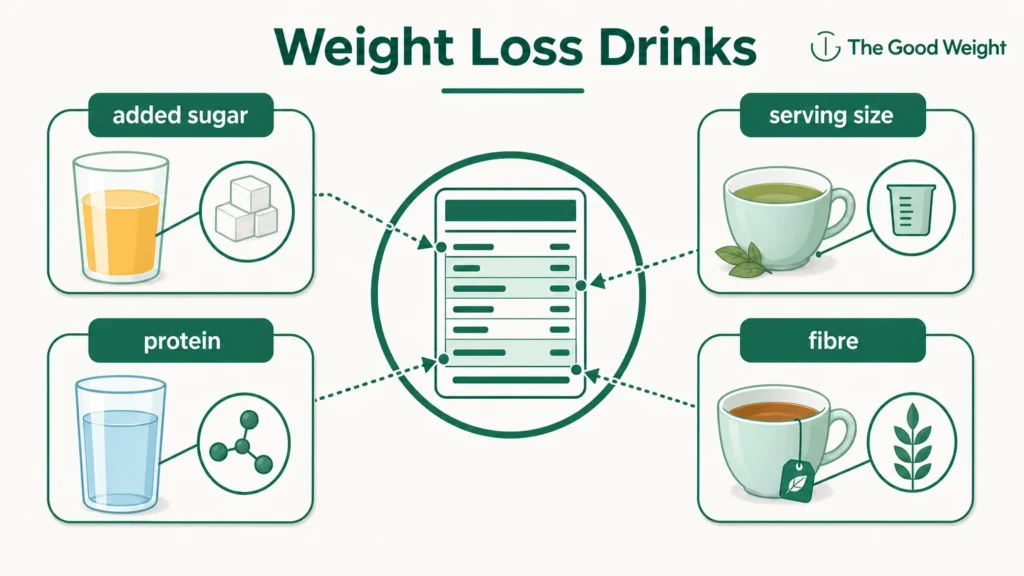
Marketing words such as “natural,” “low fat,” “fitness,” or “healthy” do not tell you whether a beverage suits your needs. A drink can contain nutritious ingredients and still be high in calories, added sugar, or portion size. Before choosing one, use this practical four-question checklist.
1. Does it contain added sugar?
Look at the nutrition label for “added sugars,” and scan the ingredients list for sugar, syrup, honey, jaggery, glucose, fruit concentrate, or flavoured powders. Sugar-sweetened beverages are a major source of added sugars in many diets, and frequent intake is associated with weight gain and other health concerns.
This does not mean every sweet drink must be avoided forever. It means that sweetness should be visible in your decision-making. A glass of tea with several teaspoons of sugar, a sweetened lassi, or a bottled coffee drink may contribute more added sugar than you realise, especially when consumed daily.
2. What is the total calorie content – and the actual serving size?
Calories are not the only factor that matters, but they remain relevant to weight management. Check whether the package lists nutrition information for 100 ml, one scoop, or the full bottle. A smoothie marketed as a single serving may contain two or more servings, especially if it comes in a large café cup or bottle.
A homemade smoothie can also become energy-dense. Fruit, milk, curd, nuts, seeds, nut butter, oats, dates, and sweeteners can all fit into a balanced diet, but combining many of them in a large drink can create a substantial meal. That may be appropriate if it replaces a meal and keeps you full; it may not be helpful if it is added alongside your usual breakfast.
3. Does it provide protein and fibre?
Protein and fibre can help a beverage feel more satisfying than a sugary drink alone. Protein is found in foods such as milk, curd, soy milk, unsweetened Greek yoghurt, and some clinically formulated nutrition products. Fibre is present in whole fruits, oats, seeds, and legumes, although blending may make it easier to consume a large amount quickly.
A juice made by extracting fruit liquid generally contains less fibre than the whole fruit it came from. In contrast, a smoothie that includes whole fruit may retain some fibre, but its usefulness still depends on the quantity and added ingredients. There is no need to label juice or smoothies as universally good or bad; the relevant question is what they contribute to your overall intake.
4. What role will it play in your day?
Ask whether the drink accompanies a meal, replaces a snack, replaces a meal, or is simply an extra. A 250 ml beverage may have a very different effect from a 700 ml beverage with the same ingredients. This is why “weight loss drinks that actually work” are not defined by an ingredient alone – they are defined by how the drink fits your hunger, nutrition needs, and wider plan.
How can different drinks fit into a weight-management plan?
Different beverages can have different roles. The goal is not to create a rigid list of allowed and forbidden drinks, but to make choices that feel practical and support your health.
Water
Water is a reliable choice for hydration because it contains no added sugar or calories. If you often drink sweetened beverages because you are thirsty, keeping water easily available may help you reduce those drinks without relying on restrictive rules. Some research has explored whether drinking water before meals may support weight-loss efforts in certain settings, but water itself is not a treatment for obesity or a replacement for adequate meals.
If plain water feels repetitive, you may prefer chilled water, sparkling water without added sugar, or water infused with lemon, mint, or cucumber for flavour. These choices can make hydration easier without turning a drink into a source of added sugar.
Unsweetened tea and coffee
Tea and coffee can fit into many people’s routines, particularly when taken without sugar-heavy syrups, cream, or large amounts of condensed milk. The beverage itself is only part of the picture: a small unsweetened coffee is different from a large blended coffee with sugar, whipped cream, ice cream, or flavoured sauces.
Caffeine can also affect individuals differently. Some people experience anxiety, acidity, palpitations, or disrupted sleep with frequent tea or coffee intake. Since sleep and appetite can be closely connected, choose an amount and timing that works for you rather than assuming more caffeine will improve weight loss.
Fruit juice and smoothies
Fruit juice can be refreshing, but it is easy to drink a large amount quickly and it does not provide the same chewing experience as whole fruit. For people with diabetes or high blood sugar, portion size and total carbohydrate intake may need particular attention. Choosing a small portion occasionally may suit some people, while whole fruit may be more filling for others.
Smoothies can be more substantial, especially when built around unsweetened milk or curd, whole fruit, and a protein source. However, ingredients such as sugar, honey, ice cream, sweetened yoghurt, flavoured protein powders, or multiple servings of fruit can change the calorie and sugar content considerably. A smoothie may be a useful breakfast on a rushed morning, but it should be assessed as food – not assumed to be a light drink.
Commercially marketed beverages
Commercial products may make broad claims about metabolism, appetite, or rapid weight change. Be cautious with claims that sound more certain than the evidence allows. The National Institutes of Health notes that many weight-loss supplements have limited evidence for effectiveness and may interact with medicines or cause side effects; supplement ingredients are not a substitute for proven weight-management care.
If a product contains herbal extracts, stimulant ingredients, laxatives, or multiple supplements, discuss it with a doctor or pharmacist before using it – particularly if you have diabetes, high blood pressure, kidney disease, liver disease, PCOS, gastrointestinal symptoms, or take prescribed medication.
When can a drink-based meal replacement be unsuitable?
Replacing a meal with a drink can seem convenient, particularly when appetite is low or work schedules are unpredictable. Yet many drinks do not contain enough protein, fibre, essential fats, vitamins, or minerals to function as a complete meal. They may also be less satisfying than food that you chew, which can leave you hungry soon after and make later eating harder to manage.
A clinically designed meal-replacement plan is different from randomly replacing meals with juice, coffee, or a homemade shake. Structured programmes may use products with defined nutrition alongside medical assessment, calorie targets, follow-up, and a plan for returning to ordinary meals. Evidence reviews have found that meal-replacement approaches can support weight management when used within a structured programme, but this does not mean every powdered drink is appropriate for every person.
Drink-based meal replacements may be unsuitable if you are pregnant or breastfeeding, have a history of disordered eating, have difficulty meeting nutrition needs, experience recurrent dizziness or weakness, or are managing a condition that affects appetite or blood glucose. People using GLP-1 medicines may also need individual guidance because these treatments can change appetite and meal tolerance. A doctor-led GLP-1 weight-loss plan can help ensure that reduced appetite does not lead to inadequate protein, fluids, or micronutrients.
The same principle applies after bariatric or endoscopic procedures, when the type, texture, timing, and nutritional quality of drinks may require specific guidance. In those circumstances, follow the plan provided by your clinical team rather than relying on general online recommendations.
How can you make a sensible choice without following beverage trends?
When you see a drink promoted for weight loss, pause and work through five simple questions:
- What is the claim? If it promises a dramatic or highly specific result, treat it with caution.
- What is the serving size? Compare the label serving with the amount you are actually drinking.
- How much added sugar and how many calories does it contain? Consider both per serving and per bottle.
- Does it offer protein or fibre? These may matter if the drink is replacing food or helping you manage hunger.
- What does it replace? A drink may be useful when it replaces a less nourishing choice, but less useful when it is simply added to an already adequate day of eating.
This approach is more realistic than chasing weight loss drinks that work fast. Sustainable progress usually comes from repeatable choices, not from one product or one ingredient.
When should you seek clinical guidance?
Speak with a doctor or dietitian if you are managing diabetes, PCOS, obesity, high blood pressure, digestive symptoms, kidney or liver concerns, or significant changes in appetite. It is also wise to seek advice before starting a restrictive liquid-only plan, using supplements marketed for weight control, or replacing regular meals for long periods.
Personalised care matters because the same beverage can affect two people differently. For one person, a high-protein smoothie may be a practical breakfast; for another, it may raise blood glucose more than expected, worsen nausea, or add calories without improving fullness. A weight-loss doctor consultation can help you consider your medical history, medications, hunger patterns, and goals before making major dietary changes.
At The Good Weight, doctor-led weight care combines medical assessment with practical nutrition support and sustainable planning. If you want help building a food and beverage routine that fits your health needs, explore personalised weight-management care. The most useful drink is not the one with the boldest claim – it is the one that genuinely supports your wider plan for metabolic health and lasting change.