
Your usual lunch may suddenly feel too large. You might leave half your rice untouched, lose interest in snacks, or feel nauseated before finishing breakfast. For adults considering or receiving medically supervised obesity treatment, those changes deserve a conversation that goes further than “How much weight have you lost?”
A 2026 qualitative study in Obesity Pillars reported appetite suppression, early fullness, reduced food noise, fewer cravings and smaller portions during the dynamic phase of obesity-medication treatment. Those findings describe participants’ experiences, not effects everyone should expect. Less interest in food may feel welcome, but nausea or difficulty eating shouldn’t become an accepted price of treatment.
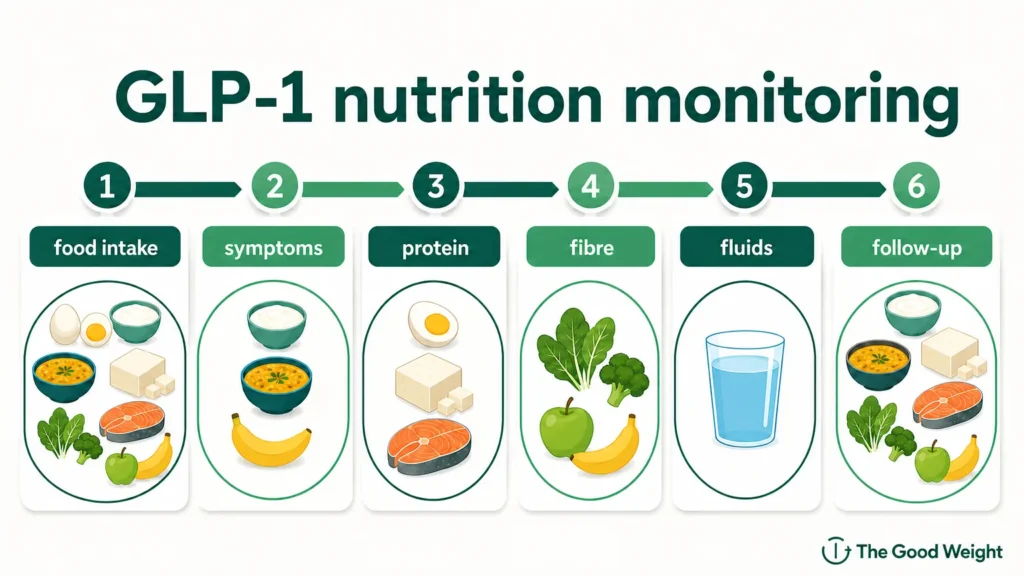
GLP-1 nutrition monitoring means regularly reviewing what you can eat and drink, alongside symptoms and nutrition risks, so your care team can adjust support.
Lower appetite doesn’t tell you whether you’re getting enough nourishment. Smaller portions can reduce protein intake, while avoiding vegetables or pulses because of discomfort can reduce fibre. The aim is a tolerable eating pattern that supports health, not simply the smallest possible meal.
The baseline review before reduced intake becomes a problem
Before treatment, or soon after starting, bring a picture of your ordinary eating week. Include rushed breakfasts and days when cooking feels impossible. Your team needs your actual routine, not your best-day menu.
An ESPEN publication describes baseline micronutrient inadequacies as common in people with obesity and warns that reduced intake, nausea or vomiting during GLP-1 therapy may worsen them. Body size alone cannot establish nutrition status. A useful baseline appointment should cover:
-
Usual intake and eating history: Describe meals, food exclusions and previous restrictive eating. Mention binge eating or anxiety about food so support doesn’t reinforce harmful patterns.
-
Symptoms and known deficiencies: Report nausea, vomiting, reflux and bowel changes. Bring previous blood results and explain any earlier treatment for a deficiency.
-
Medicines and medical conditions: Include supplements, diabetes medicines and conditions affecting digestion or kidney function. Previous bariatric surgery also belongs in this review.
-
Current nutrition support: Explain who helps with meals and whether you already see a dietitian. Cost, work schedules and food access can affect the plan.
Ask which findings would trigger testing or referral, and agree when to review again. People with previous surgery may need a specialist review of GLP-1 treatment after bariatric surgery, rather than advice based on appetite alone.
The weekly food-and-symptom log
“Eating less” is hard to interpret. Does it mean smaller balanced meals, or tea and crackers until evening? A brief log can make that difference visible without turning every mouthful into homework.
Copy the template below for a typical week, especially around treatment changes. Note approximate portions if helpful, but don’t chase universal calorie, protein or fluid targets. Your needs depend on your health and treatment plan.
| What to record | Useful detail |
|---|---|
| Meals and snacks | What you ate, skipped or couldn’t finish |
| Protein-containing foods | Eggs, curd, dal, tofu, fish or other usual choices |
| Fibre-containing foods | Vegetables, fruit, pulses and whole grains |
| Fluids | Approximate drinks and difficulty keeping them down |
| Symptoms | Nausea severity, vomiting episodes and bowel changes |
| Energy and function | Dizziness, fatigue or difficulty with usual activities |
| Changes and barriers | Sudden intake reduction, missed doses or trouble following advice |
Hypothetical worked example, not a patient account: A day’s entry might show half an idli at breakfast, skipped lunch, then a small bowl of curd rice. It might also record few drinks, nausea after a recent dose increase and dizziness when standing. No diagnosis follows from that entry alone, but it gives the clinician specific concerns to assess.
Honestly, a short, accurate record beats a detailed diary you can’t maintain. If logging increases food anxiety, ask for a simpler check-in. Bring it to your follow-up care after starting GLP-1 treatment rather than waiting for a weight plateau.
Four follow-up conversations that should not wait
You don’t need to prove that symptoms have crossed a universal numerical threshold. Their persistence, severity and effect on eating matter. Use these four prompts to decide when to contact your team.
-
“I keep vomiting, or I can’t maintain fluids.” Seek prompt medical advice rather than waiting for a routine appointment. If you cannot keep fluids down, are passing very little urine, feel faint or have severe persistent abdominal pain, seek urgent care. The Wegovy prescribing information warns about dehydration-related kidney injury and severe abdominal symptoms requiring assessment.
-
“I’m repeatedly missing meals or eating far less than planned.” Ask for a dietitian review when early fullness or nausea prevents regular nourishment. A rapid drop in intake deserves attention even if the scale is moving as expected. The prescriber should also review symptoms before any planned dose increase.
-
“Fatigue or dizziness is disrupting my day.” Contact your clinician for assessment, especially if symptoms are new or worsening. Possible explanations include low intake, dehydration or medicine-related effects; symptoms alone cannot identify a deficiency. Your clinician may review blood pressure, glucose where relevant, and selected laboratory tests.
-
“My diet has narrowed to a few tolerated foods.” Request nutrition support if whole food groups have disappeared or you’re relying mainly on drinks and snack foods. A dietitian can assess likely gaps and practical substitutions. Testing or supplementation should follow the clinical assessment, not guesswork.
Don’t self-adjust the dose or stop prescribed treatment without clinical advice. Ask your team for medicine-specific instructions and an urgent contact route. Persistent symptoms are a reason to seek help, not a test of willpower.
What clinicians may monitor alongside body weight: GLP-1 nutrition monitoring
A lower weight cannot show whether meals contain enough protein or whether vomiting is causing dehydration. Follow-up needs those details too. The 2026 ADA Standards of Care recommends monitoring nutrition intake during obesity treatment to prevent or mitigate deficiencies, with attention to protein and fibre intake.
| Review area | What it adds beyond a weigh-in | Possible next step |
|---|---|---|
| Food quantity and variety | Identifies skipped meals or shrinking food choices | Dietitian assessment and meal support |
| Protein intake and physical function | Checks food sources alongside weakness or reduced activity | Individualized nutrition and activity advice |
| Fibre, fluids and bowel symptoms | Connects intake with tolerance and bowel changes | Gradual food adjustments and symptom assessment |
| Deficiency history and symptoms | Helps identify who may need targeted investigation | Selected tests and clinician-directed supplementation |
| Symptom timing and medicine use | Checks whether problems follow treatment changes | Prescriber review before further dose escalation |
There’s no single blood-test panel or supplement routine that suits everyone. Depending on your history and symptoms, clinicians may consider blood count, iron studies, vitamin B12 or other tests; vomiting and dehydration may prompt electrolyte and kidney-function checks. Ask what each test would change, and when any abnormal result needs reassessment.
A realistic eating pattern after dose stabilization
Should I keep meals small?
Smaller, regular meals may feel more manageable if early fullness continues. They still need enough nourishment across the day. If small meals remain difficult, request a review rather than shrinking portions further.
How should protein and fibre fit?
Include tolerated protein foods across meals, using familiar choices such as curd or dal. Add fibre-containing foods gradually when nausea or bloating limits tolerance. A dietitian can help adapt portions and textures without imposing a rigid menu.
What if cooking or appetite remains unpredictable?
Flexible support may include simple home meals, prepared components or suitable meal delivery. The useful test is whether you can eat adequately within your budget and routine. Revisit the plan when symptoms, appetite or work demands change, even after the dose has stabilized.
Take this checklist and a brief log to your next follow-up. If you’re struggling to meet nutrition needs or experiencing persistent symptoms, request a clinician-and-dietitian review through your treating team or The Good Weight’s doctor-led care. Lower appetite is a treatment effect; adequate nourishment still needs a plan.