
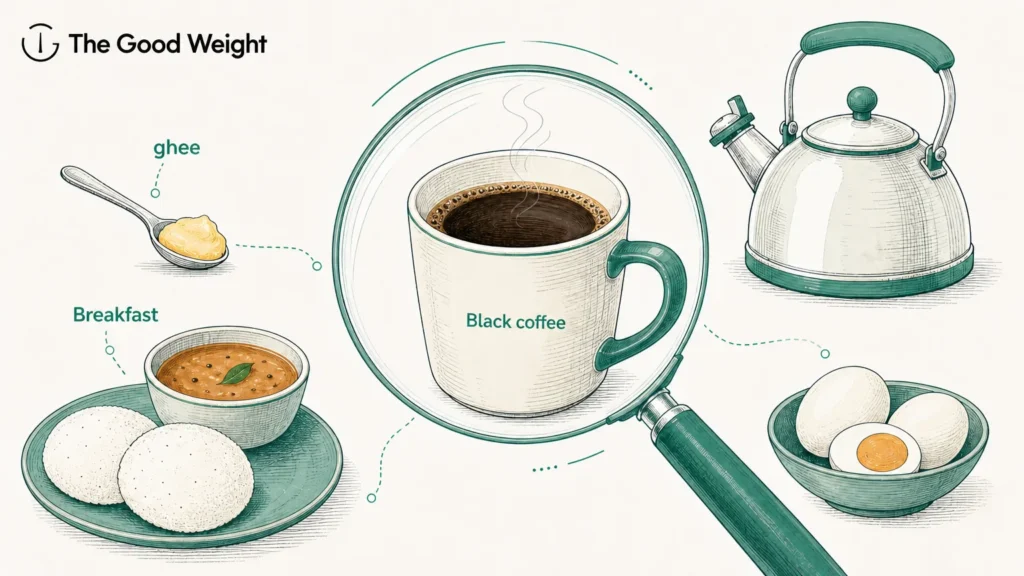
The kettle clicks off. Breakfast can wait, you decide, because a video has just explained that black coffee burns fat, especially before food. Another recommends adding ghee, which sounds reassuringly familiar in an Indian kitchen, even if the promised weight-loss mechanism is less familiar.
The appeal is understandable. A drink takes minutes to prepare, costs less than many supplements, and fits neatly into a busy morning. Compared with reorganising meals or discussing weight with a doctor, changing what goes into a cup feels manageable.
But the claims around black coffee for weight loss often mix three different things: caffeine’s short-term effects, the calories in a beverage, and changes in body fat over months. Those aren’t interchangeable. Feeling more alert after coffee doesn’t tell you whether your eating pattern supports your health.
My view is straightforward: enjoy coffee if it agrees with you, but don’t give it a medical job it hasn’t earned. A beverage habit can fit into weight management. It cannot replace an individualised nutrition and medical plan.
That distinction matters if you’re using coffee to postpone hunger, adding fat because someone called it “metabolic,” or drinking another cup to compensate for poor sleep. Adults managing diabetes risk or taking medication need more than a universal morning ritual. The useful question is how that ritual affects the rest of the day, including what you eat and how you feel.
Why does coffee sound like an easy answer?
Coffee has an advantage over most health advice: you can do something immediately. There’s no appointment to arrange and no shopping list to rethink. The warm mug also makes the change feel comforting, even when the advice attached to it encourages restriction.
Social posts then turn a plausible biological effect into a much larger promise. Caffeine affects the body, so the story becomes “coffee melts fat.” That leap deserves scrutiny, not guilt from anyone who found it persuasive.
Fat loss means a sustained reduction in stored body fat. A brief rise in energy expenditure or a change on the bathroom scale doesn’t establish that it has happened. Water shifts and digestive contents can also affect weight.
Convenience still counts. Replacing a sweetened drink with unsweetened coffee may reduce what you consume, depending on what happens later. But that’s a change in the overall routine, not proof that coffee independently causes fat loss.
Claim one: Black coffee for weight loss directly burns body fat
Myth: Drinking black coffee reliably produces meaningful fat loss because caffeine “switches on” fat burning. Fact: A temporary stimulant effect doesn’t establish a lasting change in body composition. Your body uses different fuels throughout the day; using more fat during one period doesn’t settle the longer-term balance.
There is research worth taking seriously. A randomised trial involving 126 adults with overweight and insulin resistance found that four cups of coffee daily over 24 weeks were associated with a modest reduction in body fat of about 4%. That figure describes a relative change in body fat, not a four-percentage-point drop or a 4% reduction in total body weight.
Encouraging? Yes. A prescription for everyone to drink four cups? No. One trial in a particular population cannot establish the best dose for every reader, especially someone whose sleep deteriorates after an afternoon coffee.
The practical benefit may be less dramatic than the headline. If unsweetened coffee replaces a sugary beverage without prompting compensatory eating, it may fit your plan. If you already drink it, increasing the amount isn’t an evidence-based guarantee of better results.
Claim two: Adding ghee turns coffee into a weight-loss drink
A spoonful of ghee changes the drink before it changes anything about your metabolism. Plain black coffee contains very little energy, while ghee adds dietary fat and calories. The amount matters, and a heaped spoon isn’t the same serving as a small measured portion.
Myth: Ghee gives coffee a special fat-loss property. Fact: Adding fat makes the drink more energy-dense; it doesn’t make its calories disappear. Feeling fuller afterward may affect your next meal, but fullness alone cannot tell you whether the full day supports weight loss.
Two routines need different assessments:
-
Adding ghee coffee to your usual breakfast: You’ve added energy without necessarily changing the meal. If the drink is enjoyable, that can be a preference, but it still belongs in the day’s intake. Calling it a weight-loss drink doesn’t change the arithmetic.
-
Replacing breakfast with ghee coffee: You may consume less or more energy, depending on the breakfast and the portion of ghee. You also change the nutritional content of that meal. Coffee with ghee doesn’t supply the protein or fibre that a balanced breakfast can contain.
Look, an ingredient can belong in your cooking without becoming a treatment. The same scepticism helps when assessing other weight-loss drink claims. Ask what the drink replaces, not merely what someone says it “activates.”
Claim three: Coffee can do breakfast’s job
At 8 a.m., one possible routine is coffee followed by a rushed commute. Hunger stays quiet for a while, lunch gets delayed, and the first convenient food becomes the default. Nothing has necessarily gone wrong, but the missing meal hasn’t automatically become a useful eating strategy.
Compare that with coffee alongside idli and sambar, with an extra protein source suited to your needs. Another option might be eggs with wholegrain toast, or a planned later meal if breakfast doesn’t suit your appetite. The difference is intention: you’ve made room for adequate food instead of asking caffeine to stand in for it.
Myth: Skipping breakfast with coffee is automatically better for weight loss. Fact: Breakfast timing needs personal context, and coffee isn’t nutritionally equivalent to a meal. Missing protein or fibre in the morning may leave you trying to catch up later.
To be fair, you don’t have to force breakfast simply because the clock says so. A planned eating schedule can work differently from accidental meal skipping. If you take insulin or other medication that can cause low blood glucose, discuss changes in meal timing with your clinician instead of experimenting alone.
Claim four: More coffee means better results
A second cup after a restless night can feel useful. By late afternoon, another may seem necessary to finish work. If bedtime then becomes harder, the routine deserves attention before you interpret tiredness as a need for more caffeine.
Myth: Increasing coffee intake keeps increasing its weight-management benefit. Fact: Tolerance and side effects limit that logic. The FDA cites 400 milligrams of caffeine daily as an amount not usually associated with negative effects for most adults, but that isn’t a target or a personal safety guarantee.
Cup size and brewing method vary, so count more than mugs. Tea, energy drinks, and some medicines also contribute caffeine. Use these checks before increasing your intake:
-
Sleep and anxiety: Notice difficulty falling asleep, restlessness, or feeling unusually on edge. More alertness isn’t always better functioning. Try less caffeine or an earlier cutoff instead of chasing another cup.
-
Digestive symptoms: Track whether coffee coincides with reflux, stomach discomfort, or urgent bowel movements. Don’t keep escalating a routine that repeatedly feels unpleasant. Persistent symptoms deserve assessment.
-
Appetite swings: Watch for using coffee to override hunger, followed by urgent eating later. That pattern isn’t a character flaw. It may signal that the routine needs more dependable meals.
-
Medical context: Discuss caffeine if you’re pregnant or breastfeeding, have troublesome palpitations, or take medicines that may interact with it. Mention weight-management medication too, particularly if appetite is already low. Ask a pharmacist or clinician about your specific treatment.
Claim five: If coffee suppresses hunger, the routine must be helping
Not feeling hungry can look like success when weight loss is the goal. Yet a quieter appetite doesn’t confirm that you’re eating enough protein or meeting your nutritional needs. Coffee also doesn’t have a dependable appetite-suppressing effect for everyone, as the evidence on caffeine and appetite remains mixed.
The way I see it, the useful test is whether the habit makes your day easier to nourish, not easier to ignore. Try this decision process over several ordinary days:
-
Record the actual drink. Note the serving size and timing, including anything added. Keep the record neutral. You’re gathering information, not awarding yourself marks.
-
Look at the next meal. Check whether coffee accompanies adequate food or repeatedly pushes eating out of reach. Write down how hungry you feel later. A rushed evening can reveal more than an easy morning.
-
Check the cost. Notice sleep quality and any digestive discomfort. A beverage that interferes with either may be getting in the way, even if it contains few calories. Decaffeinated coffee may suit your preferences better.
-
Bring the pattern to a consultation. Include your medication list and usual meals. At The Good Weight’s medical weight-loss service, doctor-led care can put beverage habits into a wider discussion about metabolic health. The aim is an individual plan, not a stricter coffee rule.
Questions worth settling before tomorrow’s cup
Is there a best time to drink coffee for fat loss?
Research doesn’t establish a universal coffee time that produces meaningful fat loss. Choose timing around your sleep and how coffee affects you. Drinking it on an empty stomach isn’t a requirement.
Do I need black coffee to lose weight?
No, coffee isn’t a necessary part of weight care. You can build a suitable plan without caffeine. If you enjoy coffee, its place depends on your preferences and health context.
Should I stop if I rely on it to avoid eating?
Start by discussing the pattern instead of blaming yourself. Reliance on coffee to suppress hunger warrants a review of food intake and medication effects. You may need better nutrition support, not greater restraint.
If coffee has become your main appetite-management tool, or your routine comes with poor sleep or digestive symptoms, seek personalised guidance before adding another cup. Keep the habit if it suits you, but let a plan account for your health. Arrange a conversation about your routine with The Good Weight.