
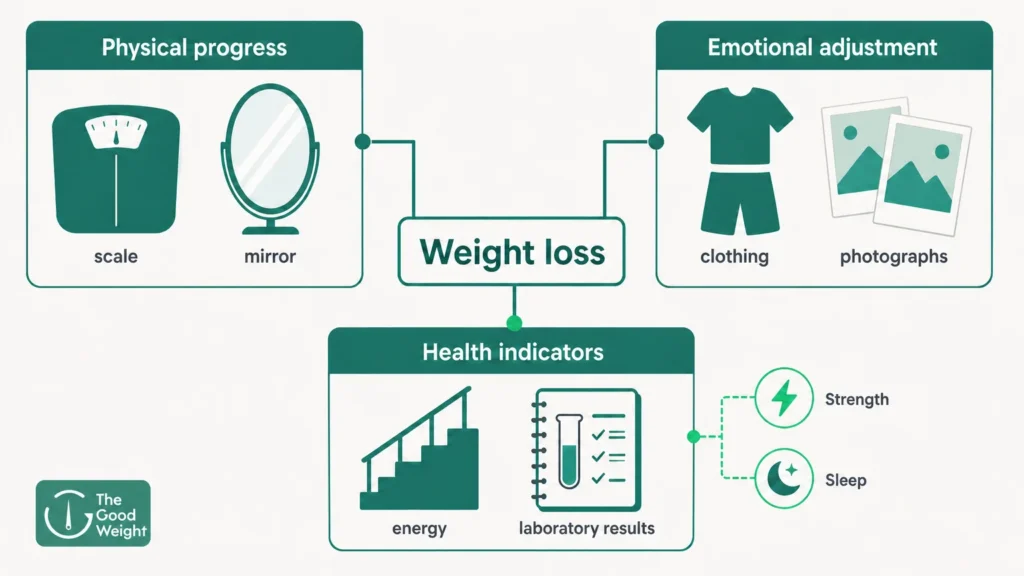
A weight loss diet can change eating patterns, energy intake and, over time, body weight. Yet it cannot dictate how quickly you feel at home in a changing body – or how confidently you move through relationships, photographs, clothing shops or social occasions. If you have made meaningful health progress but still feel like “the same person,” conflicted about your appearance, or uncomfortable with attention from others, you are not doing anything wrong.
Weight change is only one part of a much bigger adjustment. This guide explains why emotional change may lag behind physical change, how to recognise health progress beyond appearance, and when extra support could be useful. The central message is simple: progress can be real even when your feelings need more time to catch up.
Why can emotional change lag behind physical change?
For many people, body image is shaped over years – not only by body size, but also by past experiences, family messages, stigma, clothing struggles, health concerns and the ways other people have treated them. A change on the scale may happen over months, while the beliefs and protective habits built around that experience can take much longer to shift. It is understandable to look in the mirror and still expect to see the body you had before, or to automatically reach for the same clothing size.
A structured weight loss diet plan may also create visible milestones that feel easier to track than emotional ones. You can record meals, appointments, medication schedules or body-weight trends. Confidence, comfort in photos and a sense of belonging are less predictable. They may improve in some situations and remain difficult in others, especially if you have spent a long time avoiding attention or preparing for judgement.
Other people’s reactions can add another layer. You may receive compliments that feel supportive, intrusive questions about how you lost weight, or comments that imply your body is suddenly open for public discussion. Even positive attention can feel unsettling when it contrasts with earlier experiences of being overlooked, criticised or treated differently. You are allowed to have mixed feelings about this shift.
From a clinical perspective, sustainable weight management is not a personality transformation. Evidence-based care focuses on health behaviours and outcomes, not on the promise of becoming happier, more sociable or more confident at a particular weight. The National Institute of Diabetes and Digestive and Kidney Diseases’ guidance on healthy eating and physical activity similarly frames weight management around eating patterns, physical activity and health rather than a single appearance outcome.
Why do I still feel like the same person?
Because you are the same person. Weight loss does not erase your history, values, worries, responsibilities or relationships. It may change aspects of your physical health and daily capability, but it does not need to change your identity in order to “count.”
It can help to make room for both truths: you may appreciate improvements in your health while still feeling unfamiliar in your body, grieving time spent struggling, or wishing others had treated you with more kindness before. Those reactions do not mean your efforts have failed. They are often part of making sense of a significant life change.
Which expectations can make progress feel disappointing?
Weight loss is frequently portrayed as a finish line: reach a certain number and confidence, ease and happiness will supposedly arrive. This story is appealing, but it places an unfair emotional burden on a weight goal. A more realistic approach is to see physical progress as potentially helpful, while recognising that self-esteem, social anxiety, relationship stress and life satisfaction have many influences.
Myth: A smaller body automatically creates confidence
Reality: Some people feel more comfortable moving, dressing or taking part in activities after weight loss. Others continue to notice self-criticism, comparison or worries about being seen. Confidence is usually built through repeated experiences of safety, capability, supportive relationships and self-respect – not produced automatically by a particular body size.
If you find yourself delaying life until you “feel confident enough,” try choosing one low-pressure action that reflects your values now. That could mean accepting a walk with a friend, attending a class, wearing an outfit you enjoy at home first, or speaking openly with a trusted person. The point is not forced body positivity; it is gradually widening your life without waiting for perfect feelings.
Myth: A weight goal will make social situations easy
Reality: Social ease depends on more than appearance. Long-standing discomfort in groups, fear of comments or past experiences of teasing may remain relevant after weight changes. Some people even find social situations more complicated when friends, relatives or colleagues focus heavily on their body.
It is reasonable to want your body to be less of a topic. You do not owe anyone details about your meals, exercise, medication, procedures or weight. In doctor-led treatment, privacy and emotional wellbeing deserve the same consideration as nutrition support and medical follow-up.
Myth: If I still feel unhappy, the weight loss was not worthwhile
Reality: Health improvements and emotional distress can exist at the same time. A person may be proud of better stamina, improved meal regularity or clinically meaningful changes in metabolic markers while also having a difficult week with body image. Neither experience cancels the other.
A goal should be evaluated in context. The CDC notes that even modest weight loss can support health benefits, but no responsible weight care programme should promise that weight loss will resolve every personal concern. If disappointment is persistent, it is a signal to broaden the conversation – not a reason to blame yourself or intensify restriction.
What health-focused measures of progress can sit alongside the scale?
The scale can be one useful data point, particularly when it is reviewed with a clinician who understands your health history. But it is not a complete measure of wellbeing, and daily changes can reflect fluid balance, digestion, hormonal shifts and other normal factors. A more balanced review combines weight trends with behaviours, function and relevant medical information.
The best measures are individual. For example, someone managing diabetes risk may track laboratory results with their clinician, while someone recovering after a procedure may focus first on hydration, protein intake and tolerance of meals. People following personalised diet and weight-loss support can also review whether their plan is practical enough to continue during workdays, travel and family events.
Use this checklist at intervals that feel useful rather than compulsive:
-
Energy for daily life: Consider whether routine tasks feel more manageable. This might include walking through a market, keeping up with children, standing to cook, concentrating at work or having energy left for an enjoyable activity. A single tired day is not a setback; look for patterns across several weeks.
-
Strength and physical capability: Notice improvements in what your body can do, not only how it looks. You may be able to climb stairs with fewer pauses, carry groceries more comfortably, rise from a chair with greater ease or progressively build resistance-training capacity. These functional gains can support independence and quality of life at any body size.
-
Sleep and recovery: Reflect on sleep quality, daytime alertness and recovery after activity. Sleep can be influenced by many factors, so it should not be treated as a test of “good” or “bad” behaviour. Still, discussing ongoing snoring, poor sleep or fatigue with your clinician can be an important part of comprehensive wellness.
-
Mobility and symptoms: Pay attention to comfort during movement and to symptoms that matter to you, such as breathlessness with routine activity or joint discomfort. These observations can make follow-up appointments more specific and useful. They are also a reminder that health goals may be about participation in life, not appearance.
-
Relevant clinical measures: When appropriate, your care team may monitor blood pressure, blood glucose, HbA1c, lipid levels or other markers related to your health needs. The NHLBI describes weight-management plans as combining lifestyle changes with medical assessment and treatment when needed. Ask what each result means for you rather than treating any number as a verdict.
-
Meal consistency and nourishment: A sustainable plan is one that helps you eat regularly, include satisfying foods and meet nutritional needs. Extreme rules can be difficult to maintain and may increase preoccupation with food. Research comparing lower-carbohydrate and balanced-carbohydrate approaches found little to no difference in weight loss up to two years, reinforcing the value of a pattern you can sustain rather than a one-size-fits-all label.
-
Follow-up habits: Keeping appointments, discussing side effects honestly, asking questions and adjusting a plan when life changes are all meaningful forms of progress. The USPSTF recommends intensive, multicomponent behavioural interventions for adults with obesity, reflecting the importance of continued support rather than relying on willpower alone.
For people in the postpartum period, goals deserve particular care. A weight loss diet postpartum should account for recovery, sleep disruption, cultural food practices and, when relevant, breastfeeding. The ACOG guidance on breastfeeding nutrition notes that breastfeeding mothers generally need additional calories; individual needs should be discussed with a qualified clinician or dietitian rather than managed through aggressive restriction.
How can I respond to comments, photos and changing social attention?
You do not have to be grateful for every comment simply because someone intends it as praise. Deciding how much you want to share is part of protecting your wellbeing. The following scenarios are examples, not scripts you must use; choose language that feels natural and safe in your relationships.
Scenario: A colleague comments on your body at work
A colleague says, “You look so different – what have you been doing?” You might respond, “Thanks for your concern, but I prefer not to discuss my body at work.” If you want to redirect without further explanation, try: “I’m focusing on my health, but I’d rather talk about something else.”
If the comments continue, it can be helpful to state the boundary more directly: “I mentioned that I don’t want comments about my body. Please stop.” Where appropriate, document repeated workplace behaviour and seek support through your manager or human-resources process. A boundary does not require a detailed defence.
Scenario: Family members repeatedly bring up your weight
A relative may believe they are encouraging you but keep comparing your current appearance with the past. Consider speaking with them privately at a calm moment: “I know you mean well, but frequent comments about my weight make me uncomfortable. I would appreciate it if we could focus on how I am doing rather than how I look.”
You might also name what support would be more helpful. For example: “It helps when you ask whether I want company for a walk or how my appointment went, rather than commenting on my size.” This gives a caring person a practical alternative while making your needs clear.
Scenario: Photos feel more difficult than expected
You may expect to enjoy photographs more after weight loss and feel surprised if you still avoid them. Rather than forcing yourself into a major leap, consider a gradual approach: take casual photos with people you trust, choose when they are shared, or ask to see an image before it is posted. You can also decide that you do not want progress photos at all.
Photos are records, not objective measures of worth or success. If you choose to take them for clinical or personal tracking, set clear rules about where they are stored and who can view them. Your body and your health information are yours to share – or keep private.
Scenario: New attention does not feel good
Changing social attention can raise uncomfortable questions about how people viewed you before. You do not need to turn that experience into a lesson for anyone else. It may help to talk through the reaction with a trusted friend, counsellor or clinician, especially if it is bringing up anger, sadness or a strong urge to isolate yourself.
When might mental-health support be helpful?
Mental-health support is not reserved for a crisis, and it does not mean you are ungrateful for your health progress. It can be a practical part of personalised weight care, particularly during a period of major change. A qualified mental-health professional can offer a private space to explore body image, emotions around food, relationship changes and expectations without judgement.
Is it normal to need support even if my weight loss is going well?
Yes. You may be following a medical programme, using nutrition support or meeting health goals while still finding the emotional side difficult. Weight loss diet programs are often most useful when they recognise that eating patterns are connected to stress, routine, sleep, family life and emotional wellbeing – not just information about calories.
Consider starting the conversation with your weight-care clinician if you are experiencing any of the following:
- Persistent sadness, anxiety, shame or distress about your body that interferes with daily life
- Frequent checking, avoidance of mirrors or photos, or preoccupation with perceived flaws
- Social withdrawal, relationship strain or fear of eating around others
- Increasingly rigid food rules, binge eating, purging, compensatory exercise or worries that eating feels out of control
- A sense that you must keep losing weight to deserve comfort, care or participation in life
- Low mood, hopelessness or thoughts of harming yourself; in this situation, seek urgent local mental-health or emergency support
These experiences do not diagnose any condition on their own. They do indicate that you deserve an assessment and appropriate support. If thoughts of self-harm are present, contact emergency services or a local crisis resource immediately, and tell someone you trust if you can.
Give emotional wellbeing a place in ongoing weight care
Health progress can be meaningful even when your self-image has not changed at the same speed. A sustainable approach makes room for nourishment, medical follow-up, movement, rest, relationships and emotional support – not only a target number. You do not need to earn care by feeling confident every day.
If you are already receiving treatment, bring body-image concerns, unwanted comments or changes in mood to your next follow-up appointment. Chennai residents seeking structured, doctor-led support can speak with The Good Weight’s clinical team about health goals and ongoing care, including personalised nutrition, metabolic-health assessment and the emotional realities that can accompany significant weight change.