
A blood-pressure reading can make everyday food feel suddenly complicated. The extra spoon of salt in rasam, the pickle beside curd rice, the packet of namkeen during a long workday – each starts to look suspect. Meanwhile, if weight loss is also on your mind, it’s easy to get pulled toward restrictive meal plans that leave you hungry by 4 p.m.
The DASH diet for high blood pressure takes a calmer route. It focuses on the pattern of meals across weeks and months: more vegetables, fruits, pulses, whole grains, and minimally processed foods, with closer attention to sodium. No imported “diet foods” required. No promise that one bowl of salad will fix a blood-pressure problem either.
Medication still matters. If your doctor has prescribed tablets for hypertension, food changes should sit alongside that treatment, not replace it. But a practical eating pattern can make daily decisions less exhausting, and that’s often where lasting health changes begin.
What is the DASH diet for high blood pressure?
DASH stands for Dietary Approaches to Stop Hypertension. It is an eating pattern developed and studied for its effect on blood pressure. The pattern favours vegetables, fruit, whole grains, beans, lentils, low-fat dairy or curd, nuts, and lean protein, while limiting foods high in sodium, saturated fat, and added sugar.
The evidence behind it is stronger than the average diet trend. In the original DASH trial, adults following the DASH eating pattern had lower blood pressure than those eating a standard American diet, even without weight loss being the main goal. The 1997 clinical trial found meaningful blood-pressure reductions within eight weeks, especially among people who started with hypertension.
Salt is part of the story, but it isn’t the whole story. A later trial found that combining DASH-style eating with lower sodium intake reduced blood pressure further, with the largest reductions among people who began with higher readings. The DASH-Sodium study compared several sodium levels within the eating pattern, which is why clinicians often discuss food quality and salt together.
DASH is not a cure for hypertension. Blood pressure can rise for many reasons, including family history, kidney disease, sleep problems, alcohol intake, stress, and medication effects. Still, food is one part you can work with every day, even on a busy Tuesday when dinner needs to happen fast.
Can a blood-pressure eating plan help with weight loss?
Yes, it can. But DASH is not a weight-loss menu with a finish line and a “before and after” photo attached. Weight loss happens when your usual intake, over time, is lower than the energy your body uses. DASH can make that easier because it shifts meals toward foods that take up more space on the plate and often keep you full longer.
A bowl of vegetable sambar with brown rice or millet, curd, and a salad has more fibre and volume than a plate built around refined rice, papad, pickle, and a sugary drink. Both meals may feel familiar. Yet the first one makes it easier to stop at comfortable fullness because lentils, vegetables, and whole grains digest more slowly.
I’ve seen the rigid-diet approach backfire in a predictable way. Someone eats very little for five days, feels deprived, then spends the weekend grazing on restaurant food and snacks because the plan was never built for real life. A DASH-style routine asks a more useful question: what could your normal breakfast, lunch, and dinner look like most days?
A sustainable pattern leaves room for family meals, travel, celebrations, and the occasional indulgence. It does not ask you to “start over” every Monday.
For readers looking for a broader, food-first approach to weight management, diet and weight-loss support from The Good Weight can help connect meal habits with medical history and realistic goals.
What can you eat on a DASH-style Indian diet?
The best Indian version of DASH doesn’t copy a Western meal chart. It starts with foods already common in many homes: dals, chana, rajma, vegetables, fruit, curd, fish, eggs, and grains. Portion size, cooking method, and how often packaged foods appear matter more than forcing yourself to eat unfamiliar meals.
Build meals around food groups, not forbidden foods
Start with vegetables. Aim to make them a visible part of lunch and dinner, rather than a tiny garnish beside a large mound of rice. Poriyal, kootu, avial, bhindi, cabbage, beans, bottle gourd, brinjal, spinach, and mixed vegetable sambar all count. Fresh, frozen, and seasonal vegetables are fine.
Then add a protein-rich anchor. For vegetarians, that may be toor dal, moong dal, chana, rajma, cowpeas, sprouts, paneer in a modest portion, or curd. Non-vegetarian meals can include egg, grilled fish, chicken curry made with less oil, or a lean meat dish eaten less often.
Whole grains fit too. Try hand-pounded rice, brown rice, red rice, whole-wheat phulkas, oats, ragi, jowar, bajra, or millets when they suit your digestion and household routine. The goal isn’t to declare white rice illegal. It’s to avoid making a large bowl of polished rice the entire meal.
Two ordinary meal examples
A vegetarian lunch could be two phulkas or a moderate portion of rice, palak dal, beans poriyal, cucumber-carrot salad, and plain curd. Finish with a guava, orange, or small banana instead of a sweetened dessert. The meal has colour, protein, fibre, and satisfaction without needing a separate “diet” recipe.
A non-vegetarian dinner could be fish curry cooked with tomato, tamarind, pepper, and limited salt, served with red rice, cabbage poriyal, and curd. Keep the fried fish for an occasional meal rather than the default. Nuts and seeds also fit well: a small handful of unsalted peanuts, almonds, walnuts, pumpkin seeds, or sesame can replace biscuits when hunger strikes.
Most sodium hides outside the salt shaker
Many people cut salt while cooking and feel puzzled when blood-pressure readings barely change. The missing piece is often packaged or restaurant food. Sodium can pile up through pickles, papads, instant noodles, bakery snacks, chips, salted mixtures, soup powders, ready-made gravies, ketchup, soy sauce, and restaurant curries.
Restaurant meals are tricky because salt makes food taste fuller and richer, especially when the kitchen is cooking at scale. You don’t have to stop eating out. Ask for less salt when possible, share starters, skip soup and papad, and choose a dish with vegetables, dal, grilled protein, or plain curd. Small choices count here.
A quick label-reading checklist
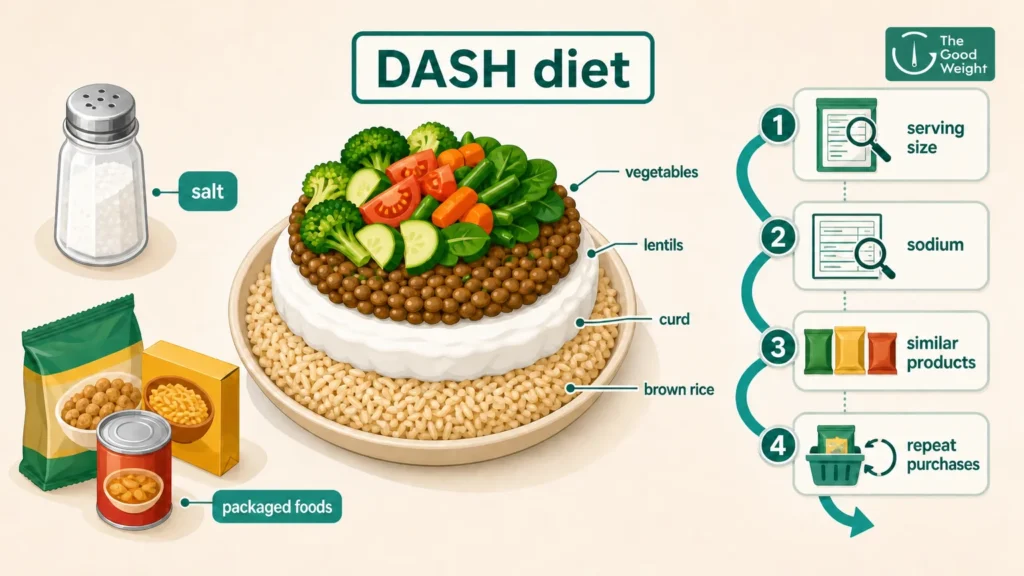
Use this four-step process when buying a packaged item:
-
Check serving size first. A packet may list sodium for half a packet, while most people eat the whole thing without noticing.
-
Read sodium, not only “low fat.” A food can be low in fat and still carry a heavy sodium load, especially sauces and savoury snacks.
-
Compare similar products. Pick the lower-sodium option when choosing between two breads, cereals, curds, or snacks.
-
Watch repeat purchases. The biscuit or pickle you eat daily matters more than the one restaurant meal you have once a month.
The National Heart, Lung, and Blood Institute’s DASH guidance gives food-group targets and practical sodium advice. Still, labels can be annoying to decipher at first. After a few shopping trips, you’ll spot the usual high-sodium culprits quickly.
Keep the flavour, change the routine
Food does not need to become bland to be blood-pressure-friendly. Salt is one flavour note, not the whole orchestra. Lemon, tamarind, tomato, ginger, garlic, pepper, cumin, coriander, curry leaves, mint, mustard seeds, and roasted spices can make a lower-salt meal feel full of character.
Here are a few swaps that keep meals culturally familiar:
| Usual choice | A more DASH-friendly version |
|---|---|
| White bread with butter and salty pickle | Vegetable oats upma with curd and fruit |
| Biscuits with sweet tea | Roasted chana or unsalted peanuts with tea using less sugar |
| Large rice portion with pickle and papad | Moderate rice portion with dal, two vegetable dishes, and curd |
| Deep-fried evening snack | Steamed sundal, corn chaat with lemon, or fruit with nuts |
| Restaurant biryani plus soft drink | Smaller biryani portion, raita, salad, and water |
The point isn’t perfection. If idli and sambar are your reliable breakfast, keep them. Add vegetables to the sambar, go easy on salty chutney powder, and pair the meal with fruit later in the morning. That’s a much better long-term plan than abandoning breakfast for a week and then ordering vada because hunger caught up with you.
Who needs a personalised plan before changing diet?
Some people need more than general DASH advice, especially when blood pressure and weight concerns overlap with another condition. Medication, kidney function, blood sugar patterns, and appetite changes can alter what a safe meal plan looks like. A clinician can help you avoid a well-meant change that doesn’t suit your body.
Can I stop blood-pressure medicine after starting DASH?
No. Do not stop or reduce prescribed blood-pressure medication without speaking to the clinician who manages it. If food changes and weight loss lower your readings over time, your doctor may review the dose, but that decision needs actual blood-pressure records.
What if I have kidney disease?
Speak with a nephrologist or dietitian before increasing fruit, vegetables, dairy, beans, or potassium-rich foods. Some people with kidney disease need limits on potassium, phosphorus, protein, fluids, or sodium. A standard DASH template may not match those needs.
What if I have diabetes?
DASH can work well with diabetes care, but carbohydrate portions still matter. Fruit, rice, millets, and dals affect glucose differently for different people. Checking your blood sugar pattern with your care team helps turn a healthy-looking plate into one that works for you.
Who else should ask for individual guidance?
Seek personalised advice if you are pregnant, have heart failure, take diuretics, have a history of eating disorders, or have had bariatric or endoscopic weight-loss treatment. People with complex health needs may benefit from medical weight-loss care that considers diagnostics, nutrition, medication, and follow-up together.
The DASH diet asks for a sensible shift, not a personality transplant. Start with one repeatable move: add a vegetable dish at dinner, replace one packet snack, or keep the pickle for weekends rather than every meal. Then check your blood pressure as advised and let the numbers, your appetite, and your routine guide the next change.
For personalised weight care that considers blood pressure, medications, food preferences, and daily routine, speak with the clinical team at The Good Weight.