
It is 8:30 a.m. in Chennai, and you leave home after only coffee because a meeting starts early. Lunch gets pushed to 3 p.m. Your commute runs late. By the time you reach home, dinner is waiting, you are exhausted, and the idea of a modest portion feels almost comical. You eat quickly, then return to the kitchen for more rice, snacks, or something sweet.
Many people begin intermittent fasting to lose weight with a plan that looks neat on paper: eat for eight hours, fast for 16. Real life is less neat. There are client calls, family dinners, temple visits, gym sessions, long drives, and the colleague who brings biryani to the office at 2 p.m.
Fasting is not a character test. For some people, a planned break from eating reduces grazing and brings routine to a chaotic day. For others, the same rule creates fatigue, irritability, and a nightly rebound of hunger. The useful question is not, “Can I force myself to fast?” It is, “Does this pattern help me eat regularly enough to care for my health?”
The fasting plan that looks simple until real life begins
A strict eating window often fails because it clashes with the hours when you actually need food. Someone who stops eating at 6 p.m. may find it hard to sit through a 9 p.m. family dinner without feeling left out. Someone who skips breakfast despite an early commute may arrive at work distracted, headachy, and ready to eat whatever is easiest by noon.
The body is not being difficult when hunger gets louder after a long day. It is responding to missed fuel, poor sleep, stress, or meals that did not contain enough protein and fibre. A fasting plan can make those gaps more visible, but it does not solve them on its own.
A patient might manage an early dinner from Monday to Thursday, then feel that Friday evenings ruin the plan. But Friday is not the problem. The plan is too brittle. Social meals, religious occasions, and a late workday are normal parts of life, not failures of discipline.
Intermittent fasting means taking planned periods without calorie-containing food or drinks, often by limiting the daily hours in which you eat. It does not describe one fixed schedule, and it does not require skipping a particular meal.
The way I see it, a food routine only earns its place if you can follow it on an ordinary Tuesday and still enjoy your grandmother’s lunch on Sunday.
What intermittent fasting to lose weight can, and cannot, do
For weight loss, fasting may work because it puts boundaries around unplanned eating. If your usual evening includes tea, biscuits, dinner, television snacks, and a second round in the kitchen, choosing a clear finishing time may reduce how much you eat without counting every calorie. Some people also find fewer meal decisions calming.
But fasting itself does not make food quality or portion size irrelevant. A six-hour eating window can still contain large restaurant meals, sugary drinks, fried snacks, and too little protein. Hunger may build until the first meal becomes enormous. In that situation, the smaller window has not made eating easier. It has merely squeezed more food into fewer hours.
Research reflects that mixed reality. In a 12-month trial, people assigned to time-restricted eating and those assigned daily calorie restriction lost similar amounts of weight. That does not mean meal timing is useless. It means its value often lies in making an eating pattern easier to follow, not in bypassing energy intake.
The National Institute on Aging also notes that human research on fasting diets still leaves open questions about long-term effects. So treat fasting as one tool. Sleep, resistance training or regular walking, enough protein, and meals that satisfy you still matter.
Start gently, around the life you already have
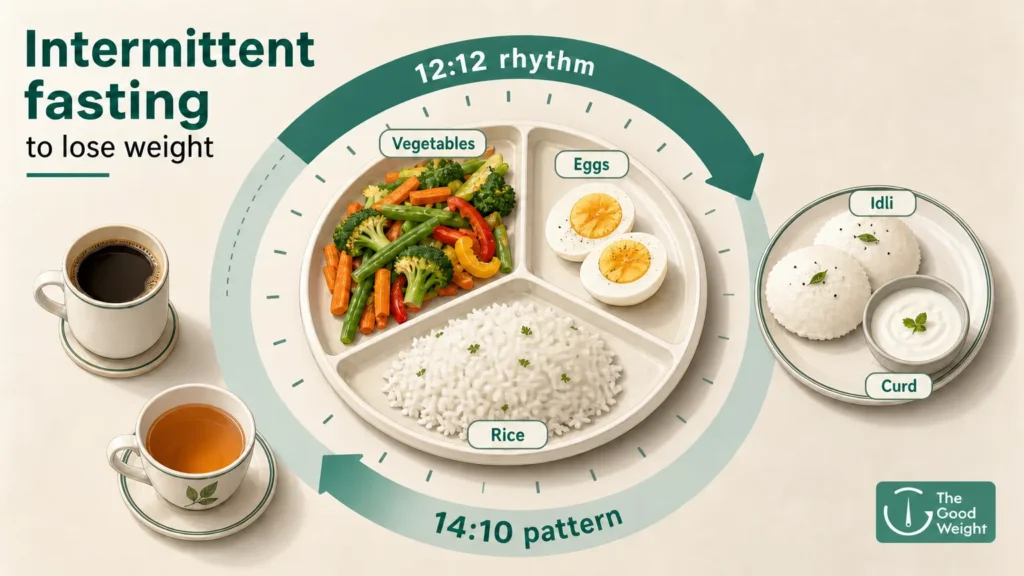
You do not need to begin with a 16-hour fast. A 12:12 rhythm, such as finishing dinner at 8 p.m. and eating breakfast at 8 a.m., gives many people a useful pause from late-night nibbling while keeping breakfast intact. If that feels comfortable for a couple of weeks, a 14:10 pattern may be worth trying.
The numbers mean fasting hours followed by eating hours. They are examples, not rules carved into stone.
-
Pick the meal you value most. If dinner with family matters, build the window around it. You might eat from 9 a.m. to 7 p.m. instead of forcing an early dinner that creates daily tension.
-
Move slowly. Shift your first or last meal by 30 to 60 minutes, then notice your energy, appetite, and mood for several days. A sudden jump to long fasting hours often feels heroic for three days and miserable by day seven.
-
Plan what happens before the commute home. A protein-rich snack at 5 p.m. can prevent the “I could eat the whole kitchen” feeling at 9 p.m. Fasting should not mean white-knuckling through traffic.
-
Drink fluids through the day. Water, plain soda water, and unsweetened tea or coffee can fit a fasting period for many people. But a headache is not always dehydration, and more caffeine is not always the answer.
Early exercisers may prefer a light breakfast after training. Others are comfortable working out before their first meal. Gym performance, recovery, and hunger later that day should guide the choice. No medal exists for exercising under-fuelled.
If you need help matching meal timing to medical history or metabolic concerns, doctor-led medical weight-loss care can bring diet, activity, and clinical review into one realistic plan.
When the window opens, build a meal that lasts
The first meal after fasting does not need to be fancy. It needs to contain enough food to steady you. Starting with sweet tea and bakery items, or with a giant plate because you are starving, can create a quick rise and fall in energy. Then hunger returns with a vengeance.
A simple plate framework works across many Indian food preferences:
-
Half the plate: vegetables, salad, sambar vegetables, or a mixed poriyal. Fibre adds bulk and helps the meal feel more filling.
-
One quarter: protein such as dal, chana, rajma, paneer, curd, eggs, fish, chicken, tofu, or sprouts. Vegetarians can combine pulses, dairy, soy, and nuts across the day rather than relying on one food.
-
One quarter: rice, millet, roti, idli, dosa, or another carbohydrate that suits you. Portions still matter, but carbohydrates do not need to disappear for weight loss.
For example, breakfast could be vegetable oats with curd and a side of eggs, or two idlis with sambar and a bowl of thick curd. Lunch might be rice, rasam, beans poriyal, and fish or chana. Dinner can stay familiar: two rotis, dal, a generous vegetable dish, and paneer bhurji.
Look, the aim is not to turn every meal into a nutrition exam. You are trying to make the next meal less desperate. Our diet and weight-loss approach focuses on patterns that work with home food and family routines, rather than asking you to live on separate “diet” meals.
Who should not try unsupervised fasting?
Some situations call for medical review before changing meal timing. Pregnancy and breastfeeding need steady nutrition, and fasting without individual advice can make it harder to meet energy and nutrient needs. People with a past or current eating disorder, or strong anxiety around food rules, may also find fasting turns eating into an unhealthy cycle.
Diabetes deserves extra care. Insulin and some glucose-lowering tablets can cause blood sugar to fall too low when meals shift. The National Institute of Diabetes and Digestive and Kidney Diseases advises people with diabetes to speak with their health care team before trying intermittent fasting, especially when medication timing may need adjustment.
Frequent dizziness, fainting, uncontrolled thyroid disease, kidney disease, liver disease, active digestive symptoms, or a demanding physical job are other reasons to pause and ask for medical guidance. The same applies if you train intensely and cannot recover well between sessions.
Fasting may also be impractical for shift workers. A nurse on night duty or a driver on long routes needs a plan built around alertness and access to nourishing food, not a fashionable clock. There is no shame in deciding that regular meals suit you better.
Is fasting helping, or is it making evenings worse?
Headaches, low energy, constant thoughts about food, poor sleep, or repeated night eating are information. They do not prove that you need tougher willpower. Often, they point to a window that is too short, a rushed first meal, not enough fluid, or a day that began after too little sleep.
Try a small adjustment before abandoning the idea entirely. Move your eating window earlier or later to fit your actual hunger. Add protein and vegetables to the first meal. Eat a planned afternoon snack before the commute. Keep a flexible schedule for weddings, travel, and family celebrations instead of trying to “make up” for them with an extra-long fast.
Honestly, I think one pattern catches many people out: they fast successfully during office hours, then eat very little at dinner to preserve the schedule, then lie awake hungry. The next morning, they blame themselves. A later dinner, or a 12-hour overnight break instead, may work far better.
Stop fasting and seek professional advice if you have fainting, repeated severe dizziness, symptoms of low blood sugar, worsening digestive symptoms, or a growing sense that food rules are taking over your day. Your eating plan should make life calmer, not smaller.
Frequently asked questions about intermittent fasting
Does intermittent fasting work for everyone?
No. Some people find that a clear eating schedule cuts down on snacking and helps them maintain a calorie deficit. Others compensate by overeating, sleep poorly, or find it conflicts with work and family meals. The pattern that you can repeat comfortably has more value than the strictest one you can endure briefly.
Can I have coffee while fasting?
Plain black coffee or unsweetened tea may suit many people, but caffeine can worsen acidity, jitters, or headaches. If coffee on an empty stomach makes you unwell, eat earlier or choose another routine. A fasting schedule should not require you to ignore symptoms.
Should I skip breakfast or dinner?
Neither meal is automatically better to skip. Your work hours, exercise, hunger pattern, and family routine matter more. Someone who eats dinner late with family may do better with a shorter overnight fast, while someone who naturally prefers an early dinner may find a longer overnight break comfortable.
What is a realistic goal?
Aim first for consistency: fewer unplanned eating episodes, meals with protein and vegetables, and a schedule you can maintain through a busy week. Changes in weight may follow, but health also includes energy, sleep, strength, blood sugar, and your relationship with food.
A schedule should serve your life
The most useful form of fasting feels almost boring. You finish eating at a reasonable time, wake up without panic-level hunger, eat satisfying meals, and have enough flexibility for real life. No dramatic countdown. No punishment after a restaurant meal.
If you live in Chennai and fasting has become confusing, The Good Weight can help you review nutrition, medical history, medicines, and metabolic health before deciding what fits. A weight-loss doctor consultation can be a sensible starting point when symptoms, diabetes risk, or repeated dieting struggles are part of the picture.
Your body does not need another test of willpower. It needs a routine you can live with. Learn more at The Good Weight.