
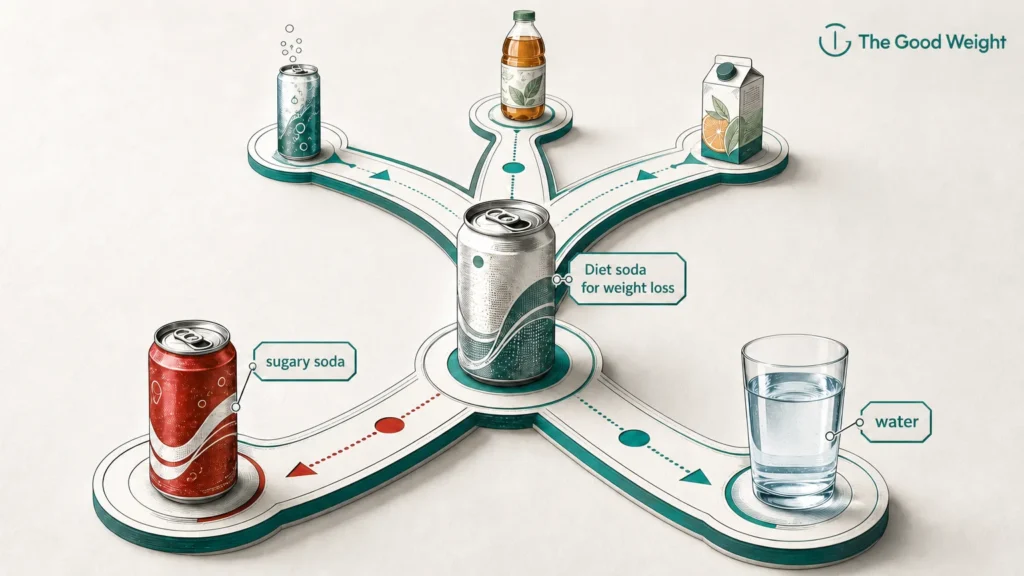
Diet soda for weight loss may reduce calories when it replaces sugary drinks. But it can’t do the work of a long-term eating pattern, medical plan, or routine you can live with.
A cold diet soda can feel like a small win when you’re trying to lose weight. You skip the sugar, save calories, and still get a sweet taste and the familiar fizz. Then comes the doubt: have you made a sensible substitution, or are you accidentally holding yourself back?
The answer depends less on what is in the can than on what the can replaced. Swapping a regular soft drink for diet soda changes one part of your intake. Swapping water for diet soda may change very little from a calorie perspective. And having a diet soda alongside frequent high-calorie snacks, irregular meals, or untreated appetite concerns won’t turn it into a weight-loss method.
That distinction matters for anyone considering diet soda for weight loss. The goal isn’t to create food rules that make daily life miserable. It’s to spot the few repeatable choices that lower calorie intake or make your routine easier to maintain, while still paying attention to metabolic health, appetite, medication, and personal preferences.
Is diet soda for weight loss a method on its own?
Myth: Diet soda causes weight loss because it has little or no sugar.
Fact: Diet soda can be a lower-calorie replacement, but it is not a treatment for excess weight. Body weight changes over time through a much wider mix of factors: usual food intake, hunger and fullness cues, sleep, activity, medical conditions, medication, and the habits that show up during busy workdays or social events. One drink choice has a role. It does not run the whole show.
Diet soda is a soft drink sweetened with non-nutritive sweeteners instead of sugar. In weight management, its effect depends on the drink or food it replaces. A calorie-free drink does not automatically create a calorie deficit.
Picture two routines. In the first, someone replaces a 300 ml sugary soda at lunch with a diet version and keeps the rest of the meal the same. That swap may remove a regular source of liquid calories. In the second, someone already drinks water most days and adds a diet soda while continuing to have the same meals and snacks. There may be no meaningful calorie difference to explain a change on the scale.
The way I see it, diet soda belongs in the “possible tool” category. It may help someone move away from sugar-sweetened beverages without feeling deprived. It may also keep a sweet-drink habit front and centre for someone who finds that taste leads to more cravings. Neither response makes a person weak or “bad” at dieting. It tells you something useful about the routine.
What happens when sugary drinks are replaced?
The clearest research question is not “Is diet soda good?” It is “What did people stop drinking?” In a large U.S. cohort study involving 143,409 participants, replacing three weekly servings of sugar-sweetened beverages with artificially sweetened beverages was associated with 1.39 kg less weight gain over four-year intervals. The estimated difference was the same when those sugary drinks were replaced with water.
That result is easy to misread. It does not say that three diet sodas each week produce 1.39 kg of weight loss in every person. Researchers observed an association with less weight gain over repeated four-year periods, not a promise for an individual body. Eating patterns, starting weight, activity, health conditions, and the accuracy of self-reported intake all matter.
Still, the finding points to a practical idea: sugary drinks can be a quiet source of calories because they don’t always create the same fullness as a meal. A person who drinks sweetened tea, packaged juice, soda, or flavoured coffee several times each week has more room for a useful change than a person who rarely drinks them. Water and unsweetened drinks remain simple defaults, while a diet soda may be a workable bridge away from sugary beverages.
There’s no prize for making the swap in the hardest possible way. If sparkling water with lime works, great. If one diet soda at a restaurant keeps someone from choosing a large regular soda, that can also be a practical choice. Consistency beats beverage purity contests. Every time.
If you already drink little sugary soda, would water change much?
Probably not by itself. If your regular soda intake is already low, changing a diet soda to water may have little direct effect on weight because both drinks contain few or no calories. Water may still be the drink you prefer for thirst, meals, or exercise. But expecting a dramatic scale change from that one adjustment can set you up for needless frustration.
Use this short decision process before turning a drink into a big project:
-
Start with your real baseline. For seven days, write down every drink, including sweetened tea or coffee, juices, milkshakes, alcohol, and the soda grabbed on the way home. Portion size counts. A tiny can once a fortnight and a large bottle every day are different patterns, even though both get called “drinking soda.”
-
Ask what the drink is replacing. If diet soda replaced a regular soft drink, it may lower your usual calorie intake. If it replaced water, plain tea, or no drink at all, weight change is less likely to come from the switch. Look at the full exchange, not the label in isolation.
-
Watch what happens next. Some people feel satisfied and carry on with their planned meal. Others notice that a sweet taste leaves them looking for biscuits or dessert later. Track appetite, snack urges, and energy for a week instead of assuming your experience must match someone else’s.
-
Choose the habit you can repeat. Water is usually a sensible everyday drink, yet forcing it when you dislike it may backfire. Chilled water, soda water, unsweetened iced tea, or a planned diet soda can all fit, depending on the person and the setting.
Honestly, this is where weight conversations can get finicky. A beverage diary sometimes reveals that soda wasn’t the main issue at all. The bigger pattern may be missed breakfasts followed by evening hunger, frequent restaurant meals, or a medication that changed appetite. Food and beverage planning works better when it matches the actual problem. Personalised diet and weight-loss support can help turn that observation into a routine rather than another short-lived restriction.
What do trials say about non-nutritive sweeteners over time?
Shorter trials often find a small weight advantage when people replace sugar with non-nutritive sweeteners. A 2026 meta-analysis of 19 randomised trials reported that replacing daily caloric sugars with non-nutritive sweeteners was linked with a mean 0.79 kg weight reduction. Yet studies lasting longer than 18 weeks showed minimal effects.
That pattern deserves more attention than the headline number. A 0.79 kg average change may matter to some people, especially if it comes from an easy swap they enjoy. But it is modest, and the smaller longer-term effect suggests that a drink change often loses influence once everyday eating patterns settle back in. The fizz doesn’t have magical properties. Sorry, soda.
Why might the effect fade? People may start compensating in other ways, such as choosing larger portions because they feel they “saved” calories on a drink. Their routines can also change with travel, stress, celebrations, or simple boredom. Or the initial sugar swap may have already captured most of the available calorie reduction, leaving no further change to expect.
Long-term weight care asks a sturdier question: can this routine still work six months from now? For people who need medical support, food changes sit alongside assessment of metabolic health, nutrition, activity, and treatment choices. Doctor-led medical weight-loss care looks at those pieces together rather than assigning oversized power to one drink.
When should beverage choices be reviewed as part of medical care?
Online advice is a starting point. A personal review makes more sense when drinks connect to a health condition, new symptoms, or a medication change.
What if I have diabetes or am trying to manage glucose?
Diet soda does not contain the same sugar load as regular soda, but glucose management involves far more than one drink. Meal timing, medication, overall carbohydrate intake, and glucose patterns all count. People using insulin or glucose-lowering medicines should discuss recurring thirst, unexpected low readings, or big changes in eating with their clinician. The American Diabetes Association’s nutrition guidance supports individualised eating plans rather than one universal beverage rule.
What if diet soda changes my appetite or digestion?
Pay attention to your own pattern. If carbonation leaves you bloated, worsens reflux, or makes you less comfortable after meals, water or a non-carbonated alternative may suit you better. If sweet drinks trigger more snacking, that is useful information too. A different choice may help, without needing to declare diet soda “forbidden.”
What if I am taking weight-loss medication or planning a procedure?
Medication changes can affect appetite, nausea, fullness, and fluid intake. The same goes for recovery after certain weight-loss procedures, where clinicians may set temporary fluid and dietary instructions. Don’t copy a generic internet plan when your care team has given you individual guidance. A weight-loss doctor consultation can connect beverage habits to your treatment plan, symptoms, and health goals.
Try a one-week replacement audit
For the next seven days, write down what you drink and what each drink replaced. Keep it plain: regular soda, diet soda, tea with sugar, water, juice, alcohol, or coffee. Next to it, note the situation – lunch, commute, late-night work, restaurant meal – and whether the drink affected hunger or snack cravings afterward.
You may find that diet soda helps you avoid a sugary drink. You may find that water is easier than expected. Or you may find the drink was never the main issue. That’s useful too.
Bring that week of notes to a personalised weight-management consultation and discuss realistic substitutions alongside your wider nutrition and health goals. Sustainable weight loss comes from choices that fit your life, not from treating one can as a verdict on your progress. Learn more at The Good Weight.