
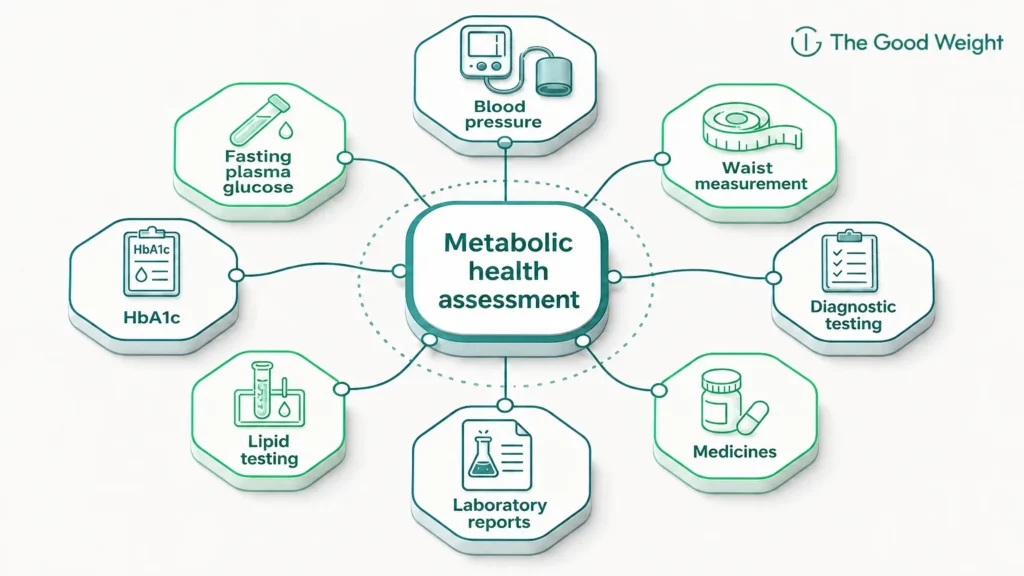
Choosing a weight-management approach can feel urgent, especially when you have tried several diets, noticed changes in energy or blood sugar, or are considering medication or a procedure. But a pre-set plan cannot answer every important question: why has weight changed, what health risks may need attention now, and which options are appropriate to discuss safely? A metabolic health assessment helps create a clearer starting point.
For adults in Chennai, a doctor-led assessment brings health history, current symptoms, measurements and selected diagnostic information into one conversation. It is not a pass-or-fail test, and it does not diagnose a person based on one number. Instead, it gives the care team decision-support information that can help personalise nutrition support, medical treatment, follow-up or conversations about procedural options.
Why is an assessment needed before selecting a weight-loss treatment?
Body weight is influenced by more than food intake and exercise. Medical conditions, medicines, sleep, stress, hormonal changes, mobility, eating patterns and life circumstances can all affect appetite, energy balance, weight change and the practicality of a treatment plan. A clinician needs to understand these factors before recommending a path that is safe, realistic and aligned with your goals.
Your weight history can be particularly useful. The care team may ask when weight gain began, whether it occurred gradually or after a major life event, what previous plans involved and what happened after they ended. A history of repeated loss and regain, for example, does not indicate a lack of effort; it may show that a prior approach was difficult to sustain, did not address hunger or medical factors, or did not include enough follow-up support.
Current symptoms also matter. Changes in thirst, urination, fatigue, snoring, daytime sleepiness, breathlessness, joint discomfort, reflux or menstrual regularity can help a clinician decide which questions and tests are relevant. These symptoms are not a diagnosis by themselves, but they can identify areas that should be explored rather than overlooked while focusing only on the scale.
Medication review is another essential step. Some medicines can affect appetite, weight, glucose levels or blood pressure, while certain weight-management medicines or procedures may require particular precautions, monitoring or changes to an existing treatment plan. Bring all prescription medicines, over-the-counter products and supplements to the consultation, including doses if possible, rather than assuming a product is irrelevant because it was prescribed for another concern.
Lifestyle questions are not meant to judge your habits. They help reveal what kind of plan could work in your everyday life: work shifts, commute times, family meals, cultural food preferences, cooking access, physical limitations, sleep timing and budget can all shape the recommendations that are actually achievable. Sustainable weight loss is more likely when nutrition support and activity planning are adapted to the person rather than imposed as a rigid template.
Finally, goals help set the direction of care. One person may want support reducing diabetes risk; another may be preparing for a procedure, aiming to improve mobility or seeking a medically supervised plan after several unsuccessful attempts. A good assessment makes room for these goals while ensuring that the recommended next steps also account for clinical safety.
What may be reviewed during a metabolic health assessment?
The precise assessment differs from person to person. Some people need a focused review and a small number of checks, while others may benefit from broader evaluation because of symptoms, known conditions, family history or current medicines. The purpose is not to order every possible test; it is to collect information that can meaningfully influence care.
Your history, measurements and blood pressure
An appointment often begins with a conversation about health history, including previous diagnoses, family history of diabetes or cardiovascular disease, prior treatments and current concerns. The clinician may also review height, weight, waist measurement and blood pressure. These findings are interpreted together, not as labels that define your health or determine treatment on their own.
Blood pressure is relevant because elevated blood pressure can occur alongside other cardiometabolic risk factors. Metabolic syndrome is generally assessed through a cluster of factors rather than a single measure, including waist circumference, triglycerides, HDL cholesterol, blood pressure and fasting glucose; having three of the five factors may meet diagnostic criteria for metabolic syndrome. That framework can help organise a clinical discussion, but it does not replace a fuller review of your symptoms, history and overall risk.
If an initial blood-pressure result is unexpectedly high, a clinician may consider whether it needs repeat measurement or assessment in another setting. Stress, recent activity, caffeine, pain and measurement technique can affect a reading. This is one reason a single number should prompt a conversation, not an immediate conclusion.
Glucose-related measures and metabolic risk
Depending on your history and risk factors, the clinician may discuss glucose-related testing. Common measures can include fasting plasma glucose, glycated haemoglobin (HbA1c or A1C), or an oral glucose tolerance test when clinically appropriate. The American Diabetes Association recognises these as tests used to diagnose diabetes or prediabetes, while also emphasising the importance of proper testing and clinical confirmation in many circumstances.
Prediabetes and insulin resistance are useful concepts to discuss because glucose can rise gradually before type 2 diabetes develops. Prediabetes means blood glucose is higher than normal but not yet in the diabetes range, and it may not cause noticeable symptoms. Finding an elevated result can open a timely discussion about nutrition, activity, weight management and follow-up; it should not be treated as a personal failure.
Screening decisions should still be personalised. For example, the USPSTF recommends screening adults aged 35 to 70 years with overweight or obesity for prediabetes and type 2 diabetes. A clinician may recommend earlier, later or more frequent testing based on factors such as symptoms, pregnancy history, family history, prior results or other medical conditions.
Medicines, relevant testing and context
A metabolic health assessment may include lipid testing or other investigations when they are relevant to the treatment decision. The care team may also review previous laboratory reports instead of repeating tests that were recently completed and remain useful. Bringing copies of past reports can save time and make it easier to identify trends rather than concentrating on one isolated result.
Not every person needs the same diagnostic panel, imaging study or specialist review. A clinician may decide that a symptom needs separate evaluation before weight-management treatment is changed, or that a known condition needs coordination with another doctor. The appropriate work-up is based on your individual history, not on an online checklist.
At The Good Weight, patients can also review the role of diagnostic testing in a personalised weight-care plan. The aim is to make testing purposeful: each recommended measure should have a clear clinical question behind it and a plan for how the result will be discussed.
What can results help a clinician decide?
Results can help turn a broad goal – such as “I want to lose weight safely” – into a plan with priorities. They may identify reasons to begin with nutrition changes and regular monitoring, to discuss medical weight-loss options, or to consider whether a referral for a procedure is appropriate. No result automatically assigns a person to one route.
Nutrition and lifestyle support
For many people, the first or central part of care is structured nutrition support. Assessment findings can help a clinician and nutrition professional decide whether the focus should be meal timing, protein and fibre intake, portion structure, food planning around work shifts, reducing sugary drinks, or managing hunger in a more consistent way. Preferences and cultural eating patterns should be part of this conversation, because a plan is only useful if it can be followed beyond the first few weeks.
If glucose-related measures, blood pressure or lipids need attention, the plan may include targeted monitoring and coordination with the appropriate treating clinician. Evidence-based lifestyle support can be valuable at every stage of treatment – not as a simplistic alternative to medical care, but as a foundation that can work alongside it. For practical context, The Good Weight’s overview of diet and weight-loss support explains how nutritional planning can fit into a broader care approach.
Medication discussions and monitoring
Some patients may be appropriate candidates to discuss anti-obesity medication as part of doctor-led treatment. That discussion should include your medical history, current medicines, likely benefits, possible adverse effects, affordability, pregnancy considerations where relevant, and the follow-up needed to use treatment responsibly. It should also address what happens if a medicine is not tolerated, does not provide sufficient benefit or is stopped.
Monitoring needs can differ substantially between patients. Someone with diabetes, for example, may require careful coordination of glucose-lowering medicines as eating patterns or body weight change. Someone with high blood pressure may need periodic review of blood pressure and their existing treatment. These are practical safety issues, not reasons to assume that any one treatment is unsuitable.
A doctor can also help separate evidence-based options from claims that promise dramatic change without appropriate monitoring. Weight-care medication is not a replacement for assessment, nutrition support or follow-up; it is one possible tool within a personalised plan.
Considering endoscopic or surgical pathways
For some people, an assessment may lead to a conversation about endoscopic weight-loss procedures or bariatric surgery. These options are not “last resort” punishments, nor are they quick fixes. They are medical interventions that require suitability assessment, informed consent, nutritional preparation and longer-term follow-up.
Clinical findings may help identify health concerns that make a more intensive option worth discussing, but they cannot make the decision alone. The person’s medical history, previous care, ability to attend follow-up, nutritional needs, goals and preferences all matter. Anyone exploring these routes can learn more about doctor-guided bariatric surgery options, then discuss whether a referral or detailed eligibility review is appropriate for them.
What can test results not tell me on their own?
Test results are valuable, but they have limits. The most useful interpretation comes from placing them alongside your health history, symptoms, examination, medicines and changes over time. The following myth-versus-fact questions can help set realistic expectations.
Myth: One abnormal result proves exactly what treatment I need
Fact: A result can highlight an issue worth investigating, but it does not independently prescribe a diet, medication or procedure. Clinicians may repeat a test, compare it with earlier results or consider factors that could have influenced it before making a decision. Diabetes diagnostic guidance, for instance, explains that confirmatory testing is generally needed when there is no unequivocal hyperglycaemia.
This approach protects against false certainty. A result is a piece of evidence, not a complete explanation of your health or a prediction of what will happen next. It should lead to an informed conversation, not a rushed treatment choice.
Myth: A normal result means there is no reason to seek support
Fact: Normal testing is reassuring in context, but it does not invalidate symptoms, family history, weight concerns or the wish for preventive care. It may mean the focus should be on long-term habits and periodic review rather than urgent treatment. It can also provide a helpful baseline against which future changes can be compared.
A normal value on one day does not guarantee that every metabolic measure is normal or that it will remain unchanged indefinitely. Follow-up timing should reflect your individual risk profile and your clinician’s advice. Prevention is still meaningful before a laboratory value crosses a diagnostic threshold.
Myth: Online ranges can interpret my results as well as my clinician can
Fact: Online information can help you prepare questions, but it cannot account for your symptoms, medicines, testing conditions or the reason the test was ordered. Reference ranges may vary by laboratory, and numbers that look similar can carry different meaning in different clinical situations. Online calculators can be educational, but they are not a diagnosis.
For example, a metabolic syndrome calculator can help you understand the risk factors commonly considered together, but it cannot replace a medical review. Use such tools to support a conversation with a qualified clinician, especially if you have symptoms or existing health conditions.
What should I ask about medical oversight and follow-up?
Before agreeing to testing or treatment, it is reasonable to ask who will oversee your care and how decisions will be made. Clear answers can make the process feel less overwhelming and help you understand what happens after the first consultation. A doctor-led plan should explain not only the recommended action, but also the rationale, the expected review points and the circumstances in which the plan may change.
Consider taking the following questions to your appointment:
-
Who is responsible for interpreting my results and coordinating my treatment? Ask whether the same clinician will review results with you, how nutrition and medical care are coordinated, and when another specialist may be involved. Knowing who holds the overall clinical picture is particularly important if you already see doctors for diabetes, hypertension, thyroid disease or other conditions.
-
Why is each test being recommended for me? A useful answer should connect the test to your history, symptoms, medicines or treatment decision. It is appropriate to ask what the result could change, whether an earlier report can be used and whether any preparation – such as fasting – is required.
-
How will the results be explained? Ask whether you will receive copies, which findings are most important, what they mean in your personal context and whether a result needs confirmation. Request plain-language explanations as well as the chance to discuss technical terms.
-
When will my progress be reviewed? Follow-up should be planned, not left uncertain. Ask which measurements or symptoms will be monitored, when they will be checked again and how you should contact the clinic if side effects, worsening symptoms or practical difficulties arise.
-
What would make the plan change? A personalised plan should be adaptable. Ask what would prompt changes to nutrition support, medication, monitoring frequency or consideration of a procedure, and how your preferences will be included in that decision.
Take the next step with a documented plan
A metabolic health assessment is not about finding a single “right” treatment from one report. It is a structured way to understand your starting point, identify what needs attention and choose the next step with appropriate medical oversight. The most useful results are those that lead to a conversation you can understand and a plan you can realistically follow.
If you are considering nutrition support, medication or a procedure, arrange a doctor-led assessment with The Good Weight. Bring previous reports, an up-to-date medication list and the questions that matter to you, so your next-step plan can be explained clearly and documented.