
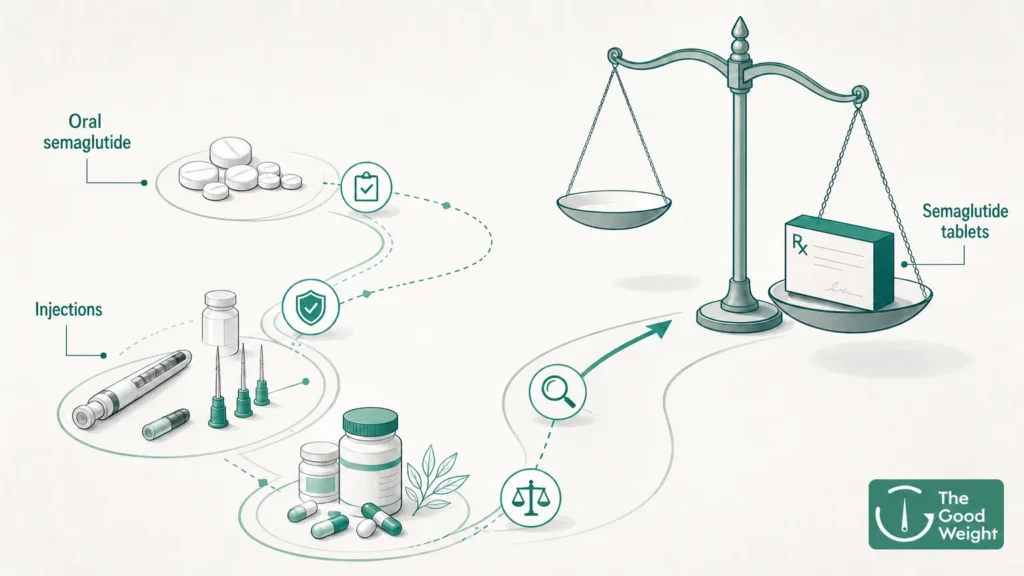
A tablet can feel like the simpler answer. No injections, no needles to store, no weekly reminder. For someone who has spent years moving between strict diets, gym memberships, and frustrating plateaus, the idea of an oral medicine may sound refreshingly manageable.
But the medicine comes after the decision-making, not before it. Before asking for semaglutide tablets for weight loss, a person needs a clinical assessment that looks at their health goals, medical history, current treatment, and wider metabolic picture. Weight is part of that picture, but it isn't the whole story. Blood sugar patterns, blood pressure, sleep, digestion, hormonal health, eating habits, and medication interactions can all change the safest next step.
That can feel slower than placing an online order. It is slower, at first. Yet a rushed prescription often creates harder problems later: unpleasant symptoms without anyone to call, a dose that doesn’t suit the person taking it, or uncertainty about whether the product is genuine.
A doctor-led review does not begin with “tablet or injection?” It begins with more useful questions: What has changed in your health? What are you hoping treatment will help with? Are there medical reasons to choose a different pathway entirely? Sometimes medication is part of the plan. Sometimes nutrition care, diagnostic testing, a procedure, or treatment for an underlying condition deserves attention first.
Semaglutide is a prescription medicine that acts on pathways involved in appetite and blood sugar regulation. Its route, dose, suitability, and monitoring plan need individual medical review.
Start with the decision, not the prescription
A good appointment starts by defining the problem in plain language. Someone may say, “I need to lose 15 kilos,” while the more urgent concern is rising blood sugar, fatty liver risk, knee pain, PCOS-related weight changes, or sleep disruption. Those distinctions affect the care plan.
Doctors also ask what “success” would look like beyond the weighing scale. Better stamina on a Chennai commute? Fewer afternoon energy crashes? Lower diabetes risk? A safer way to manage weight before a planned procedure? Numbers matter, but they need context.
The medical conversation should include previous attempts at weight loss as well. A person who regained weight after repeated restrictive diets needs a different discussion from someone whose weight changed after starting a new medicine or during a period of poor sleep. There is no prize for suffering through a plan that never matched the problem.
At The Good Weight’s medical weight-loss service, doctor-led treatment is framed as one part of personalized weight care. That matters because a prescription without food guidance or follow-up can leave people trying to solve a medical issue alone.
Honestly, “oral” does not automatically mean “easy.” Tablets have their own instructions, timing, side-effect considerations, and interaction questions. The right first step is a proper review, not a product search.
Semaglutide tablets for weight loss: oral and injectable treatments in daily life
Oral and injectable medicines differ most visibly in how they enter the body. Tablets are swallowed and may need to be taken under particular conditions, while injections are given under the skin on a set schedule. That difference sounds simple, yet it can shape adherence, meal timing, travel routines, and how reliably the medicine is absorbed.
Current FDA prescribing information for oral semaglutide includes specific administration instructions, dose escalation, contraindications, and warnings. Those details are not fine print to skim after purchase. They are part of deciding whether the treatment fits a person’s life and health status.
A tablet is not a “lighter” medicine
Some people assume an oral medicine carries fewer medical considerations than an injection. That assumption can cause trouble. The active medicine, the intended use, the dose schedule, and the person’s medical history all matter more than the route alone.
For example, a person taking several morning medicines may need a careful plan for timing. Someone with frequent nausea, reflux, constipation, or a history of dehydration may need a more cautious conversation. Another person may find a weekly injection easier to remember than a tablet with strict morning instructions. People are different. So are their routines.
Research on oral semaglutide for obesity has studied treatment within structured clinical settings rather than as a self-directed purchase. In a phase 3 trial of once-daily oral semaglutide in adults with overweight or obesity, participants followed a defined protocol with lifestyle support and clinical assessment. Real-life care should respect that context.
The clinician decides from the full picture
A doctor may discuss oral medication, injectable treatment, nutrition support, or another medical option. No route wins by default. Availability and approved indications also vary by country, so people in India should not assume that social-media advice from another market applies to them.
The way I see it, the “best” route is the one that fits a person’s diagnosis, risk profile, budget, treatment goals, and ability to attend follow-up. Convenience matters. Safety and follow-through matter more.
The health history that can change the plan
The questions in a medical consultation can feel personal, especially when a person has already been carrying weight-related stress for years. Still, details that may seem unrelated can change medication suitability or the pace of treatment. A useful review is more detective work than checkbox theatre.
A clinician may ask about:
-
Current medicines and supplements. Prescription drugs, over-the-counter remedies, and herbal products can affect blood sugar, appetite, digestion, or how medicines should be timed. Bring photos of labels if the names are hard to remember.
-
Diabetes status and prior low blood sugar episodes. People using insulin or medicines that increase insulin release may need closer blood glucose planning. A doctor needs to know recent readings, HbA1c results if available, and any history of shaking, sweating, confusion, or faintness.
-
Gastrointestinal symptoms. Ongoing vomiting, severe reflux, constipation, abdominal pain, or a history of delayed stomach emptying can alter the conversation. Don’t minimize these symptoms because you worry they will disqualify you from treatment.
-
Kidney or liver concerns. Repeated vomiting or poor fluid intake can become more serious in someone with reduced kidney function. Liver conditions, past gallbladder issues, and relevant blood tests may also guide next steps.
-
Pregnancy, breastfeeding, or pregnancy plans. Weight-loss medicines are not a casual choice around conception. The prescribing information carries pregnancy-related advice, so bring up plans early, even if pregnancy is only a possibility in the coming months.
-
Previous treatment experiences. Tell the clinician if a past medicine caused nausea, anxiety, constipation, appetite loss that felt extreme, or no meaningful change at all. A bad past experience is useful medical information, not a failure.
One overlooked part of the history is eating pattern. Skipping meals all day and eating heavily late at night, frequent alcohol intake, binge-eating symptoms, or a highly restricted diet can all affect how someone feels on appetite-altering treatment. No judgment. The clinician needs an honest map before choosing a route.
Why the source of a weight-loss medicine matters
A box, a label, and a familiar logo can create false confidence. Unverified online sellers may use unclear product descriptions, omit storage requirements, sell products with no prescription review, or send items that cannot be traced through a regulated supply chain. That is a big risk with medicines that require dose changes and monitoring.
A regulated source links the medicine to a prescription and a prescriber who knows why it was selected. The packaging should identify the medicine, strength, batch details, expiry date, storage instructions, and manufacturer information. If anything looks vague, mismatched, damaged, or too good to be true, pause before taking it.
Counterfeit or wrongly handled medicine can create two separate problems. The product may not contain what the buyer expects, and even a legitimate medicine may become unsafe or unreliable if it has not been stored correctly. There is no practical way to “test it at home” by judging its colour, taste, or whether it seems to suppress appetite.
Look for a process, not a bargain. You should know who prescribed the medicine, which pharmacy dispensed it, how to contact the treating team, and when the next review is due. If a seller says a prescription is unnecessary or encourages you to increase the dose without speaking to a doctor, walk away.
Food, symptoms, and follow-up after treatment begins
Medication can change hunger cues. That does not make meal quality irrelevant. In some cases, a sudden drop in appetite leads people to eat too little, drink too little, or rely on tea and crackers for most of the day. Then fatigue, constipation, dizziness, or muscle loss can creep in. Not ideal.
The early weeks often call for simple, steady food routines: planned meals with a protein source, vegetables or fruit where tolerated, and enough fluid across the day. The exact plan depends on dietary preferences, medical conditions, and symptoms. A person with nausea may need smaller portions; someone with diabetes may need blood sugar-aware meal planning.
Personalized diet and weight-loss support can make this part less confusing. “Eat less” is flimsy advice when appetite, work schedules, family meals, and digestion have all changed at once. A practical nutrition plan should feel workable on an ordinary Tuesday, not only during a motivated first week.
A sensible follow-up rhythm
Follow-up is where safe treatment becomes real care. The treating clinician may review body weight, waist measures, appetite, gastrointestinal symptoms, hydration, blood sugar where relevant, and whether the plan fits daily life. Dose changes should happen only through that clinician, not because a friend felt fine on a higher dose.
Use a small note on your phone between appointments. Record medication timing, notable symptoms, meal tolerance, bowel changes, and any episodes of low blood sugar if you monitor it. A short record is far more useful than trying to reconstruct several weeks from memory in a clinic room.
Seek medical advice promptly for persistent vomiting, severe abdominal pain, inability to keep fluids down, symptoms of dehydration, or concerning low blood sugar. People sometimes wait because they assume discomfort is “part of it.” It doesn’t have to be.
Questions worth taking to your appointment
A written list helps, particularly if you tend to agree quickly in medical appointments and remember your real questions on the ride home. Bring it out. Good clinicians won’t mind.
-
What health goal are we treating, and how will we measure progress? Ask whether the plan will track metabolic markers, symptoms, mobility, or other goals alongside weight. A scale alone cannot tell the whole story.
-
Why are you considering an oral medicine for me, if at all? Ask about other routes and non-medication paths. You deserve an explanation that relates to your own history, not a generic sales pitch.
-
How often will we review treatment? Find out who you contact between visits, which symptoms need an earlier call, and when the clinician would reconsider the dose or medicine.
-
What will the full cost include? Ask about consultation fees, tests, medicine, nutrition appointments, and follow-up. Cost clarity prevents a treatment plan from becoming difficult to continue halfway through.
-
What food support will I receive? Ask how the nutrition plan will adapt if appetite changes, if you are vegetarian, if you work shifts, or if you have diabetes. Generic meal charts are often where good intentions go to die.
-
What happens if treatment is paused or changed? Travel, side effects, cost, illness, surgery, and pregnancy planning can interrupt treatment. Knowing the plan beforehand reduces panic and prevents self-directed restarting.
Frequently asked questions
Are semaglutide tablets for weight loss suitable for everyone?
No. Suitability depends on the person’s diagnosis, health history, other medicines, pregnancy plans, and the medicine’s locally approved use. A doctor should assess these factors before prescribing.
Can I change the dose if I do not notice appetite changes?
No. Dose adjustment needs the treating clinician’s direction. Moving too fast can increase side effects and may ignore signs that the medicine or treatment route does not suit you.
Can nutrition care replace medical follow-up?
Nutrition support is valuable, but it does not replace medical review for prescription treatment. Food intake, hydration, symptoms, and medicines need to be considered together.
A better next step than buying first
Oral weight-loss medication may be part of a person’s care plan. It may also be the wrong fit, or only one small part of a larger plan that includes nutrition work, metabolic assessment, or another treatment path. The honest answer comes from a consultation, not an online checkout page.
If you are in Chennai, book a doctor-led conversation with The Good Weight’s weight-loss doctors to discuss medication, nutrition support, or another pathway that fits your health needs. Sustainable weight loss starts with care that sees the person taking the medicine, not only the medicine itself.
Learn more at The Good Weight.