
A profile photo can create a very specific kind of panic. You catch the angle of your neck, pull your chin forward, and suddenly start searching for double chin reduction exercises, face yoga routines, and treatments that promise a sharper jawline by next month. The internet has no shortage of confident answers. Most are too simple.
The area below the chin can reflect body fat, but it can also reflect inherited facial structure, the angle of the jaw, loose skin, and the way you hold your head over a laptop. Two people at the same body weight may have very different neck profiles. One may see marked change after losing weight; the other may reach a healthy, stable weight and still see fullness under the chin.
That distinction changes the next step. A sustainable weight-loss plan may be the right first move for someone carrying excess body fat. For another person, more dieting could mean a thinner face without the jawline change they expected. And for someone with skin laxity after weight loss, the concern may no longer be fat at all.
What actually causes a double chin?
“Double chin” is an everyday term for fullness or a fold beneath the jawline. Clinicians often refer to extra fat in that area as submental fat, but the visible shape comes from more than fat alone. Skin quality, the position of the hyoid bone and jaw, neck muscles, and chin projection all affect what a person sees in the mirror.
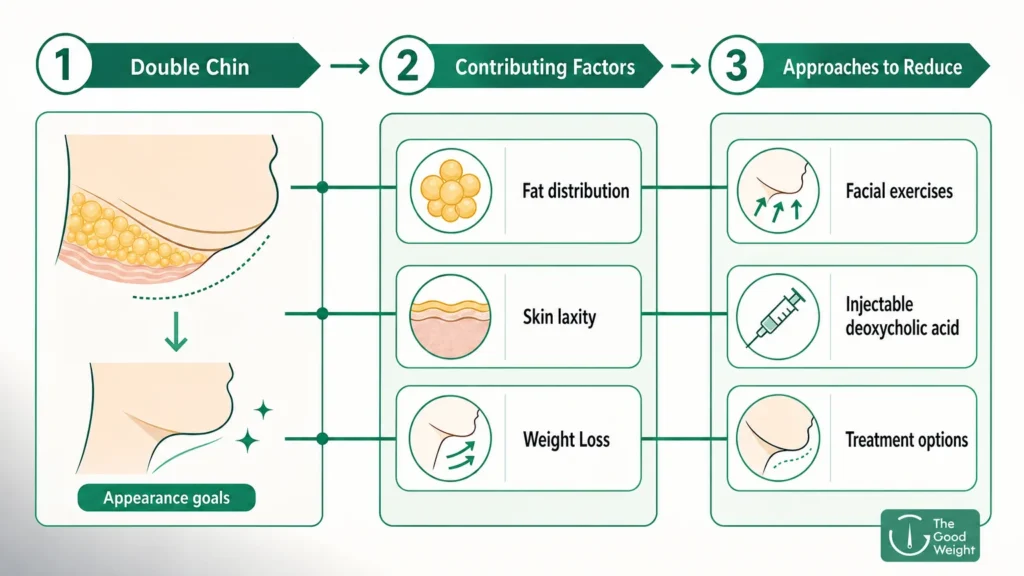
Definition: Double chin reduction refers to reducing the appearance of fullness below the chin. The right method depends on whether the main contributor is fat, loose skin, facial anatomy, posture, or a mix of these factors.
Body fat can play a role at many weights. Genetics influence where the body stores fat, so a person may notice submental fullness even when their waistline and bloodwork are healthy. A smaller or less projected chin can also make the transition from jaw to neck look softer, even with little fat in the area.
Posture has a smaller but real visual role. Hours spent looking down at a phone can shorten the front of the neck and round the upper back, which may bunch the soft tissue under the chin in photos. Still, posture rarely creates a lasting double chin from nothing. It changes the angle, not your underlying anatomy.
Skin changes with age and after weight change. Collagen and elastin fibers become less springy over time, so skin may not contract as much after fat volume decreases. The thing is, someone can have little submental fat and still dislike the crepey or folded skin beneath their jaw.
When can weight loss improve double chin reduction?
A person who has gained body fat across several areas, including the face and neck, may see a more defined jawline with gradual overall fat loss. Fat cells do not leave one chosen body part because we want them to. The body draws on stored energy according to biology, hormones, genetics, and the size of an overall calorie deficit.
For many people, the face changes early enough to feel encouraging. Cheeks may look less full, the neck may look longer, and the line beneath the jaw may become easier to see. Those shifts can occur with sustainable changes in eating patterns, activity, sleep, and, where appropriate, medical supervision.
But weight loss has limits. Someone at a stable, healthy weight with a long-standing under-chin fold may have a genetic fat pattern or a jaw-and-neck structure that dieting will not alter much. Pushing for further loss solely to change one facial area can leave a person tired, preoccupied with food, or unhappy with volume loss elsewhere in the face. Not ideal.
A realistic assessment starts with four questions:
-
Has your weight changed recently? If the fullness appeared alongside broader weight gain, gradual weight loss may improve it. Track progress over months, not after a week of restrictive eating.
-
Is the area soft and pinchable, or is loose skin the main issue? Soft tissue may suggest fat contributes. Thin, folded, or crepey skin points toward laxity, though only an in-person examination can sort this out.
-
Did the concern remain at past lower weights? A feature that stays consistent across weight changes may relate more to anatomy or inherited fat distribution.
-
Do your health goals extend beyond your profile photo? Blood sugar, PCOS symptoms, mobility, sleep, and cardiovascular risk deserve more attention than a camera angle.
At The Good Weight’s medical weight-loss program, the goal is not to shrink one body part on command. A clinician can help match nutrition, diagnostics, medication decisions, and follow-up to your health history. Appearance may change along the way, but a medically sound plan should not depend on a promise about your jawline.
Why chin exercises cannot target fat loss
The viral routine usually looks harmless: tilt your head back, press your tongue to the roof of your mouth, repeat a motion 20 times, then wait for a transformed jawline. Those movements may make you more aware of your neck posture or gently work nearby muscles. They do not selectively burn the fat below your chin.
Spot reduction has been tested in other body areas, and the pattern stays frustratingly consistent. Training one region can strengthen its muscles, but it does not force the body to pull fat from the layer sitting over that muscle. A review of facial exercise research also found limited, low-quality evidence for claims that facial exercises meaningfully change facial appearance.
That does not mean you should never do them. Gentle chin tucks, upper-back strengthening, and mobility work can support a more upright posture, especially if screen time leaves your neck stiff. A posture routine may also help you feel less collapsed in photos. The result will be subtle, though, and it should not be sold as fat removal.
Honestly, I’d treat exercise as a health and posture tool, not a test of willpower for your face. If a routine causes jaw pain, headaches, dizziness, or neck strain, stop. Grinding through hundreds of repetitions will not outsmart anatomy, and your temporomandibular joint does not need that drama.
When procedures enter the double chin reduction conversation
Medical and cosmetic options make sense to explore when a person has stable weight, clear appearance goals, and a concern that has not changed enough with lifestyle measures. The order matters. Someone still planning major weight loss may prefer to wait, since later fat loss can alter the area again and may reveal loose skin.
For isolated submental fat with reasonable skin elasticity, a clinician may discuss nonsurgical approaches. Injectable deoxycholic acid is approved for adults with moderate to severe submental fat, though it requires a trained clinician because placement and anatomy matter. The FDA prescribing information warns about swelling, bruising, numbness, nerve injury, and swallowing difficulty, so this is not a casual lunchtime decision.
Other methods use controlled cooling or energy-based devices to address fat. Results vary with the device, the amount of fat, and skin elasticity. A device’s FDA clearance does not mean every person gets the same result, so ask what exact device will be used and what the clearance covers. The American Society of Plastic Surgeons describes injection lipolysis as a treatment for small, localized fat deposits rather than a weight-loss method.
Surgery may enter the discussion when fat, lax skin, or neck-muscle banding calls for a more direct correction. Submental liposuction can remove fat, while a neck lift addresses loose skin and deeper neck contours. Recovery, scarring, cost, and medical suitability all differ. One procedure is not “better” in the abstract. It needs to fit the actual tissue causing the concern.
Before booking, bring these questions:
-
What is causing my under-chin fullness: fat, skin laxity, anatomy, or more than one factor?
-
What result is realistic for my face and neck, not a filtered before-and-after image?
-
How many treatments or what recovery period should I expect?
-
What side effects or complications should make me call your office?
-
If I plan to lose more weight, should I wait?
You can read about non-surgical fat-reduction options before a consultation, but a webpage cannot replace an exam. Cosmetic treatment should remain separate from treatment for diabetes, PCOS, or weight-related health risks. Sometimes the two conversations overlap. They should not get confused.
Confidence deserves a calmer conversation
Feeling self-conscious about a double chin is not shallow. Photos can feel oddly unforgiving because a lens, lighting, head position, and a split-second expression can exaggerate under-chin fullness. Front-facing phone cameras are especially mischievous at close range.
Still, panic can push people toward harsh dieting or expensive treatment before they know what they are trying to change. The more I think about appearance concerns, the more useful it seems to name the goal plainly: “I want less fullness,” “I want tighter skin,” or “I want to stop hating every side photo.” Those are different problems.
Give yourself permission to want a cosmetic change without turning that wish into a verdict on your health or worth. You can also decide not to treat it. Both choices deserve respect, and neither requires an apology.
Frequently asked questions about under-chin fullness
Does age cause a double chin?
Age can make under-chin fullness more visible because skin loses elasticity and the neck can develop looser texture. Fat distribution and facial structure still matter, so age alone does not explain every change. A clinician can help distinguish skin laxity from submental fat.
Can creams tighten loose skin under the chin?
Moisturizers can improve how dry skin feels and may make the surface look temporarily smoother. They cannot remove a meaningful amount of fat or tighten deeper loose skin. Be wary of products that promise a surgical-looking neck contour from a jar.
Why did my double chin look worse after losing weight?
Weight loss can reduce fat under the chin while also revealing skin that does not fully retract. Loss of facial volume may make the contrast between jaw and neck more noticeable, too. Waiting until weight has been stable for a period gives skin time to settle before making a cosmetic decision.
Can fast weight loss worsen loose skin?
Rapid weight loss can leave more visible loose skin for some people, especially after a larger change in body size. Age, genetics, smoking history, sun exposure, and how much weight was lost also affect skin retraction. A slower pace cannot promise tight skin, but it gives you more time to build habits that support lasting weight stability.
The best next step might be weight-loss support. It might be a structured medical plan, or a referral conversation about an appearance-focused option. Start with an honest assessment instead of a viral promise, then choose the path that fits your body and your goals.
Learn more at The Good Weight.