
If you have tried to lose weight by eating less and ended up thinking about food all day, you have not “failed” at dieting. Often, the diet itself has become too restrictive to sustain. Hunger, tiredness, cravings, and repeated restarts are common responses when the body receives far less food, protein, fibre, or structure than it needs.
This matters because obesity is a chronic health condition, not a personal discipline problem. The World Health Organization describes obesity as a complex disease influenced by biological, behavioural, social and environmental factors. An effective obesity diet should therefore do more than create a calorie deficit on paper. It should help you stay full enough to follow it, maintain nutrition, support daily life, and be adjusted with medical supervision when health conditions or medications are involved.
The goal is not to find the hardest plan you can tolerate for two weeks. It is to build an eating pattern you can return to on ordinary workdays, family meals, travel days, and stressful periods.
Why cutting food can make you feel hungrier, not more controlled
A common weight-loss myth is that hunger is proof a plan is working. In reality, intense hunger can be a sign that your plan is asking too much of your body too quickly. Skipping breakfast, eating only salads, cutting out all rice or roti, and relying on willpower until dinner may reduce food intake briefly, but they can also create a powerful rebound effect later in the day.
When food is sharply restricted, the body does not simply accept the change. It may increase appetite, reduce the feeling of fullness after meals, and make high-calorie foods feel more rewarding. In a study of people who lost weight through a low-calorie diet, changes in appetite-related hormones were still present a year later, including higher hunger-promoting ghrelin and lower levels of several hormones linked with fullness. The researchers found that weight loss was associated with hormonal changes that could encourage weight regain.
This is one reason an obesity diet should not be judged only by how little it allows you to eat. A plan that makes you ravenous by late afternoon can lead to snacking, overeating at dinner, guilt, and another round of restriction the next day. That binge-restrict pattern is exhausting, and it teaches people to blame themselves rather than examine whether their eating pattern is nutritionally adequate.
There is also a practical issue: hunger narrows your focus. It is harder to work, care for family, sleep well, or exercise consistently when meals are too small or too far apart. Sustainable results are more likely when meals are planned to reduce the frequency and intensity of “I need food now” moments.
What aggressive restriction does inside the body
Weight loss requires an energy deficit, but that does not mean the largest possible deficit is the best approach. The body responds to reduced energy intake through several overlapping mechanisms, including greater appetite, lower energy expenditure, fatigue, and changes in food-related thoughts and cravings. This is why two people can follow the same popular diet and have very different experiences.
Appetite hormones and lower fullness
Your appetite is regulated by signals from the stomach, intestines, pancreas, fat tissue, and brain. Ghrelin tends to rise before meals and can increase when body weight falls. Signals associated with fullness, such as leptin and gut hormones, can change during weight loss as well. You cannot “switch off” these processes with motivation, but you can make them more manageable with sufficient protein, fibre-rich foods, regular meals, and a moderate rather than extreme reduction in food.
A useful obesity diet works with these signals. It includes foods that take time to eat and digest, such as dal, beans, vegetables, fruit, curd, eggs, fish, chicken, tofu, and whole grains. It does not rely on tea or coffee to replace meals, nor does it treat hunger as an inconvenience to ignore until it turns into a craving.
Energy dips are often a meal-structure problem
Many people experiencing fatigue on a weight-loss diet are not necessarily eating “too many carbs.” They may be eating too little overall, going many hours without food, or building meals that are mostly refined carbohydrate with very little protein. For example, tea and biscuits for breakfast or a bowl of poha without a protein side may leave you hungry again quickly, even if the portion seems small.
Protein is especially useful because it can improve fullness and helps preserve lean tissue during weight loss when paired with appropriate activity. A systematic review and meta-analysis found that higher-protein diets can support weight loss and improvements in body composition, although the right amount depends on your health, kidney function, food preferences, and total diet. People with kidney disease, pregnancy, eating disorders, or other medical concerns should not make major protein changes without clinical guidance.
Quality matters more than extreme food rules
There is no single “perfect” split of carbohydrates, fats, and protein for every person with obesity. In a large trial, healthy low-fat and healthy low-carbohydrate diets produced similar average weight loss over 12 months. The shared pattern was not a punishment diet: participants were encouraged to reduce refined grains, added sugars, and highly processed foods while prioritising vegetables and whole foods.
For an Indian eating pattern, this means rice, roti, idli, dosa, or poha do not have to disappear. The more useful question is what accompanies them. A meal containing a measured portion of carbohydrate, a substantial protein source, vegetables, and some healthy fat is usually more filling than a larger plate of carbohydrate eaten alone.
The building blocks of a hunger-aware obesity diet
A sustainable obesity diet is personalised, but most successful plans include a few repeatable foundations. These are not rigid rules or a substitute for medical care. They are a framework for making meals more satisfying while gradually improving energy intake and food quality.
1. Create a predictable meal rhythm
You do not need to eat every two hours, but regularly waiting until you are extremely hungry often makes balanced choices harder. For many adults, three meals with one planned snack works well; others prefer two larger meals and one smaller meal. The best pattern is the one that reduces uncontrolled hunger and fits your work, commute, medication schedule, and family routine.
Try to avoid making the daytime meal too small only to eat a large, hurried dinner. If evenings are consistently difficult, review lunch first. Adding protein, vegetables, and a planned afternoon snack is often more helpful than trying to use more willpower at night.
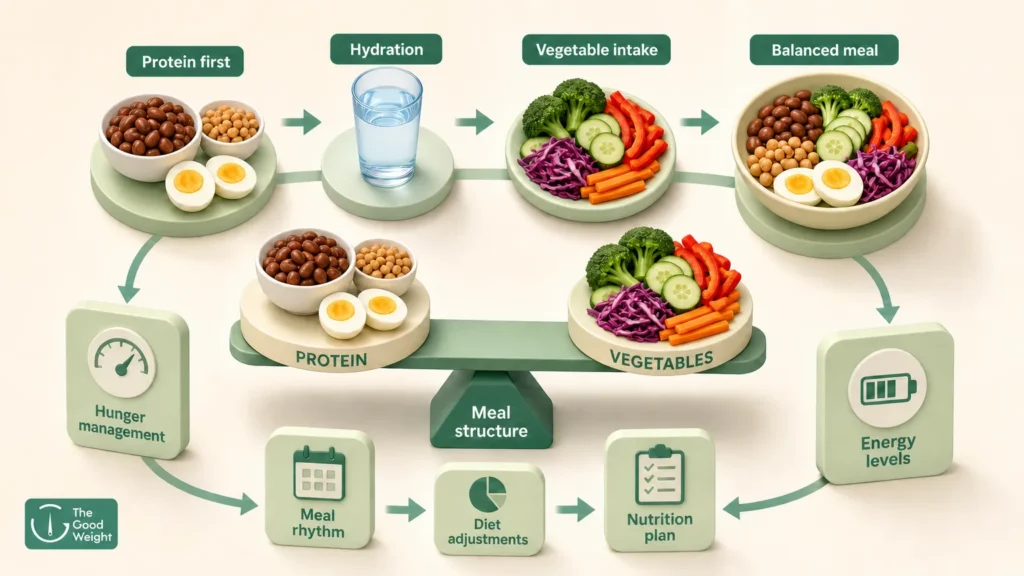
2. Start meals with protein
Think “protein first,” not “protein only.” At each main meal, include one clear protein source before deciding the rest of the plate. Vegetarian choices can include dal, chana, rajma, soy chunks, tofu, paneer, Greek yoghurt or thick curd, and milk. Non-vegetarian options include eggs, fish, chicken, and lean meats prepared with less deep-frying.
For example, instead of having plain upma for breakfast, pair vegetable upma with curd, boiled eggs, or a moong chilla on the side. Instead of a dinner of only two rotis and sabzi, add dal, chana, paneer bhurji, egg curry, grilled fish, or chicken. These additions can make a moderate portion feel like a complete meal rather than a temporary compromise.
3. Use fibre to add volume and slow eating
Fibre-rich foods help make meals physically larger and more satisfying without relying heavily on ultra-processed snacks. Vegetables, fruit, pulses, beans, oats, millets, and whole grains are useful options. The WHO recommends diets based largely on minimally processed foods and including fruits, vegetables, pulses and whole grains.
A simple plate structure is to fill about half the plate with non-starchy vegetables where available, reserve a quarter for protein, and use the remaining quarter for carbohydrate foods such as rice, roti, millet, or potatoes. This is a visual guide, not a requirement to weigh every ingredient. If a meal is a mixed dish, such as khichdi, sambar rice, or pulao, add vegetables and a protein side rather than trying to make the dish unnaturally “diet-friendly.”
4. Make hydration and snacks intentional
Thirst, long gaps between meals, and easy access to packaged snacks can all worsen cravings. Water, unsweetened chaas, lemon water without added sugar, and clear soups can support hydration, but they should not be used to suppress genuine hunger. If you are hungry between meals most days, use a planned snack rather than waiting until hunger becomes urgent.
Useful snack combinations include fruit with curd, roasted chana with buttermilk, a boiled egg with fruit, sprouts chaat, or a small handful of nuts with guava or apple. The point is to combine fibre or protein with a food you enjoy, rather than relying on foods that are easy to overeat quickly.
For more practical options that can be adapted to your preferences, explore The Good Weight’s diet and weight-loss support, where meal planning can be aligned with health needs and daily routines.
Indian meal swaps that improve fullness without becoming a crash diet
Food swaps are most useful when they add something nourishing rather than simply remove a favourite food. Replacing every familiar meal with imported “diet foods” can make a plan expensive, socially isolating, and difficult to maintain. Keep the cuisine; improve the structure.
| Instead of | Try | Why it may help |
|---|---|---|
| Tea and biscuits for breakfast | Vegetable poha with curd, or eggs with one roti and vegetables | Adds protein and fibre to reduce a rapid return of hunger |
| Plain idli or dosa | Idli or dosa with sambar, extra vegetables, and curd or egg on the side | Adds lentils and protein without banning traditional foods |
| Large rice portion with little else | Moderate rice with dal, sabzi, salad, and curd | Builds volume and protein around the carbohydrate |
| Evening namkeen or biscuits | Roasted chana, fruit with curd, sprouts chaat, or makhana with a protein side | Makes snacks more filling and less likely to trigger further grazing |
| Roti-sabzi dinner with very little protein | Roti, sabzi, and paneer, dal, fish, chicken, tofu, or egg curry | Helps the meal last longer through the evening |
Portion needs differ widely. Someone with diabetes, PCOS, fatty liver disease, high blood pressure, thyroid disease, or a history of bariatric procedures may need a more specific plan. Women managing PCOS or hormonal concerns may benefit from a female weight-loss diet approach that considers symptoms, lifestyle, medical history, and food preferences rather than applying generic restrictions.
Signs your calorie deficit may be too aggressive
Some discomfort can occur when changing eating habits, but persistent symptoms deserve attention. A diet should support your ability to function, not make everyday life feel like a constant battle. Review your plan if several of the following signs are present for more than a short adjustment period:
- You have persistent fatigue, dizziness, headaches, or poor concentration. These symptoms can relate to low energy intake, dehydration, irregular meals, sleep problems, anaemia, medication effects, or other conditions that should not be self-diagnosed.
- You notice hair fall, brittle nails, frequent feeling cold, or worsening skin concerns. Rapid weight loss and inadequate intake of protein or key nutrients can contribute, but medical evaluation is important because other causes are common.
- You are unusually irritable, socially withdrawing, or constantly preoccupied with food. A plan that consumes all your mental energy is unlikely to support long-term holistic well-being.
- You cycle between strict eating and episodes of overeating. This is a strong clue that restriction may be triggering rebound hunger rather than building a sustainable routine.
- Your workouts and recovery are getting worse. If you feel weak, struggle to recover, or cannot maintain ordinary movement, your intake, training plan, sleep, and health status may need review.
- You lose weight rapidly and regain it soon after stopping the plan. Quick early scale changes may include water loss, but rapid regain often signals that the strategy was not practical enough to maintain.
The National Heart, Lung, and Blood Institute notes that behavioural weight-loss treatment should combine healthy eating, physical activity and support for sustainable lifestyle changes. If warning signs are severe, if you faint, or if you have thoughts or behaviours consistent with an eating disorder, seek medical help promptly rather than tightening the diet further.
A sample one-day eating pattern for steadier hunger
This example is not a prescription and does not assign calories because requirements vary with body size, activity, medical conditions, medications, and goals. It shows how an Indian day of eating can be structured around protein, fibre, regular meals, and flexibility.
Breakfast: Two moong chillas with vegetables, served with curd and mint chutney. A person who prefers non-vegetarian food could include eggs instead, while someone with a rushed morning might prepare overnight oats with curd, fruit, and nuts. The aim is to avoid starting the day with only refined carbohydrate or a beverage.
Lunch: One to two rotis or a moderate serving of rice, dal or chana, a generous vegetable sabzi, salad, and curd. If lunch is bought outside, choose a thali-style combination and prioritise dal, curd, vegetables, and protein before adding extra rice, fried sides, or sweets. You do not have to make lunch tiny to make progress.
Afternoon snack: Fruit with roasted chana, curd, or a boiled egg. This snack is particularly useful if dinner is late or if you regularly feel driven to eat packaged snacks at 5 or 6 pm. Plan it before hunger peaks rather than treating it as a lapse.
Dinner: Grilled fish, chicken, paneer, tofu, egg curry, or dal with vegetables and one roti or a smaller portion of rice. If you enjoy dessert, a planned portion after a balanced dinner may be more sustainable than banning it and later eating it in response to intense deprivation.
How to adjust weekly without starving
Use a simple review once a week, not a daily punishment system. Look at your average hunger, energy, sleep, digestion, activity, and weight trend over several weeks. Body weight can fluctuate from fluid retention, menstrual cycles, constipation, travel, and salt intake, so a single day does not tell you whether a plan is working.
If you are constantly hungry, first add structure: check whether every meal includes protein, whether vegetables and fibre are adequate, whether meals are spaced too far apart, and whether sleep is poor. Do not immediately cut portions further. If you are not very hungry but weight is stable for several weeks, review liquid calories, frequent grazing, portion creep, alcohol, restaurant meals, and activity patterns before making one modest, targeted change.
If you are hungry, tired, and not seeing progress, it is time to stop guessing. A clinician or registered dietitian can review medications, glucose control, thyroid concerns, PCOS, sleep, stress, binge-eating symptoms, and other barriers. Comprehensive obesity care may include nutrition counselling, activity support, behavioural treatment, anti-obesity medication, or procedures where clinically appropriate; NIDDK outlines several evidence-based treatment pathways for adults with overweight or obesity.
When self-directed dieting is no longer enough
When should I see a doctor for obesity support?
Consider an assessment if repeated diets have led to regain, if hunger feels unmanageable, or if you have obesity alongside diabetes, high blood pressure, PCOS, sleep apnea, fatty liver disease, joint pain, or other health concerns. Medical support is also appropriate when weight is affecting quality of life or when you are unsure whether medication, hormones, or another condition may be contributing. The USPSTF recommends that adults with obesity be offered or referred to intensive, multicomponent behavioural interventions.
Do I need to eliminate rice, roti, or sugar completely?
Usually, no. A sustainable plan can include culturally familiar carbohydrate foods in portions that fit your needs, especially when meals contain protein and fibre. Added sugars and highly processed foods may need to be reduced, but an all-or-nothing approach often increases cravings and makes social eating difficult. Your medical team may recommend more specific carbohydrate adjustments if you have diabetes or another condition.
Are weight-loss medications a replacement for diet?
No. When clinically appropriate, medications can be part of a comprehensive care plan, but they work best alongside nutrition, activity, and behavioural support. For example, a trial found that semaglutide combined with lifestyle intervention led to substantial average weight loss compared with placebo, but medication decisions require assessment of benefits, risks, contraindications, cost, and follow-up needs.
Build a plan you can live with
The right obesity diet is not the one that leaves you proud of surviving on the least food. It is the one that steadily improves your eating pattern while reducing hunger, protecting nutrition, and fitting real life. Protein-first meals, fibre-rich foods, planned snacks, hydration, and modest adjustments can make a meaningful difference without turning food into a daily fight.
If you are tired of restarting restrictive diets, consider moving from random rules to a personalised, doctor-led plan. Explore The Good Weight’s medical weight-loss support to discuss nutrition, diagnostics, behavioural guidance, and medically supervised options designed for sustainable results.