
At 8:30 on a workday morning, a powder mixed into a shaker can feel like the sensible answer to skipped breakfast, a long commute, and the familiar late-afternoon hunt for biscuits or bakery snacks. Meal-replacement powders remove decisions at a time when decision-making is already running on fumes. That convenience has real appeal.
But a powder is only a product. It cannot look at your blood sugar pattern, notice that nausea has started after a new medication, or help you work out what dinner looks like when your family eats rice, sambar, vegetables, and curd. Those details decide whether a short period of structure becomes a useful habit or another diet you abandon after two weeks.
The research is more measured than the marketing. A review of 23 trials found that meal-replacement plans produced about 1.44 kg more weight loss at one year than comparison diets, with better results in programmes that included stronger ongoing contact and support in this systematic review and meta-analysis. The powder did not do all the work. The surrounding plan mattered.
A meal-replacement powder is a portioned food product used in place of one or more meals for a limited period. A medically supervised plan uses that product, when appropriate, within clinical assessment, nutrition planning, follow-up, and a planned return to ordinary food.
That distinction is worth understanding before you spend money on a large tub or a diet kit.
Weight loss powders: a product versus a programme
Buying a powder yourself may suit someone who wants an occasional convenient breakfast and already has a settled eating pattern. A clinical plan has a different job. It asks whether the product fits your health picture, then builds the rest of the day around it.
| Question | Buying a powder independently | Medically supervised meal support |
|---|---|---|
| Starting point | Label reading and personal guesswork | Review of health history, medicines, eating routine, and relevant risks |
| Nutrition | You decide whether the powder and other meals add up | A clinician or dietitian checks protein, energy, fibre, and micronutrient intake |
| Adjustments | You may stop if hunger or side effects become frustrating | Hunger, fatigue, digestion, and adherence are reviewed and the plan can change |
| Daily fit | Often follows a fixed routine from the package | Works around work hours, family meals, culture, budget, and cooking time |
| Exit plan | The tub runs out | Regular meals are introduced in stages before the product ends |
A “complete meal” claim on a label also needs context. One serving may contain added vitamins and minerals, but that does not answer whether it suits your total intake, how many servings you are using, or what else you are eating. Two shakes and a very small dinner can leave someone low on fibre or protein despite a polished nutrition panel.
The way I see it, the real test is boring but useful: can you describe what happens after the powder? If the answer is “I’ll figure it out later,” the plan has a loose screw. Sustainable weight loss involves repetition, and regular food is where most repetition happens.
A doctor-led programme may also sit alongside broader treatment. Someone managing obesity with medication, for example, may need meal timing and portion advice that works with changes in appetite. Read about medical weight-loss care if your plan includes a clinical review rather than nutrition support alone.
Who should pause before starting a powder?
Meal-replacement products are not automatically unsafe, but some situations call for medical or nutrition advice before starting. Look, caution is not a punishment or a sign that you have failed at dieting. It is a way to avoid treating a health issue like a calendar problem.
Speak with a qualified clinician or dietitian first if any of the following apply:
-
You have diabetes, prediabetes, or episodes of low blood sugar. A sharp drop in food intake can change glucose readings and may affect how medicines need to be timed. A shake should not become a reason to ignore symptoms such as sweating, shakiness, confusion, or dizziness.
-
You are taking weight-loss medicines or medicines that affect glucose. Appetite changes, nausea, constipation, or reduced meal size can alter what feels tolerable. The product, timing, fluid intake, and regular monitoring may need adjustment.
-
Fatigue has become part of your normal day. Persistent tiredness has many possible causes, including poor sleep, anaemia, thyroid concerns, low intake, or depression. Replacing meals without asking why you are exhausted can muddy the picture.
-
You have digestive symptoms or follow a restrictive diet. Reflux, bloating, diarrhoea, constipation, food allergies, vegetarian or vegan eating, and religious fasting practices all affect product choice and the rest of the meal pattern.
Be wary of powders marketed as “fat burners,” detoxes, or drug-like appetite suppressants. Dietary supplements do not go through pre-market FDA approval in the way medicines do, and the agency warns that some products can contain harmful or undeclared ingredients in its consumer guidance on dietary supplements. That is a different category from a nutritionally formulated meal replacement. The label matters. So does the seller.
What weight loss powders that work must account for
A powder that works is not the one with the most dramatic promise. It is the one a person can use for a defined period without leaving the rest of their nutrition, schedule, or relationship with food in a mess.
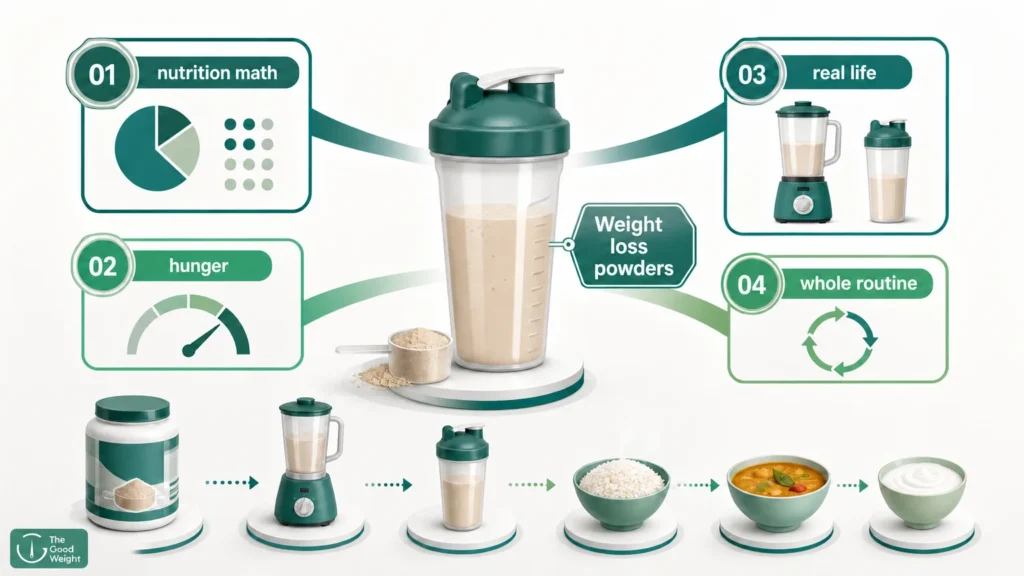
Start with this four-part planning process.
-
Check the nutrition math. Look at protein per serving, fibre, energy, and listed vitamins and minerals. Then look beyond the scoop. If breakfast is a shake, lunch is canteen food, and dinner is minimal, the day may still fall short of protein or contain very little produce.
-
Track hunger and usable energy. Mild hunger before a scheduled meal is one thing. Headaches, constant thoughts about food, poor concentration in meetings, or a sharp evening rebound are another. Those signals often call for a change in meal spacing, composition, or total intake.
-
Fit the product into real life. A powder that requires a blender, ice, and ten silent minutes may not survive a Chennai commute. A practical plan might use the powder for the hardest weekday meal while keeping a familiar lunch and a shared dinner.
-
Price the whole routine. A diet kit that strains the monthly budget often disappears first when life gets expensive. Plan for groceries too: dals, curd, eggs, fish, paneer, vegetables, fruit, rice or rotis, and the occasional convenience meal.
Food preferences deserve more respect than they often get. A person who dislikes sweet drinks may tolerate a savoury breakfast far better. Someone who eats with parents may need a dinner plan based on the household menu, perhaps a measured serving of rice with extra sambar, poriyal, and a protein source. No powder can settle those questions for you.
For personalised help that starts with ordinary eating rather than a product catalogue, The Good Weight’s diet and weight-loss care looks at routines, preferences, and health needs together.
The return to regular meals is the real assignment
Here is a worked example, not a prescription. Priya has been using one meal-replacement powder on rushed weekday mornings while following a clinician-reviewed plan. Her goal is to stop relying on it without returning to skipped breakfasts and evening overeating.
Weeks 1-2: Priya keeps the powder on her two earliest office days. On the other weekdays, she practises two simple breakfasts: vegetable upma with curd, or two eggs with fruit and toast. She buys ingredients on Sunday, portions them, and keeps a backup option at work.
Weeks 3-4: The powder moves from twice weekly to once weekly. Priya repeats the breakfasts she actually enjoyed rather than chasing variety for its own sake. Her care team checks whether the new meals keep her full until lunch and whether evening hunger has changed.
Weeks 5-6: The powder becomes an emergency option for travel or an unusually packed day. Breakfast is now a food routine, not a performance. She knows what to buy, what to prepare in ten minutes, and what to order if she misses the train.
That gradual handover matters because abrupt stops often expose the gap the product was covering. The product did not fail. It simply had no successor. Familiar Indian meals work well here because they are already part of household shopping, social life, and cooking habits.
Questions to ask before joining a programme
A responsible meal-replacement programme should welcome detailed questions. If every answer circles back to “just follow the plan,” take a step back. Your health history deserves more than a script.
Use this checklist before enrolling:
-
Who reviews my medical history and current medicines before I begin?
-
How will you assess whether the product meets my protein and micronutrient needs?
-
What happens if I develop constipation, fatigue, worsening reflux, or excessive hunger?
-
How often will someone review progress beyond the number on the scale?
-
What is the planned duration, and how will regular meals replace the powder?
-
What support continues once the product is no longer in my routine?
How long should a meal-replacement powder be used?
There is no universal timeframe. Duration depends on the role of the product, your medical context, your response, and the food routine you are building alongside it. If a programme cannot explain its stopping plan from the start, that is a fair concern.
What support should continue after the product ends?
Follow-up should shift toward ordinary meals, appetite awareness, planning around workdays, and responding to weight changes without panic. Some people also need ongoing medical review for diabetes risk or weight-loss medication. The handover period can feel less dramatic than the initial diet phase, but it is where routines either settle or unravel.
Can a powder replace every meal?
Do not assume it should. Very-low-calorie approaches and full meal replacement plans need closer clinical oversight, particularly when a person has health conditions or takes medicines. Self-directed restriction can become surprisingly finicky, fast.
A temporary tool, not a permanent food identity
A meal-replacement powder may create breathing room when breakfast is chaos or meal planning has stalled. But lasting change comes from practising the meals that will still be there after the shaker bottle is in the back of a cupboard.
If you are considering diet kits, meal support, medication, or a food-first approach, speak with The Good Weight’s clinical and nutrition team about what fits your health needs and schedule. Learn more at The Good Weight.