
A sweet craving does not mean you have “failed” your weight-loss plan. It may reflect genuine hunger, a routine such as tea-time, stress, poor sleep, or simply the wish to enjoy something sweet after a meal. The goal is not to eliminate every craving, but to plan low-calorie snacks for sweet cravings in a way that feels satisfying and supports sustainable weight loss.
A small sweet item eaten when you are very hungry can leave you looking for more soon afterwards. A more useful approach is to pair sweetness with protein, fibre, or both, while choosing an amount that fits your individual nutrition plan.
Start with the craving, not food guilt
Sweet cravings can feel stronger during weight loss when meals are skipped, portions are cut too sharply, or favourite foods are labelled “off limits.” Hunger and restriction can make a sweet food feel especially urgent, while stress or habit can create a craving even when your body does not need a full meal. Neither response is a character flaw.
Before choosing a snack, pause briefly and ask what is happening. If your last meal was several hours ago, hunger may be the main driver. If you always want something sweet with evening tea, it may be a learned routine; if the craving comes after a difficult day, comfort or stress relief may be involved. Recognising the pattern helps you respond practically instead of trying to fight it with willpower alone.
Use a simple sweet-snack pairing formula
A satisfying snack usually has three parts: a sweet element + a protein or fibre source + a planned portion. Fruit, dates, cocoa, cinnamon, or a small amount of jaggery can provide sweetness, while yogurt, milk, tofu, nuts, roasted chana, seeds, and pulses can make the snack feel more substantial.
Portions still matter because even nourishing ingredients can be calorie-dense. Nuts, peanut butter, tahini, dates, and dried fruit are useful in measured amounts rather than eaten freely from the packet. Checking the label can also help: the Nutrition Facts label separates added sugars from naturally occurring sugars, which is particularly useful when comparing flavored yogurts, cereal bars, and packaged “healthy” desserts.
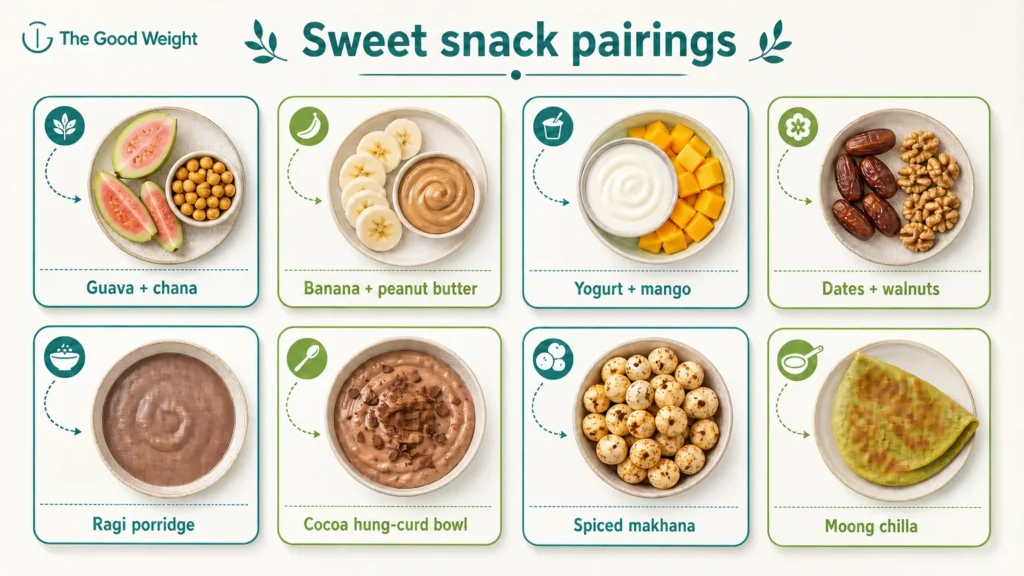
Eight Indian-friendly sweet snack pairings
These combinations use familiar pantry foods and can be adjusted for your calorie budget, medical needs, and preferences.
-
Guava or apple with roasted chana
Slice one guava or apple and eat it with a small bowl of dry-roasted chana. The fruit offers sweetness and crunch, while chana adds fibre and plant protein. If you prefer a softer snack, replace chana with plain hung curd; for a dairy-free option, choose unsweetened soy yogurt. -
Half a banana with peanut butter or peanuts
A small banana with one measured spoon of natural peanut butter can feel much more dessert-like when topped with cinnamon. Use unsweetened peanut butter where possible, since many commercial versions contain added sugar. For a nut-free variation, use roasted pumpkin seeds or a thin layer of tahini. -
Plain yogurt with mango, papaya, or berries
Add chopped fresh mango or papaya to unsweetened curd, then use cardamom, cinnamon, or vanilla for extra flavour. Frozen fruit can work well when fresh berries are expensive or unavailable; thaw it slightly before mixing. Dairy-free eaters can use unsweetened soy yogurt, which generally provides more protein than many coconut-based alternatives. -
Dates with walnuts or almonds
One or two dates paired with a few walnuts can satisfy a strong desire for something rich and sweet. Dates are concentrated, so this pairing works best when plated deliberately rather than eaten directly from a container. If dates are unavailable, use a small piece of dried fig with almonds. -
Ragi porridge with milk and cardamom
Make a small bowl of ragi porridge with milk, unsweetened soy milk, or another fortified plant beverage. Cardamom, cinnamon, and a little mashed banana can add sweetness without relying on syrups. For more texture, stir in a teaspoon of chia seeds or crushed peanuts. -
Cocoa hung-curd bowl
Mix plain hung curd with unsweetened cocoa powder, vanilla, and a few slices of banana or strawberries. It resembles a chocolate dessert without requiring a large serving of ice cream or chocolate sauce. Use firm silken tofu blended with cocoa and fruit for a dairy-free version. -
Sweet-spiced makhana with milk
Roast makhana until crisp, then add cinnamon and a light dusting of cocoa powder. Serve it with a small glass of unsweetened milk or soy milk so the snack is not only crunchy and sweet. If makhana is not available, use air-popped popcorn with cinnamon alongside a protein-rich drink. -
Moong chilla with a sweet yogurt filling
Make a small moong-dal chilla and fill it with plain yogurt, grated apple, and cinnamon. This may sound unconventional, but it combines a familiar savoury staple with a mild sweet filling and can be particularly helpful when you need a more filling afternoon snack. Use tofu or unsweetened soy yogurt instead of dairy yogurt if needed.
Make fruit and yogurt choices work for you
Fruit does not need to be avoided because it tastes sweet. The CDC recommends fruit in its original form and dairy foods with no added sugars as healthier meal and snack choices. Fresh fruit is convenient and naturally portioned, while frozen fruit is often practical for smoothies, yogurt bowls, and hot-weather snacks in Chennai.
Choose plain curd, Greek yogurt, hung curd, or unsweetened soy yogurt more often than sweetened fruit yogurt, dessert cups, or flavored lassi. These products can look similar from the front of the pack but differ substantially in added sugar. The Daily Value for added sugars is 50 grams on a 2,000-calorie diet, but your own calorie and carbohydrate needs may differ, especially if you manage diabetes or another metabolic condition.
Plan portions and timing around your day
Office afternoon: If lunch was early and dinner is several hours away, have fruit with roasted chana or yogurt rather than relying on biscuits with tea. The pairing can prevent you from arriving home overly hungry, when an unplanned large portion is more likely.
After dinner: Choose a deliberate dessert-like portion, such as cocoa curd with fruit or one date with nuts, and eat it seated without scrolling. This helps the snack feel like an enjoyable part of the day rather than a secretive or rushed eating episode.
Post-exercise: If you have exercised and will not be eating a meal soon, banana with yogurt, milk, or soy milk may be more useful than fruit alone. The right amount depends on the intensity of activity, your overall intake, medications, and health goals.
Know when cravings suggest your plan needs review
Frequent cravings deserve attention when they come with skipped meals, very low food intake, recurrent overeating after restriction, or distress and guilt around eating. They may also need personalised review if you have diabetes, insulin resistance, digestive concerns, kidney disease, are pregnant, or use medicines that affect appetite or blood glucose.
At The Good Weight, personalized diet and weight-loss support can help you build an approach that includes enjoyable foods while supporting metabolic health. If you are repeatedly swinging between strict restriction and overeating, bring a short record of meal timing, cravings, usual snacks, medicines, and current health conditions to a consultation. A planned sweet snack is often more sustainable than an overly restrictive plan that you cannot comfortably maintain.