
A headline says a medication helped people lose 15% of their body weight. It looks clean, decisive, and oddly personal when you’re reading it on your phone after dinner. You may be living with weight-related health concerns, trying to manage diabetes risk, or feeling worn down by advice that begins and ends with “eat less and move more.”
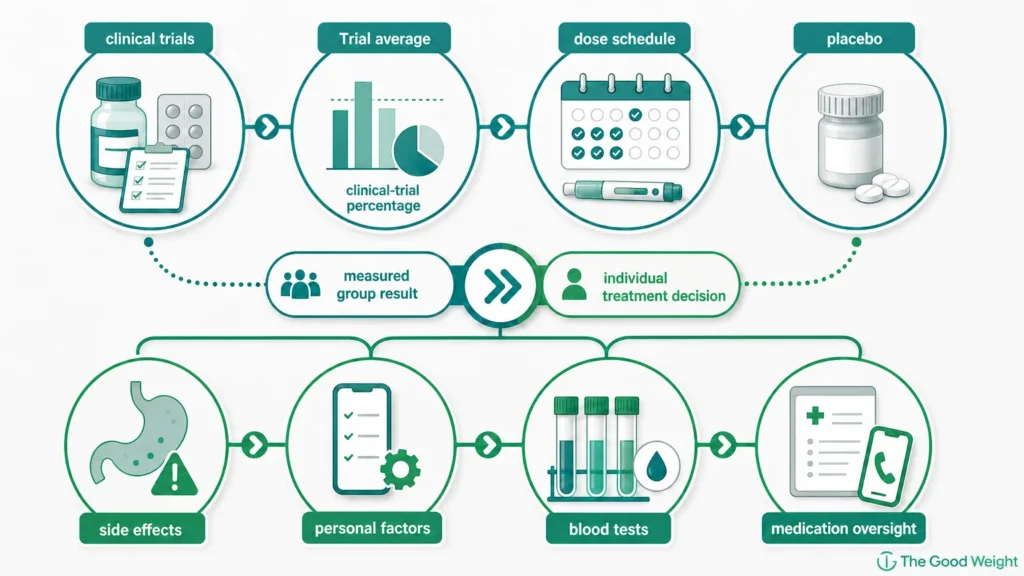
But a trial percentage is not a treatment plan. It is an average calculated from a selected group of people who followed a particular dose schedule, had regular study visits, and received a defined amount of lifestyle support. Real life has travel, Tamil wedding meals, changing work shifts, side effects, medication availability, and budgets that do not appear in a headline.
That doesn’t make weight loss medication clinical trials less useful. Far from it. Good trials help doctors understand how a medicine performed, what adverse effects occurred, and where uncertainty remains. The more useful question is not, “Will I lose the same amount?” It is, “Does this evidence fit my health history, my day-to-day life, and the care I can continue?”
Why do medication trial headlines sound more certain than real-life treatment decisions? Weight loss medication clinical trials explained
Clinical trials answer focused questions. Researchers may ask how much weight participants lost over a set period, how a medicine compared with placebo, or how often certain side effects occurred. They need controlled rules to get an answer, which is why trial participants must meet eligibility criteria and follow planned visits.
A trial result is a group average measured under defined conditions. It is not a promise of the result any one person will have.
The participants, treatment dose, follow-up length, and lifestyle programme all affect what the number means.
A clinician’s job is to decide how much of that evidence applies to the person in front of them.
Take a familiar headline: “Medicine X causes 15% weight loss.” The study may have followed adults for 68 or 72 weeks, gradually increased the dose, and included regular counselling about food intake and physical activity. Some people in the study may have lost more than 15%, while others lost less, stopped the medicine, or did not tolerate the planned dose.
Now bring that number into a real consultation. A person with type 2 diabetes who uses insulin, frequent reflux, a history of gallbladder problems, and irregular work hours needs a different conversation from someone without those factors. The doctor may discuss a lower starting dose, closer glucose review, another treatment route, or a decision to avoid a medicine altogether.
That gap between headline and appointment is not a flaw. It is medicine being honest.
What did the latest comparative evidence find, and what did it not prove for every patient?
A 2026 BMJ network meta-analysis compared obesity medicines against lifestyle modification alone across many studies. At one year, tirzepatide was associated with a mean additional weight loss of 14.9%. The same review also reported more gastrointestinal adverse events and more treatment discontinuation with several obesity medicines.
That figure is meaningful. It tells us tirzepatide performed strongly, on average, in the trials included in the analysis. Still, “mean additional weight loss at one year” is a very specific measure. It does not tell you which dose you will reach, how you will feel on it, what happens after year one, or whether the medicine fits your medical history.
Earlier trials show the same principle. In the STEP 1 trial, participants without diabetes who received semaglutide 2.4 mg alongside lifestyle intervention had a mean weight change of 14.9% at 68 weeks. That is strong clinical evidence, yet the trial population and study setting still matter when discussing treatment with an individual patient.
The way I see it, comparative research is most helpful when it changes the quality of questions asked in the clinic. It should not turn into a scoreboard where one medicine “wins” for everybody. Tolerability, diabetes treatment, cardiovascular history, local availability, and cost can alter the most sensible choice.
A trial also cannot prove that continuing a medicine will be easy. Some people stop because of nausea, vomiting, constipation, expense, supply interruptions, pregnancy plans, or a change in health status. Those details are less catchy than a dramatic percentage, but they often decide whether treatment works in ordinary life.
Which personal factors change whether a trial result applies to me?
Before a consultation, gathering the right information can make the discussion more productive. It is not a self-screening test, and it should not be used to start, stop, or source medication without medical advice. It is simply a practical way to arrive prepared.
-
Start with your weight and health history. Bring recent weight changes, waist measurements if you have them, blood-pressure history, sleep concerns, and prior test reports. A clinician will look beyond the scale because fatty liver disease, sleep apnoea, PCOS, joint pain, and raised blood sugar can all change the goals of treatment.
-
Be specific about diabetes and cardiovascular risk. Share your HbA1c results, glucose readings if you monitor them, and every diabetes medicine you take. Some drugs can raise the risk of low blood sugar when used alongside new treatment, while a past heart event or current heart symptoms may affect the monitoring plan.
-
Mention digestive symptoms and all current medicines. Persistent nausea, severe constipation, reflux, abdominal pain, or prior pancreatitis deserve a careful conversation before treatment begins. Prescription medicines, over-the-counter products, and supplements can matter too, especially when appetite, glucose levels, blood pressure, or absorption may change.
-
Talk honestly about previous attempts and practical limits. Previous diets, exercise plans, medications, procedures, work patterns, and food routines are useful clinical information, not a report card. Include pregnancy plans where relevant, along with the monthly amount you can sustain and the time you can realistically give to follow-up visits.
Affordability deserves plain language, not embarrassment. A medicine that works well in a trial but becomes unaffordable after a few months may not suit a long-term plan. During a doctor-led medical weight loss consultation, those practical facts belong beside lab reports and body-weight targets.
What should safe medication oversight include after treatment starts?
Starting a prescription is the beginning of care, not the finish line. Promotional posts tend to focus on the injection pen or the final number on the scale. Medical follow-up focuses on what is happening between those two points: symptoms, food intake, strength, blood sugar where relevant, and whether the plan remains safe.
A sensible timeline might look like this:
-
At the starting assessment, the doctor reviews medical history, current medicines, baseline measurements, and relevant blood tests. The patient should understand the intended use, dose-escalation plan, common side effects, warning symptoms, and how to contact the clinic if something feels wrong. No one should leave guessing how the treatment is meant to fit into daily life.
-
During dose changes, the focus shifts to tolerance. Nausea, altered bowel habits, reduced appetite, dizziness, or trouble eating enough can signal that the pace of dose escalation needs review. Rushing upward because a social-media post mentioned a higher dose is a bad bargain.
-
At regular side-effect and nutrition reviews, weight is only one measure. The clinician and nutrition team should ask about protein intake, hydration, fibre, meal patterns, and symptoms that make eating difficult. Nutrition guidance for weight loss can help protect diet quality while appetite changes, rather than treating reduced hunger as a reason to skip nourishment.
-
Over the longer term, the conversation should include muscle-preserving activity, medication supply, total cost, and a plan if the medicine needs to change or stop. Weight regain after stopping treatment can happen, so the plan should not rely on medication alone. Strength work, adequate protein, and regular meals may sound less dramatic than a trial headline, but they matter a great deal.
The FDA’s prescribing information for chronic weight-management medicines includes warnings, contraindications, and adverse-effect details that need individual review. A prescription is safer when a doctor explains how those medicine-specific risks and precautions relate to your own history.
What questions should I bring to a weight-loss medication consultation?
Save or print this checklist before your appointment. A good consultation has room for questions, including awkward ones about cost, duration, and what happens if your body says “no.” You are not being difficult by asking for clear answers.
-
What is the approved-use context for this medicine, and why are you considering it for me? Ask how your current weight, health conditions, diabetes status, and previous treatment attempts affect the recommendation. Ask what result would count as useful progress for your health, not only for appearance.
-
What benefits and limitations should I expect? Clarify that trial averages are not personal forecasts. Ask when progress will be reviewed and what would lead the doctor to adjust the dose, switch the plan, or stop treatment.
-
Which side effects or warning symptoms need a call right away? Discuss nausea, vomiting, constipation, abdominal pain, low blood sugar risk where relevant, and any concern linked to your medical history. Ask how side effects will be managed without simply telling you to “push through.”
-
Who should not take this medicine, or needs extra caution? Mention pregnancy plans, family or personal medical history, digestive conditions, and every medicine you currently use. Bring photographs of prescription labels if your medication list is messy. It happens.
-
What will the monthly cost include? Ask about the medicine, consultation fees, tests, nutrition appointments, dose changes, and support between visits. A clear number helps you judge whether the plan can last.
-
What happens if I cannot tolerate it or supplies are interrupted? Ask about the backup plan before you need it. That question can spare you a panicked search for answers later.
A weight-loss doctor consultation in Chennai should feel like a clinical conversation, not a sales pitch. The right next step may be medication, nutrition support, a procedure, or a different route altogether.
Frequently asked questions
Can I predict my own weight loss from a clinical-trial percentage?
No. Trial averages describe a group, while your response depends on dose tolerance, health conditions, food intake, activity, other medicines, and how long treatment continues. A clinician can discuss a realistic range of possibilities, but no responsible clinician can promise the average result from a headline. The aim is better health and a plan you can live with.
Do weight-loss medicines replace changes in food and activity?
No. Trials often include lifestyle support, and real treatment should address nutrition and physical activity too. Food planning helps preserve nutrient intake when appetite falls, while resistance exercise can help maintain muscle during weight loss. Medication may be one part of care, not the entire plan.
Should I choose a medicine because it had the largest trial result?
No. The largest average result may not match your diabetes treatment, side-effect risk, budget, pregnancy plans, or capacity for follow-up. A lower-dose or different approach may be more appropriate for a particular person. The better choice is the one a doctor can justify for your situation.
Trial headlines can start a useful conversation. They should not make the decision for you. If you are considering medication, arrange a doctor-led assessment with The Good Weight and bring the questions that matter to your life. Learn more about The Good Weight.