
You don’t need punishing cardio to begin losing weight. You need a walking plan you can repeat, plus eating habits that don’t leave you starving by 4 p.m.
After a strict diet falls apart, exercise can start to feel like another test you’re bound to fail. You buy the trainers, promise yourself an hour at the gym, miss three sessions, then decide you “lack discipline.” That story is common, and it’s usually wrong. The routine was too demanding for the life around it.
Walking workouts to lose weight work because they ask less of your recovery, your schedule, and your willpower than many intense plans. A brisk walk may not look dramatic on a fitness app, but it raises daily energy use, breaks up long periods of sitting, and gives you a repeatable cue to practice. Repeatable is the word that matters.
The aim here isn’t to sell walking as magic. Weight loss still depends on the pattern of energy intake, movement, sleep, health conditions, and medications over time. But walking can become a dependable part of that pattern when you build it gradually and pair it with a calmer approach to food.
Walking workouts to lose weight are planned walks that gradually increase frequency, time, or pace while fitting around meals and ordinary life. The goal is steady activity you can sustain for months, not a single exhausting week.
Walking workouts to lose weight are an adherence tool
A hard workout only helps if you can return to it. Walking has a low entry cost: no gym membership, no complicated routine, and less soreness than a session that leaves you dreading stairs the next day. For someone returning after a long break, that lower friction can make the difference between four active days and none.
Public-health guidance gives walking more credit than fitness culture sometimes does. Adults are encouraged to build toward at least 150 minutes of moderate-intensity activity each week, and brisk walking counts. The guideline is a health target, not a weight-loss guarantee, but it gives your week a useful shape.
The way I see it, an exercise plan should fit your least glamorous day: the late meeting, the poor sleep, the rainy commute. If your plan only works on a perfect Monday, it’s a hobby, not a routine. Start small enough that you can keep the promise.
Why walking can feel easier on appetite and recovery
Crash diets often create a miserable loop. You eat too little, feel tired and preoccupied with food, then abandon the plan when hunger wins. A moderate walk usually doesn’t create the same recovery burden as all-out training, which may make it easier to keep moving while you repair your relationship with regular meals.
Research on exercise and appetite suggests the response is personal, not automatic. Some people feel hungrier after activity, while others don’t, and factors such as workout intensity and food environment matter. A review of the topic found that acute exercise can affect appetite-related hormones and food intake in different ways. So don’t assume a 30-minute walk “earns” a large snack. Check what your own hunger is doing first.
Post-meal walks have another practical use. Light movement after eating can help interrupt long sitting stretches, while studies of activity breaks have linked them with better post-meal glucose responses in adults. One trial found that brief interruptions to sitting reduced postprandial glucose and insulin responses. You don’t need to march around the block immediately after every bite. Ten calm minutes after one meal is plenty to begin.
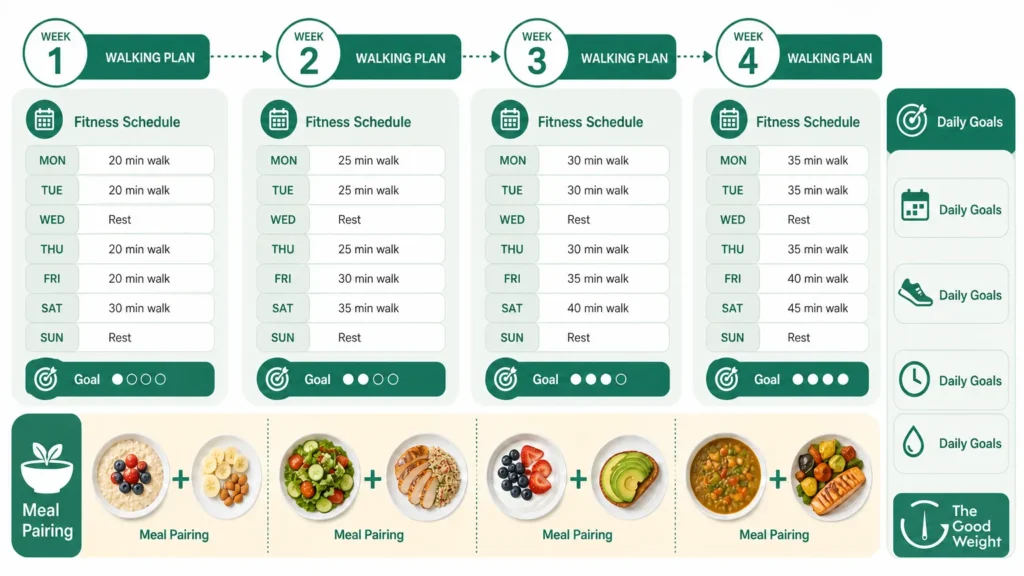
A four-week walking workouts to lose weight plan
Pace matters, but breathing is easier to track than speed. During moderate activity, you should be able to talk in short sentences but not sing comfortably, a practical standard described in the CDC’s guide to measuring physical activity intensity. Slow down if you feel sharp pain, dizziness, chest discomfort, or unusual breathlessness.
-
Week 1: Walk four days for 15 minutes. Keep the pace comfortable enough that you could do it again tomorrow. Add a five-minute stroll after dinner on two of those days if it feels easy, but don’t turn the first week into a fitness audition.
-
Week 2: Walk five days for 20 minutes. On two walks, include three one-minute brisk segments with two easy minutes between them. Brisk means purposeful, not breathless. Your arms may swing a bit more and your steps may become quicker.
-
Week 3: Walk five days for 25 to 30 minutes. Keep one walk easy. On two others, repeat five brisk one-minute segments, separated by easy walking. Put a 10-minute walk after lunch or dinner on three days if that timing suits your schedule.
-
Week 4: Walk five or six days for 30 minutes. Make one session slightly longer, perhaps 40 minutes on a weekend. Keep intervals light: six one-minute brisk efforts are enough. You’re building a habit that survives a busy month, not chasing a dramatic calorie number.
Missed days happen. Resume with the next planned walk instead of trying to “make up” 90 minutes on Saturday. That sort of punishment has a way of turning a workable plan into sore feet and resentment.
Three reasons walking may not change your weight
The first snag is compensatory eating. A walk can make you feel virtuous, and then a pastry, sweetened coffee, or oversized dinner slides in under the banner of “I deserved it.” Food isn’t a reward or a moral failure. Still, it helps to pause for ten minutes, drink water, and ask if you’re physically hungry before adding an unplanned snack.
Second, calorie-burn estimates are finicky. Your body size, pace, hills, fitness, and watch algorithm all change the number. Treat the display as a rough record of movement, not permission to eat back every estimated calorie. Honestly, I’d rather see someone walk consistently and eat satisfying meals than chase a suspiciously precise number on a screen.
Third, random short walks won’t build much weekly activity. A five-minute stroll is better than sitting, but doing it once every few days rarely changes the larger pattern. Put walks in your calendar, attach them to an existing event, and count completed sessions. Boring? A little. Useful? Very.
Two schedules that work in ordinary life
The desk worker with a crowded calendar
Rina works at a laptop from 9 a.m. to 6 p.m. She starts with a 12-minute walk before opening her inbox, then takes another 10 minutes after lunch on weekdays. On Tuesday and Thursday, she adds a 20-minute brisk walk after work, while Saturday becomes a 35-minute walk with a podcast.
That adds up without requiring a single large block of free time. Her food rule is equally plain: lunch includes protein and a high-fiber carbohydrate, so the afternoon walk doesn’t end in a vending-machine raid. Small scheduling choices can beat ambitious plans that never leave the notes app.
The person rebuilding fitness confidence
Meera hasn’t exercised regularly in years and worries that people will watch her struggle. She begins with eight minutes around her building after breakfast, four days per week. During week two, she walks with a friend once, then adds one extra lap only when the original route feels comfortable.
Her target isn’t a step count. It’s reaching week four without quitting. That confidence comes from evidence she creates herself: “I said I’d go, and I went.” For women who want eating guidance that accounts for changing life stages and individual needs, personalized female weight-loss diet support can make the nutrition side feel less generic.
Pair the walk with food that keeps hunger manageable
Don’t answer a walking routine with a harsh meal plan. A better starting point is a regular eating rhythm: meals with a protein source, produce or another fiber-rich food, and enough carbohydrate or fat to keep the meal satisfying. If you routinely become ravenous at 5 p.m., plan an afternoon snack instead of pretending you’ll be able to outthink hunger.
Keep a simple two-week note on your phone: walk completed, hunger before dinner from 0 to 10, and any unplanned eating that felt hard to control. Patterns show up fast. Maybe a post-lunch walk helps your concentration. Maybe skipping breakfast turns every evening into a snack hunt. Data from your own week beats guilt.
People managing diabetes, PCOS, pregnancy recovery, joint pain, or medications that affect appetite deserve more than one-size-fits-all rules. A clinician or dietitian can tailor food timing and activity goals safely. The Good weight’s diet and weight-loss care and doctor-supervised medical weight-loss programs are built for people who need that added level of support.
Frequently asked questions
How fast should I walk for weight loss?
Walk at a pace that feels purposeful but controlled. The talk test works well: you can speak in sentences, though singing would feel difficult. Start slower if you’re new, then add brisk minutes over several weeks.
Is walking after meals better than one long walk?
Both count. Short walks after meals may feel easier to fit into your day and can break up sitting time. One longer walk may be more enjoyable for you. The better choice is the one you’ll repeat next week.
Can I lose weight by walking without changing my diet?
Some people may see progress if walking replaces a very sedentary routine, but many won’t see the change they want without some meal awareness. You don’t need rigid restriction. Regular, satisfying meals and fewer automatic extras make walking more useful.
Start with the smallest walk you can repeat four times this week. Then notice what changes when movement stops being a punishment and becomes part of your day. If you want personal nutrition planning with medical supervision, learn more at The Good weight.