
When you are trying to lose weight, it is easy for “eating less” to gradually become eating fewer different foods. Repeating the same light meals, skipping breakfast, or cutting out entire food groups may reduce variety at a time when your body still needs protein, fibre, vitamins and minerals. Iron is one nutrient worth keeping in view, particularly if tiredness has become part of your routine.
Iron-rich foods can fit comfortably into a calorie-aware eating pattern. The goal is not to chase a single “superfood” or assume that food will fix unexplained fatigue. Instead, build satisfying meals that support nutritional adequacy while you work towards sustainable weight loss. If symptoms persist, testing and personalised medical advice matter more than guesswork.
What iron does and why intake can matter
Iron is a mineral your body uses to make haemoglobin, the protein in red blood cells that carries oxygen from your lungs to the rest of the body. It also supports myoglobin in muscle and contributes to several processes involved in energy production and normal cell function. The amount you need varies with age, sex, menstrual blood loss, pregnancy status, dietary pattern and health history; recommended intakes are higher for women aged 19-50 than for men of the same age.
That does not mean iron causes weight loss, boosts metabolism, or explains every low-energy day. Fatigue can be related to inadequate sleep, stress, low overall calorie intake, depression, thyroid conditions, infection, medication effects, diabetes, low vitamin B12, and many other factors. Anaemia itself can have several causes, including nutritional deficiencies, inflammation, inherited conditions and blood loss.
During weight management, iron becomes relevant because highly restrictive plans can reduce dietary variety and make it harder to meet nutrient needs. This is particularly important if your diet excludes meat or fish, you have frequent heavy periods, or you are recovering from a procedure that changes food intake. A balanced approach protects your nutrition while still allowing for a realistic energy deficit tailored to your needs.
Iron-rich foods to include in everyday meals
The most useful approach is to include a range of iron-containing foods across the week rather than relying on one item. Iron comes in two forms: haem iron, found in animal foods, and non-haem iron, found mainly in plant foods and fortified products. Haem iron is generally absorbed more efficiently than non-haem iron, but plant-based foods can still make an important contribution – especially when meals are thoughtfully combined.
Animal-based options
Lean red meat, poultry, liver, seafood and eggs can provide iron alongside protein. If you eat meat, modest portions of lean mutton, chicken, fish or shellfish can be part of a balanced meal; the best choice depends on your preferences, medical needs and usual cuisine. Liver is very high in iron but is not necessary for most people and may not be suitable in pregnancy because of its high vitamin A content.
Seafood options such as clams, oysters, sardines and some fish contain iron, while eggs offer a smaller contribution alongside high-quality protein. Rather than viewing these foods as “weight-loss foods,” use them as practical building blocks: an egg bhurji with vegetables, grilled fish with beans, or chicken added to a fibre-rich salad or curry.
Vegetarian and plant-based options
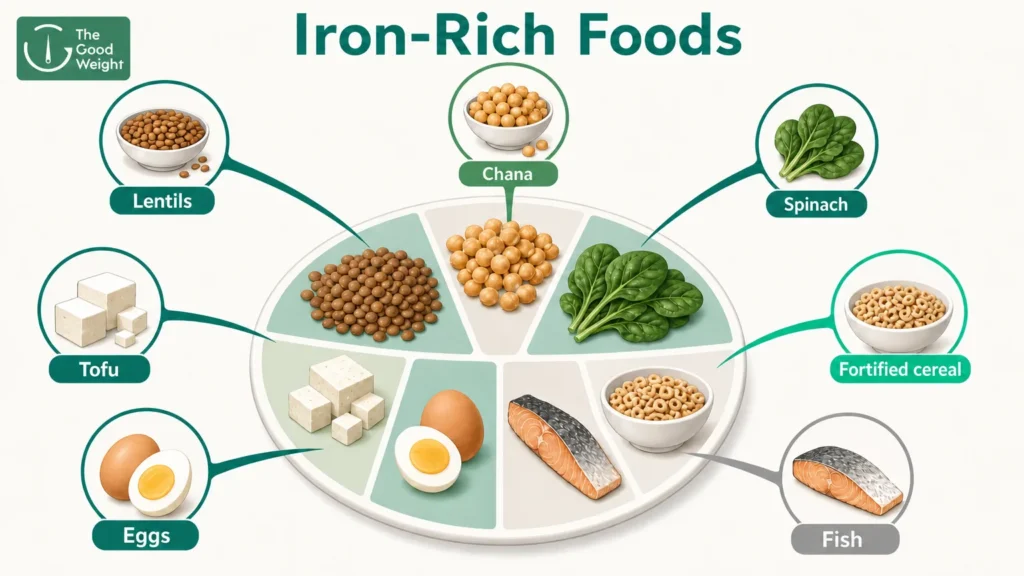
Legumes are versatile, affordable sources of non-haem iron. Dal, chana, rajma, black-eyed peas, soybeans and other beans also provide fibre and plant protein, which can support fullness and regular meals. Tofu, tempeh and soy products can work especially well for people who do not eat meat, fish or eggs.
Dark green leafy vegetables such as spinach, amaranth leaves and moringa leaves contribute iron, although serving size and absorption affect how much your body ultimately uses. Nuts and seeds – including sesame, pumpkin seeds and cashews – can add iron, but they are energy-dense, so a small sprinkle or measured spoonful is often more practical than eating freely from the packet. Whole grains and iron-fortified cereals may also help; many grain products and breakfast cereals are fortified with iron.
No single list suits everyone. A person with heavy menstrual bleeding, a vegetarian eating pattern, coeliac disease or a history of gastrointestinal surgery may need individual assessment rather than general food advice alone.
How to build a balanced weight-management plate
A nourishing plate does not need separate “diet food” and “iron food.” Start with a protein source, add plenty of non-starchy vegetables, include a sensible portion of carbohydrate based on your hunger, activity and plan, and use fats intentionally rather than accidentally. This structure can make meals more filling while providing a broader range of nutrients than a very small, repetitive meal.
For a vegetarian lunch, try a bowl built around masoor dal or chana, sautéed spinach or mixed vegetables, a modest serving of brown rice or two phulkas, and a tomato-cucumber salad with lemon. The lentils provide iron, protein and fibre; the vegetables increase volume and variety; and the carbohydrate portion makes the meal satisfying rather than overly restrictive. You can adjust portions without removing the core food groups.
For a non-vegetarian dinner, pair grilled fish, chicken, or a lean meat curry with a large portion of vegetables and a measured serving of millet, rice, roti or another familiar staple. Adding capsicum, tomatoes, cabbage, broccoli or citrus fruit brings colour and vitamin C to the meal. If your family meal includes a richer gravy, you may not need to avoid it entirely; consider the amount of oil used, the portion served and what else is on the plate.
Breakfast can be equally practical. An omelette with spinach and tomatoes, tofu scramble with vegetables, or fortified cereal with fruit and yoghurt can offer more nutritional value than simply skipping the meal after a busy morning. For personalised meal structure, including support after medical treatment or procedures, explore The Good Weight’s approach to diet and weight loss.
Improve absorption without turning meals into rules
You do not need to engineer every bite, but a few flexible habits can help. Vitamin C improves the absorption of non-haem iron from plant foods. Pairing dal, beans, tofu or leafy greens with tomatoes, lemon, amla, guava, oranges, capsicum or other vitamin-C-rich produce is a simple, culturally adaptable strategy; vitamin C can enhance non-haem iron absorption.
For example, squeeze lemon over chana chaat, include tomato in a dal-based meal, or have guava or an orange later in the meal. This does not make a meal “perfect,” and you do not need to force foods you dislike. The broader pattern of eating enough, eating varied foods and following medical guidance matters more than a single pairing.
Tea and coffee contain compounds that can reduce absorption of non-haem iron when consumed with meals. Research has found that tea can substantially inhibit non-haem iron absorption when taken with a meal. If iron intake is a concern, consider having tea or coffee between meals rather than alongside your main iron-containing meal, without treating this as an all-or-nothing rule.
Calcium supplements and some medicines can also affect iron absorption or interact with iron supplements. Do not stop prescribed medication or supplements on your own; ask a clinician or pharmacist about timing if you have been advised to take iron.
When food advice is not enough
Food choices can support iron intake, but they cannot diagnose iron deficiency or explain ongoing symptoms. Arrange a clinical review if you have persistent or worsening fatigue, unusual weakness, shortness of breath, dizziness, headaches, palpitations, reduced exercise tolerance, or difficulty concentrating. These symptoms are non-specific, meaning they can occur for many reasons and should not be self-diagnosed as “low iron.”
It is particularly important to seek advice if you have heavy or prolonged menstrual bleeding, are pregnant or planning pregnancy, have recently given birth, follow a very restrictive diet, donate blood frequently, or have a known gastrointestinal condition. Conditions affecting the stomach or intestines can influence nutrient absorption, while bleeding from the digestive tract may require evaluation. People who have had bariatric surgery or other weight-loss procedures may also need structured long-term nutrition monitoring.
A clinician may recommend blood tests to assess haemoglobin and iron stores, alongside other investigations where appropriate. Laboratory measures such as haemoglobin and serum ferritin are used in the assessment of iron status, but results need interpretation in context because inflammation and other health conditions can affect some markers. If you already have results, bring them to your appointment rather than trying to interpret them in isolation.
The Good Weight offers diagnostic tests and personalised nutrition support as part of comprehensive, doctor-led weight care. This can be especially useful when fatigue, changing food intake, metabolic health concerns and weight-management goals overlap.
Should you take an iron supplement?
Myth: “If I feel tired, an iron tablet is a safe first step.”
Fact: Tiredness alone cannot confirm iron deficiency. High-dose iron can cause side effects such as nausea, constipation, abdominal discomfort and dark stools, and excess iron can be harmful in some circumstances. The upper intake level for adults is 45 mg per day from all sources unless a clinician recommends otherwise, though therapeutic treatment may differ and must be supervised.
Myth: “All iron supplements work the same way.”
Fact: Formulations, doses, timing, tolerability and interactions vary. The appropriate choice depends on whether there is a documented deficiency, its likely cause, your medical history, and medicines or supplements you already use. Food-first habits are reasonable for general nutrition, but suspected deficiency deserves assessment rather than self-prescribing.
Myth: “Taking iron means I can ignore my overall diet.”
Fact: Supplements do not replace regular meals with protein, fibre, vegetables and adequate energy intake. Before a consultation, note your symptoms and when they began, typical meals, dietary restrictions, menstrual history where relevant, current medicines and supplements, and any previous blood results. This gives your clinician a clearer picture of what may be contributing.
Sustainable weight loss should not require you to trade nourishment for smaller portions. If fatigue, food restriction or test results are worrying you, speak with The Good Weight’s clinical team about your eating pattern, preferences and health history. Personalised weight care can help you build meals that support both your goals and your longer-term wellbeing.