
Products marketed for belly-fat loss can make a difficult decision sound simple: take a capsule, curb appetite, increase metabolism and watch abdominal fat disappear. For many people, the appeal is understandable – especially when weight concerns affect confidence, mobility, blood sugar, blood pressure or long-term metabolic health.
But a convincing label is not the same as convincing evidence. Before buying supplements for belly fat loss, it is worth asking two practical questions: What outcome is this product actually promising? And is it appropriate for my health, medicines and goals? This checklist can help you assess the claim before you spend money or combine a supplement with other treatments.
Can a supplement selectively reduce fat from the belly?
Myth: A “fat burner,” appetite suppressant or metabolism booster can target the fat around your waist.
Fact: No supplement has been shown to selectively remove fat from one chosen area of the body. Body-fat changes, when they occur, reflect overall changes in energy balance, health, hormones, activity, sleep, medicines and other individual factors. Where the body stores or loses fat is influenced in part by genetics and biology; it cannot be reliably directed by a pill, tea, powder or gummy.
This distinction matters because abdominal fat is often used in marketing as a visible and emotionally charged target. A product may use phrases such as “burn belly fat,” “melt stubborn fat” or “target the waistline,” but those words rarely define a measurable result. Does “burn” mean a temporary rise in heart rate? Does “melt” mean a change on a scale, waist measurement or body-composition scan? Does “target” mean a result in the abdomen that is different from overall weight change? If the claim does not say, it cannot be meaningfully evaluated.
A change in waist circumference can be a useful health measure when assessed consistently over time, but it is not proof that a supplement specifically acted on belly fat. Sustainable weight loss and improved metabolic health generally come from a broader, individualized plan that considers nutrition, activity, sleep, stress, medical conditions and, when appropriate, doctor-led treatment.
That does not mean you need to ignore your abdominal-health concerns. It means the safer question is not, “What can spot-reduce my stomach?” but, “What approach can safely support my overall health and body-composition goals?” For many people, nutrition support and structured weight-loss planning are more useful starting points than a product chosen for its marketing language.
What does reliable guidance say about weight-loss supplements?
The evidence check is straightforward: the National Institutes of Health Office of Dietary Supplements states that there is little scientific evidence that weight-loss dietary supplements work. The same resource notes that some ingredients can cause side effects or interact with medications. The National Center for Complementary and Integrative Health also cautions that many products sold for weight loss have not been adequately studied for safety and that some may pose serious risks.
This does not mean that every product carries identical risk or that every ingredient has exactly the same evidence base. A fibre-containing product, a high-caffeine blend and a multi-ingredient herbal capsule are not interchangeable. The important point is that a broad category label – “natural,” “herbal,” “clinically tested” or “doctor formulated” – cannot tell you whether a particular formula is effective, safe or suitable for you.
Product quality also deserves attention. Health authorities have issued notifications about weight-loss products found to contain hidden drug ingredients. This is one reason not to treat an unusually dramatic online promise as reassurance. A claim of rapid, effortless transformation should raise questions about both the evidence and the contents.
What five checks should I make before trusting a product claim?
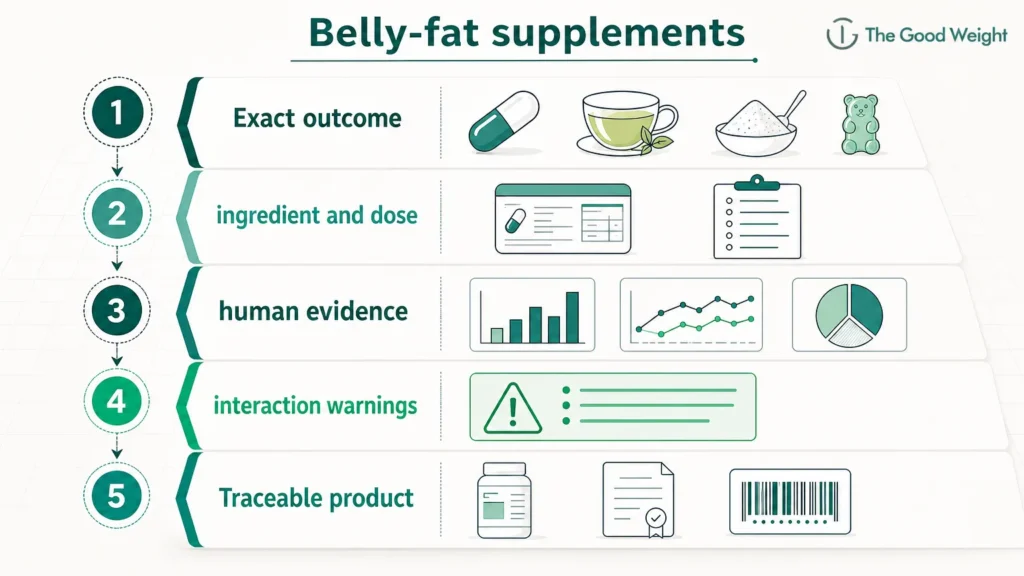
A label may contain technical language, ingredient lists and charts that create an appearance of certainty. Slow down and use the following five checks. They are designed to help you decide whether a claim is specific enough to investigate – and whether it belongs in a clinician conversation rather than an online shopping cart.
1. Identify the exact promised outcome
Write the promise in plain language. Is the product claiming lower body weight, reduced hunger, a smaller waist, more energy, less bloating or “fat burning”? These are different outcomes, measured in different ways. “Less bloating,” for example, is not the same as losing body fat, and a short-term shift on the scale is not automatically a meaningful improvement in metabolic health.
Be cautious when the claim cannot be translated into a defined outcome. “Boosts metabolism” does not state how much, for how long or whether it leads to relevant health change. Similarly, before-and-after images and personal stories do not establish that the product caused the result. They cannot account for changes in food intake, activity, illness, other treatments or natural weight fluctuation.
2. Check whether the research matches the ingredient, dose and person
A study is relevant only if it tested the same ingredient or combination, at a comparable dose, in people similar to you. Evidence for a single ingredient does not automatically apply to a proprietary blend containing many ingredients. Nor does research in a narrowly selected group necessarily predict results for people with diabetes, hypertension, digestive symptoms or a different age range.
Look for information about study duration, the number of participants and what was actually measured. Ask whether the result was large enough to matter in everyday life, not merely whether it was described as “significant.” If a brand cites research but does not identify the formula, dose or population, you cannot confirm whether that research supports its product.
3. Separate human evidence from marketing language
The phrase “clinically proven” is not a conclusion by itself. It may refer to an ingredient study rather than the finished product, a study that was not designed to measure fat loss, or evidence that does not apply to the advertised dose. A product page may also use laboratory findings, animal data or general statements about an ingredient’s role in the body as if they prove a real-world outcome in people.
Prioritise well-conducted human research that measures outcomes relevant to the claim, such as body weight or waist circumference, rather than a marketing-friendly proxy. The broader evidence base remains limited: supplements marketed for weight loss often lack strong evidence of effectiveness. A careful evidence review is not pessimism; it is a way to protect your health and budget.
4. Read adverse-effect and interaction warnings before purchase
Do not leave the warning panel until after you have decided to buy. Check for stimulant ingredients, large caffeine amounts, laxative effects, digestive side effects, warnings related to blood sugar or blood pressure, and instructions not to combine the product with medicines. “Natural” describes a source, not a guarantee of safety.
Interaction risk is especially important because a supplement can alter symptoms or compound the effects of prescription treatment. A stimulant-containing blend, for example, may be a poor fit for someone already dealing with palpitations, anxiety, poor sleep or uncontrolled blood pressure. A product affecting appetite or digestion may also complicate an existing treatment plan. The NIH advises consumers to discuss supplements with healthcare professionals because weight-loss supplement ingredients can interact with medicines.
5. Assess whether the product is traceable
A responsible product should provide a complete ingredient list, serving size, manufacturer details, batch or lot information and a way to contact the company. Be cautious if the label hides amounts inside a “proprietary blend,” if the seller makes it difficult to identify who made the product, or if the item is promoted mainly through urgency, secrecy or exaggerated results.
Traceability does not prove a supplement works. It does, however, give a clinician and the consumer something concrete to review. If you cannot identify the actual ingredients and doses, you cannot properly assess efficacy, duplication with other products or potential interactions.
A worked example: questioning “clinically proven fat burner”
Imagine a generic product described as a “clinically proven fat burner for stubborn belly fat.” Start by asking what it promises: a lower waist measurement, lower overall weight or simply more energy? Next, inspect the label. Does it name every ingredient and dose, or does it hide them in a blend?
Then ask for the clinical evidence. Was the finished formula studied in humans, or only one ingredient? Did the study use the same daily amount? Were participants adults with similar health profiles and goals? Did researchers measure meaningful body-fat or waist changes over time? Finally, review the safety information and batch details. If those questions cannot be answered clearly, “clinically proven” is a promotional phrase – not a sufficient reason to take the product.
Who should get medical advice before using a weight-loss supplement?
Medical advice is particularly important if you take prescription medicines or manage an ongoing health condition. Bring the complete product label – not only the front-of-pack claim – along with your current medication list, including over-the-counter medicines and other supplements. A clinician needs the full list to identify duplicated ingredients, dose concerns and interactions that are not obvious from advertising.
Pause and seek advice before using a weight-loss supplement if you have:
- diabetes or take medicines that affect blood sugar;
- high blood pressure, heart disease, palpitations or other heart concerns;
- liver or kidney disease;
- ongoing nausea, vomiting, reflux, diarrhoea, constipation or other digestive symptoms;
- planned pregnancy, pregnancy or breastfeeding; or
- any prescription medicine regimen, including treatment for mood, thyroid, blood pressure or blood sugar concerns.
This is not about blaming someone for wanting support with weight. It is about making the decision in context. A supplement that appears minor may still change appetite, bowel habits, sleep, heart rate or blood-sugar patterns. When weight concerns are tied to health conditions, an individualized review can be much safer than trial and error.
What can I use instead of a quick-fix product decision?
Use this practical decision tree when you encounter a product marketed for belly-fat loss:
Stop if the claim promises targeted fat loss, dramatic transformation or effortless results. These messages do not reflect how body-fat change works and can distract from a realistic plan.
Pause for medical input if you take medicines, have a health condition or are considering multiple products at once. Do not assume that a supplement can be safely added to a treatment plan without review.
Focus on the foundations if your goal is long-term metabolic health. Regular meals that fit your needs, adequate protein and fibre, enjoyable movement, sleep and a sustainable routine are less dramatic than a “fat burner,” but they are the components that can be adjusted and maintained. The CDC similarly emphasizes healthy eating, regular physical activity and adequate sleep as part of achieving a healthy weight.
Seek a clinician-led treatment review when weight concerns are significant, persistent or connected with diabetes risk, blood pressure, mobility or other health issues. Evidence-based care may include nutritional assessment, diagnostics, behavioural support and, for suitable individuals, medical or procedural options. A medical weight-loss consultation can help place any treatment – including a supplement claim – within a personalized plan rather than treating it as a standalone solution.
Make the next decision an informed one
Supplements for belly fat loss cannot selectively remove abdominal fat, and an impressive label cannot replace sound evidence or a personal safety review. The most useful next step is to bring the product label or full ingredient list, along with your medications, to a doctor-led weight consultation with The Good Weight before spending money or combining it with other treatments.