
The Good Weight

GLP-1 Side Effects: A Doctor’s Guide to Managing Your Health

GLP-1 side effects timeline week by week — nausea, constipation, muscle loss management by The Good Weight

GLP-1 Side Effects Timeline: What to Expect (A Doctor’s Guide)

GLP-1 Side Effects, Week by Week: What’s Normal, What Needs a Doctor, and How to Manage Each One By Dr. Neha Shah, Bariatric & Metabolic Surgeon, Co-Founder & Clinical Lead, The Good Weight Key Takeaways GI side effects affect 40–70% of people starting GLP-1 therapy; nausea alone is reported in 40–58% of patients, mostly in the first 1–8 weeks. Nausea typically peaks in week 1 and eases as the body adapts; constipation tends to appear in weeks 2–4 and lingers longer. Each dose increase (usually around week 4–5) can temporarily bring symptoms back for 3–7 days. Up to 25–45% of weight lost on GLP-1 therapy can be lean muscle mass if protein intake and resistance training aren’t actively managed.[2] Serious but rare risks — pancreatitis, gastroparesis, gallbladder complications — need immediate medical attention, unlike routine GI adjustment symptoms.[3] GI side effects are the leading cause of GLP-1 discontinuation in real-world data, most often when dose escalation outpaces tolerance.[4] Almost every side effect conversation I have with a new Member follows the same arc: excitement about starting, a rough first fortnight, a moment of “is this normal?”, and then — for the vast majority — things settling into a manageable rhythm. GLP-1 medications are genuinely effective tools, but they are not side-effect-free, and going in with an accurate map of what to expect makes the difference between someone who sails through titration and someone who quits in week three over something entirely manageable. This is that map — organised by when symptoms actually appear, what’s expected physiology versus what’s a red flag, and exactly what to do about each one. Why GLP-1 Medications Cause Side Effects in the First Place GLP-1 receptor agonists work partly by slowing gastric emptying — the rate at which food leaves your stomach and moves into your intestine. This is precisely why they curb appetite so effectively, and it’s also precisely why the earliest, most common side effects are gastrointestinal. A 2025 review in Mayo Clinic Proceedings found that 40–70% of patients experience gastrointestinal adverse effects on GLP-1 and GLP-1/GIP therapies, with nausea, vomiting, diarrhoea, constipation, and reflux the most frequent (Mayo Clinic Proceedings, 2025)[1] — but the overwhelming majority are mild-to-moderate and temporary, easing as the body adapts to each dose. The GLP-1 Side Effect Timeline Days 1–3: The First Wave Most people notice their first symptoms within 24–72 hours of the first injection — mild nausea, reduced appetite, occasional headache or light-headedness. This is your gut registering the change in gastric emptying speed; it is expected and, for most Members, mild. What helps: Small, bland, low-fat meals (think dal-rice, khichdi, plain dosa rather than fried or rich food); eating slowly and stopping at first fullness; staying upright for 30–60 minutes after eating rather than lying down. Week 1: Nausea Peaks Nausea is typically most intense in the first week, especially on injection day and the day after. For most patients it begins to noticeably ease by the end of week one as the body starts adapting. What helps: Ginger tea or ginger candies (genuinely evidence-backed for nausea relief); five to six small meals instead of three large ones; plain, easy-to-digest foods — curd rice, khichdi, soups, bananas, boiled eggs. Weeks 2–4: Constipation or Loose Stools Emerge As nausea starts easing, a second wave often appears — constipation in some people, loose stools in others, depending on individual gut response and which molecule you’re on. Constipation is reported in roughly 12–25% of GLP-1 users depending on the drug, and unlike nausea, it tends to linger longer, often persisting through weeks two to four before substantially improving. What helps: Build fibre up gradually rather than all at once (a sudden high-fibre load can worsen bloating); 2.5–3 litres of water daily; a 20–30 minute daily walk, which genuinely helps gut motility; if constipation persists, ask your doctor about a stepwise approach starting with an osmotic option rather than jumping straight to stimulant laxatives. Weeks 4–6: The Dose-Increase Flare Every GLP-1 protocol increases the dose in steps, typically around week four or five for the first escalation. Each increase can temporarily bring back nausea or GI symptoms for roughly 3–7 days before the body adapts again. This is one of the most important things I tell Members: if side effects from your current dose haven’t settled, don’t escalate yet. The titration schedule is a guide, not a race — your doctor can hold you at a dose longer if you need it. Months 2–3: Fatigue and “Food Noise” Changes As calorie intake drops meaningfully, some Members notice fatigue, mild dizziness on standing, or a change in mood as appetite and “food noise” quiet down. This is usually a sign of simply eating too little, not a drug side effect requiring dose changes. What helps: Deliberately structured, protein-forward meals even when you don’t feel hungry; adequate salt and fluid intake, especially in Chennai and Bengaluru’s heat; a check on your blood pressure medication doses if you’re on them, since appetite and weight changes can mean your existing dosages need revisiting. Months 3–6+: The Muscle Loss Window This is the side effect that gets the least airtime and matters the most long-term. A 2024 review in Circulation found that lean mass can account for up to 25–45% of total weight lost on semaglutide and tirzepatide in registration trials, depending on the medication and body composition method used (Neeland et al., Circulation, 2024)[2] — particularly when protein intake and resistance training aren’t actively managed. What helps: Protein intake above 1.2 g per kg of body weight daily, spread evenly across meals; two to three resistance training sessions a week (even bodyweight or band-based training counts); periodic body composition (BCA) scans to track fat loss versus muscle loss, not just the number on the scale. The Complete Symptom & Action Grid Symptom Typical Timing Action Mild nausea, reduced appetite Days 1–7, each dose increase Manage at home — small meals, ginger, low-fat food Constipation Weeks 2–6 Fibre, fluids, movement; escalate to

GLP-1 Side Effects Timeline: What to Expect (A Doctor’s Guide) Read More »
Glp-1-cost-in-india

GLP-1 Cost in India 2026: Complete Price Guide

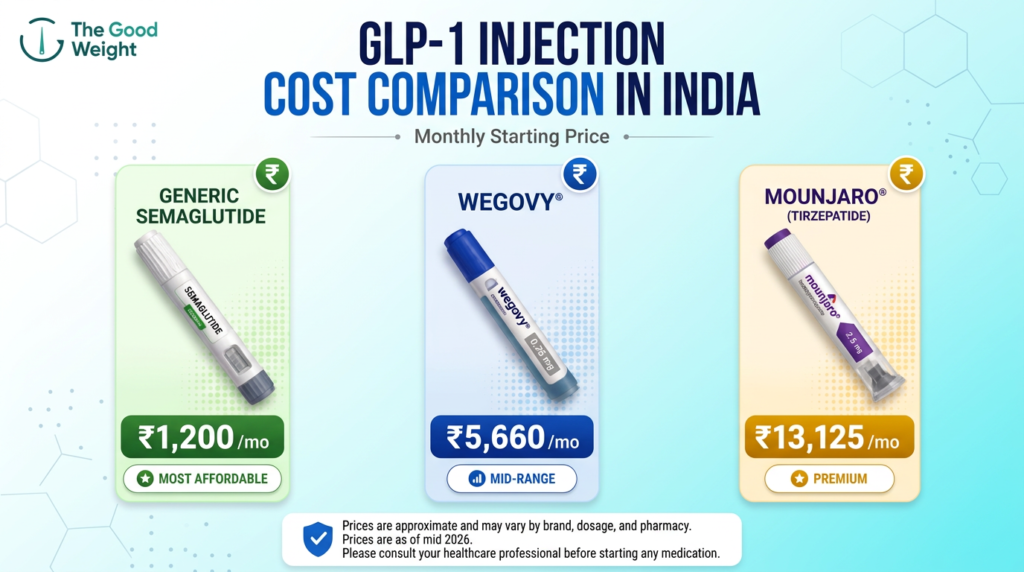
The Real Cost of GLP-1 Therapy in India: A Doctor’s Complete 2026 Price Guide By Dr. Neha Shah, Bariatric & Metabolic Surgeon, Co-Founder & Clinical Lead, The Good Weight Key Takeaways Generic semaglutide in India costs from ₹1,290/month at the starting dose, rising to ₹1,300–4,200/month at maintenance doses. Branded Ozempic and Wegovy cost from ~₹5,660/month after Novo Nordisk’s April 2026 price cuts (up to 48% off Wegovy, 36% off Ozempic). Mounjaro (tirzepatide) is the most expensive option, running ₹13,125–27,500/month depending on dose, since it remains under patent with no generic yet. Semaglutide’s Indian patent expired on 20 March 2026, triggering 40+ DCGI-approved generic brands. Total monthly cost should also include labs, physician consults, and nutrition support — not just the medicine strip price. No IRDAI-regulated insurance in India currently covers GLP-1 medication for the obesity indication. Almost every Member who walks into our Chennai or Bengaluru centres asking about GLP-1 therapy starts with the same question, and it isn’t about side effects or efficacy. It’s: “Doctor, how much is this actually going to cost me every month?” It’s a fair question, and in 2026 the honest answer is “it depends enormously on which molecule, which brand, and which pathway you choose” — because this market has changed more in the last twelve months than in the previous five years combined. Two events reshaped GLP-1 pricing in India this year: semaglutide’s Indian patent expired on 20 March 2026, opening the door to 40+ generic brands, and Novo Nordisk responded on 1 April 2026 by cutting its own Ozempic and Wegovy prices by up to 36–48%. As a clinician who prescribes and titrates these medications daily, I want to walk you through exactly what you’ll pay — medicine, consults, labs, and the costs nobody mentions on Instagram — so you can budget for this properly before you start. Quick Answer: What Does GLP-1 Therapy Cost in India in 2026? Medication Molecule Monthly Cost (Starting Dose) Monthly Cost (Maintenance Dose) Generic Semaglutide (vials) Semaglutide ₹1,290–1,300 ₹1,300–4,200 Generic Semaglutide (pens) Semaglutide ₹1,800–4,500 ₹4,000–6,000 Ozempic (branded) Semaglutide ~₹5,660 ~₹9,000 (1 mg) Wegovy (branded) Semaglutide ~₹5,660 ~₹16,400 (2.4 mg) Mounjaro (branded) Tirzepatide ₹13,125–14,000 (2.5 mg) ₹22,000–27,500 (10–15 mg) Prices are typical Indian retail MRP as of mid-2026 and vary by city, pharmacy chain and exact dose. Always confirm current pricing with your prescribing doctor or pharmacy at the time of purchase. Why Prices Just Fell: The Two Events That Changed Everything 1. The Semaglutide Patent Expired (20 March 2026) Semaglutide — the molecule in Ozempic and Wegovy — lost patent protection in India this March. Within weeks, more than 40 DCGI-approved generic brands entered the market from major Indian manufacturers including Natco, Sun Pharma, Dr. Reddy’s, Cipla, Zydus, Alkem and Glenmark. Vial-based generics now start from as little as ₹1,290 a month, and pen-format generics from roughly ₹1,800–4,500. 2. Novo Nordisk Cut Its Own Prices (1 April 2026) Facing genuine price competition for the first time, Novo Nordisk cut Ozempic prices by up to 36% and Wegovy prices by up to 48%. The starting 0.25 mg dose of both now costs roughly ₹5,660 a month — a fraction of what it did in late 2025. 3. Tirzepatide (Mounjaro) Remains Untouched Tirzepatide is still under patent in India, with generics not expected before 2027–28. As the only dual GIP/GLP-1 agonist available here, and India’s top-selling drug by value since October 2025, its pricing hasn’t moved — it remains the most expensive option on the table, running from roughly ₹13,000 at the starting dose to ₹25,000–27,500 at higher maintenance doses. Branded vs Generic: What Are You Actually Paying For? This is the question I get asked most, and I want to be clinically precise about it rather than diplomatic. Generic semaglutide contains the same active molecule as Ozempic and Wegovy. What you’re paying extra for with the branded pen is: Manufacturing and quality assurance track record from an internationally audited facility. Device engineering — branded auto-injector pens are generally easier to dose accurately than drawing from a vial with a syringe. A longer real-world safety and outcomes dataset, including cardiovascular and kidney outcome trials that some generics haven’t yet replicated in India. What matters clinically is that whichever option you choose, it should be a DCGI-approved brand, sourced from a licensed pharmacy, and prescribed and titrated by a doctor — never self-purchased or self-dosed. At The Good Weight, our clinical team reviews the manufacturer, batch quality, and cold-chain handling before we recommend any specific brand to a Member, because with an injectable prescription drug, the ₹1,000 you save by cutting corners on sourcing is not worth the risk. The Hidden Costs Nobody Mentions The medicine strip price is only part of the real monthly outlay. Here’s what a properly run GLP-1 programme should also budget for: Baseline and follow-up labs — thyroid panel, HbA1c/fasting glucose, kidney and liver function, lipid profile. Typically ₹2,000–4,000 at baseline, repeated every 3–6 months. Physician consultation and titration support — dose changes should be doctor-guided, not self-managed off a YouTube video. Budget ₹1,000–2,500 per review consult, or a bundled monthly programme fee. Body composition monitoring — a BCA (body composition analysis) scan tracks how much of your weight loss is fat versus muscle, which matters enormously on GLP-1 (see our companion article on muscle loss). Most clinics offer this at ₹500–1,500 per scan. Protein and nutrition support — appetite suppression makes it genuinely hard to hit protein targets through food alone; many Members add a protein supplement or a structured food kit, typically ₹1,500–2,500/month. Cold-chain storage — GLP-1 pens need 2–8°C refrigeration; factor this into travel and storage planning, especially in Chennai’s climate. Six-Month Cost Reality Check: What You’ll Actually Spend Because these medications are titrated — you start low and increase the dose gradually over several months — your early months cost meaningfully less than your maintenance months. A rough six-month picture for generic semaglutide, including consults and labs, typically lands between ₹25,000 and ₹45,000 total; branded Wegovy or Ozempic across

GLP-1 Cost in India 2026: Complete Price Guide Read More »

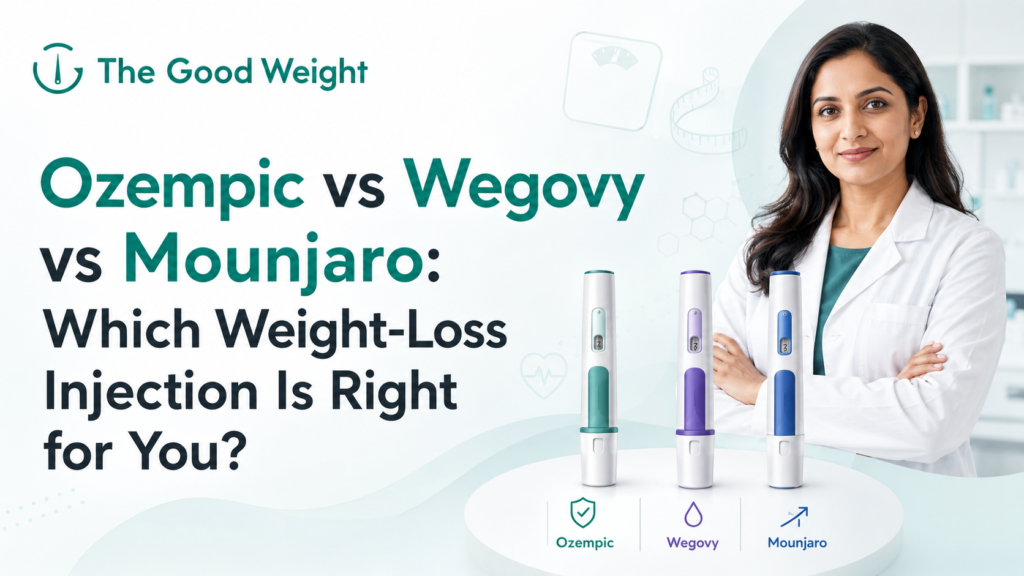
Ozempic vs Wegovy vs Mounjaro

Ozempic vs Wegovy vs Mounjaro: Which Weight-Loss Injection Is Right for You?

Weight-loss injections have revolutionized the way obesity and Type 2 diabetes are managed, with some of the most popular drugs today being discussed for their ability to promote weight loss. Weight-loss injections have changed the landscape of obesity and Type 2 diabetes treatments, with certain drugs like Ozempic, Wegovy, and Mounjaro being among the most talked about medications today. These prescription drugs are used to manage chronic metabolic disorders, and they are not appropriate for all people, although they may be linked to weight loss. When considering the options of Ozempic vs Wegovy vs Mounjaro, it is crucial to grasp the differences between them. While all three can help manage appetite and promote metabolic health, they differ in their active ingredients, approved uses, efficacy, side effects and target audience. This guide will outline the important distinctions between these drugs, how they work, side effects, cost, and the importance of choosing the correct drug based on your metabolic health, not a one-size-fits-all treatment. Understanding GLP-1 Medications It’s important to understand how they control hunger and blood sugar to understand the differences between Ozempic, Wegovy, and Mounjaro.It is helpful to understand how they work to regulate hunger and blood sugar to understand the differences between Ozempic, Wegovy, and Mounjaro. Incretin hormones are released after eating and communicate with the brain and pancreas to manage appetite, insulin production and digestion. One of these hormones, called GLP-1 (glucagon-like peptide-1), can help reduce blood sugar, slow the emptying of the stomach and make people feel full. Ozempic and Wegovy are drugs that mimic this hormone, which can help lower appetite and food cravings. These medications are meant to complement and not replace good lifestyle habits. They work best when used in conjunction with balanced nutrition, regular exercise and continuous medical oversight. What Is Ozempic? Semaglutide is the active ingredient in Ozempic of the medication used for weight loss called Ozempic. A GLP-1 receptor agonist that is typically used in adults with type 2 diabetes to help control blood sugar. It is administered by injection once a week. Ozempic is known for weight loss, but it’s primarily used for diabetes treatment. As an extra benefit, semaglutide can help people lose weight by making them feel full with less food, and by slowing the emptying of their stomachs. A healthcare professional may consider the use of Ozempic for adults with type 2 diabetes, particularly when they are also at risk for overweight, insulin resistance or cardiovascular conditions. But it should not be used on a whim or just because it’s popular on the net. It is a prescription drug and should be used under doctor’s supervision. What Is Wegovy? The active ingredient of Wegovy is the same as that of Ozempic. The difference is that Wegovy is a weight management drug specifically formulated and dosed for people with chronic weight management who qualify for the treatment. Wegovy may also cause more weight loss than Ozempic, and cause more appetite suppression because it is prescribed at a higher maintenance dose. It does this by suppressing appetite, boosting satiety after eating and decreasing stomach emptying, all without using willpower alone. Wegovy may be used in adults with obesity or adults who are overweight and have a weight-related health condition like type 2 diabetes, high blood pressure, sleep apnoea or abnormal cholesterol level. Weight should never be the only criterion used to assess suitability. What Is Mounjaro? Mounjaro contains tirzepatide. Mounjaro is different from Ozempic and Wegovy, which target primarily GLP-1 receptors, because it targets both GLP-1 and GIP receptors. This dual-incretin action can help to control blood sugar, curb appetite and help many qualified patients lose significant amounts of weight. The drug Mounjaro has been marketed as a diabetes medication, but it has recently garnered significant attention for its potential in weight loss. Tirzepatide works on two hormone pathways that control appetite and glucose levels, which could make it more effective than GLP-1 alone for some people. This is not to imply that Mounjaro is the best choice for all individuals. The choice of treatment will depend on the level of diabetes, severity of obesity, medical history, tolerance of side effects, availability, cost and long term goals. Ozempic vs Wegovy vs Mounjaro: Key Differences Feature Ozempic Wegovy Mounjaro Active ingredient Semaglutide Semaglutide Tirzepatide Hormone pathway GLP-1 GLP-1 GLP-1 + GIP Main treatment focus Type 2 diabetes Chronic weight management Type 2 diabetes and metabolic weight support where clinically appropriate Dosing style Once-weekly injection Once-weekly injection Once-weekly injection Weight-loss potential Moderate to significant High Often higher in clinical studies Best suited for Diabetes-focused care Weight-management care Diabetes/metabolic care with significant weight concern Approximate four-week medicine cost in India ₹5,660–₹9,100 ₹5,660–₹16,400 ₹13,125–₹25,781 The right medication is not simply the one with the highest average weight loss in studies. It is the one that matches your medical needs, health risks, treatment tolerance and long-term plan. How Effective Are Ozempic, Wegovy and Mounjaro for Weight Loss? A common question is, “Which medication helps you lose the most weight?” While clinical trials provide useful guidance, individual results vary based on factors such as metabolic health, insulin resistance, lifestyle, medication adherence, and underlying medical conditions. Ozempic can support meaningful weight loss, particularly in people with Type 2 diabetes. However, because it is primarily approved for diabetes management, it should not be directly compared with medications specifically studied for obesity treatment. Wegovy has demonstrated significant weight-loss benefits. In the STEP 1 trial, participants receiving semaglutide 2.4 mg alongside lifestyle changes lost an average of 14.9% of their body weight over 68 weeks. (Src: New England journey of medicine) Mounjaro has shown even greater results. In the SURMOUNT-1 trial, participants receiving tirzepatide achieved average weight reductions of up to 20.9% over 72 weeks. (Src: New England journey of medicine) Benefits Beyond Weight Loss These medications are extensively talked about for weight loss, but they can have benefits that go beyond the weighing scale. GLP-1 and dual-incretin therapies can help control blood sugar levels, decrease appetite, reduce

Ozempic vs Wegovy vs Mounjaro: Which Weight-Loss Injection Is Right for You? Read More »

Calorie Deficit

Why Am I Not Losing Weight in a Calorie Deficit? 15 Hidden Causes You Should Know

You’ve been skimping on your food intake. You’ve given up on desserts, counted your calories, started regularly exercising and are trying to be consistent. However, every time you step on the scale, it’s only a slight increase. If you’ve asked yourself the question, “Why am I not losing weight in a calorie deficit?,” then you’re not alone. It is one of the most asked problems of the people while they are on a weight loss program. Keeping a calorie deficit is crucial to weight loss, but it’s not all there is to it. Your metabolism, hormones, sleep patterns, stress, medication, and health issues all impact the way that your body utilizes and stores energy. If your weight has not changed despite consistent effort, one or more of these hidden factors may be responsible. 1. You May Not Actually Be in a Calorie Deficit The first is you are not necessarily in a calorie deficit. Even the most disciplined can be off target for calorie consumption. Little extras like cooking oil, salad dressings, sugary drinks, coffee creamers, or frequent “good-for-you” snacks can add quickly. Calories on the weekends may also compensate for the calorie deficit that occurs throughout the week. But before automatically jumping to the conclusion that something is amiss, portion sizes should be looked at and the meals should be accurately recorded. 2. Your Metabolism Has Adapted When you keep the calories down for an extended amount of time, the body will, naturally, conserve energy. The term adaptive thermogenesis (your body’s way of slowing metabolism when you’re trying to lose weight) describes this effect, which decreases the amount of calories burned day-to-day. That’s one of the reasons for weight-loss plateaus during crash diets. 3. You are losing fat, but gaining muscle. For those who have just begun to strength train, it may not be so simple as the scale reading. You may not lose weight, but you may be able to reduce your waist size and increase your body fat percentage as your muscles gain lean mass and your body fat reduces. Progress photos and body measurements can be a more accurate reflection than a weighing scale. 4.  Insulin Resistance Is Affecting Fat Loss One of the most prevalent metabolic problems that makes it hard to lose weight is insulin resistance, or a situation where the cells don’t react well to insulin. The body responds to the glucose by creating insulin which promotes fat storage and reduces utilization of fat for energy. Signs may include: Gaining weight in the belly area Constant hunger Sugar cravings Fatigue after meals Pre diabetes 5. Your thyroid may be slowing your metabolism down. If the thyroid is under active, or hypothyroid, then many activities in the body are slowed down, including the metabolism. Some of the other symptoms of thyroid disorders include thinning hair, sensitivity to colds, constipation, dry skin, and unexplained weight gain. 6. PCOS(PMOS) Makes Weight Loss More Difficult Polycystic Ovary Syndrome (PCOS) is now referred to as PMOS (Poly endocrine Metabolic Ovarian Syndrome) and for many women is a condition that has an impact on more than just their reproductive health. Insulin resistance and hormonal imbalance are often linked with PCOS, making it hard to shed pounds with good eating habits. Some of the most frequent signs are irregular periods, acne, an excess of facial hair growth, and weight retention in the abdomen. 7. Bad sleep is on your side Sleep is a big factor that is not considered when it involves weight management. Regularly having less than 7 hours of sleep wreaks havoc on hormones that control hunger and fullness. Consequently, you might feel more hungry, have a greater appetite, feel less energetic, and have slower metabolic activity. Enhanced sleep quality can help promote healthier eating patterns and metabolic health. 8. Chronic Stress Raises Cortisol Levels A prolonged stress can raise cortisol, which is also known as the stress hormone. Chronic elevated cortisol levels can promote fat in the belly and can make one more tempted to eat high calorie comfort foods. When paired with poor sleep, stress can work its magic without you realizing it’s hindering your weight loss. 9. Some Drugs Affect Weight Weight gain or slower weight loss may be contributed by some prescription drugs. Some antidepressants, steroids, diabetes drugs and some hormone treatments. Do not discontinue medications prescribed by health care providers. 10. Hormonal changes during menopause As with most other hormonal changes that occur during menopause, loss of estrogen may cause a change in body composition, decrease muscle mass, and redistribute fat to the abdomen. A lot of women find that the tactics that have been effective for them in their 30s cannot be duplicated in their 40s. 11. Fatty Liver Disease May Affect Metabolic Health Non-alcoholic fatty liver disease (NAFLD) closely associates with obesity, insulin resistance and metabolic disorder. If liver function is impaired, controlling body weight is even more challenging, and it is particularly important to assess liver health. 12. Water Retention Can Mask Fat Loss Occasionally, the scale is measuring water weight instead of fat. Fluctuations in hormones, stress, too much sodium in the diet, or some prescriptions may cause a temporary increase in fluid retention that can give the false appearance of weight loss stalls. 13. Not getting sufficient protein. Protein helps to maintain muscle and promotes fullness. If you lose weight without the right protein, your body could be stripping your body of muscle mass and this can cause your metabolism to decrease slowly. 14. You’re moving less than you think However, there are many people who, when they begin to trim the fat, end up being less active than they were previously. This decrease in calories expended on non-exercise activity thermogenesis (NEAT) – the calories burned in normal daily activities like walking, standing, and housework can have a significant impact on total daily energy expenditure. 15. An underlying metabolic condition is not being identified. At times the scale may be more indicative of a medical instead of

Why Am I Not Losing Weight in a Calorie Deficit? 15 Hidden Causes You Should Know Read More »

How to Lose Weight with PCOS

How to Lose Weight with PCOS (Now Called PMOS): What Every Woman Should Know

For women with Polycystic Ovary Syndrome (PCOS) weight loss can seem like a struggle. You could be eating right, exercising regularly, and doing all the “right” things, and the scale still won’t budge. If you can relate to this, you’re not the only one. Many women are unaware that PCOS is a more than just a reproductive disorder. In 2026, an international expert consensus proposed the name change to reflect the hormone and metabolism nature, which is now Poly endocrine Metabolic Ovarian Syndrome(PMOS). The new name reflects the fact that the condition impacts the whole body’s metabolism, not just the ovaries. Here at The Good Weight, we feel that sometimes weight gain is a symptom, not a problem. The first step in achieving sustainable weight loss is to grasp the metabolic shifts which occur in the body of a PCOS patient that makes weight loss more difficult. What Makes Weight Loss Harder When You Have PCOS? A major cause is insulin resistance, which is when the cells in the body are less sensitive to insulin. In response, the body makes more insulin, leading to higher appetite, fat storage and a more gradual rate of weight loss. PCOS also impacts hormones that control appetite, energy balance and fat distribution. Traditional calorie counting methods may not be as effective as metabolic changes are caused by poor sleep, chronic stress, inflammation, and decreased muscle mass. Studies also indicate that unchecked, these factors can increase women with PCOS to developing pre diabetes, Type 2 diabetes, and other metabolic conditions. How Can You Lose Weight With PCOS the Best Way? There is no one-size-fits-all “PCOS diet. Each woman’s metabolism is unique, so custom-made treatment is more likely to be effective than the trend diets. Don’t aim for fast weight loss, but instead work on improving metabolic health by adopting sustainable habits. Consume protein at each meal to maintain muscle and help you feel full. Opt for vegetables, fruits, legumes and whole grains that are high in fiber to help control blood sugar. Moderate amounts of healthy fats from nuts, seeds, and olive oil can also help keep hormones balanced. Regular exercise is also important. Strength training will help maintain lean muscle, and walking, biking, swimming or other activities you enjoy will increase insulin sensitivity and cardiovascular health. These lifestyle changes are paired with proper sleep and stress control, making healthy weight loss more possible. The Importance of Treating the Root Cause Many women get frustrated because they are addressing only the symptom weight gain and not the cause. In many cases with PCOS, it’s not a matter of willpower, but rather the excess weight is closely associated with insulin resistance and metabolic dysfunction. Weight loss can be temporary from a mere change in eating habits, but it can be a challenge to keep the weight off if the underlying hormonal and metabolic imbalance is not corrected. (Src: World Health Organization) Tips to Lose Weight With PCOS (PMOS) Losing weight with PCOS is rarely about following the strictest diet or spending hours in the gym. Because hormonal imbalances and insulin resistance often make weight loss more challenging, the goal should be to build sustainable habits that improve metabolic health over time. Here are some practical strategies that can help: Prioritize protein and fibre-rich foods to stay fuller for longer and help regulate blood sugar levels. Choose regular physical activity that you enjoy, such as brisk walking, strength training, yoga, or cycling. Consistency is more important than intensity. Aim for 7–9 hours of quality sleep, as poor sleep can worsen insulin resistance and increase hunger hormones. Manage stress effectively through mindfulness, meditation, or other relaxation techniques, as chronic stress may contribute to hormonal imbalances. Follow your treatment plan consistently, including medications or supplements prescribed by your healthcare provider. Avoid crash diets or extreme calorie restriction, which are difficult to sustain and may negatively affect your metabolism. Sustainable weight loss is built on realistic lifestyle changes rather than quick fixes. Commenting in a Hindustan Times feature, Dr. Neha Shah, Founder and Bariatric Surgeon at The Good Weight, highlights that long-term success comes from developing healthy habits that can be maintained for years—not following restrictive diets that offer only temporary results. For women with PCOS, this approach becomes even more important because addressing the underlying metabolic and hormonal factors is just as essential as making healthy lifestyle choices. What Are the Ways Doctors Check for Weight Gain in PCOS? If lifestyle changes have not yielded the results desired, a medical evaluation can be helpful. Your doctor will check blood glucose, HbA1C, thyroid function, hormone levels, liver function and body composition, depending on your symptoms. These tests can be useful in determining if there are metabolic abnormalities that are interfering with weight loss and can help to develop a tailored treatment plan rather than “trial and error”. The Mayo Clinic says lifestyle changes and medical evaluation and treatment, based on a person’s symptoms and metabolic profile, are often essential to successful management of PCOS. (Src: Mayo Clinic) When to Go to the Doctor? If you’re having trouble losing weight even with healthy eating and regular exercise, if your periods are irregular or absent, you have a lot of facial hair, acne, unexplained weight gain, or if you feel like you’re always tired and have a lot of cravings for sugar, then you may want to seek medical advice. Early assessment may reveal the presence of underlying metabolic or hormonal disorders before they become more serious health issues. A Healthier Metabolism is the Goal Living with PCOS does not mean weight loss is impossible. It simply means your body may require a different approach, one that recognizes the role of hormones, insulin resistance, and metabolic health rather than focusing only on calorie restriction. At The Good Weight, our philosophy is Heal the Root. Lose the Weight. Through medically supervised metabolic assessments and personalized treatment plans, we help identify the underlying causes affecting weight and hormonal health. If persistent weight struggles

How to Lose Weight with PCOS (Now Called PMOS): What Every Woman Should Know Read More »

Dr Neha Shah — India’s Leading Obesity Specialist

Obesity & Metabolic Health Specialist India’s leadingobesity specialist DR. NEHA SHAH MBBSMS FIAGESFAIS FMAS Fellow — Metabolic Surgery, Taiwan Fellow — Bariatric Surgery, USA Over 20 years of clinical practice, 20,000+ consultations, and one conviction — most weight problems are metabolic problems in disguise. 20+Years of practice 20,000+Consultations 6,000+Procedures Co-Founder, The Good Weight Chief Bariatric & Metabolic Surgeon, Swastya — Chennai Apollo Spectra • Global Gleneagles • Apollo Main Quoted in TOI, ET, NDTV, Mint, The Hindu & more About Dr. Neha Shah Medicine that askswhy, not just what Dr. Neha Shah has spent over two decades asking one core question in every consultation: why is this person not losing weight? Not as a lifestyle question — as a clinical one. Her practice is built on the insight that obesity is rarely a failure of willpower. It is almost always a failure of diagnosis — missed insulin resistance, cortisol dysregulation, chronic inflammation, nutrient deficiencies that silently sabotage every effort. “Your HbA1c can be normal while your fasting insulin is screaming. That gap — between what a report says and what the body is doing — is exactly where I work.” Trained in metabolic surgery in Taiwan and advanced bariatric surgery in the USA, Dr. Shah brings surgical precision to her clinical thinking — and applies it in the consultation room long before any intervention begins. Qualifications MBBS, MS — Government Medical College, Surat FIAGES, FAIS, FMAS, FMIS, FALS Fellow in Metabolic Surgery (Taiwan) Fellow in Advanced Bariatric Surgery (Cleveland, USA) Clinical career Chief Surgeon, Swastya Gastro & Weight Loss Centre, Chennai Apollo Spectra Hospital, Chennai Global Gleneagles Hospital, Chennai Co-Founder, The Good Weight — Bengaluru & Chennai Teaching & training Chief Trainer, MISTI — Chennai Faculty, Johnson & Johnson Surgical Training Institute At the clinic Clinical philosophy Three things worth knowingabout treating obesity right 01 The scale is the last place to look Weight is a symptom, not a diagnosis. Treating it without understanding the underlying metabolic dysfunction leads to short-term results at best. 02 Routine bloods are not metabolic bloods Fasting insulin, cortisol, hsCRP, ApoB, ferritin — these markers tell the real story. A “normal” report can completely miss the root cause. 03 Diet without data is guesswork Every protocol at The Good Weight is personalised to the patient’s metabolic profile. What works for one person can worsen another’s insulin response. Areas of clinical focus Conditions Dr. Shahspecialises in Obesity & stubborn weight gain Insulin resistance & pre-diabetes PCOS-related weight issues Thyroid & metabolic disorders Visceral fat & body composition Chronic fatigue & low energy Hormonal weight fluctuation Post-menopausal weight gain Metabolic syndrome Non-alcoholic fatty liver Bariatric & metabolic surgery Corporate metabolic care The clinical approach How a consultationwith Dr. Shah works 1 Deep metabolic workup21-parameter panel — fasting insulin, cortisol, hsCRP, thyroid, Vitamin D and more. Home collection via Orange Health Labs. 2 Body composition analysisFat mass, muscle mass, and visceral fat — not just weight. 3 1:1 with Dr. Neha ShahFull clinical review of results, history, and goals. A protocol built for your biology. 4 Metabolic coach sessionYour plan is designed in line with your metabolic findings — no generic advice. Dr. Neha Shah in the media Quoted by India’sleading publications News18 Mar 2026 From Ozempic To Lifestyle Science: The Changing Face Of Weight Management Read ↗ Times of India Mar 2026 A simple waist measurement may reveal more about health than weight Read ↗ Hindustan Times Mar 2026 5 boring habits that deliver real weight loss results Read ↗ NDTV Apr 2026 Can Ozempic Cause Hair Loss? Experts Explain Read ↗ India TV Apr 2026 Ozempic trend in India: Weight-loss shortcut or health risk? Read ↗ Mint Apr 2026 Is India’s fitness culture under threat from weight-loss drugs? Read ↗ Times of India Apr 2026 ‘Good’ and ‘bad’ cholesterol: What if that’s not the full story? Read ↗ Economic Times Apr 2026 Health experts weigh in on sesame oil and metabolism Read ↗ Money Control Apr 2026 Obesity needs medical attention, not just dieting or willpower Read ↗ The Hindu Apr 2026 Overfed and undernourished — Obesity and malnutrition in India Read ↗ BW Wellbeing May 2026 Children Are No Longer Eating With Families — They Are Eating With Screens Read ↗ Times Now May 2026 The Dangerous Side Of DIY Weight Loss Nobody Talks About Read ↗ Ready to get answers? Book a consultationwith Dr. Neha Shah Available at The Good Weight, HSR Layout Bengaluru and Chennai.In-person and online consultations across India. 📞 Call: +91 93630 16300 💬 WhatsApp for Online Consult

Dr Neha Shah — India’s Leading Obesity Specialist Read More »

Elementor #14530

GLP-1 & Metabolic Health Mounjaro works.The internet versionof it doesn’t. Tirzepatide is one of the most effective weight loss interventions we’ve seen in decades. But what’s trending online this week reveals a dangerous gap between the drug and the protocol that makes it safe. TGW The Good Weight Clinical Team · 8 min read · Bengaluru & Chennai “Is Mounjaro safe with a doctor?” is currently being searched 276,000 times. The fact that people are asking tells you everything — the drug is everywhere, but the clinical context around it isn’t. In the past month, we’ve seen the same pattern repeat. People discover tirzepatide (sold as Mounjaro) through social media before-and-afters. They research it, get excited, and then face a fork in the road: go through a proper clinical evaluation, or find it online at a fraction of the hassle. A significant number choose the second option. And then they come to us — or to emergency rooms — with the consequences. This piece is our attempt to address every question that’s trending right now, honestly and without selling you anything. What Mounjaro actually does — and why it’s genuinely remarkable Tirzepatide, the molecule in Mounjaro, is a dual GIP/GLP-1 receptor agonist. In plain terms: it mimics two gut hormones that your body naturally releases after eating. These hormones signal fullness to your brain, slow gastric emptying, and — crucially — improve insulin sensitivity at the cellular level. The clinical trial results (the SURMOUNT series) are legitimately impressive. Participants lost an average of 20–22% of body weight over 72 weeks — numbers not previously seen outside bariatric surgery. For people with insulin resistance, pre-diabetes, or metabolic syndrome, the effect extends beyond weight: fasting insulin drops, HbA1c improves, and inflammatory markers come down. 22% avg. body weight lost in SURMOUNT-1 at highest dose 96% of participants had reduced fasting insulin levels 72 wks trial duration — a long-term intervention, not a quick fix So yes — the drug works. The question is never “does it work.” The question is always “what does it take to make it work safely and sustainably for you?” Why buying Mounjaro online is genuinely risky Searches for “buying Mounjaro online risks” are spiking. Here’s why that instinct to research is right. What unsupervised use typically looks like No baseline labs — starting a powerful metabolic drug without knowing your kidney function, liver enzymes, thyroid status, or existing HbA1c No titration support — pushing to higher doses too fast because “more = faster results”, leading to severe nausea and vomiting No nutrition protocol — protein intake that’s far too low to protect lean muscle mass as weight drops No monitoring — muscle loss masquerading as “good” weight loss on the scale No exit strategy — weight regain of 60–70% within a year of stopping, because no behavioural or dietary foundation was built There’s also the product authenticity issue. The market for counterfeit GLP-1s has exploded alongside demand. Compounded tirzepatide from unverified online pharmacies may contain incorrect concentrations, undisclosed fillers, or in some documented cases, insulin — a dangerous substitution that has caused hypoglycaemic emergencies. The drug is not the risk. The absence of clinical context around it is. Can you lose weight without Mounjaro? This is the most searched question in the cluster, and it deserves a direct answer: yes, absolutely. Tirzepatide is a tool — a powerful one — but it’s not the only path. At The Good Weight, roughly 40% of our active clients are on GLP-1 therapy. The other 60% are achieving meaningful, sustained weight loss through structured metabolic protocols that don’t involve medication. The decision to use or not use Mounjaro should depend on your metabolic profile, your history with weight loss, your current health markers, and your preferences — not on what’s trending. Good candidates for GLP-1 therapy typically have: BMI ≥ 30, or ≥ 27 with a weight-related comorbidity (T2DM, hypertension, PCOS, OSA) Documented difficulty maintaining weight loss over time despite effort Evidence of metabolic dysfunction — elevated fasting insulin, HbA1c in the pre-diabetic range, significant visceral adiposity No contraindications — personal or family history of medullary thyroid cancer or MEN2, active pancreatitis, severe GI motility disorders The point isn’t to gatekeep the drug. It’s to match the right intervention to the right person. That’s what clinical evaluation exists to do. Before and after Mounjaro — what the photos don’t show The before-and-afters driving search traffic are real. The results shown are real. What they don’t show is the work that happened around the drug. In our clinical experience, the patients with the best long-term outcomes on GLP-1 therapy are not the ones who lost weight fastest. They’re the ones who used the appetite suppression window — the period when hunger is genuinely reduced — to build new eating patterns, protect muscle through resistance training and high protein intake, and address the psychological dimensions of their relationship with food. The drug quiets hunger. It doesn’t build habits. That second part is entirely human work. Without supervision ✕ No baseline labs or metabolic assessment ✕ Dose escalation driven by impatience ✕ Nausea, vomiting go unmanaged ✕ Low protein → significant muscle loss ✕ No plan for maintenance or exit ✕ Weight regain of 60–70% after stopping Under clinical care ✓ Full metabolic panel before starting ✓ Titration paced to your tolerance ✓ Side effects caught and managed early ✓ High-protein protocol from week one ✓ Behavioural and nutritional coaching ✓ Structured maintenance plan built in The vomiting problem — and what it actually means Nausea and vomiting after a Mounjaro dose increase is one of the most commonly discussed side effects right now. Here’s the clinical reality. GLP-1 agonists slow gastric emptying — that’s part of how they work. At the right dose, this creates sustained fullness. At too high a dose, reached too quickly, it creates nausea, vomiting, and in some cases, severe dehydration. The standard titration schedule for tirzepatide starts at 2.5mg weekly for four weeks before any dose

Elementor #14530 Read More »

Shopping Cart
Scroll to Top