
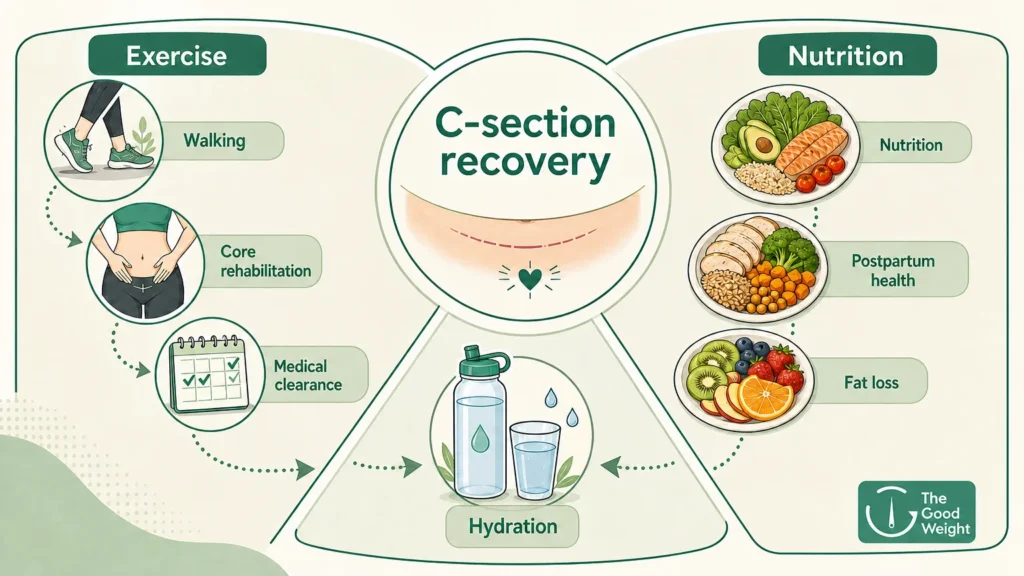
If you are looking at a persistent lower-belly shelf after delivery and wondering what you are doing wrong, you are not alone. Belly fat after cesarean can be frustrating because the area may look and feel different from the rest of your abdomen. But that shape is rarely explained by body fat alone, especially in the first weeks and months after birth.
A C-section is major abdominal surgery as well as childbirth. Your body may still be dealing with swelling, scar healing, weakened or stretched abdominal muscles, changed posture, disrupted sleep, and lower activity levels. These factors can overlap, so a belly that feels slow to change does not mean you have failed to eat well or exercise enough.
The most helpful question is not, “How do I get rid of this immediately?” It is, “What is contributing to this change, and what is safe and realistic for my stage of recovery?” A gradual plan that supports healing, strength, nutrition, and metabolic health is more useful than trying to force a rapid “bounce back.”
Why a C-section belly can look different
After pregnancy, the uterus gradually shrinks, fluid levels shift, and the abdominal wall begins adapting to a major physical change. Following a C-section, the incision and the tissues beneath it also need time to heal. Early swelling and tenderness around the scar are common, and C-section recovery instructions commonly emphasize protecting the incision and avoiding strain while healing.
The scar itself can affect how the lower abdomen sits. As it heals, the tissue may feel firm, numb, tight, or pulled in one area. Some women notice that tissue above the scar appears to fold or rest forward, even when they are losing weight elsewhere. This can be related to swelling, the way the scar attaches to deeper tissue, and the natural softness of postpartum skin – not simply an excess of fat.
Posture also matters more than many people realise. Feeding, carrying a baby, guarding a tender incision, and spending long periods sitting can encourage a rounded upper back and a pelvis that tips forward. That position can make the abdomen project more, particularly when the deep core and pelvic-floor muscles are still recovering. Sleep deprivation and reduced movement can further affect appetite, energy, and the ability to maintain regular meals.
Belly fat after cesarean: what weight loss can change
Sustainable fat loss can make a meaningful difference, but it is important to be clear about what it can and cannot do. When your overall body-fat level decreases, the abdomen often becomes smaller too. Better meal structure, regular movement, adequate protein, and medical support for metabolic concerns can all contribute to that process over time.
However, no eating plan or workout can selectively burn fat from only the lower abdomen. Your genetics, hormones, sleep, breastfeeding status, activity, and starting weight all influence where changes appear first. A smaller waist or looser clothes can be genuine progress even if the area above a C-section scar remains the last place you notice it.
What gradual fat loss may improve
A gradual calorie deficit, when appropriate for your recovery and feeding plan, may reduce the thickness of abdominal fat and improve how clothing fits. It can also support blood-sugar control, mobility, and energy when it is built around regular, nourishing meals rather than restriction. For women with insulin resistance, previous gestational diabetes, PCOS, or significant weight gain, personalised weight care may be particularly helpful.
Weight loss also often makes strengthening work feel easier. Walking becomes more comfortable, it may be easier to return to resistance training after clearance, and the abdominal wall is under less overall load. The goal is not to make your body look a certain way by a deadline; it is to support function and long-term metabolic health.
What fat loss may not fully change
Loose or stretched skin may improve slowly, but it may not disappear completely. Scar tethering – when a scar feels anchored to tissue below it – can also maintain a shelf-like contour despite weight loss. A qualified clinician or pelvic-health physiotherapist can assess whether discomfort, restricted movement, or scar sensitivity needs more specific care.
Another possible contributor is diastasis recti, a widening of the connective tissue between the abdominal muscles during pregnancy. It can change the shape and function of the abdomen, but a visible gap alone does not tell the full story. Research has found that diastasis recti is common in the postpartum period, and an assessment should focus on symptoms, muscle control, pressure management, and daily function – not appearance alone.
When it is too early to judge progress
The first six weeks after a C-section are primarily about healing, not fat loss. Even if you feel eager to become more active, your incision, pelvic floor, abdominal wall, sleep, and feeding demands are all still adjusting. Your own obstetrician’s advice should guide the pace, particularly if you had complications, high blood pressure, heavy bleeding, infection, or a difficult recovery.
For many women, the period from six weeks to three months is when a gentle routine becomes more realistic – provided they have medical clearance and symptoms are settling. ACOG advises that postpartum exercise can be resumed gradually when medically safe, with the timing tailored to your delivery, health, and recovery. This is a better framework than copying a social-media workout plan designed for someone else.
Breastfeeding can add another layer. It raises energy and fluid needs, while night feeds can make appetite and cravings less predictable. Aggressive dieting may leave you exhausted, make meal planning harder to sustain, and may be inappropriate for some breastfeeding women. Rather than aiming for rapid scale changes, focus first on consistent meals, hydration, recovery-friendly movement, and enough rest wherever possible.
The first steps that help most
A sensible plan does not need to be complicated. The first month or two of focused recovery is about building repeatable habits that respect your current capacity. If a plan makes you feel dizzy, increasingly sore, constantly hungry, or unable to care for yourself and your baby, it is too aggressive.
Start with medical clearance and symptom awareness
At your postpartum review, ask specific questions about walking, lifting, exercise, scar discomfort, bleeding, and core work. Tell your clinician if an activity causes pain at the incision, heaviness in the pelvis, urine leakage, abdominal bulging, or bleeding that increases after activity. These are useful clinical details, not something to push through.
Once you are cleared, start below the level you think you can manage. That may mean a five- to 10-minute easy walk, followed by a rest, rather than a long outing that leaves you sore the next day. Gradual physical activity after pregnancy is supported by postpartum exercise guidance that encourages women to build activity based on their health and recovery.
Build walking before demanding workouts
Walking is often the most practical place to begin because it supports circulation, mood, confidence, and general fitness without requiring a gym. Aim for consistency first: a short walk most days, even if it is broken into two or three small sessions. Add a few minutes or a little pace only when you are recovering comfortably between walks.
At around six to 12 weeks, some women can progress to low-impact strength training with clearance. The focus should be on full-body function: supported squats, rows, gentle hip work, and controlled breathing rather than high-impact intervals. If you see midline doming or feel downward pelvic pressure, scale back and seek assessment instead of forcing repetitions.
Use gentle core rehabilitation, not endless crunches
Early core work is less about “tightening” the stomach and more about reconnecting breath, rib position, pelvic floor, and deep abdominal control. A pelvic-health physiotherapist can teach movements suited to your body, especially after a C-section or if you have diastasis symptoms. This is often more productive than doing planks, sit-ups, or intense abdominal challenges before you can manage pressure well.
Simple examples may include slow exhale-based deep-core engagement, heel slides, supported bridges, and posture work – only if these are comfortable and approved for your stage of healing. Progress is not measured by soreness. Better control during lifting, walking, feeding, and getting out of bed is a meaningful sign that your body is rebuilding capacity.
Make meals regular and protein-forward
Postpartum nutrition does not require “clean eating” or skipping meals. A practical starting structure is three balanced meals and one or two planned snacks, depending on hunger and feeding needs. Include a protein source at each meal – such as eggs, curd, dal, beans, fish, chicken, tofu, paneer, or Greek yoghurt – along with vegetables or fruit and a satisfying carbohydrate such as rice, roti, oats, millet, potatoes, or whole-grain bread.
For example, breakfast could be eggs or paneer with roti and fruit; lunch could be dal, vegetables, rice, and curd; and dinner could be fish, chicken, tofu, or beans with vegetables and a carbohydrate portion. This is easier to maintain than trying to eat very little all day and then feeling intensely hungry at night. The Good Weight’s approach to nutrition-led, personalised weight management can help turn these principles into a plan that fits your preferences, schedule, and health history.
Protect hydration, rest, and basic planning
Keep water within reach during feeds and meals, and include soups, milk, fruit, and other fluids if plain water is difficult to remember. Hydration will not “melt” belly fat, but it supports recovery and may make constipation, headaches, and fatigue easier to manage. If you are breastfeeding, discuss individual fluid and nutrition needs with your care team rather than following blanket rules online.
Choose one small planning habit each week. That might be keeping protein-rich snacks at home, preparing a simple dal or vegetable dish in advance, or asking a family member to handle one grocery task. Sustainable weight loss usually comes from a routine that works on an exhausting Tuesday, not from a perfect plan that lasts four days.
When more specialised support makes sense
A routine postpartum check may be enough for many women, but extra support is appropriate when symptoms persist or progress feels unusually difficult. Seeking help is not overreacting; it can prevent you from spending months on the wrong strategy.
Consider a doctor-led review or pelvic-health assessment if you have:
- Persistent or worsening scar pain, redness, discharge, or a painful pulling sensation
- Pelvic heaviness, urine leakage, bowel difficulties, or pain during movement
- Abdominal doming, marked weakness, or trouble getting out of bed or lifting safely
- Severe fatigue, low mood, dizziness, or difficulty eating regularly
- A history of gestational diabetes, PCOS, thyroid concerns, or signs of blood-sugar instability
- Repeated attempts at dieting that feel unsustainable or lead to overeating later
A clinician can review recovery, sleep, medications, blood pressure, glucose risk, thyroid symptoms, and nutrition needs. When appropriate, diagnostic testing as part of a personalised metabolic assessment can help identify factors that a generic postpartum diet cannot address.
Why surgery is often the wrong first question
Can surgery remove the shelf above a C-section scar?
Body-contouring procedures can address certain concerns later, but they are not a first-line solution for a healing postpartum body. Surgery cannot replace scar recovery, pelvic-floor rehabilitation, gradual strength building, or treatment for fatigue and metabolic issues. It also involves its own recovery period, costs, risks, and decision-making process.
If the main issue is body fat, a medically guided weight-management plan may be the appropriate first step. If the main issue is scar discomfort or abdominal-wall function, rehabilitation or clinical review may be more useful. If loose skin or contour remains a concern after recovery, weight stabilisation, and family-planning decisions are clearer, then a specialist can discuss options realistically.
What about non-surgical fat reduction?
Non-surgical body-contouring treatments may suit selected adults with localised fat concerns, but they are not treatment for postpartum healing, diastasis, or a tethered scar. They also do not replace sustainable nutrition or address the medical drivers of weight gain. Before considering any procedure, it is worth understanding the role and limits of non-surgical fat-reduction options in a broader care plan.
The responsible sequence is simple: heal, assess symptoms, rebuild strength, support nutrition and metabolic health, then revisit appearance-focused decisions if they still matter to you. Waiting is not “doing nothing.” It gives your body and your care team better information about what is likely to improve with time and what may need targeted treatment.
Set a realistic 12-week expectation
Over 12 weeks, useful progress may look like more energy through the day, regular meals, a comfortable walking habit, improved core control, less fear around movement, and steadier waist measurements. The scale may change slowly, especially during breastfeeding or disrupted sleep, and that does not erase the value of these changes. A flat stomach is not a medically meaningful deadline, and it is not the only measure of recovery.
If you feel stuck, have PCOS, diabetes risk, severe fatigue, or concerns about your C-section recovery, consider a doctor-led postpartum weight consultation. The Good Weight can help you explore personalised weight care that puts healing, nutrition support, and lasting metabolic health before quick fixes.