
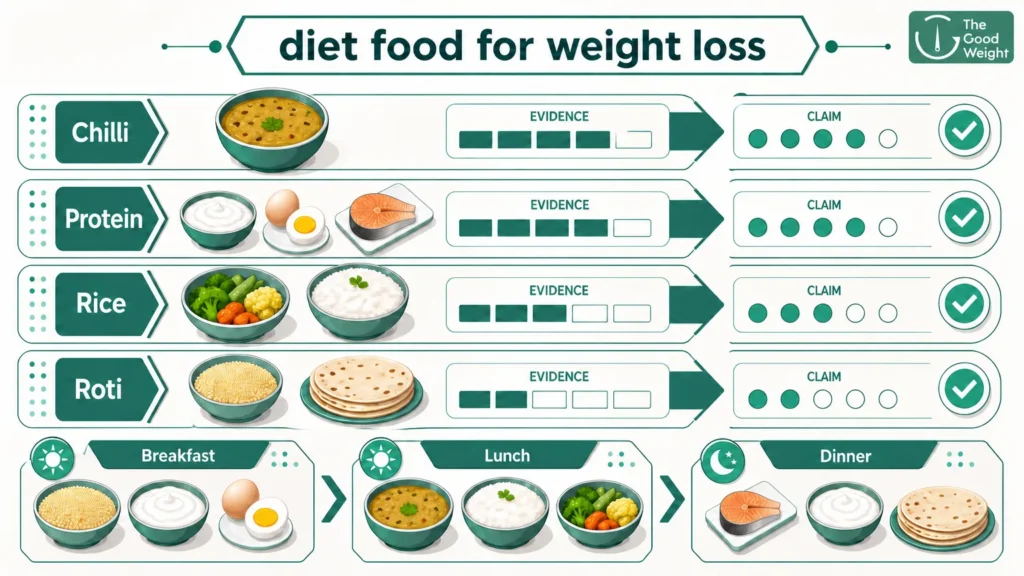
“Which foods boost metabolism for weight loss in India today?” is a common question, especially when social media posts promise that a spice, drink, or “fat-burning” food can change body weight quickly. It is understandable to look for a simple answer when weight loss feels difficult. But the more useful answer is reassuring: no single food meaningfully transforms metabolism on its own, and you do not need expensive supplements or highly restrictive food rules to make progress.
The most effective diet food for weight loss is usually food that helps you stay satisfied, nourished, and consistent with an eating pattern you can maintain. For many people in Chennai and across India, that can include familiar meals built around dal, vegetables, curd, eggs, fish, millet, rice, roti, fruit, nuts, and thoughtfully used oils. Sustainable weight loss also depends on activity, sleep, stress, health conditions, medicines, and the support available to you.
Can a single food really speed up metabolism enough to cause weight loss?
Metabolism refers to the processes through which the body uses energy to keep you alive and functioning. Most daily energy use comes from basal metabolic rate: the energy needed for essential functions such as breathing, circulation, and maintaining body temperature. Physical activity, daily movement, and the energy used to digest food make up the rest. Food choices matter, but their greatest value is not a dramatic metabolic “switch.”
| Common claim | What the evidence-based view is |
|---|---|
| “Chilli, lemon water, or green tea melts fat.” | These may fit into an enjoyable eating pattern, but they do not cause meaningful fat loss by themselves. |
| “Eating very little resets metabolism.” | Severe restriction is difficult to sustain and can increase hunger, reduce meal quality, and contribute to cycles of weight loss and regain. |
| “Protein speeds metabolism enough to cancel overeating.” | Protein takes more energy to digest than carbohydrate or fat and can support fullness, but overall intake and consistency still matter. |
| “Rice or roti must be eliminated.” | Carbohydrate foods can be included in portions that suit your needs, especially when paired with protein, vegetables, and fibre. |
The body does use some energy to digest and absorb food, often called the thermic effect of food. Protein tends to have a higher thermic effect than carbohydrate or fat, but this is not a licence to rely on protein shakes or eliminate entire food groups. The practical benefit of protein-rich meals is often that they can be more satisfying and can help preserve lean mass during weight loss when combined with appropriate activity.
What matters over weeks and months is the overall pattern. In a large dietary study, participants lost weight across different macronutrient approaches when the plan focused on reduced energy intake, food quality, and sustained adherence rather than a single “best” ratio of carbohydrate, fat, and protein. This is why a plan built from meals you genuinely enjoy is more useful than chasing metabolism boosters.
A better question is: “Which foods help me feel full enough to eat consistently within my needs?” The answer is usually minimally processed, nutrient-dense food with enough protein and fibre, rather than one supposedly special ingredient. The diet and weight-loss support offered by The Good Weight can help translate this principle into meals that fit your culture, schedule, health needs, and preferences.
Which everyday foods can make a weight-loss diet more filling and balanced?
A supportive weight-loss diet does not require “perfect” foods. Instead, aim to include food groups that contribute protein, fibre, vitamins, minerals, and satisfying flavour. The balance of foods should be personalised: someone with diabetes, kidney disease, PCOS, digestive symptoms, pregnancy-related needs, or food allergies may need specific advice from a clinician or dietitian.
Protein-rich foods
Protein can make meals more satisfying and helps support muscle while body weight is changing. Familiar vegetarian options include moong dal, toor dal, chana, rajma, cowpeas, soy chunks, tofu, paneer, milk, and curd. Non-vegetarian choices can include eggs, fish, chicken, and leaner preparations of meat.
A simple approach is to include a clear protein source at each main meal instead of treating it as a small side dish. For example, add egg bhurji beside idli, use a generous serving of sambar with dosa, choose grilled fish with rice and vegetables, or build a bowl around chana and vegetables. The portion that is right for you depends on your overall intake, medical history, and appetite, not on a one-size-fits-all rule.
High-fibre vegetables and pulses
Vegetables and pulses add volume, texture, and nutrients without making every meal heavily energy-dense. Fibre can also slow eating and support fullness, particularly when meals contain a variety of whole foods. Public-health guidance consistently supports making fruit and vegetables a regular part of an overall healthy eating pattern, rather than treating them as optional garnish.
Use what is accessible and appealing: keerai, beans, cabbage, cauliflower, carrot, beetroot, brinjal, bottle gourd, ridge gourd, okra, cucumber, tomatoes, mushrooms, and drumstick can all work. Rotate dry vegetable poriyal, kootu, sambar vegetables, salads, roasted vegetables, or mixed vegetable curries. If vegetables feel boring, flavour matters – mustard seeds, curry leaves, ginger, garlic, pepper, cumin, coriander, lime, and measured amounts of coconut or groundnut can make a meal more satisfying.
Pulses deserve particular attention because they provide both protein and fibre. Dal, rasam with dal, sundal, chole, rajma, and sprouted moong can make a meal more substantial than a carbohydrate-only plate. If you are increasing pulses after a low-fibre diet, add them gradually and drink adequate water to reduce discomfort from bloating.
Fruits and whole grains
Fruit is not a weight-loss obstacle. Whole fruit provides water, fibre, and micronutrients, and it is generally more filling than juice. Guava, orange, apple, papaya, watermelon, pomegranate, banana, mango, and seasonal local fruit can all have a place; the most helpful choice is often the fruit you will eat regularly instead of a packaged sweet snack.
Whole grains and traditional staples can also fit. Brown rice, red rice, hand-pounded rice, whole-wheat atta, oats, ragi, jowar, bajra, and millets offer variety, but none needs to be treated as compulsory or superior in every situation. White rice can still be part of a balanced meal when the serving is appropriate and the plate includes vegetables and protein. The goal is to improve the meal as a whole, not to create fear around one staple food.
Healthy fats used with awareness
Fats are necessary for health and make food taste satisfying, but they are energy-dense. Nuts, seeds, groundnuts, sesame, coconut, avocado, and oils such as groundnut, mustard, sesame, rice bran, and olive oil can all be used thoughtfully. A small handful of nuts or a measured spoon of oil can be more useful than pouring freely from the bottle because “healthy” does not mean unlimited.
Rather than removing fat entirely, notice where it is added without improving fullness: repeated frying, extra ghee or butter, creamy gravies, bakery foods, namkeen, and large restaurant portions. This is not about avoiding cultural foods. It is about choosing the preparation and frequency that support your broader goals while leaving room for foods you enjoy.
How can I build diet meals for weight loss from the foods I already eat?
A balanced meal framework is more adaptable than a rigid menu. Begin with a protein source, add vegetables or another fibre-rich component, choose a carbohydrate portion that matches your hunger and activity, and use flavourful additions intentionally. These examples are frameworks, not prescribed calorie plans; individual needs vary widely.
Breakfast framework: protein plus fibre plus a familiar staple
Start with a South Indian breakfast base, then add a visible protein source and fibre. For example, have two or three idlis with a bowl of vegetable sambar, a serving of egg bhurji or curd, and mint or tomato chutney in a moderate quantity. Alternatively, make vegetable oats or ragi dosa with sambar and paneer, tofu, or eggs on the side.
If you prefer poha or upma, add peas, vegetables, roasted chana, curd, or an egg rather than making the meal mostly refined grains. A piece of fruit can be included if it helps you feel satisfied until lunch. Tea or coffee can also fit, but reducing sugar and avoiding frequent high-calorie add-ons may be more important than changing the beverage itself.
Lunch framework: a balanced Indian plate
Build lunch around one carbohydrate serving, whether that is rice, two rotis, millet, or another staple you enjoy. Add a protein-rich dish such as dal, sambar with extra dal, chana, rajma, curd, fish curry, grilled chicken, egg curry, tofu, or paneer. Then include two or more vegetable components, such as poriyal and a vegetable-based sambar, salad, kootu, or a cooked sabzi.
For example, a practical meal could be rice with rasam, a bowl of keerai dal, beans poriyal, cucumber, and curd. Another could be two rotis with chole, mixed vegetable sabzi, and salad. These meals are not “diet food” because they are bland or tiny; they work because the plate is more balanced, filling, and easier to repeat.
Dinner framework: lighter in routine, not deprived
Dinner does not have to be dramatically smaller than lunch, but a meal that is satisfying without leaving you overly full can support sleep and routine. Consider vegetable-rich dal with one or two rotis and curd, fish or chicken with sautéed vegetables and a modest rice serving, or a bowl of vegetable khichdi with raita and salad. If you eat late because of work or commuting, planning a substantial evening snack can prevent arriving home extremely hungry.
Flavour remains important at dinner. Use lemon, herbs, spices, onion, tomato, pepper, garlic, and yoghurt-based marinades to make simple ingredients enjoyable. The best meal plan is one that leaves you feeling nourished rather than punished, because adherence – not novelty – is what turns a healthy choice into a habit.
What should I change if my body weight has stayed the same despite eating healthier?
A stable scale can be frustrating, but it does not prove that you have “damaged” your metabolism. Body weight naturally fluctuates with hydration, sodium intake, bowel habits, menstrual cycles, and changes in exercise. Look at trends over several weeks, as well as waist measurements, energy levels, strength, sleep, and how your clothes fit.
Use this checklist with curiosity rather than self-blame:
- Review portions and extras. Healthy foods can still add up when oils, nuts, cheese, coconut, rice, restaurant gravies, or snacks are larger than you realise. Try serving food onto a plate, measuring cooking oil briefly, and noticing whether you are eating while distracted.
- Check liquid calories. Sugary tea or coffee, juices, soft drinks, alcohol, sweet lassi, shakes, and frequent café drinks may contribute energy without the fullness of a meal. Whole fruit and water are often more satisfying choices.
- Notice meal timing and hunger patterns. Skipping meals may lead to intense evening hunger for some people. A regular meal pattern with protein and fibre can reduce the urge to graze or overeat later.
- Consider movement beyond exercise. Walking, household activity, standing, strength training, and planned exercise all contribute to energy use and metabolic health. Healthy eating and regular physical activity together support weight management, rather than food changes alone.
- Protect sleep and manage stress. Persistent poor sleep and high stress can affect appetite, food choices, energy, and the ability to maintain routines. Addressing them is part of weight care, not a distraction from it.
- Review medicines and health conditions. Some medicines and conditions, including thyroid disorders, depression, PCOS, sleep apnoea, and diabetes-related concerns, can affect weight or make change harder. Do not stop prescribed medicine without medical advice.
If the scale has not changed but your meals, fitness, or blood-sugar habits have improved, those gains still matter. If progress has stalled for several months despite consistent efforts, an individual review may identify adjustments that are more appropriate than further restriction.
What does healthy weight loss look like beyond choosing the right foods?
Healthy weight loss is usually gradual, flexible, and connected to improvements in metabolic health rather than appearance alone. A realistic plan allows for family meals, festivals, work travel, appetite changes, and occasional foods chosen purely for enjoyment. It also helps you build skills: planning meals, recognising hunger and fullness, cooking practical options, and returning to your routine after an off-plan meal without guilt.
For people living with overweight or obesity, even modest weight reduction can improve health markers, and structured treatment can be appropriate when lifestyle changes alone have not been enough. Evidence-based obesity treatment may include nutrition, physical activity, behavioural support, medicines, or procedures depending on individual needs. This is particularly relevant if you have diabetes risk, fatty liver disease, high blood pressure, sleep apnoea, or joint pain.
A personalised plan may include medical assessment, nutrition support, and, where clinically appropriate, treatment options such as GLP-1 medicines or endoscopic procedures. These are not replacements for food habits, but they can be part of comprehensive care for the right person. Explore doctor-led medical weight-loss support when you need a plan that considers your health history as well as your plate.
When should I seek doctor-led support instead of trying another diet on my own?
I lose weight and regain it repeatedly. What should I do?
Repeated regain is common and is not a personal failure. It often signals that the previous plan was too restrictive, did not account for hunger and lifestyle pressures, or did not address medical and behavioural factors. A clinician can help you identify a more sustainable approach and discuss whether nutrition counselling, structured follow-up, medication, or another treatment pathway may help.
Which symptoms need medical assessment?
Seek medical advice if you have rapid or unexplained weight change, severe fatigue, persistent constipation or diarrhoea, excessive thirst or urination, irregular periods, snoring with daytime sleepiness, breathlessness, chest pain, or worsening mood. These symptoms do not always indicate a weight-related condition, but they deserve proper assessment rather than self-treatment with another restrictive diet. If you already have diabetes, high blood pressure, kidney disease, liver disease, or a history of eating-disorder symptoms, personalised guidance is especially important.
Can medicines or health conditions affect weight?
Yes. Some medicines used for mood disorders, seizures, diabetes, inflammation, hormones, and other conditions can affect appetite or weight. Conditions such as hypothyroidism, PCOS, sleep apnoea, and depression may also influence weight management. A doctor can review your history and test only when clinically indicated, helping you avoid both missed diagnoses and unnecessary testing.
How can nutrition support fit alongside medical treatment?
Nutrition support is valuable whether your care involves lifestyle changes alone, medication, or a procedure. It helps you meet protein and nutrient needs, plan satisfying meals, manage side effects where relevant, and maintain results over time. For people considering procedures, post-procedure weight-loss guidance can help make food progression and long-term habits safer and more practical.
No single food boosts metabolism enough to produce lasting weight loss on its own. The most useful diet food for weight loss is food that helps you build balanced, satisfying meals consistently – alongside movement, sleep, stress support, and appropriate medical care.
If you are in Chennai and want a personalised eating and metabolic-health plan, book a doctor-led assessment with The Good Weight. You do not need to rely on restrictive food rules or metabolism promises to work towards sustainable weight loss.