
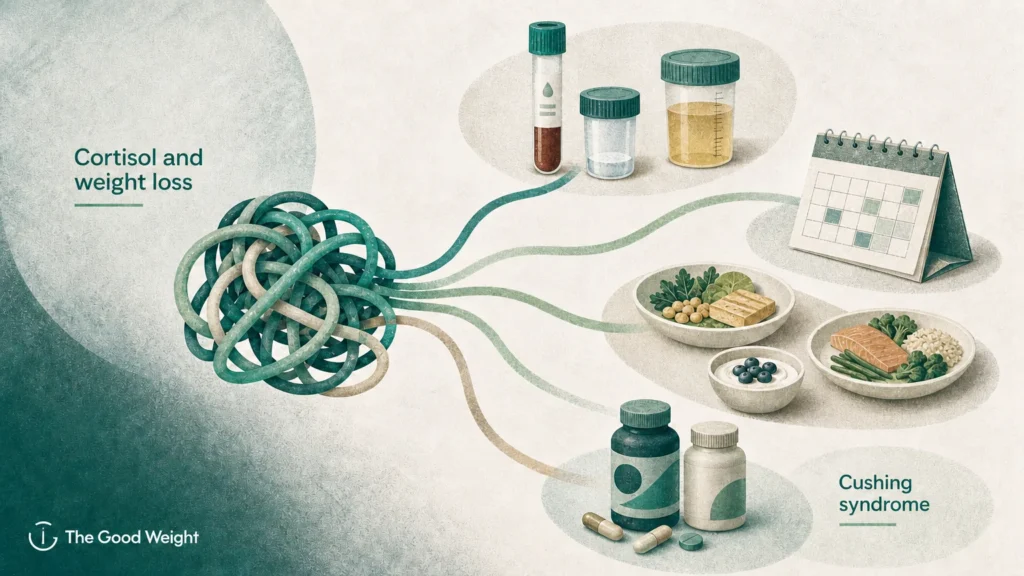
Myth: Weight gain, abdominal fat or persistent tiredness usually means your cortisol is “out of balance.” Fact: Cortisol is rarely the sole explanation for weight gain or fatigue, and these symptoms alone cannot identify a hormonal disorder. Social-media advice about cortisol and weight loss often turns a complex health concern into a simple sales pitch for tests, supplements or restrictive routines. A more useful approach is to understand how stress affects daily life, recognise symptoms that deserve assessment, and choose support that fits your circumstances.
“Adrenal fatigue” is another label worth questioning. The Endocrine Society states that adrenal fatigue is not a recognised medical condition and has no scientifically supported diagnostic test. That does not mean your exhaustion, sleep difficulties or weight concerns are imaginary. It means those symptoms deserve a proper assessment rather than an unsupported diagnosis that could delay appropriate care.
Cortisol and weight loss: what stress can realistically change
Cortisol is a normal, necessary hormone made by the adrenal glands. It helps regulate processes including the stress response, blood pressure and blood glucose, and its level changes across the day. As the National Institute of Diabetes and Digestive and Kidney Diseases explains, cortisol supports several essential body functions. The goal is not to eliminate cortisol or keep it permanently low.
Stress can nevertheless make weight-care routines harder to maintain. A demanding working week may leave less time for shopping, cooking, movement or recovery, while disrupted sleep can make the next day feel more difficult. Some people eat more when distressed; others lose their appetite or miss meals. Neither response is evidence, by itself, of abnormal cortisol production.
Research also needs careful interpretation. An observational study found an association between hair cortisol concentrations and measures of adiposity, but an association does not establish that cortisol alone caused weight gain. Nor does it show that an individual needs cortisol-lowering treatment or a commercial hair test. Population research cannot replace an assessment of your symptoms, medicines, sleep and health history.
In practical terms, stress may affect several connected parts of daily life:
- Appetite and meal patterns: Rushed days can mean skipped meals followed by intense hunger later. Keeping convenient meals available may help more than trying to suppress appetite through another rule. The aim is a workable routine, not perfect eating.
- Sleep and recovery: Worry, irregular schedules and late-night work can reduce opportunities for restorative sleep. Poor sleep deserves attention in its own right, rather than being treated as proof of a hormone problem. Loud snoring or witnessed breathing pauses also warrant discussion with a clinician.
- Movement and follow-through: Exhaustion can make planned exercise or appointments harder to manage. Reducing the size of a goal may make it more sustainable during a difficult period. Missing a session is not a failure or evidence that your metabolism is “broken.”
Stress support can improve wellbeing and make healthy routines more achievable, but it cannot promise a particular amount of weight loss. Evidence-based weight care considers nutrition, activity, behavioural support and, where appropriate, medication or surgery – not simply hormone “balancing.” These are among the established approaches to treating overweight and obesity. The right combination depends on health needs, preferences and clinical assessment.
A checklist before buying a cortisol test
A one-off cortisol blood test is generally not useful for explaining ordinary weight gain or tiredness. Cortisol varies with timing and circumstances, so an isolated result cannot reliably answer whether stress caused a change in weight. When clinicians suspect Cushing syndrome, they use specific tests such as late-night salivary cortisol, 24-hour urinary free cortisol or dexamethasone suppression testing. An untargeted result may instead create uncertainty, anxiety and unnecessary follow-up.
Before paying for a test advertised online, ask these questions:
- What condition is being investigated? “Cortisol imbalance” is too vague to explain what a test should establish. Ask whether the concern is a recognised disorder, such as Cushing syndrome or adrenal insufficiency. Testing should address a clinical question, not simply validate a marketing label.
- Is this the right test for that condition? Saliva, blood and urine tests have legitimate uses, but they are not interchangeable. Timing, collection instructions and medicines can affect interpretation. A commercial “stress panel” is not automatically equivalent to an endocrine investigation.
- Who will interpret the result? A number outside a laboratory range does not, on its own, establish a diagnosis. Ask who will review the result alongside your symptoms and medical history. Be cautious when the same seller interprets the test and immediately recommends its own supplements.
- Would the result change appropriate care? If the promised outcome is a generic diet, an expensive supplement bundle or a claim to diagnose “adrenal fatigue,” pause. The Endocrine Society notes that tests marketed for adrenal fatigue are not supported by good scientific evidence. A consultation may be a more useful first investment.
This does not mean cortisol blood tests are never appropriate. For suspected adrenal insufficiency, clinicians may use a carefully timed blood sample and further testing, depending on the situation. The distinction is between targeted medical investigation and screening ordinary weight difficulty with a single hormone measurement. Let the clinical concern determine the test, rather than buying a test and searching for a diagnosis afterwards.
Which symptoms should prompt formal evaluation?
Weight gain, abdominal fat and fatigue are common and nonspecific. They should not be dismissed, but they do not automatically suggest an adrenal disorder. Cushing syndrome and adrenal insufficiency involve different problems – too much cortisol and too little cortisol, respectively – and require different investigations. Use the following guide to decide when to seek care, not to diagnose yourself.
Arrange an assessment for progressive features suggestive of Cushing syndrome
Seek a medical appointment if weight gain occurs alongside features such as wide purple stretch marks, easy bruising, fragile skin or increasing muscle weakness, particularly difficulty rising from a chair or climbing stairs. New or worsening high blood pressure, elevated blood glucose or unexplained fractures can strengthen the reason for assessment when they occur with these features. NIDDK lists these among the characteristic signs and symptoms of Cushing syndrome. Abdominal weight gain alone is much less informative than a pattern of progressive changes.
Bring a complete medication history to that appointment. Prolonged exposure to glucocorticoid medicines can cause Cushing syndrome, and relevant products may include tablets, injections, inhalers and creams. NIDDK identifies long-term, high-dose glucocorticoid treatment as a common cause. Do not stop prescribed steroids suddenly; ask the prescriber how they should be managed.
Seek prompt assessment for possible adrenal insufficiency
Persistent fatigue accompanied by unintentional weight loss, reduced appetite, nausea, abdominal discomfort or dizziness on standing deserves clinical assessment, especially when symptoms are worsening. Unusual skin darkening or marked salt craving should also be mentioned. The Endocrine Society distinguishes real adrenal insufficiency from the unsupported concept of adrenal fatigue. Symptoms overlap with other illnesses, so neither an online questionnaire nor a supplement trial can establish the cause.
Tell the clinician if symptoms began after reducing, missing or stopping steroid medication. That history can change the urgency and type of assessment needed. Do not try to correct suspected low cortisol with an “adrenal support” product or borrowed medication. Treatment needs to match a confirmed or clinically suspected medical problem.
Get emergency help for severe illness
Severe weakness with repeated vomiting, severe abdominal pain, confusion, fainting or collapse requires emergency assessment, particularly in someone with known adrenal insufficiency or recent steroid withdrawal. These symptoms can indicate an adrenal crisis or another serious illness. Do not wait for a routine appointment or a home test result. Anyone already prescribed an adrenal emergency plan should follow it while obtaining emergency help.
Book a routine review for persistent, unexplained symptoms
Even without the warning features above, ongoing fatigue or unexplained weight change deserves attention. A clinician can assess possible contributors such as sleep problems, medication effects, mood, nutrition, thyroid disease or other medical conditions. The appropriate investigations depend on the history and examination, rather than a standard hormone package. If snoring and daytime sleepiness are part of the picture, understanding when sleep-apnoea and metabolic assessment may help can prepare you for that conversation.
A supportive action plan for this week
Start by choosing one or two changes that reduce strain rather than adding another demanding programme. These steps are not treatments for Cushing syndrome or adrenal insufficiency, and they should not delay assessment of concerning symptoms. Their purpose is to make everyday care more manageable while you seek help where needed. Progress can mean greater consistency or better energy, not only a change on the scales.
-
Protect a realistic sleep routine. Choose a reasonably consistent waking time and create a short wind-down period where possible. If shift work or caregiving limits your options, focus on protecting an achievable sleep opportunity. Persistent insomnia, snoring or daytime sleepiness deserves discussion rather than self-blame.
-
Make meals easier to access. Keep a few dependable options available, such as dal with rice and vegetables, curd with fruit, or eggs with wholegrain toast. Regular access to food can reduce the need to improvise when exhausted. This Indian eating guide for healthy weight loss offers a practical starting point without requiring a “cortisol diet.”
-
Choose manageable movement and support. A short walk or gentle activity may fit your current capacity better than an intense challenge. Ask someone for practical help with meals, childcare or company if that would make a difference. Movement should support health, not punish eating or compensate for stress.
-
Prepare for a useful consultation. Note when symptoms started, how they have changed, and any associated sleep or appetite changes. Bring your medication and supplement list, including steroid products and recent dose changes. Discuss persistent symptoms and medication concerns before changing treatment yourself.
The central message is reassuring but important: stress can affect health behaviours, yet cortisol is rarely the sole explanation for weight change. Avoid buying tests or supplements on social-media claims alone, and bring persistent symptoms, medications and relevant health history to a medical consultation. For adults in Chennai, The Good Weight’s doctor-led medical weight care can provide a starting point for personalised assessment and nutrition support, with specialist referral where appropriate. You deserve care based on your whole health – not a single hormone label.