
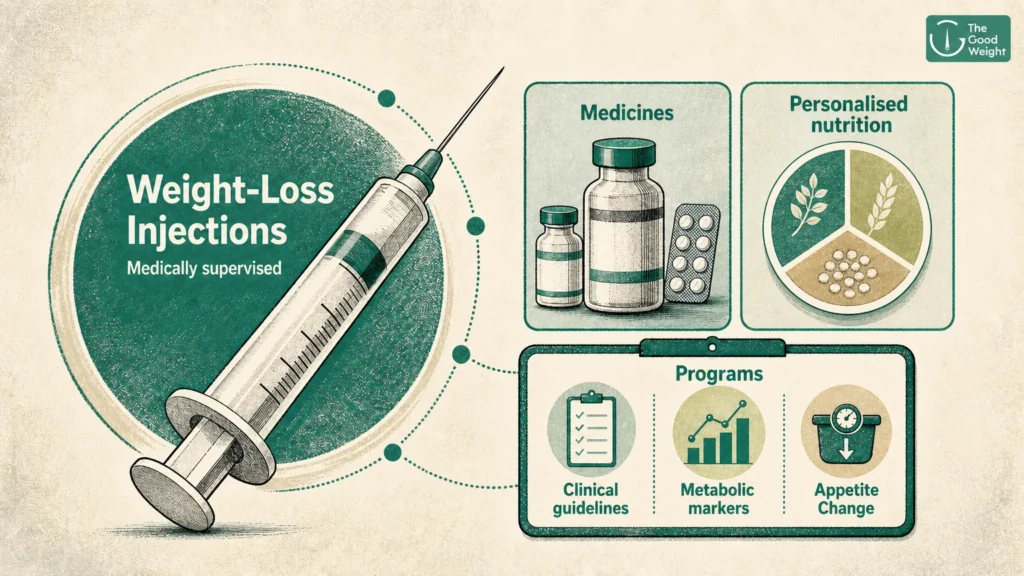
Interest in losing weight by injections has grown alongside conversations about “food noise,” reduced appetite, and the feeling of being able to stop eating when comfortably full. For many people, that change can sound life-changing after years of dieting, regaining weight, or feeling that hunger dominates everyday decisions.
There is a legitimate medical basis for some injectable weight-management medicines. In a major clinical trial, participants taking weekly semaglutide alongside lifestyle support lost an average of 14.9% of their starting body weight over 68 weeks, compared with 2.4% in the placebo group. Another trial found that tirzepatide produced average weight reductions of up to 20.9% at 72 weeks, depending on dose.
However, trial results do not mean that an injection is appropriate for every person – or that medication alone creates sustainable results. The safest route is a medically supervised programme that assesses your health profile, reviews risks, protects nutrition and muscle mass, and stays involved when appetite or side effects change.
What Do People Mean by “Weight-Loss Injections”?
The phrase “weight-loss injection” is often used broadly online. It can refer to evidence-based prescription medicines, vitamin injections marketed for slimming, unregulated products, or medications obtained without a clinical assessment. These are not equivalent options, and treating them as interchangeable can lead to poor decisions.
Evidence-based metabolic medicines
The most widely discussed prescription medicines for weight management act on gut-hormone pathways involved in appetite, fullness, digestion, and blood-sugar regulation. GLP-1 receptor agonists, and newer medicines that act on more than one metabolic pathway, may help some people feel satisfied with less food and experience fewer persistent thoughts about eating.
These treatments are intended for chronic weight management in appropriately selected adults, not for cosmetic use alone. For example, the FDA’s approval criteria for semaglutide for chronic weight management include adults with obesity, or adults who are overweight and have at least one weight-related condition such as high blood pressure, type 2 diabetes, or abnormal cholesterol levels. The medicine was approved as an addition to a reduced-calorie diet and increased physical activity, not as a replacement for nutrition or movement.
A doctor should decide whether a medicine is clinically appropriate based on your full history, current health, and locally applicable prescribing rules. In India, availability, approved indications, and the specific product offered may differ, which makes qualified medical review especially important.
The “skinny shot” label is not a diagnosis
Marketing terms such as “skinny shot” oversimplify a clinical decision. A person with PCOS, insulin resistance, type 2 diabetes, sleep apnoea, or a long history of weight cycling may need a different treatment plan from someone who is mainly trying to lose a small amount of weight for an event.
Similarly, vitamin B12, lipotropic, or other wellness injections should not be presented as equivalent to clinically studied anti-obesity medicines. They may have a role in treating a documented deficiency, but they do not have the same evidence base for long-term weight management. Ask the provider to name the medicine, explain why it is appropriate for you, and describe the evidence behind it.
Avoid unclear sourcing and self-dosing
An injection should never be chosen only because it is trending on social media or appears easy to obtain. Products sold without clear prescription oversight, unclear storage conditions, or unverified dosing instructions create avoidable risks. Regulators have specifically reported dosing errors with compounded semaglutide products, including cases where people used too much medication because they misunderstood vial-and-syringe measurements.
A reputable clinic should be able to tell you exactly what product is being prescribed, how it is supplied, how it should be stored, and whom to contact if you have a concerning symptom.
The Medical Checklist Before Starting
Losing weight by injections begins with deciding whether treatment is suitable – not with selecting a dose. A careful eligibility review helps identify whether an injectable medicine may support your health goals, whether another approach is more appropriate, and what needs attention before treatment starts.
Weight, health history, and realistic goals
A clinician will usually review your BMI, waist measurement where relevant, weight trajectory, and previous attempts at weight management. BMI is only one part of the picture; a person’s health risks, body composition, metabolic status, and history of weight regain also matter.
Discuss what you want to improve beyond the number on the scale. For some people, the priorities may be better blood-sugar control, easier mobility, improved PCOS symptoms, reduced fatty liver risk, or more energy. Setting a health-based goal can make the programme more useful than chasing an arbitrary target weight.
Blood sugar and metabolic markers
Baseline testing may include blood glucose or HbA1c, lipid levels, liver markers, kidney function, blood pressure, and other tests based on your history. This is particularly important for people with diabetes, PCOS, high cholesterol, fatty liver disease, or a family history of metabolic illness.
If you use insulin, sulfonylureas, or other glucose-lowering medicines, your prescribing doctor must review them carefully. Lower food intake and changes in weight can affect blood-glucose management, so medication adjustments may be needed. This is one reason a weight-loss prescription should not sit separately from the rest of your medical care.
Eating patterns and dieting history
A consultation should explore how you currently eat: meal timing, protein intake, emotional eating, binge-eating symptoms, late-night hunger, work schedules, vegetarian food preferences, and cultural or family eating patterns. Reduced appetite can be helpful, but it does not automatically teach someone how to build meals that meet their nutritional needs.
Tell the clinician if you have a history of restrictive eating, binge eating, purging, frequent fasting, or severe anxiety around food. These concerns deserve sensitive assessment and may change the safest treatment plan. Medication should support a healthier relationship with food, not intensify fear or under-eating.
Current medicines, pregnancy, and clinical red flags
Bring a complete medication and supplement list, including thyroid treatments, diabetes medicines, oral contraceptives, psychiatric medicines, steroids, and herbal products. Your clinician should also ask about personal or family history of certain thyroid cancers, pancreatitis, gallbladder disease, significant digestive disorders, and kidney concerns.
Pregnancy and breastfeeding require particular care. Weight-loss medicines are generally not used during pregnancy, and people planning pregnancy should discuss timing and contraception with their doctor before starting. The current prescribing information for semaglutide includes important warnings, contraindications, and guidance on when treatment should be stopped before a planned pregnancy.
Seek prompt medical advice rather than experimenting independently if you have severe or persistent abdominal pain, repeated vomiting, signs of dehydration, fainting, very low blood sugar, or new severe mood symptoms.
What a Supervised Programme Should Include Beyond the Prescription
A prescription is one component of care. The strongest programmes combine medical supervision with personalised nutrition, practical habit support, and regular follow-up. That structure helps ensure that appetite reduction leads to improved health rather than simply eating too little.
A personalised nutrition plan
When portions become smaller, food quality matters more. A dietitian or qualified nutrition professional should help you build meals around protein, fibre, fluids, and micronutrient-rich foods that suit your preferences and medical needs. This is especially valuable for women managing PCOS, people with diabetes, and those following vegetarian or regional Indian diets.
Protein targets should be individualised according to body size, kidney health, activity level, and overall calorie intake. In practical terms, the plan may include protein at each meal – such as dal with curd, eggs, paneer, fish, chicken, tofu, Greek yoghurt, or a clinically appropriate supplement if needed – rather than relying on one large evening meal when appetite is already low.
For a more structured foundation, a clinician may combine medication with diet and weight-loss support that makes healthy eating practical for your home, schedule, and health conditions.
Muscle-preservation basics
Weight loss can include loss of lean mass as well as fat mass. That is why adequate protein, resistance training suited to your ability, and gradual progression matter. You do not need an extreme workout routine; starting with supervised strength exercises, body-weight movements, resistance bands, or gym-based training can help preserve function as weight changes.
The aim is not simply to weigh less. It is to improve metabolic health while maintaining strength, mobility, and quality of life. A programme that tracks only kilograms lost misses an important part of sustainable well-being.
Side-effect support and dose follow-up
Nausea, constipation, diarrhoea, reflux, vomiting, and fatigue can occur with these medicines, particularly during dose escalation. Many symptoms can be managed by reviewing meal size, hydration, food choices, timing, and dose progression – but only if the patient has access to timely clinical guidance.
Dose increases should not be treated as automatic. If appetite suppression is excessive, side effects interfere with eating or drinking, or progress is accompanied by poor nutrition, the doctor may hold, reduce, or reconsider the dose. An appropriate programme has a clear follow-up schedule and an accessible process for reporting symptoms between appointments.
Appetite Change Is Not the Same as Success
Feeling less hungry can be a useful treatment effect, especially for people who experience intrusive food thoughts or struggle with large portions. Yet controlled portions are only beneficial when they still provide enough nutrition. The goal is calm, consistent eating – not skipping essentials because hunger cues have become quiet.
Myth: “If I am not hungry, I do not need to eat”
Reality: Appetite is not the only signal your body needs fuel. Consider someone who now has tea in the morning, a few bites of lunch, and a light dinner because nausea or fullness arrives quickly. They may initially see a rapid fall on the scale, but they may also consume very little protein, fibre, fluid, iron, calcium, or other essential nutrients.
A better approach is to plan small, nutrient-dense meals. For example, breakfast might be eggs or besan chilla with curd; lunch might include dal, vegetables, and a protein source; and an evening meal could be soup with paneer, tofu, fish, or chicken. The portions may be smaller, but the nutritional structure remains intentional.
Myth: “The medicine will prevent weight regain on its own”
Reality: Medication can help regulate appetite while it is being used, but long-term progress also relies on skills that remain useful when routines, doses, or treatment plans change. Meals built around protein and fibre, regular movement, sleep, stress support, and strategies for social occasions all reduce dependence on willpower alone.
In the STEP 1 extension study, participants who discontinued semaglutide regained a substantial portion of prior weight loss over the following year, illustrating that ongoing treatment and long-term care planning matter. This is not a reason to avoid treatment; it is a reason to discuss maintenance before starting.
Questions to Ask Before Choosing a Clinic or Programme
Before committing, ask direct questions. A credible provider should welcome them and answer without pressure.
- Who will assess and prescribe for me? Confirm that a qualified doctor reviews your medical history, labs, medication list, and eligibility before prescribing.
- What does the total cost include? Ask whether pricing covers consultations, medicine, lab tests, nutrition sessions, follow-up, and support for side effects. Transparent pricing prevents surprises after the first month.
- How often will I be reviewed? Find out how dose changes are decided, when your progress will be assessed, and how you can contact the team between visits.
- Will my nutrition and muscle health be monitored? Ask whether the programme includes a personalised food plan, protein guidance, physical-activity advice, and review of symptoms that affect eating.
- What happens if I develop side effects or treatment is not suitable? A responsible service should have a clear escalation pathway, including when you need an urgent medical review or a referral.
- What is the maintenance plan? Ask how the clinic approaches plateaus, continued treatment, dose changes, stopping medicine, and preventing regain.
A thorough medical weight-loss programme should make these elements visible before you pay, rather than adding them only after problems arise.
Frequently Asked Questions
Do injections work without lifestyle changes?
They may reduce appetite and support weight loss, but they are designed to work alongside nutrition and activity changes. Clinical trials of these medicines included lifestyle intervention, not medication in isolation. Lifestyle support also helps protect muscle, manage digestion, maintain blood sugar, and build routines that remain valuable over time.
How soon does appetite change after starting?
Some people notice changes in fullness or appetite within days or weeks, while others experience a more gradual effect. Response varies by medicine, dose, eating pattern, and individual biology. A lack of immediate appetite change is not a reason to increase a dose independently; dose progression should always follow your doctor’s plan.
Does everyone lose weight with injections?
No. Average results from clinical trials describe groups of participants, not a guarantee for each individual. Some people lose less than expected, experience side effects that limit treatment, or find that another medical or behavioural approach fits better. Your response should be assessed through weight, waist measurements where appropriate, health markers, nutrition, strength, and how you feel – not one metric alone.
When should I stop self-experimenting and seek care?
Seek medical advice promptly if you are using an injectable medicine without a prescription, have bought a product from an unclear source, are unsure about the dose, or cannot tolerate food and fluids. Urgent review is also important for severe abdominal pain, persistent vomiting, dehydration, allergic symptoms, fainting, or symptoms of low blood sugar – especially if you take diabetes medication.
Choose Medical Supervision, Not Hype
Losing weight by injections can be a meaningful medical option for some adults, particularly when weight is affecting metabolic health, mobility, PCOS, diabetes risk, or quality of life. But the injection is not the whole programme. Eligibility screening, lab review, personalised nutrition, muscle-preservation support, side-effect management, and consistent follow-up are what turn appetite change into safer, more sustainable progress.
Before you commit, book a supervised eligibility review with The Good Weight to understand whether an injectable treatment fits your health profile, the nutrition support you may need, and what realistic progress could look like for you.